

Needle felting is the best first wool craft for anyone who wants a finished, giftable thing by the end of one evening. Strawberries, oranges and pears are the ideal starter shapes: they are round, forgiving and instantly recognisable. Since it is the last weekend of November, they are also about the right size and mood for the Christmas tree.
That is my argument, and I’ll stand by it. If you are choosing a first project in needle felting for beginners UK makers will find a hundred tutorials for foxes and hedgehogs. Skip them. Faces and legs demand proportion, and a wonky fox looks sad. A wonky pear looks like a pear with character.
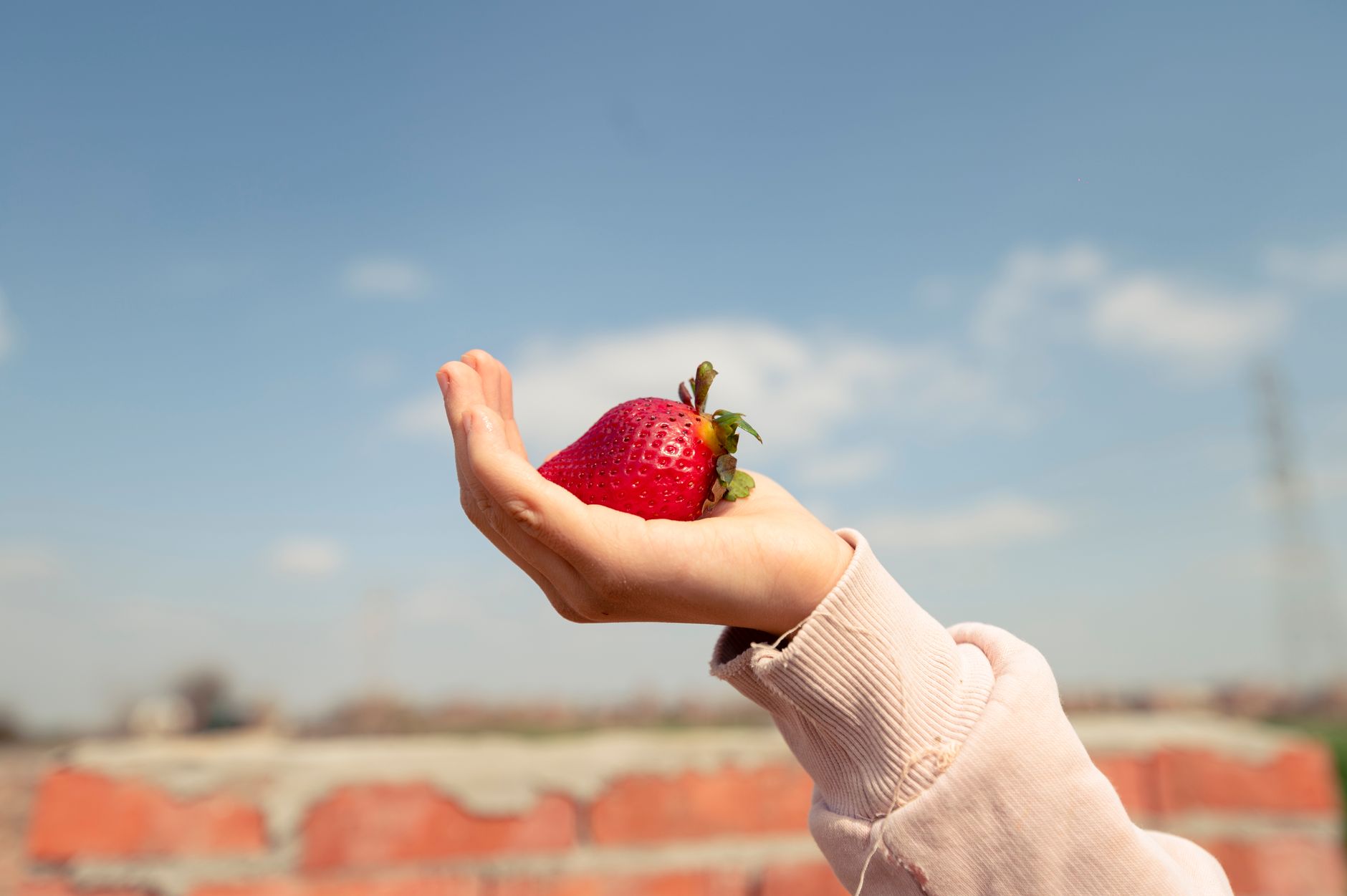
Why fruit beats animals for a first project
A ball of wool is the whole skill. You stab loose fibre with a barbed needle until it tangles into a firm shape, and a fruit is mostly that ball with one or two small additions. A strawberry needs a pointed end and a few green leaves. An orange needs almost nothing. A pear needs you to roll the base fatter than the top.
The obvious objection is that fruit is boring and a little animal is more fun. Fair. But boredom is not what ruins beginners’ projects, frustration is. Making three small, quick wins builds your hand control, and a little wool hedgehog is far easier once you have felted a dozen firm balls.
What wool and needles do you need?
You need core wool, a few colours of carded wool, a pack of felting needles, a foam pad and some thread for hanging. That is the full kit, and it costs very little.
Core wool is the cheap, slightly coarse fibre you use to build the body. Carded wool, sold as batts or roving, is the soft coloured stuff for the surface. For these ornaments you want red, orange, yellow-green and a bit of brown and green for stalks and leaves.
- Needles: buy a mixed pack. A medium needle (often sold as 38 gauge) does most of the shaping, and a finer one smooths the surface. Needles are brittle and you will snap one sooner or later, so buy spares.
- Foam pad: a thick sponge or a dense foam block stops you stabbing the table and your fingers.
- Thread: embroidery cotton or thin ribbon for the hanging loop, with a darning needle to pull it through.
How do you make a needle-felted strawberry?
To make a needle-felted strawberry, roll a lump of red wool into a ball, stab it firm, then shape one end into a point. The steps below work for all three fruits with small changes.
- Pull off a handful of core wool, roll it loosely and stab it all over, turning it constantly, until it is about the size of a walnut and firm.
- Wrap a thin layer of red wool around it and stab it in with short, straight strokes. Keep going until no core shows through.
- Squeeze one end into a cone, stabbing the sides inwards to make the point.
- Stab tiny pinches of yellow wool into the surface for seeds, going in just once or twice each.
- Roll a few green wisps into a small star, stab it on top as the leaves, and sew your loop through it.
For an orange, stay round and use a fine needle to polish the surface, then add a dot of brown at the top. For a pear, build a fat bottom and a narrower top, in yellow-green with a blush of red if you like. Check each one in your hand: it should feel firm, with no squashy patches.
Is needle felting safe?
Needle felting is safe if you respect the needles, which are razor sharp and have tiny barbs. The usual injury is a stabbed fingertip, and it is easy to avoid.
Keep your fingers well away from the needle’s path and always stab straight in and out, never sideways, because bending is how needles snap. Work on a stable pad, in good light, and put the needle in a cork or case when you pause. If you are crafting around children or pets, store the kit out of reach. Young children should not use the needles unsupervised, and I would not hand them over before the age of about eight, even with an adult beside them. Finger guards are cheap and worth having while you get used to the rhythm. If you do puncture your skin, wash the wound and treat it like any other small cut, and see a doctor if it looks infected.
One more safety point: small felted ornaments are a choking hazard for babies and toddlers, so hang them high on the tree.
Where can you buy British wool for felting?
You can buy UK-sourced felting wool from independent British fibre sellers, farm shops that sell fleece and many craft suppliers who label their fibre by breed. Look for descriptions that name the sheep, such as Shetland, Corriedale, Merino blends or Herdwick for coarser core wool.
Etsy UK has plenty of small sellers dyeing wool in tiny batches, and local wool or knitting shops often stock felting packs. Look for listings that say where the fleece was grown and processed, not just where the seller is based. Colourful dyed British roving is usually a little pricier than imported wool, but a small bag makes many fruits, so the extra cost per ornament is pennies. If you enjoy working with wool in other ways, our guide to wet felting fruit-inspired wall art uses the same fibres.
For general advice on British wool and the people who produce it, the British Wool website is a good starting point.
Finishing and hanging your fruit
Finish by trimming stray fibres with small scissors and giving each fruit a gentle squeeze. If the surface looks fuzzy, a few light jabs with the fine needle will tidy it. Hang them from thin branches, or pop a set of three in a gift box with a handwritten tag.
My advice: make a batch of six in one sitting, two of each fruit. By the fourth you will be quicker and neater, and you will have the start of a set that looks deliberate rather than accidental.
Frequently Asked Questions
How long does it take to needle felt a small ornament?
A first small fruit usually takes 30 to 60 minutes. Once you have the rhythm of stabbing and turning, a simple orange or strawberry can take around 20 minutes. Shaping and surface details take the longest.
Do I need special wool for needle felting?
Yes, you need wool that has not been treated to be machine washable, as it will not tangle properly. Roving, wool batting and core wool all work. Synthetic fibres such as acrylic will not felt.
What needle size is best for beginners?
A medium needle, often sold as 38 gauge, is the best all-rounder for shaping. Add a finer needle for smoothing the surface. A mixed starter pack gives you both and spares for when one snaps.
Can children try needle felting?
Older children can try it with close adult supervision, finger guards and a foam pad. The needles are very sharp, so younger children should not use them. Wet felting is a safer alternative for small hands.
Leave a Reply