Author: Ethan Miller

  • Wood Burning Art for Beginners: How to Create Stunning Pyrography at Home

    Wood Burning Art for Beginners: How to Create Stunning Pyrography at Home

    There is something almost magical about drawing with heat. Wood burning art, properly known as pyrography, has been quietly having a massive moment in craft circles across the UK, and honestly, it deserves every bit of the attention it is getting. It sits in this gorgeous sweet spot between drawing, painting, and sculpture, producing rich, warm tones that no ink or pigment can quite replicate. If you have ever wanted to try a new creative hobby that feels genuinely satisfying from the very first session, this might be the one.

    The best part? You do not need a fancy studio or years of art school training. A basic pyrography kit, a piece of smooth wood, and a bit of patience are genuinely enough to get started. I picked up my first wood burner for around £15 from a craft shop in Manchester and was completely hooked within an hour. So let us get into it.

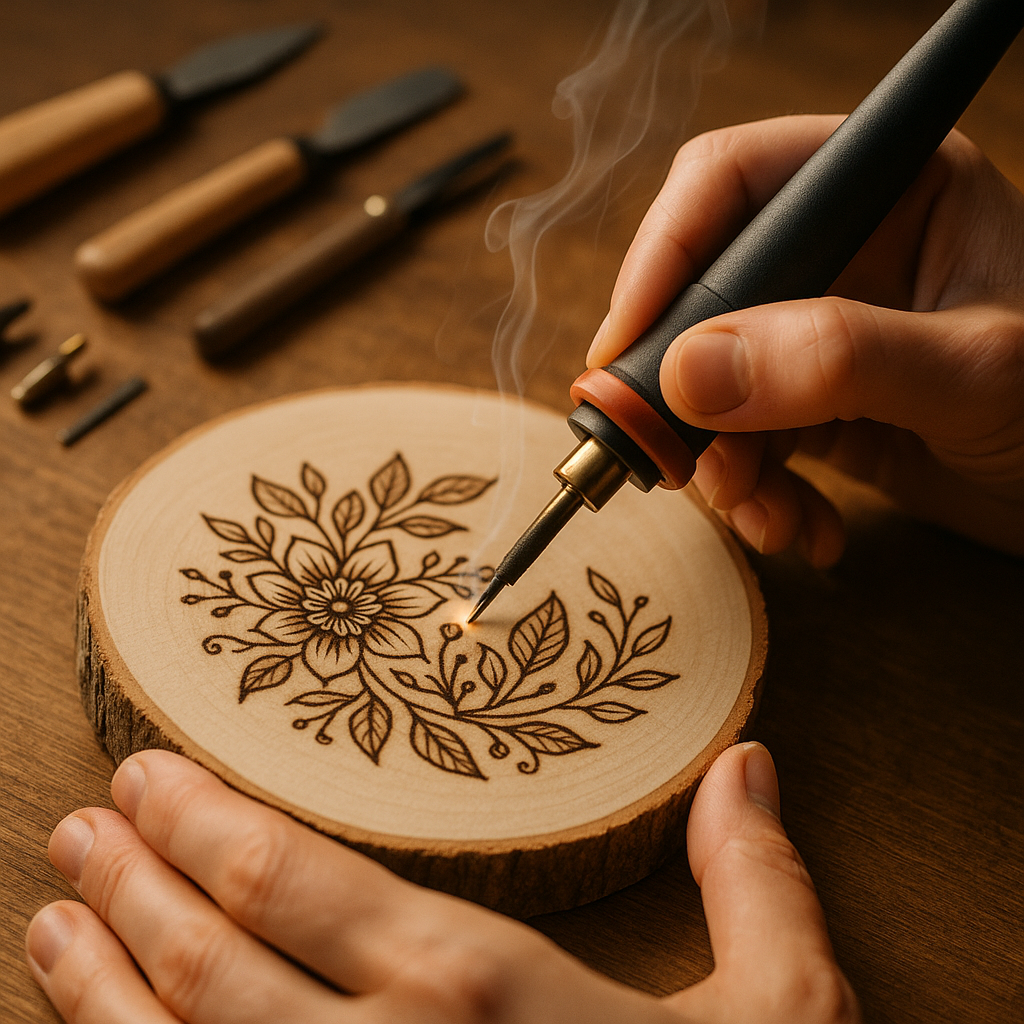
    Close-up of hands using a pyrography pen for wood burning art on a birch disc
    Close-up of hands using a pyrography pen for wood burning art on a birch disc

    What Is Pyrography and Why Is It Trending Right Now?

    Pyrography literally means “writing with fire” and it involves using a heated tool to scorch designs onto wood (and sometimes leather or other natural materials). The technique has been around for centuries, but it is enjoying a real revival thanks to the handmade goods movement and a growing appetite for earthy, tactile home décor.

    According to the Craft Council, interest in traditional and heritage craft skills has risen sharply over the past few years, with more people seeking out slow, mindful making as a counterweight to screen-heavy daily life. Wood burning art fits that mood perfectly. It is deliberate, it is quiet (well, mostly), and it produces something you can actually hang on your wall or give as a gift.

    On social platforms and craft markets from Edinburgh to Bristol, pyrography pieces are selling well. Personalised wooden signs, botanical illustrations burned onto birch ply, fruit and floral patterns on chopping boards, you name it. The aesthetic has this warm, organic quality that feels very 2026.

    What Tools Do You Need to Start Wood Burning Art?

    You do not need much, which is part of the joy. Here is a honest beginner’s kit list:

    • A pyrography pen or wood burning unit: Entry-level pens start around £12 to £20. A variable temperature unit with interchangeable tips is better value long term, typically £30 to £60. Brands like Walnut Hollow and Jakar are well regarded in the UK.
    • Wood blanks: Basswood and birch ply are the go-to choices for beginners. They have a tight, even grain that burns cleanly and takes detail beautifully. You can find craft blanks at Hobbycraft or order online in packs.
    • Pencils and transfer paper: Sketch your design in pencil first or use graphite transfer paper to trace a printed image onto your wood surface.
    • Fine sandpaper: Lightly sand your wood to a smooth finish before you start. This makes an enormous difference to the quality of your burn.
    • A well-ventilated space: This is non-negotiable. Wood burning produces fine smoke, so open a window or work near an extractor fan. Some crafters use a small desktop air purifier too.
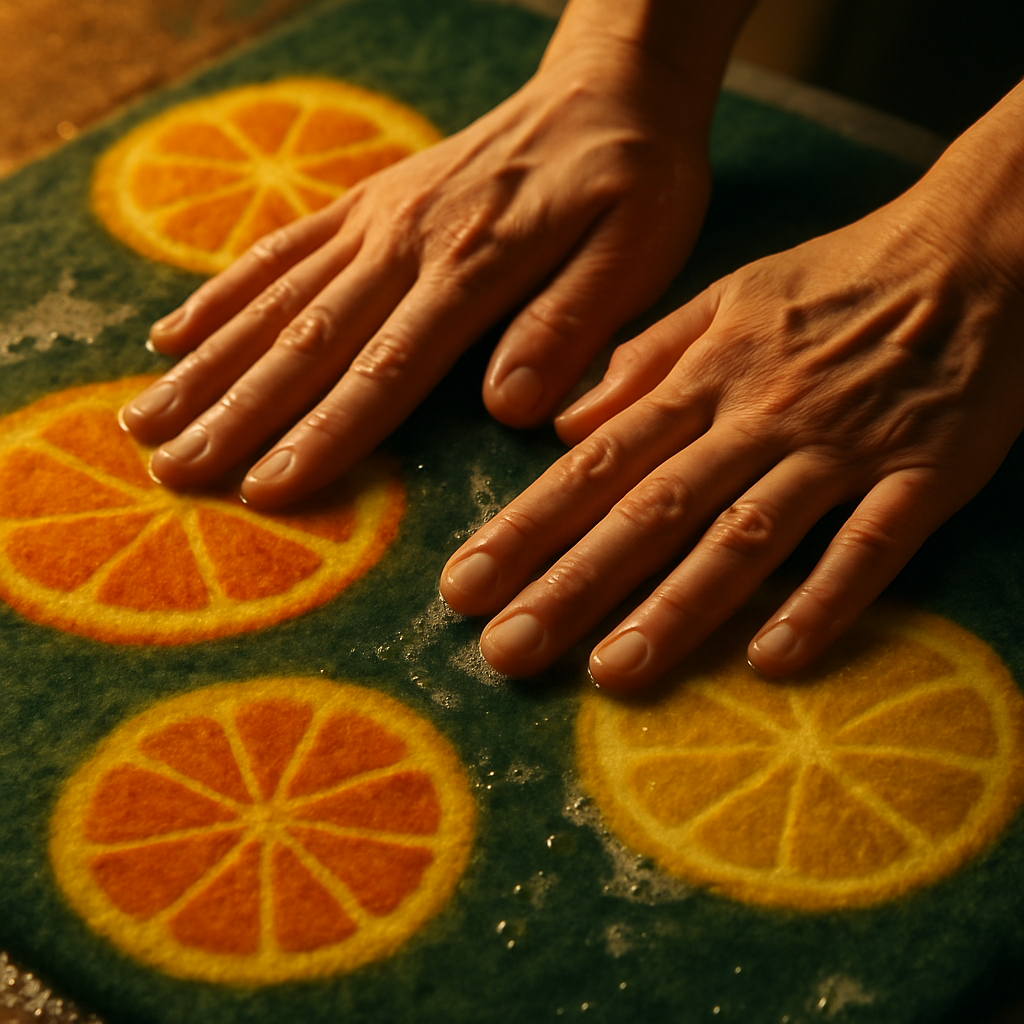
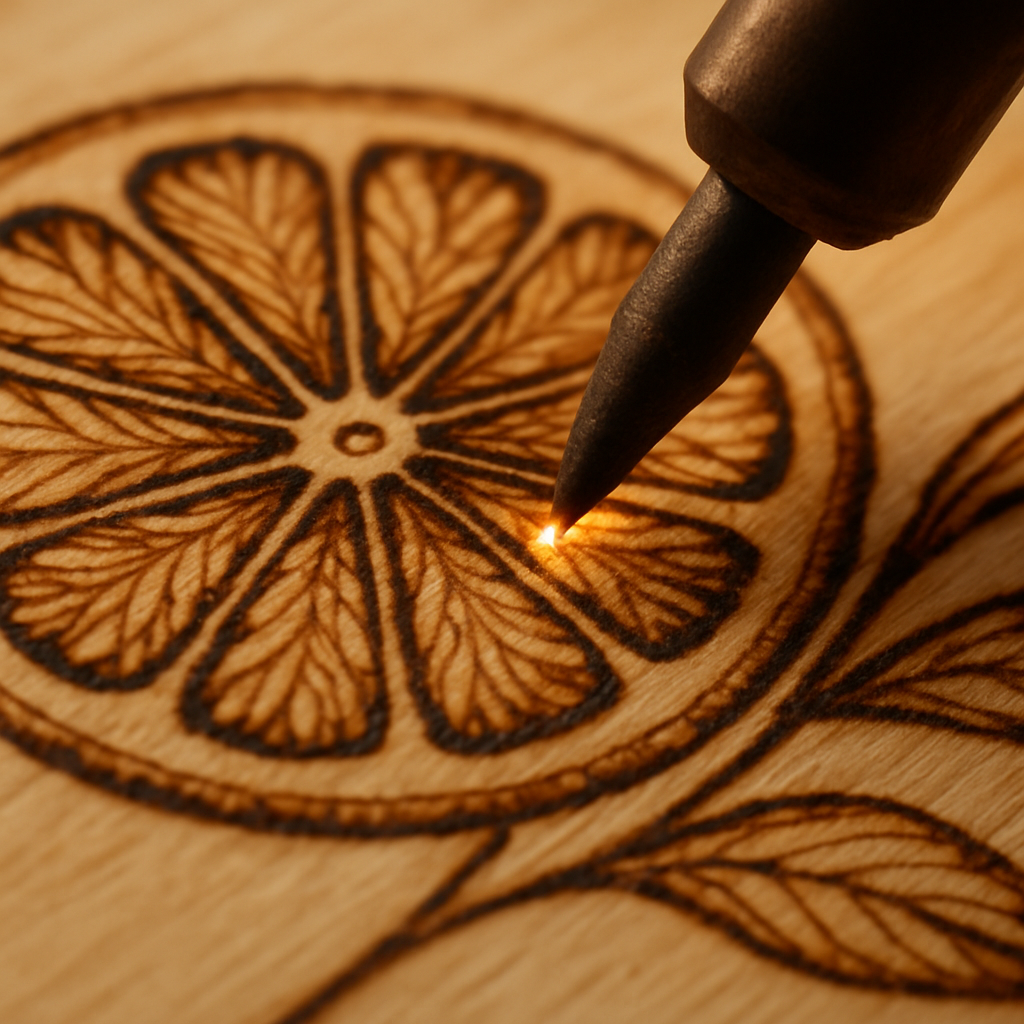
    Macro detail of a wood burning art pyrography tip creating fruit patterns on pale basswood
    Macro detail of a wood burning art pyrography tip creating fruit patterns on pale basswood

    Beginner Techniques That Actually Work

    Once your tool is warm (give it a couple of minutes to reach temperature), practise on a scrap piece of wood first. Always, always practise first. Here are the core techniques worth learning early:

    The Flowing Line

    Move your pen tip in smooth, continuous strokes, as if you are drawing with a fine pen. The slower you move, the darker the burn. Speed equals lightness, which means you have a huge amount of tonal control just by adjusting your pace. This is what makes wood burning art so expressive; it rewards a steady hand but also forgives imperfection in the most characterful way.

    Shading with Circular Motion

    For smooth gradients and filled areas, use small tight circles or figure-of-eight movements with the tip. Build up tone gradually rather than pressing hard. Think of it like watercolour layering, gentle passes that deepen with repetition.

    Stippling for Texture

    Dotting the tip repeatedly in varying densities creates gorgeous textural effects, brilliant for animal fur, tree bark, or the dimpled surface of a lemon. It is slow work but deeply satisfying.

    Creative Ideas for Your First Pyrography Projects

    If you are wondering what to actually make, here are some ideas that work beautifully for beginners and look brilliant as finished pieces:

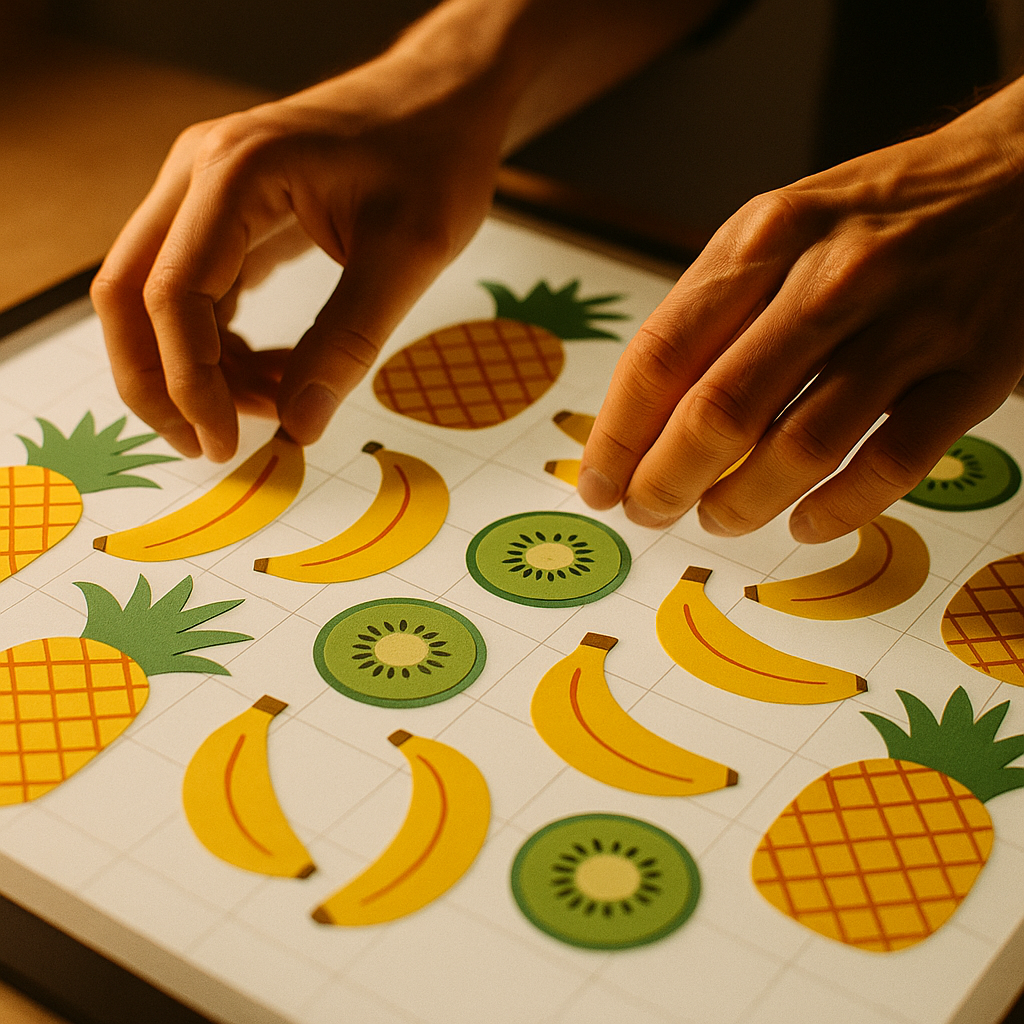
    • Fruit slices on a round birch disc: Citrus cross-sections, figs, kiwis. The graphic shapes are simple to burn and look absolutely stunning on a kitchen wall.
    • Botanical leaf study: Pick a few leaves from the garden, trace the outlines, and focus on the veining detail. Even a simple fern sprig burned in varying tones looks incredibly elegant.
    • Personalised gift tags and coasters: Monograms, small florals, or a recipient’s favourite animal. These are the kind of handmade gifts that people genuinely treasure.
    • Abstract geometric patterns: Triangles, chevrons, concentric circles. Perfect for beginners who are still building confidence with freehand work.

    One thing I love about the craft community around pyrography is how it connects with other making disciplines. Woodworkers who use cnc routers to cut intricate shapes from timber often combine that precision-cut base with hand-burned surface decoration, producing pieces that blend the best of machine accuracy and human artistry. It is a lovely example of how traditional and modern making can sit together.

    How to Add Colour to Your Wood Burning Art

    Pyrography does not have to stay monochrome. Once your burn is complete and cool, you can introduce colour in several beautiful ways. Watercolour washes sit wonderfully on burned wood, the charred lines acting as a natural resist that keeps colours crisp. Alcohol inks produce vivid, jewel-like results. Coloured pencils layered over a light burn give a more illustrative, storybook feel.

    For a Colourfruit-approved approach, try burning a bold fruit or floral outline and then flooding it with loose, vibrant watercolour. The contrast between the warm brown burn marks and the bright pigment is genuinely gorgeous. Seal everything with a light coat of beeswax finish or matte varnish to protect the surface.

    Keeping It Safe and Sustainable

    A few practical notes worth keeping in mind. Always use sustainably sourced wood where possible; the FSC (Forest Stewardship Council) mark is a good thing to look for when buying your blanks. Never burn treated, painted, or MDF wood, as the fumes from those materials are genuinely harmful. Stick to natural, untreated timber.

    Keep your tips clean by wiping them gently on a piece of fine sandpaper while warm. A clean tip burns more precisely and lasts longer. Store your pens in a case when cool, and never leave a hot tool unattended. Basic stuff, but worth saying.

    Wood burning art is one of those crafts that grows with you. Your first piece will be tentative and your tenth will surprise you. That progression, that visible evidence of your own improvement, is one of the genuinely joyful things about learning any creative skill. Pick up a cheap starter kit, grab some birch ply, and see where the heat takes you.

    Frequently Asked Questions

    Is wood burning art suitable for absolute beginners with no art experience?

    Absolutely. Wood burning art is considered one of the more accessible craft skills because you work slowly and build up marks gradually. Starting with simple geometric shapes or traced designs means you do not need any drawing ability to produce something you are proud of.

    How much does it cost to get started with pyrography in the UK?

    A basic beginner setup costs as little as £15 to £25, covering a simple pyrography pen and a small pack of wood blanks. A more versatile variable-temperature unit with multiple tips typically runs between £30 and £60, and is worth the investment if you plan to stick with it.

    What is the best wood to use for wood burning art?

    Basswood and birch ply are the most recommended for beginners due to their fine, even grain and light colouring, which shows the burned marks clearly. Avoid MDF, treated timber, or painted wood, as burning these releases toxic fumes.

    Can you add colour to pyrography artwork?

    Yes, and it looks fantastic. Watercolour washes, alcohol inks, and coloured pencils all work well over a completed burn. The scorched lines act as a natural boundary that keeps colour from bleeding, similar to using a resist technique in traditional watercolour painting.

    Is pyrography safe to do indoors?

    It can be done indoors provided you have good ventilation. Open a window, position a fan to direct smoke away from your face, or use a small desktop air purifier. Always use natural, untreated wood to keep the fumes as minimal as possible.

  • DIY Fruit-Themed Wall Art: Easy Ideas to Brighten Any Room in 2026

    DIY Fruit-Themed Wall Art: Easy Ideas to Brighten Any Room in 2026

    There is something genuinely joyful about a big, bold slice of watermelon hanging above your sofa. Fruit art has this magical ability to make a room feel alive, like someone squeezed a little sunshine directly onto your walls. Whether you rent a flat and can’t knock holes everywhere, you’re picking up a paintbrush for the very first time, or you simply want your living space to stop looking so beige, these DIY fruit wall art ideas will give you something bright to work with.

    The best part? You do not need a studio, a fine art degree, or even a particularly steady hand. You need enthusiasm, a few supplies, and maybe a bowl of actual fruit nearby for inspiration (and snacking).

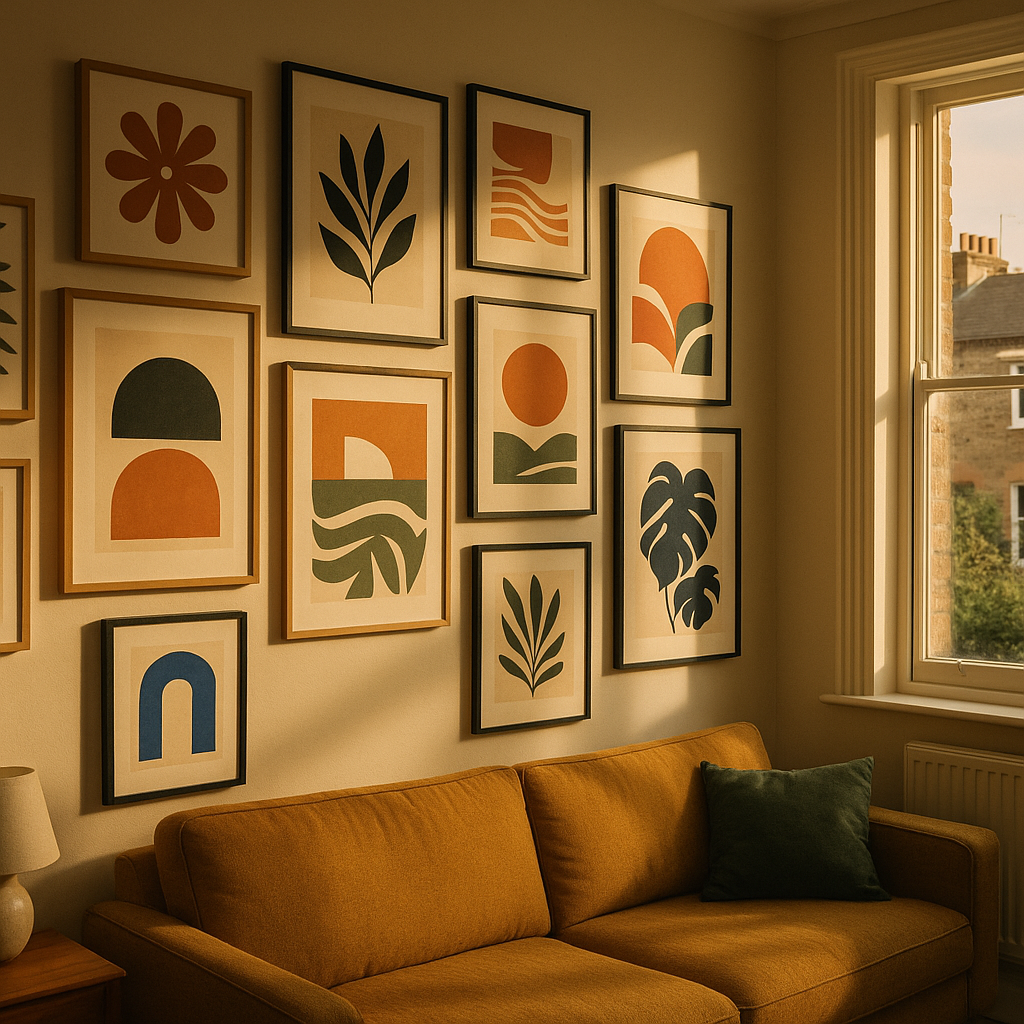
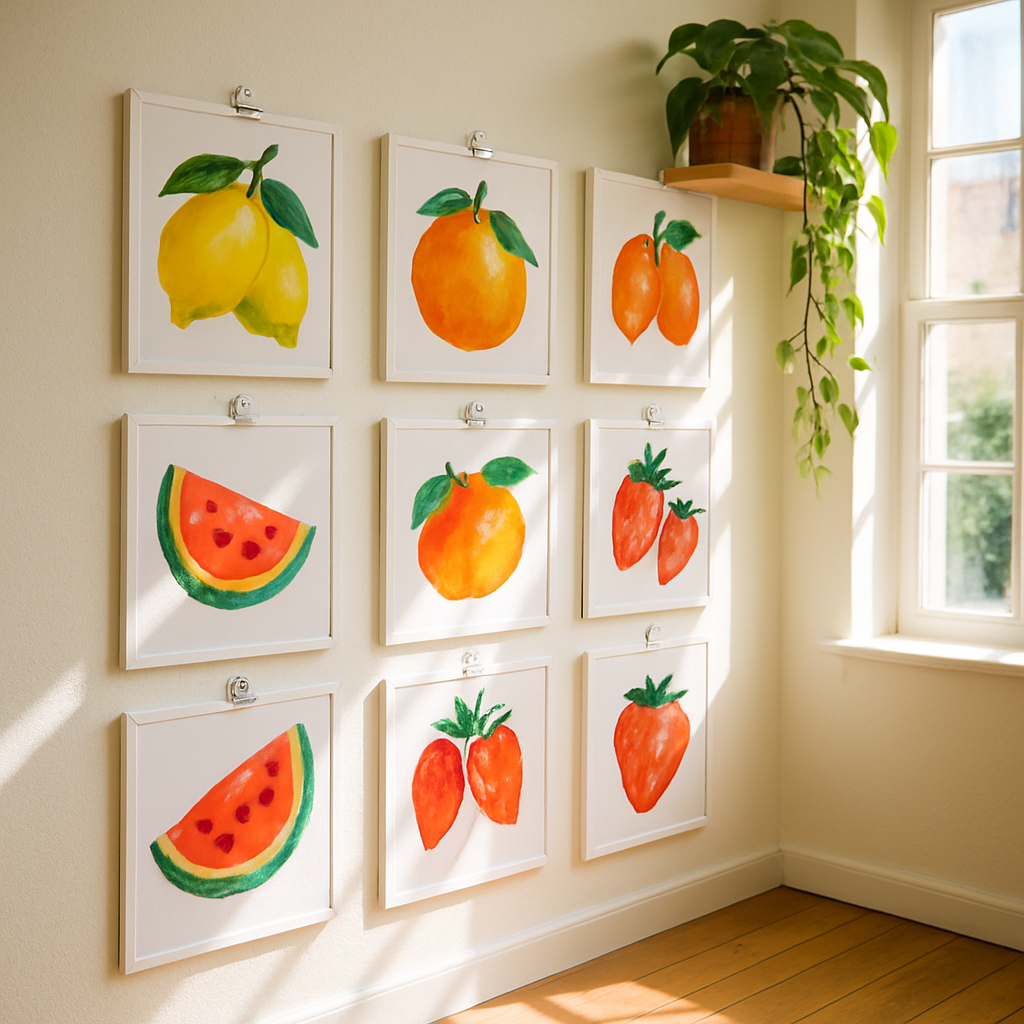
    A colourful gallery wall of DIY fruit wall art ideas displayed in white clip frames in a bright British living room
    A colourful gallery wall of DIY fruit wall art ideas displayed in white clip frames in a bright British living room

    Why Fruit Wall Art Works So Well in Any Home

    Fruit has been a subject in art for centuries. From Dutch Golden Age still life paintings to Matisse’s vivid cut-outs, artists have always been drawn to the shapes, colours, and textures of oranges, lemons, figs, and berries. In 2026, the trend has gone firmly domestic. Maximalist, playful interiors are everywhere, and fruit prints are right at the heart of it.

    For renters in particular, wall art is one of the easiest ways to personalise a space without repainting or drilling. A cluster of frames at different heights, filled with your own painted pieces, costs far less than a sofa and has far more personality than anything picked up at a flat-pack furniture shop. According to BBC Culture, still life art continues to resonate because it celebrates the everyday, and there is nothing more everyday than fruit sitting in your kitchen.

    DIY Fruit Wall Art Ideas Using Watercolour

    Watercolour is the natural starting point for fruit. The way pigment bleeds into wet paper mimics the juicy, translucent quality of a halved orange or a bunch of grapes in the most satisfying way possible. You do not need expensive supplies to get going.

    Try painting single fruits on small sheets of hot-press watercolour paper, roughly A5 size. A lemon, a strawberry, a cross-section of kiwi. Keep each painting loose and a little imperfect. Those happy accidents where the paint pools at the edges? That is the whole look. Once dry, pop them into simple clip frames from IKEA or Wilko and arrange them in a grid of six or nine on your wall using removable adhesive strips. Instant gallery wall, zero drilling.

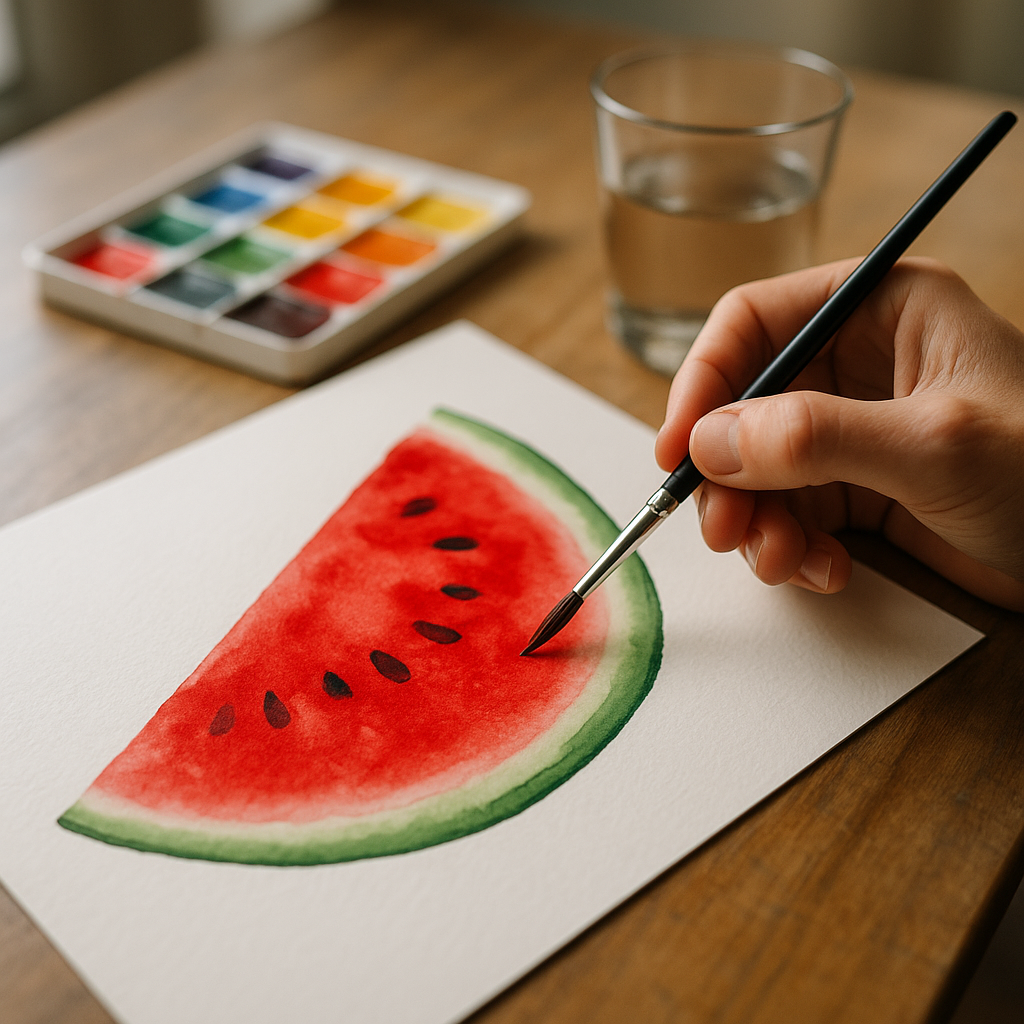
    For a slightly more dramatic piece, try a large watermelon slice on A3 paper. Use a confident stroke of cadmium red (or a bright coral if you prefer), leave a thin white rind, then add a wash of lime green around it. Dot in seeds with a fine liner pen. Frame it in a wide white mount and it becomes genuinely striking.

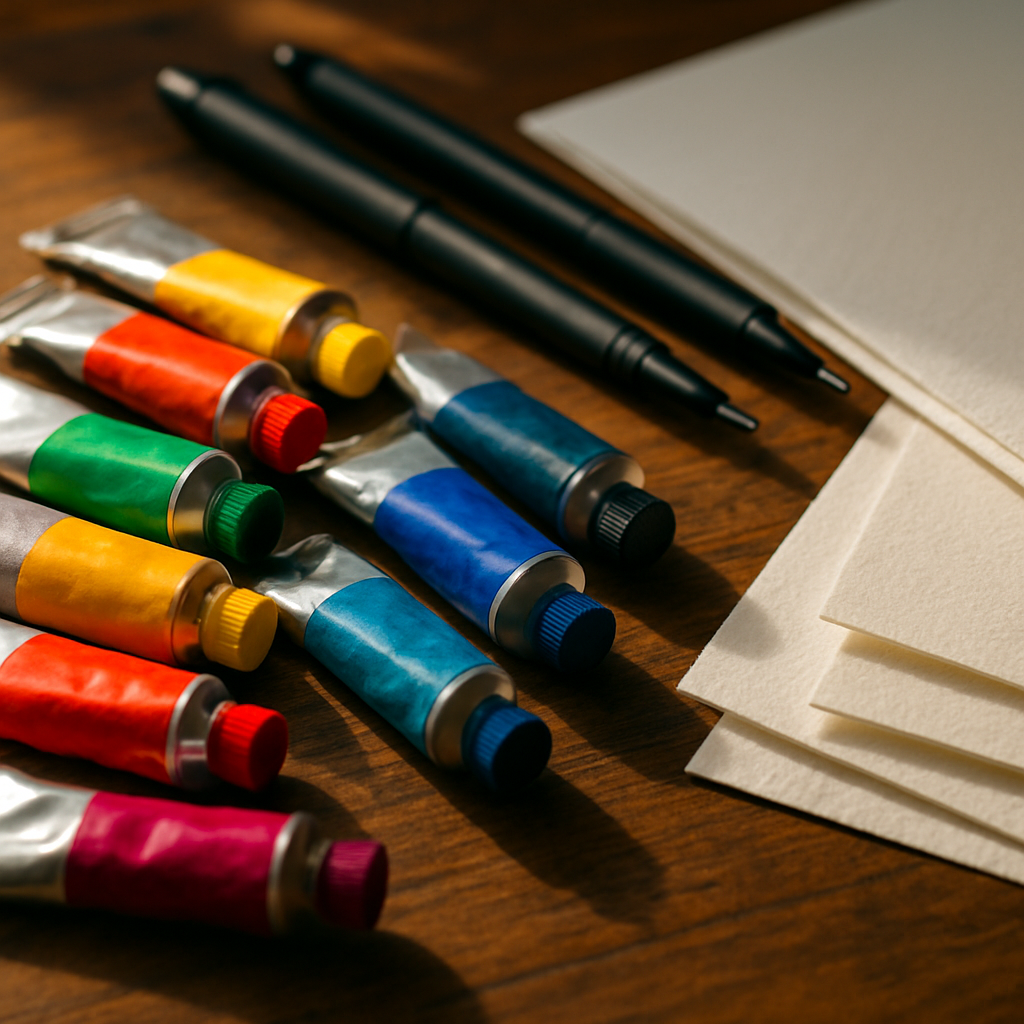
    Close-up of watercolour painting in progress as part of a DIY fruit wall art idea on a wooden table
    Close-up of watercolour painting in progress as part of a DIY fruit wall art idea on a wooden table

    Going Bolder: DIY Fruit Wall Art with Acrylics

    If watercolour feels a bit unpredictable for you, acrylics give you more control and a lot more vibrancy. This is where your DIY fruit wall art ideas can really go big, literally.

    Stretched canvas from The Works or Hobbycraft gives you a proper surface to work on, and it is affordable enough that mistakes do not sting. Paint a plain background first, something dusty terracotta, sage green, or a deep cobalt. Let it dry fully. Then sketch your fruit shapes lightly in pencil before filling them in with bright, opaque colour. Overlapping lemons in yellow and chartreuse look brilliant on a warm terracotta background. A pile of cherries on cobalt is a timeless combination.

    You can also try the block-printing approach with acrylics. Cut a lemon or apple in half, press the cut face onto an ink pad or roll acrylic paint across it with a small roller, then stamp it onto paper or fabric canvas. The natural texture of the fruit cross-section prints beautifully. Repeat the stamp in rows with slightly varying colours, and you have a bold, graphic print that looks intentional and professional even when it very much isn’t.

    Digital Tools: Fruit Art for the Screens-and-Printers Generation

    Not everyone wants paint on their kitchen table. Fair enough. Digital illustration has become genuinely accessible, and the results can be printed at home or ordered through a print-on-demand service for a beautifully finished piece.

    Apps like Procreate (if you have an iPad) or the free browser-based Canva are wonderful for creating flat, graphic fruit illustrations. Think bold outlines, limited colour palettes, retro-inspired shapes. A halved avocado in three flat colours. A bunch of bananas with chunky outlines. These styles work particularly well for children’s rooms and kitchens where you want something cheerful but not chaotic.

    Once you have your design, you can order a print at places like Photobox or Snapfish, both UK-based services that produce excellent quality at reasonable prices. A40cm x 50cm print typically costs between £10 and £20 depending on paper quality, making it one of the most affordable ways to get a personalised piece of DIY fruit wall art onto your walls.

    Arranging Your Fruit Wall Art: Tips for Maximum Joy

    Creating the art is only half the fun. Arranging it is where the real personality comes in. A few things I have found genuinely useful:

    • Mix your sizes. A large anchor piece surrounded by smaller prints creates depth and keeps the eye moving. Try one A3 watermelon surrounded by four A5 citrus paintings.
    • Don’t match your frames. A mix of natural wood, white, and black frames feels collected rather than bought as a set. More gallery, less catalogue.
    • Use removable strips. Command strips (available in most UK hardware shops and Tesco) are a renter’s best friend. They hold up to 3.6kg per strip and come away cleanly.
    • Lay it out on the floor first. Arrange your pieces on the floor below the intended wall space before committing. Photograph it, then recreate it above.
    • Add greenery. A trailing plant on a nearby shelf or a sprig of eucalyptus in a small vase near your art cluster ties the organic theme together beautifully.

    Budget Breakdown: What Does DIY Fruit Art Actually Cost?

    One of the genuinely lovely things about these DIY fruit wall art ideas is how accessible they are financially. Here is a rough sense of what you might spend:

    • Watercolour starter set (Winsor and Newton Cotman, widely available): around £12 to £18
    • A4/A3 watercolour paper pad: £5 to £12
    • Clip frames or simple clip frames (set of 4): £8 to £15 from IKEA or The Range
    • Acrylic paint set (basic, from Hobbycraft or The Works): £6 to £14
    • Stretched canvas pack (set of 3, A4 size): around £8 to £12

    You can put together a full gallery wall of original, handmade fruit art for well under £50. That is a remarkable amount of colour and personality for the money.

    The Simplest Fruit Art Project to Try This Weekend

    If you are new to all of this and want one project to start with, go for this: buy a pad of watercolour paper and a small set of paints. Cut five sheets to A5 size. On each one, paint a single fruit. A lemon. An orange. A fig. A strawberry. A bunch of grapes. Keep each one loose, use more water than you think you need, and do not overwork the paint. Let them dry overnight. Frame them in matching white clip frames. Hang them in a row above a sideboard or a bed.

    That is it. That is a proper gallery wall, made entirely by you, in a weekend, for about £25. Bright, bold, and completely your own.

    Art does not need to be complicated or expensive to make a room feel alive. Sometimes all it takes is a painted lemon and a bit of confidence.

    Frequently Asked Questions

    What is the easiest DIY fruit wall art idea for a complete beginner?

    Painting individual fruits on small sheets of watercolour paper is the most accessible starting point. Choose simple shapes like a lemon or strawberry, keep your brushwork loose, and frame the finished pieces in clip frames for an instant gallery wall effect.

    Can I make DIY fruit wall art if I rent and can't put holes in the walls?

    Absolutely. Command strips and similar removable adhesive products, available from most UK hardware shops and supermarkets, can hold framed art securely without damaging walls or paintwork. They peel away cleanly when you move out.

    How much does it cost to create a DIY fruit wall art gallery at home?

    You can put together a full set of original fruit paintings and frames for well under £50. A basic watercolour set costs around £12 to £18, paper pads start from £5, and simple clip frames from shops like IKEA or The Range are typically £8 to £15 for a set of four.

    Can I use digital tools to create fruit wall art if I'm not good at painting?

    Yes, apps like Procreate on iPad or the free browser-based Canva are brilliant for creating bold, graphic fruit illustrations without any painting skills. You can then print your designs through UK services like Photobox or Snapfish for a polished, professional-looking result.

    What fruit shapes and styles work best for DIY wall art?

    Cross-sections of fruit such as watermelon slices, halved citrus, and kiwi work particularly well because of their striking natural symmetry and vivid colour contrast. Bold, flat graphic styles in a limited colour palette also reproduce beautifully whether painted or printed.

  • The Best Gouache Painting Techniques for Capturing Juicy Fruit Textures

    The Best Gouache Painting Techniques for Capturing Juicy Fruit Textures

    Gouache is one of those paints that feels like a cheat code. Opaque, velvety, and brilliantly forgiving, it lets you build colour with a confidence that watercolour sometimes doesn’t allow. And when it comes to painting fruit, it is absolutely in its element. Whether you want a hyper-realistic lemon with a waxy, sun-kissed skin, or a punchy stylised mango that looks like it belongs on a screen-printed tote bag, gouache painting techniques can take you there.

    This guide covers everything from setting up your palette to achieving that signature glossy or powdery matte texture that makes fruit subjects so satisfying to paint.

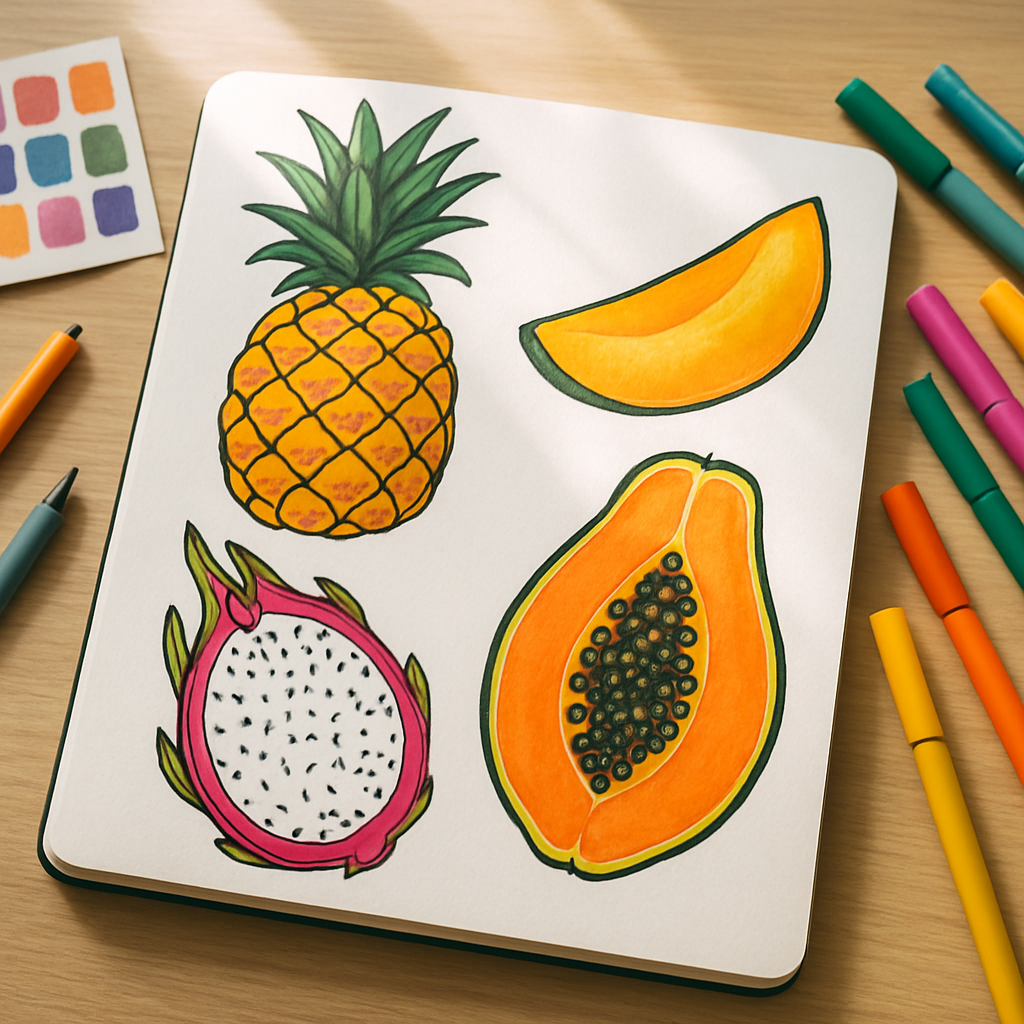
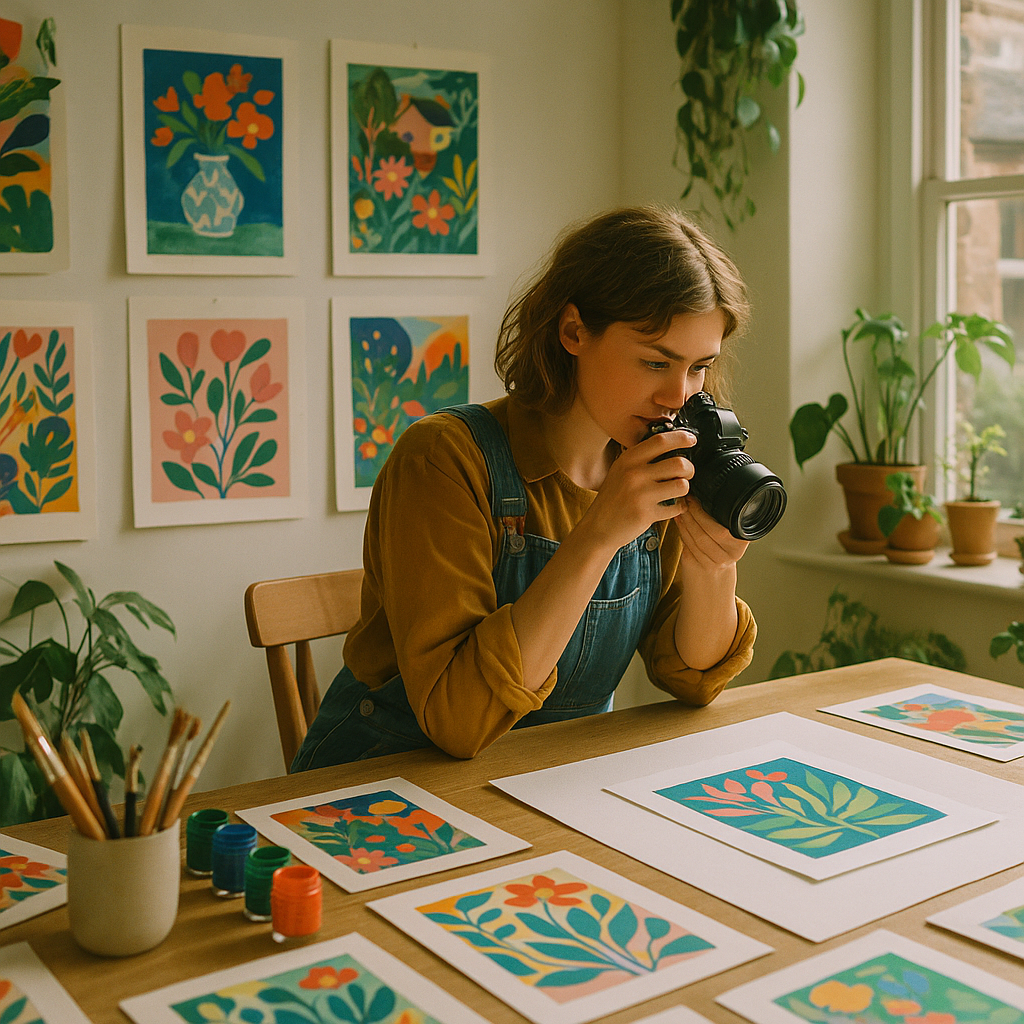
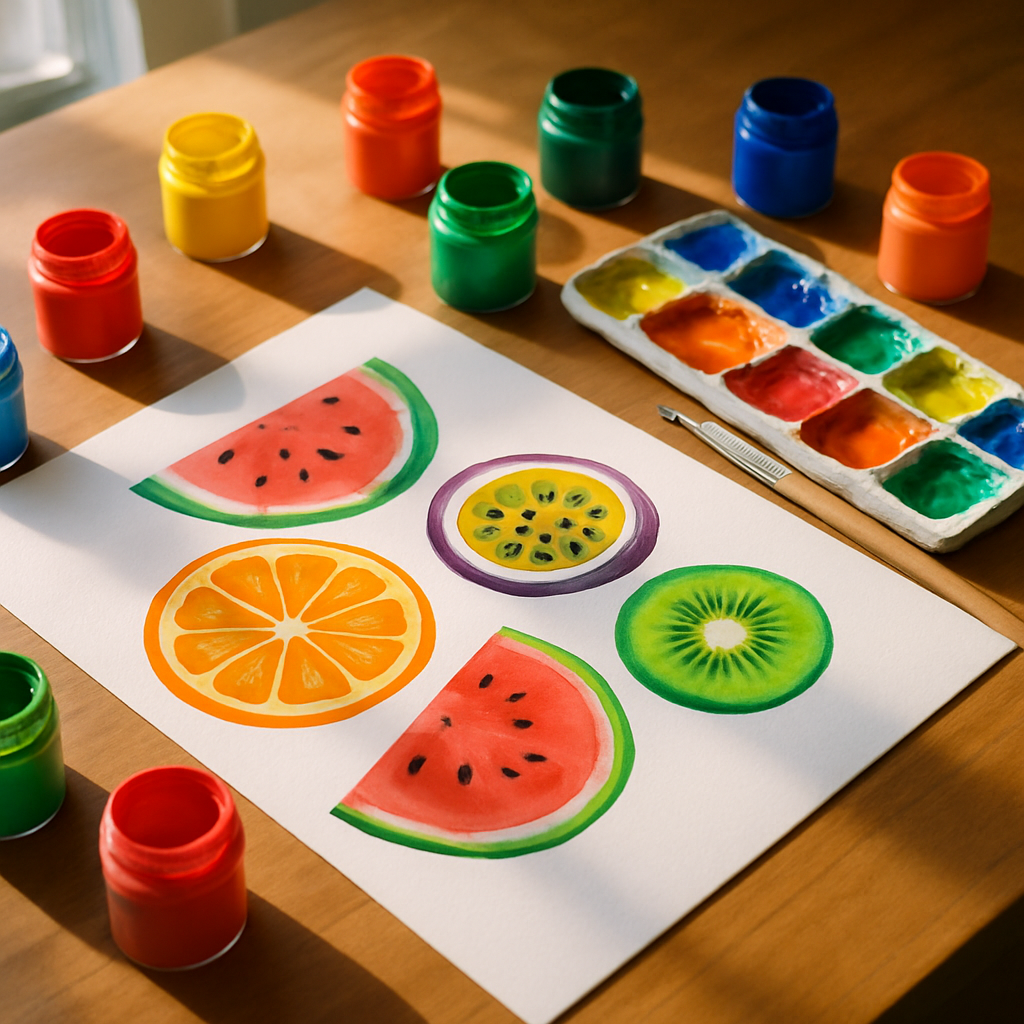
    Artist workspace with gouache painting techniques applied to colourful fruit artwork on watercolour paper
    Artist workspace with gouache painting techniques applied to colourful fruit artwork on watercolour paper

    Why Gouache Works So Well for Fruit Subjects

    Fruit is all about colour intensity and surface variation. A strawberry has a soft, almost suede-like texture dotted with tiny seeds. A plum has that dusty bloom. A blood orange split in half is practically stained glass. Gouache handles every single one of these challenges brilliantly because of how it sits on the surface.

    Unlike watercolour, gouache is opaque enough to lay light colours over dark ones. Unlike acrylic, it stays workable for longer and dries to a flat, chalky finish that photographs beautifully. The Arts Council England notes that gouache has seen a genuine resurgence among contemporary illustrators, and it’s easy to see why once you start using it for botanical and food subjects.

    My personal take: gouache rewards patience. Rushing it produces muddy, chalky streaks. But slow down, keep your consistency right, and it sings.

    Setting Up: Palette, Paper, and Paint Consistency

    Before you touch a brush, get your consistency sorted. This is the single most important thing about gouache painting techniques that beginners overlook. Too thick and the paint cracks as it dries. Too thin and you lose the opacity that makes gouache so special.

    Aim for a consistency somewhere between single cream and yoghurt. If you drag a palette knife through it and the line holds for a second before slowly closing, you’re in the right zone. Use a ceramic or glass palette rather than a plastic one; gouache rehydrates easily and a ceramic palette lets you keep colours fresh under a damp cloth between sessions.

    For paper, choose something heavy. A 300gsm hot-pressed watercolour paper gives you a smooth surface that lets detail sing. Cold-pressed works too but adds a slight texture that can be lovely for more stylised fruit pieces. Rough-surfaced paper is generally too unpredictable for realistic fruit work unless you’re specifically after that effect.

    Layering Gouache for Depth and Realism

    The layering process is where the magic lives. Start with your mid-tone as a flat base layer. For a ripe peach, that might be a warm apricot. For a lime, a mid-range yellow-green. Let this layer dry fully before adding anything else.

    Once dry, build your shadows using a slightly deeper version of the same hue rather than reaching straight for brown or black. A peach shadow, for instance, might be a deeper burnt orange with a touch of violet. This keeps the colour vibrant and stops the shadows looking muddy or dead. Keep your layers thin; each one should be semi-translucent so the previous layer shows through slightly, adding dimension.

    Highlights come last. Mix your lightest tones with a little white gouache and apply them confidently. Don’t blend them too far into the surface; a crisp edge on a highlight on a cherry or a grape is what gives it that satisfying three-dimensional pop.

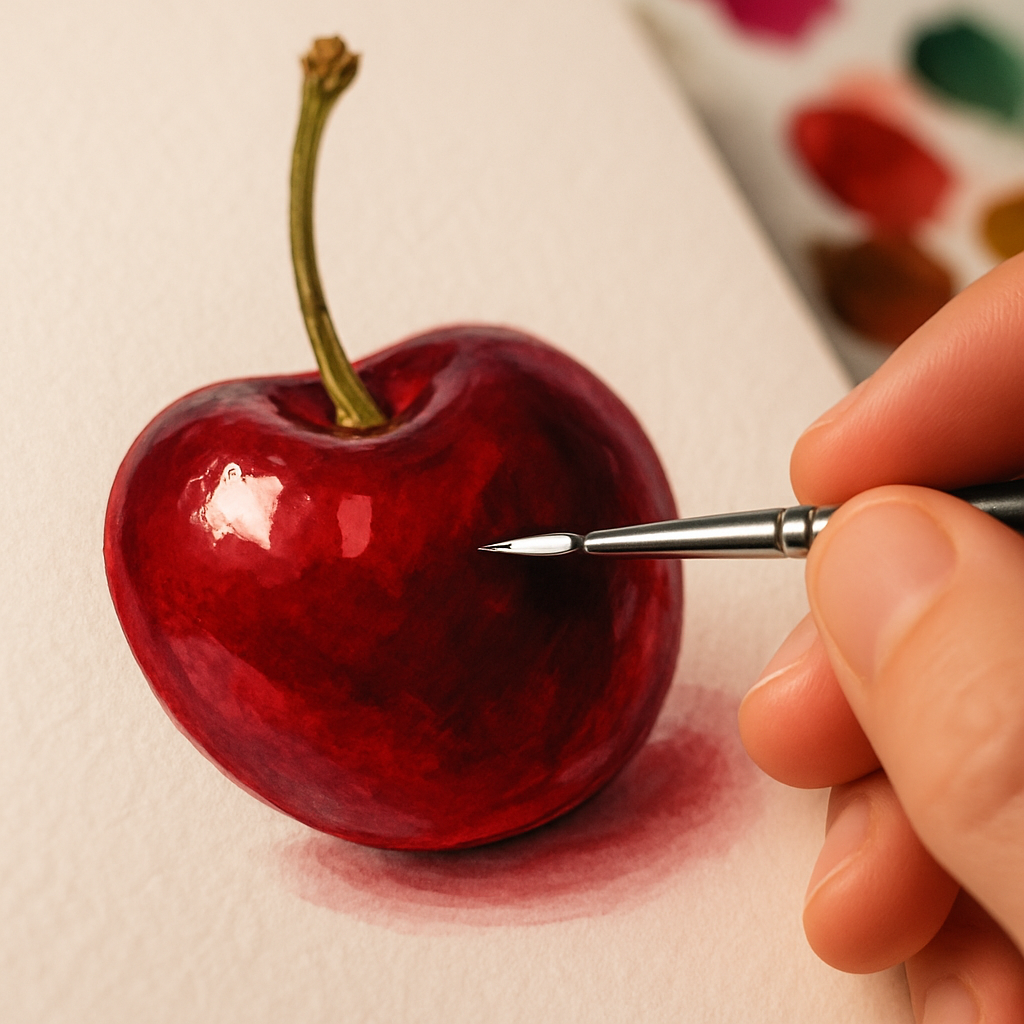
    Close-up of gouache painting techniques creating a glossy highlight on a painted cherry
    Close-up of gouache painting techniques creating a glossy highlight on a painted cherry

    Blending Gouache: Wet-into-Wet vs Dry Brushing

    Gouache can be blended in two quite different ways, and knowing when to use each is a key part of developing your gouache painting techniques.

    Wet-into-wet blending works while the paint is still damp. You lay down one colour and then drop a second into it before it dries, letting them merge at the boundary. This is brilliant for the subtle colour shifts on something like a ripe tomato, where red bleeds into a warm orange-yellow near the base. Work quickly and use a clean, damp brush to soften the join.

    Dry brushing is the opposite approach. You let each layer dry fully and then use a stiff, dry brush loaded with a small amount of paint to drag colour across the surface. This is perfect for the rough, dimpled texture of an orange skin or the soft fuzz on a peach. The bristles skip across the surface and leave a lovely broken, textural mark.

    For stylised fruit illustration, you can also skip blending entirely and embrace flat, graphic sections of colour separated by clean edges. This posterised look is genuinely stunning for surface pattern work and prints.

    Achieving Glossy vs Matte Fruit Textures

    This is where fruit painting gets genuinely exciting. Different fruits have completely different surface qualities, and you can replicate all of them with gouache.

    For glossy fruit (cherries, grapes, aubergines, red peppers), the trick is a very small, very sharp highlight in near-white or pure white. Place it off-centre rather than dead-centre; this looks more natural. Surround the highlight with a deep, rich shadow on the opposite side. The high contrast between the two is what sells the glossy effect. A tiny secondary reflected light in a warm tone on the darkest edge completes the illusion beautifully.

    For matte or powdery fruit (plums, blueberries, greengage), keep your highlights soft and diffused. Add a tiny amount of blue-grey or lavender to your highlight mix to mimic that dusty bloom. Avoid hard edges; everything should feel soft and slightly hazy.

    For textured fruit skin (oranges, lemons, limes), a dry brush stippling technique over your mid-tone base creates the dimpled peel effect convincingly. Some artists also use a sea sponge dabbed lightly with a deeper tone for this.

    Colour Mixing for Maximum Vibrancy

    One practical tip that transforms the vibrancy of fruit paintings: avoid mixing more than two or three pigments together. Every additional pigment you add dulls the mixture slightly. For the most saturated gouache colours, choose paints that contain a single pigment where possible. Brands like Winsor and Newton, Schmincke, and Holbein all label their pigment codes on the tube.

    Also consider your white. Titanium white is the most opaque and is brilliant for mixing tints. Zinc white is slightly more transparent and gives a cooler, cleaner result. Mixing the wrong white into a warm yellow can send it chalky and flat surprisingly fast.

    Looking After Your Creative Energy

    A small but genuine side note: detailed painting sessions, particularly those involving fine layering work, can be intense. Extended focus, hunching over a board, and the mental effort of colour mixing all take their toll. Some artists in the wellness-meets-creativity space have been exploring recovery tools, including sessions in an hbot chamber, as a way to support focus and overall wellbeing between creative sprints. It’s an interesting corner of the artist wellness conversation.

    More practically, take regular breaks, stretch your hands, and keep a glass of water nearby rather than accidentally sipping from your brush-rinsing cup. (We’ve all done it once.)

    Bringing It All Together

    The best way to develop strong gouache painting techniques is to paint the same fruit multiple times in different styles. Paint a lemon realistically one week, then do it again as a flat graphic illustration the next. Notice how your eye improves, how your colour mixing becomes more instinctive, and how the paint starts to do what you want rather than what it wants.

    The BBC Arts section regularly features working illustrators whose gouache fruit work sits somewhere between botanical art and bold graphic design. It’s a rich tradition and there’s plenty of room to find your own voice within it. Pick up a tube of cadmium yellow, grab a plum from the fruit bowl, and see what happens.

    Frequently Asked Questions

    What is gouache and how is it different from watercolour?

    Gouache is an opaque, water-based paint that dries to a flat, chalky finish. Unlike watercolour, it is not transparent, which means you can paint light colours over dark ones and correct mistakes easily. It’s widely used in illustration, surface pattern design, and fine art.

    What paper is best for gouache fruit painting?

    Heavy 300gsm hot-pressed watercolour paper is the most popular choice for detailed gouache work because the smooth surface allows clean edges and fine detail. Cold-pressed paper adds a subtle texture that suits looser, more stylised fruit illustrations. Avoid lightweight paper as gouache can cause it to buckle and warp.

    How do I stop gouache from cracking when it dries?

    Cracking is usually caused by applying paint too thickly. Keep each layer relatively thin and allow it to dry fully before adding another. Adding a tiny drop of water to your mix to bring it to a creamy consistency will also help prevent cracking without sacrificing opacity.

    Can I mix different brands of gouache together?

    Yes, most gouache brands are compatible with each other as they share the same water-based formula. However, some brands use different binders or fillers which can occasionally affect drying texture. Sticking to one brand for a project keeps results consistent, but mixing popular brands like Winsor and Newton with Schmincke generally works well.

    How do I achieve the dusty bloom effect on painted plums or grapes?

    Add a small amount of cool blue-grey or lavender to your highlight mix rather than using pure white. Keep the highlight soft and diffused rather than crisp. A light dry-brush pass with this mix over the dried mid-tone layer mimics the powdery bloom beautifully and gives the fruit a realistic, three-dimensional appearance.

  • The Rise of Maximalist Art: Why More Colour Always Wins

    The Rise of Maximalist Art: Why More Colour Always Wins

    Somewhere between a ripe mango and a disco ball, a creative revolution is happening. Maximalist art — loud, layered, unapologetically abundant — has been building momentum for a few years, and by 2026 it has fully exploded into the mainstream. Galleries, surfaces, textiles, and Instagram feeds are awash with bold patterns, clashing colours, and the kind of joyful excess that makes minimalism feel a little… hungry. If you have ever been told your work is “too much”, consider this your vindication. The maximalist art style colourful movement is here to stay, and it is absolutely gorgeous.

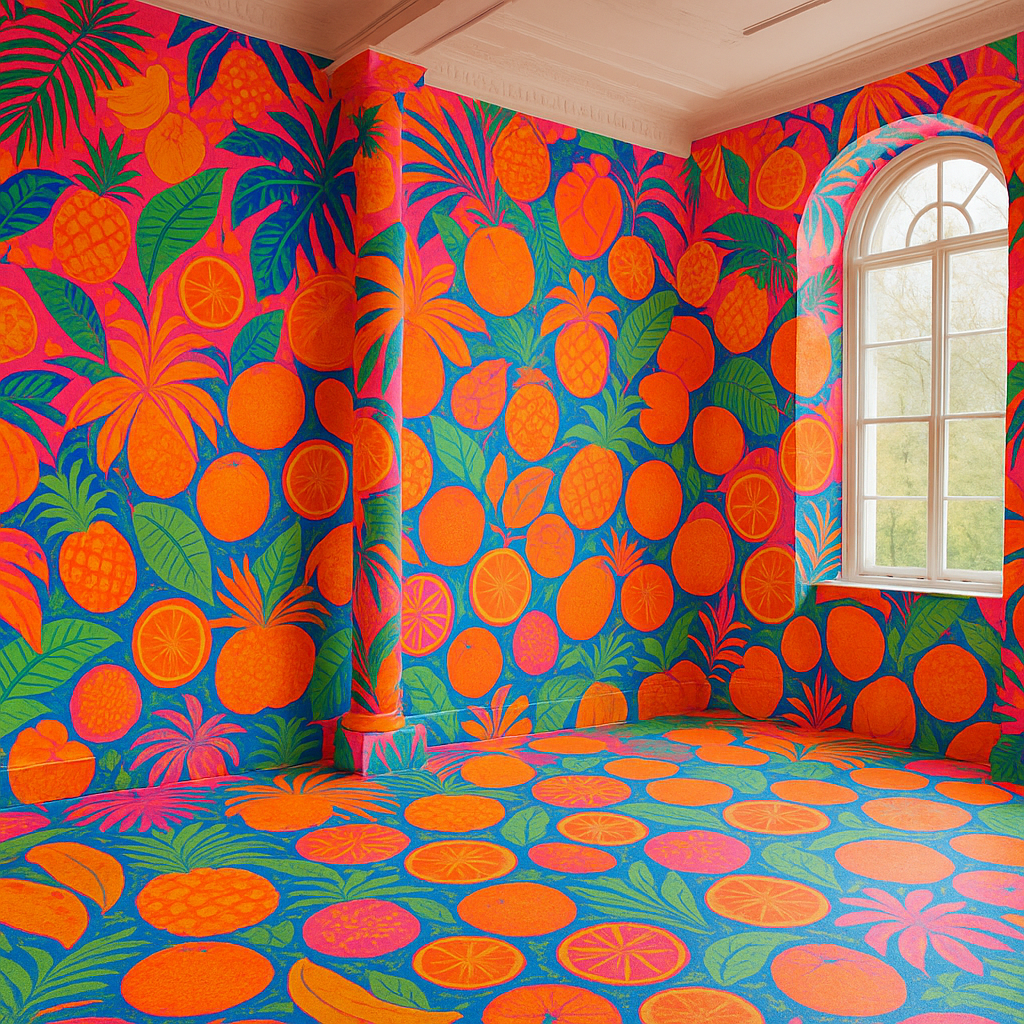
    Maximalist art style colourful installation with bold botanical patterns and fruit motifs in a British gallery
    Maximalist art style colourful installation with bold botanical patterns and fruit motifs in a British gallery

    What Is Maximalism in Art?

    Maximalism is not just “a lot of stuff on a canvas”. It is a deliberate, expressive philosophy that says more detail, more pattern, more colour, and more texture are all valid artistic choices. Where minimalism strips back, maximalism layers up. Think William Morris’s botanical wallpapers crossed with tropical fruit markets crossed with a very cheerful fever dream. It is rooted in abundance rather than restraint, and it draws heavily from decorative arts, folk traditions, and the natural world.

    Historically, maximalism has threads running through Baroque painting, Victorian pattern-making, and 1970s psychedelic illustration. What feels fresh about the current wave is the way contemporary artists are blending these references with bold digital tools, screen printing, and a very modern sense of self-expression. The result is work that practically hums with energy.

    Key Artists Driving the Maximalist Art Style Colourful Trend

    Several artists have become banner-carriers for this movement, and they are well worth exploring if you want to understand what maximalism looks like at its most exciting.

    Yayoi Kusama is arguably the godmother of joyful visual excess. Her polka dots, pumpkins (very fruity energy), and infinity rooms have inspired a generation of artists who see repetition and pattern as deeply emotional tools rather than decoration. Her influence on the current maximalist wave is enormous.

    Morag Myerscough, based in the UK, is a brilliant example of British maximalism done right. Her large-scale installations use clashing typography, vivid colour blocks, and pattern-on-pattern layering to transform public spaces into places of genuine delight. Her work for NHS hospitals alone shows how bold colour can be genuinely life-affirming.

    Favianna Rodriguez brings maximalist printmaking with political and cultural depth, while illustrators like Ohara Hale have built devoted followings by leaning into fruit, foliage, and fantastically dense compositions that reward close looking. These artists share a willingness to fill every corner and trust the viewer to handle it.

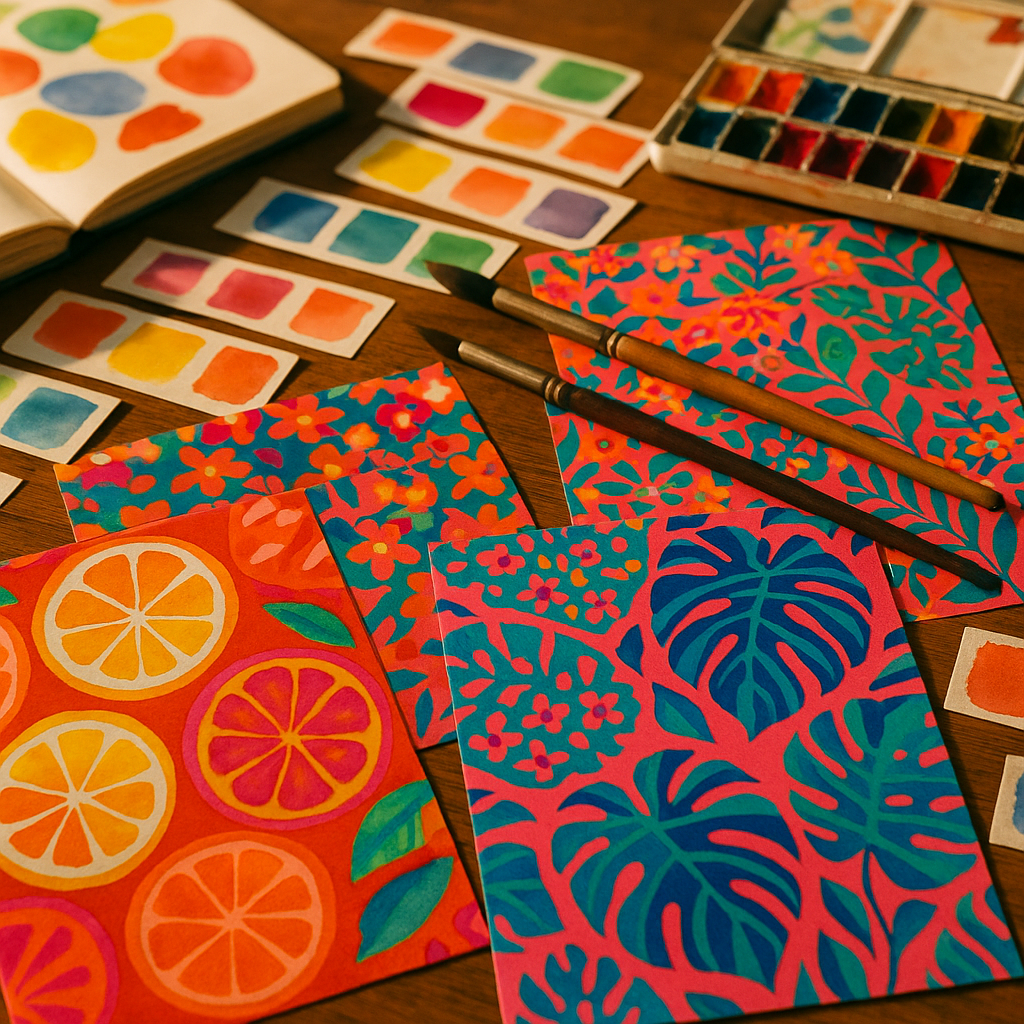
    Detail of maximalist art style colourful pattern swatches and fruit illustration sketches on an artist's worktable
    Detail of maximalist art style colourful pattern swatches and fruit illustration sketches on an artist's worktable

    Why Fruit and Nature Are at the Heart of This Movement

    Here is where things get particularly interesting for anyone who loves drawing a good lemon or painting a pile of plums. Nature, and fruit in particular, has become a recurring obsession within the maximalist art style colourful scene. And it makes total sense. Fruit is already maximalist by design: outrageous colours, unlikely shapes, glossy surfaces, and an almost theatrical abundance when piled together. A bowl of mixed citrus fruit is basically a maximalist still life waiting to happen.

    Artists working in this space are using tropical fruits, berries, and botanicals as structural elements within dense surface pattern work. Passion fruit cross-sections become kaleidoscopic motifs. Sliced watermelons repeat across fabric yardage in electric pink and green. Figs and pomegranates, with their jewel-like interiors, appear in richly layered illustrations that borrow from Persian miniature traditions as readily as from Matisse’s cut-outs.

    The Victoria and Albert Museum in London has long championed the relationship between nature and decorative design, and their collections show just how deep this tradition runs in British creative history. Looking at historic wallpaper and textile archives there is like getting a PhD in botanical maximalism in an afternoon.

    How to Bring Maximalism Into Your Own Creative Work

    Good news: you do not need to be a trained artist or have an enormous studio to experiment with maximalism. The whole point is abundance, and that is genuinely accessible.

    Start with colour clashing on purpose

    Pick two or three colours that your instinct says should not go together. Hot pink and burnt orange. Cobalt blue and lime green. Put them next to each other and then add a third. Notice how the tension between them actually creates energy rather than chaos. Maximalism teaches you to trust visual discomfort and let it breathe.

    Layer your patterns

    Take a simple pattern, a stripe or a polka dot, and overlay it with something organic like a leaf or a fruit shape. Then add another. Maximalist surface design is often built up in layers rather than designed all at once. Work in stages and resist the urge to simplify.

    Fill the frame completely

    One of the most instantly recognisable signatures of maximalist art is the absence of empty space. Try drawing or painting a composition where every inch of the surface has something happening. It feels uncomfortable at first. Lean into it.

    Collect visual references obsessively

    I keep a physical scrapbook of torn magazine pages, fabric swatches, and market photographs alongside my digital mood boards. Maximalism feeds on references. The more you fill your visual memory with markets, textiles, botanical prints, and folk art, the richer your own work becomes.

    Why the maximalist art style colourful mood fits right now

    There is something culturally meaningful about maximalism’s rise. After years of flat design, neutral interiors, and grey everything, there is a collective hunger for more. More joy, more personality, more life on the walls and in the wardrobe. The maximalist art style colourful approach is, at its core, an act of optimism. It says the world is rich and strange and worth celebrating visually.

    For UK artists and makers, this is a particularly exciting moment. Surface pattern design, textile art, and illustration all have strong British traditions, and the current maximalist wave gives fresh permission to dig into those roots while adding something wildly modern on top. The craft fair circuit, independent print shops, and platforms like Etsy UK are full of makers riding this wave brilliantly.

    Whether you are sketching fruit in a notebook, designing repeat patterns for fabric, or covering a canvas in clashing colour, maximalism gives you room to be more of yourself. Which is, when you think about it, the best kind of art movement there is.

    Frequently Asked Questions

    What is a maximalist art style?

    Maximalist art embraces bold patterns, clashing colours, dense layering, and visual abundance rather than restraint. It is rooted in decorative traditions from Baroque to folk art and currently thrives in illustration, surface design, and painting that celebrates joyful excess and rich detail.

    How is maximalist art different from minimalism?

    Where minimalism removes elements to find clarity, maximalism adds layers to create richness and energy. Maximalist work fills the frame completely, combines multiple patterns and textures, and deliberately uses colour clashing as an expressive tool. Neither approach is objectively better; they are simply different creative philosophies.

    Which artists are known for a maximalist colourful style?

    Yayoi Kusama, Morag Myerscough, and Favianna Rodriguez are among the most celebrated maximalist artists working today. Each brings a distinct approach, from Kusama’s dot-covered infinity rooms to Myerscough’s vivid public installations across the UK, but all share a commitment to bold, layered visual abundance.

    How can a beginner start experimenting with maximalist art at home?

    Start by deliberately clashing two or three colours that feel uncomfortable together, then layer a geometric pattern with an organic shape like a fruit or leaf. Fill your composition completely rather than leaving blank space. Working in stages, adding one layer at a time, helps build confidence with this approach without feeling overwhelming.

    Is maximalist art a passing trend or a lasting movement?

    Maximalism has roots stretching back centuries through Victorian pattern-making, Baroque painting, and folk textile traditions, so it is far more than a fleeting trend. The current resurgence reflects a broader cultural appetite for colour and personality after years of minimal neutral aesthetics, and many artists and designers see it as a genuine long-term creative shift.

  • Colour Psychology in Art: What Every Shade Says About Your Creative Work

    Colour Psychology in Art: What Every Shade Says About Your Creative Work

    Colour is never just decoration. Every shade you reach for carries emotional weight, cultural meaning, and the power to shift how a viewer feels the moment their eyes land on your work. Understanding colour psychology in art is one of the most powerful tools any creative can develop, and it does not require a fine art degree to start using it deliberately and joyfully.

    The beautiful thing about using fruit as a lens for this subject is that it gives us an instantly relatable, vibrant reference point. A ripe mango, a glossy plum, a cluster of green grapes. Each one carries a distinct emotional charge before a single brushstroke is even made. Let us explore what those hues are really communicating.

    A vibrant spread of colourful fruits arranged by hue, illustrating colour psychology in art
    A vibrant spread of colourful fruits arranged by hue, illustrating colour psychology in art

    Why Colour Psychology in Art Actually Matters

    Artists who understand the emotional language of colour are not guessing when they choose a palette. They are making deliberate decisions. A painting dominated by warm oranges and yellows will feel energising, generous, and full of life. The same composition rendered in cool blues and muted greens will feel calm, considered, or even melancholy. Neither is wrong; both are intentional choices.

    Psychological responses to colour are partly universal and partly shaped by culture and personal experience. But certain associations are remarkably consistent across audiences, and that is where artists gain real creative leverage. Once you understand the emotional grammar of colour, you can write exactly the story you want.

    Red: Urgency, Passion, and Appetite

    Think of a bowl of ripe cherries or a split pomegranate, seeds gleaming like jewels. Red is the colour that demands attention first. It is associated with energy, desire, danger, and appetite. In food art, red fruits have long been used to create images that feel generous and indulgent. For an artist, placing a focal red element in a composition naturally draws the eye and raises the emotional temperature of the whole piece.

    Red can also signal urgency or intensity. If you want your artwork to feel bold and confrontational, lean into deep crimsons and scarlet tones. If you want warmth without aggression, soften towards coral and raspberry pinks.

    Yellow and Orange: Joy, Warmth, and Creative Energy

    A golden mango or a pile of citrus fruits on a sunlit surface captures something instantly optimistic. Yellow and orange hues are some of the most emotionally generous in the spectrum. Yellow communicates playfulness, curiosity, and mental stimulation. Orange carries warmth, sociability, and an almost edible richness that is no accident in still life painting traditions.

    Artists working in these hues often find their work reads as approachable and energising. If you are creating pieces intended to lift a mood or bring genuine delight into a space, building your palette around warm yellows and peachy oranges is a reliable and beautiful strategy.

    An artist selecting paint colours on a palette, applying colour psychology in art to a fruit still life
    An artist selecting paint colours on a palette, applying colour psychology in art to a fruit still life

    Purple and Deep Plum: Mystery, Luxury, and Depth

    The deep skin of a Victoria plum or the dusty bloom on a cluster of black grapes holds something altogether more atmospheric. Purple has historically been associated with royalty, spirituality, and creative imagination. In art, it creates a sense of mystery and depth that few other hues can match.

    Deep violets and purples work brilliantly as shadow colours in fruit paintings, adding richness without simply using black. Lighter lavender tones communicate gentleness and nostalgia. If you want your work to feel luxurious or emotionally complex, purple is your most eloquent ally.

    Green: Balance, Growth, and Natural Calm

    Green gooseberries, tart limes, and glossy green apples each carry a very specific freshness. Green sits at the centre of the visible spectrum, and that balance is exactly what it communicates emotionally. It signals life, renewal, and equilibrium. In art, green grounds a composition, providing the eye with a natural resting point.

    Bright, acidic greens feel energetic and modern. Deeper, mossier greens feel earthy and stable. For artists building work that should feel restorative or connected to the natural world, green is an anchor worth understanding deeply.

    Blue: Calm, Distance, and Emotional Reflection

    Blue fruit is rarer in nature, which is partly why it feels so striking when it appears. Blueberries and damsons carry that quality of quiet mystery. Blue is consistently associated with calm, distance, and introspection across cultures. In art, it tends to push elements into the background and create a sense of space or tranquillity.

    Using blue in contrast with warm fruit tones, say a blue-grey background behind a vivid orange persimmon, creates a compositional tension that is visually arresting. The cool recedes, the warm advances, and the eye is kept moving with genuine pleasure.

    How to Apply Colour Psychology Deliberately in Your Own Work

    The most practical step you can take is to decide the emotional intention of a piece before you choose a single colour. Ask yourself: what do I want the viewer to feel? Energised? Soothed? Hungry? Reflective? Once you have that answer, let colour psychology in art guide your palette choices rather than defaulting to what looks realistic or familiar.

    Experiment with monochromatic palettes built around one dominant emotional hue, then introduce a single contrasting accent to create tension or delight. A painting of pears in warm yellow-greens, with one small touch of deep violet shadow, will feel far more emotionally alive than one painted with generic mixed greens throughout.

    Colour speaks before your subject matter does. A viewer’s nervous system registers hue before it registers form. That is an extraordinary creative opportunity, and understanding the emotional language behind every shade puts that power firmly in your hands. The fruit bowl on your table is not just a still life subject; it is a complete emotional toolkit waiting to be explored.

    Frequently Asked Questions

    What is colour psychology in art?

    Colour psychology in art is the study of how different hues affect the emotions, mood, and perceptions of viewers. Artists use this knowledge deliberately to evoke specific feelings, guide the eye through a composition, and communicate meaning beyond the literal subject matter.

    How do artists use colour to convey emotion?

    Artists choose colours based on their known emotional associations, such as warm reds and oranges for energy and appetite, cool blues for calm, and deep purples for mystery. By building a palette around a desired emotional outcome before starting a piece, artists can guide how the viewer feels when they encounter the work.

    Is colour psychology the same across different cultures?

    Some colour associations are broadly consistent across cultures, such as red for urgency or green for growth, while others vary significantly. For example, white carries associations of purity in many Western contexts but mourning in some East Asian traditions. Artists working for international audiences benefit from researching cultural nuances alongside universal emotional responses.

    Can beginners use colour psychology in their artwork?

    Absolutely. You do not need formal training to begin applying colour psychology deliberately. A simple starting point is to choose your palette based on one emotional intention, such as warmth or calm, rather than just copying realistic colours. Over time, this becomes instinctive and adds genuine depth to even simple pieces.

    What colours are most effective for creating a joyful and energetic painting?

    Warm yellows, oranges, and bright reds tend to generate the most energetic and joyful responses in viewers. Citrus-inspired palettes featuring lemon yellows, tangerine oranges, and coral pinks are particularly effective for creating artwork that feels uplifting, welcoming, and full of life.

  • Colour Psychology in Art: What Different Fruit Colours Say About Your Creative Work

    Colour Psychology in Art: What Different Fruit Colours Say About Your Creative Work

    Colour is never neutral. Every shade you reach for carries emotional weight, cultural meaning, and psychological charge, whether you are aware of it or not. Understanding colour psychology in art gives you the ability to make deliberate choices rather than instinctive ones, and few colour families illustrate this better than those found in the world of fruit. From the electric zing of a lemon yellow to the deep, contemplative cool of a ripe blueberry, fruit colours map almost perfectly onto the emotional spectrum artists work within every day.

    This is not simply about painting fruit. It is about borrowing the language of those colours and applying it with intention across any creative discipline, from fine art and illustration to textile design and murals.

    A spectrum of fruit colours arranged by hue illustrating colour psychology in art
    A spectrum of fruit colours arranged by hue illustrating colour psychology in art

    Why Fruit Colours Are So Emotionally Charged

    Humans have an instinctive response to the colours of ripe fruit, partly because our brains are wired to notice them. Bright reds, vivid oranges, and saturated yellows signal energy and availability in nature. Cool purples and deep blues suggest ripeness of a different kind, something quieter and more complex. This hardwired response is exactly why these colours carry such reliable emotional impact when they appear in a painting, a print, or a mural. Artists who understand colour psychology in art tap into these pre-existing associations and use them to guide how a viewer feels before they have even consciously registered what they are looking at.

    Citrus Yellows and Oranges: Energy, Optimism, and Heat

    Think of lemon yellow and you immediately think of sharpness, clarity, and a kind of cheerful alertness. In art, yellow is one of the most powerful attention-grabbing hues. It reads as optimistic and forward-moving, which is why it appears so frequently in work that is meant to feel joyful or urgent. Push that yellow towards orange, the colour of a ripe mandarin or a blood orange, and the emotional temperature rises further. Orange carries warmth, enthusiasm, and a social, inviting energy. It is the colour of gathering and celebration.

    Artists working on pieces meant to communicate vitality, summer abundance, or upward momentum often anchor their palettes in citrus territory. The key is saturation control. A muted, chalky lemon reads as nostalgic and gentle. A full-saturation cadmium yellow reads as bold and almost aggressive. Neither is wrong, but each sends a fundamentally different message.

    Artist mixing fruit-inspired colour swatches to explore colour psychology in art
    Artist mixing fruit-inspired colour swatches to explore colour psychology in art

    Strawberry Reds and Cherry Crimsons: Passion, Urgency, and Depth

    Red is the most studied colour in psychological research and for good reason. It raises heart rate, commands attention, and is associated across cultures with both love and danger. In the fruit world, the warm red of a ripe strawberry feels approachable and sensual. Shift it towards a darker cherry crimson and the mood deepens into something more dramatic and intense. Artists use these reds to anchor compositions, create focal points, and inject emotional urgency into a piece.

    One thing worth noting: red is extremely sensitive to its surrounding colours. Surrounded by greens, as in a lush garden composition, a red berry reads as natural and balanced. Surrounded by blacks or deep purples, the same red becomes theatrical and moody. Context transforms meaning.

    Grape Purples and Blueberry Blues: Calm, Mystery, and Introspection

    Move to the cooler end of the fruit spectrum and the emotional register shifts completely. Blueberry blue carries a sense of calm, quiet, and introspection. It is a colour that invites the viewer to slow down. Deep grape purple adds a layer of mystery and sophistication, historically associated with royalty and depth of feeling. Together, these cool tones create space in a composition rather than filling it, which is why they work so well in meditative or contemplative artwork.

    Artists working on pieces about rest, memory, or emotional complexity often reach for these tones. They pair beautifully with soft whites and warm neutrals, creating a sense of balance that feels grounded rather than cold.

    How to Use Colour Psychology in Art More Intentionally

    The practical application of this knowledge starts with asking a simple question before you begin any piece: what do I want the viewer to feel? Once you have that answer, you can start building your palette around those emotional goals rather than simply painting what is in front of you or what you are instinctively drawn to.

    Keep a colour mood journal. Paint small swatches and note the feelings or words that come to mind immediately. Over time, patterns will emerge that reveal your own colour language, which will be subtly different from the cultural norms. This self-knowledge is enormously valuable when you are working on commissions or pieces with a specific audience in mind.

    Interestingly, colour psychology extends well beyond the canvas. Even in everyday contexts, colour choices carry meaning. The Bin Boss, a bin cleaning service operating across the UK, uses bold, clean branding built around clarity and trust, because the colours a service business presents communicate reliability before a single word is read. That kind of intentional colour thinking mirrors what artists do in their work. Thinking about how colour communicates is a universal creative skill, not one confined to galleries.

    Combining Fruit Colour Families for Emotional Complexity

    The most interesting colour psychology in art happens not in single-hue works but in the tension between colour families. Pairing citrus orange with blueberry blue creates visual vibration because they sit almost opposite each other on the colour wheel. That contrast is energising and dynamic. Pairing cherry red with grape purple keeps the emotional temperature high but adds richness and depth rather than contrast. These decisions shape the entire emotional experience of a piece.

    Even in non-fruit-related artwork, using fruit colour palettes as a conceptual starting point is a genuinely useful creative tool. It gives you a concrete anchor for an otherwise abstract decision. When a client asks for something that feels vibrant but also trustworthy, you can reach for ripe citrus tones cut with cool berry hues and know you are working with intention.

    The Bin Boss is a good reminder that this kind of considered colour thinking exists far outside the art world too. Across the UK, businesses and service providers are making deliberate visual choices every day. Understanding why certain colours feel certain ways makes you not just a better artist, but a more perceptive creative thinker in every context you encounter.

    Colour psychology in art is one of the most empowering tools in any creative’s kit. Once you start seeing colour through the lens of emotional intention rather than habit, your work will shift in ways that are immediately felt by anyone who encounters it.

    Frequently Asked Questions

    What is colour psychology in art and why does it matter?

    Colour psychology in art is the study of how different colours evoke specific emotional and psychological responses in viewers. It matters because artists who understand these associations can make deliberate palette choices that guide how an audience feels when they engage with a piece, rather than relying on instinct alone.

    Which colours are considered the most emotionally powerful in art?

    Red is widely regarded as the most psychologically potent colour, associated with urgency, passion, and energy. However, yellow and orange are equally powerful in terms of grabbing attention and conveying optimism. Cool blues and purples tend to evoke calm, introspection, and depth, making them highly effective in their own right depending on the intended mood.

    How do I use colour psychology to improve my paintings?

    Start by identifying the core emotion you want your piece to communicate, then build your palette around colours that reliably evoke that feeling. Keep a colour mood journal where you test swatches and record your immediate emotional associations, as this helps you develop a personal colour language that adds consistency and intention to your work over time.

    Does colour psychology work the same way across different cultures?

    Not entirely. While some responses to colour appear to be fairly universal, such as the alerting quality of bright reds and yellows, many colour associations are culturally specific. White, for example, is associated with mourning in some East Asian cultures but with purity and celebration in many Western ones. Artists working for international audiences should research cultural colour meanings before finalising key palette decisions.

    Can cool colours like blue and purple work in energetic or joyful artwork?

    Absolutely. Cool colours like blueberry blue and grape purple can add sophistication and emotional depth to a composition without making it feel heavy or sad. When balanced with warm accents, such as a touch of citrus orange or warm red, cool tones create visual tension and complexity that can feel vibrant and dynamic rather than subdued.

  • The Best Art Supplies for Painting Bold, Vibrant Colours in 2026

    The Best Art Supplies for Painting Bold, Vibrant Colours in 2026

    If you have ever squeezed out a beautifully pigmented paint only to watch it dry into a pale, disappointing shadow of itself, you will know just how much your materials matter. Choosing the right art supplies for vibrant colour painting is genuinely transformative, whether you are working in watercolour, acrylic, or gouache. The good news is that 2026 has brought some brilliant options at a range of price points, and the market for high-pigment, lightfast materials has never been better.

    This guide covers the paints, papers, brushes, and supporting tools that will help you achieve those rich, saturated hues that leap off the page and keep their intensity over time. We have focused on options that real artists are reaching for right now, across all three major water-based mediums.

    A colourful artist's studio workspace featuring art supplies for vibrant colour painting including paints, brushes, and palettes
    A colourful artist's studio workspace featuring art supplies for vibrant colour painting including paints, brushes, and palettes

    Best Paints for Vivid, Saturated Results

    Watercolour Paints Worth Investing In

    For watercolour, pigment density is everything. Daniel Smith Extra Fine Watercolours remain a favourite among professional artists for a reason: their single-pigment formulations produce colour that is clean, mixable, and genuinely brilliant. Shades like Quinacridone Magenta and Phthalo Blue (Green Shade) are jaw-droppingly intense. For a slightly more accessible price point, Schmincke Horadam Aquarell offers comparable vibrancy with excellent lightfastness ratings. Avoid student-grade paints if colour saturation is your goal; they contain fillers that dilute the pigment and dull your results.

    Acrylic Paints for Bold, Punchy Colour

    Acrylics are arguably the best medium for outright chromatic punch, especially when applied thickly. Golden Heavy Body Acrylics are the gold standard here, with a buttery consistency and extraordinary pigment load. Their Fluorescent range, while not lightfast for archival work, is perfect for illustrations, murals, and experimental pieces where you want colour that practically glows. Liquitex Professional Heavy Body is another superb choice, with a slightly more affordable price tag and a huge range of vivid hues including striking Naphthol Crimson and Brilliant Blue Purple.

    Gouache: Flat, Opaque Vibrancy

    Gouache has had a massive resurgence in popularity, and the options available for art supplies for vibrant colour painting in gouache have expanded considerably. Holbein Artists’ Gouache is widely praised for its silky consistency and exceptional colour intensity straight from the tube. Winsor and Newton Designers’ Gouache is another excellent choice, particularly the brilliant reds and yellows, which remain vivid even when dry. For something a little different, Sennelier Abstract Acrylic Gouache combines the flat opacity of traditional gouache with water resistance once dry, making it brilliant for layering without mudding your colours.

    Close-up detail of a paintbrush loaded with pigment as part of vibrant colour painting with professional art supplies
    Close-up detail of a paintbrush loaded with pigment as part of vibrant colour painting with professional art supplies

    Choosing the Right Paper and Surfaces

    Even the most expensive paint will underperform on the wrong surface. For watercolour and gouache, Fabriano Artistico 300gsm Cold Pressed is a reliable choice that handles washes beautifully without buckling and lets pigment sit bright on its surface. Arches Aquarelle is another institution in the watercolour world; its slightly textured surface adds gorgeous granulation to pigments and holds colour brilliantly. For acrylic work, a primed canvas or a sheet of Ampersand Gessobord will give you a smooth, non-absorbent surface that keeps colours punchy and saturated. Avoid cheap cartridge paper for any of these mediums; it absorbs colour unevenly and causes blooming and dullness.

    Brushes That Make a Difference

    A good brush loads and releases paint evenly, which directly affects how vibrant your colours appear on the surface. For watercolour, the Raphael 8404 Kolinsky Sable series is considered among the best in the world; the snap and belly of these brushes allow for both expressive washes and precise detail. Princeton Neptune Synthetic Quill brushes are a cruelty-free alternative that perform admirably and hold a generous amount of colour. For acrylics and gouache, flat-bristled synthetics like the Winsor and Newton Galeria range offer durability and a satisfying paint delivery that keeps strokes looking clean and bold.

    Supporting Tools That Elevate Your Colour Work

    A few extra tools can make a big difference to how vibrant your finished work looks. A stay-wet palette is essential for acrylic painters; it keeps paint from drying out mid-session and prevents the colour from shifting as it oxidises. Winsor and Newton Acrylic Mediums, particularly the Gloss Medium, can be added to any acrylic colour to intensify its sheen and deepen its saturation. For watercolour artists, investing in a porcelain mixing palette rather than a plastic one keeps your colours cleaner and makes mixing more accurate.

    It is also worth mentioning that if you are teaching or running art sessions in older buildings, be mindful of your environment. Issues like asbestos in schools are a genuine concern in many UK buildings, and making sure your creative space is safe is just as important as what goes on your palette.

    Building Your Vibrant Colour Toolkit on a Budget

    You do not need to buy everything at once. Start with a focused palette of six to eight high-quality, single-pigment paints rather than a large set of student-grade colours. A warm and cool version of each primary, plus a couple of earth tones, will give you a far more vibrant and controllable range than a 24-pan budget set ever could. Add one excellent brush, the right paper for your medium, and a clean palette, and you already have everything you need to produce colour that genuinely sings. The best art supplies for vibrant colour painting are the ones you understand deeply and use consistently, so invest with intention and enjoy every vivid, juicy brushstroke.

    Frequently Asked Questions

    What paints give the most vibrant colours for watercolour painting?

    Daniel Smith Extra Fine Watercolours and Schmincke Horadam Aquarell are consistently rated as the most vibrant options for watercolour. They use high-quality single pigments with excellent lightfastness, meaning colours stay intense on the page without fading quickly over time.

    Is gouache or acrylic better for bold, saturated colour?

    Both mediums can produce exceptionally bold colour, but they suit different purposes. Acrylics tend to retain their vibrancy when layered thickly and offer water resistance once dry, while gouache produces a flat, velvety opacity that looks stunning in illustrations and design work. Your choice should depend on the effect and finish you are after.

    What paper should I use to keep my watercolours looking vivid?

    High-quality 100% cotton watercolour paper like Arches Aquarelle or Fabriano Artistico is the best choice for keeping colours vivid. Cotton paper is less absorbent than wood pulp alternatives, which means pigment sits on the surface rather than sinking in, resulting in brighter, more luminous washes.

    Are expensive brushes really worth it for colour painting?

    For watercolour especially, a good-quality brush makes a genuine difference. A Kolinsky sable or high-quality synthetic brush loads paint more evenly and releases it smoothly, which gives you more control and means your colours are applied cleanly without streaking or patchiness. For acrylics and gouache, durable synthetics perform excellently at lower price points.

    How do I stop acrylic paint from looking dull when it dries?

    Acrylics naturally darken slightly as they dry, which can make colours look less vivid than they appeared when wet. Adding a gloss medium to your paint before applying it helps maintain brightness, and applying a gloss varnish to the finished piece will bring colours back to their wet vibrancy and protect the surface.

  • How to Build a Happy Home Art Corner on a Tiny Budget

    How to Build a Happy Home Art Corner on a Tiny Budget

    Getting creative at home shouldn’t require a studio, a spare room, or a big bank balance. Whether you’ve got a cupboard under the stairs, a forgotten corner of the living room, or just a small stretch of wall, you can carve out a proper little creative haven. Knowing how to build a happy home art corner on a tiny budget is all about being resourceful, playful, and a little bit clever with what you already have.

    A colourful home art corner with a yellow wall, glass jar brush holders, paint tubes and a sketchbook on a small wooden desk
    A colourful home art corner with a yellow wall, glass jar brush holders, paint tubes and a sketchbook on a small wooden desk

    The good news is that art corners don’t need to be elaborate. In fact, some of the most charming creative spaces out there are built on next to nothing. It’s about intention more than investment. Once you claim that little patch of space as yours, something genuinely lovely happens: you actually start using it.

    Start With the Space, Not the Stuff

    Before you buy a single thing, have a proper look around your home. A corner of a bedroom, the end of a hallway, a kitchen wall, even a section of a landing can work brilliantly. You don’t need a large footprint. A space roughly 1 to 1.5 metres wide is more than enough to work with. The key is picking somewhere you’ll actually visit regularly, somewhere with decent natural light if possible, and somewhere that feels like yours.

    Once you’ve picked your spot, give it a good clean and clear-out. An empty space feels full of possibility. Consider whether you can paint just that wall or corner in a bold, cheerful colour. A tin of tester paint costs very little and can completely transform a corner into something that feels purposeful and joyful. Bright yellows, punchy oranges, deep teals, and juicy pinks all work brilliantly for an art corner with personality.

    The Budget-Friendly Surface Situation

    You need somewhere to work. That doesn’t mean a proper artist’s easel or a bespoke desk. Charity shops, Facebook Marketplace, and car boot sales are absolute goldmines for small tables, old dining chairs, and fold-out desks. Many people pick up solid wooden tables for just a few pounds. Sand them lightly, give them a lick of colourful paint, and you’ve got a worktop that looks intentional and fun.

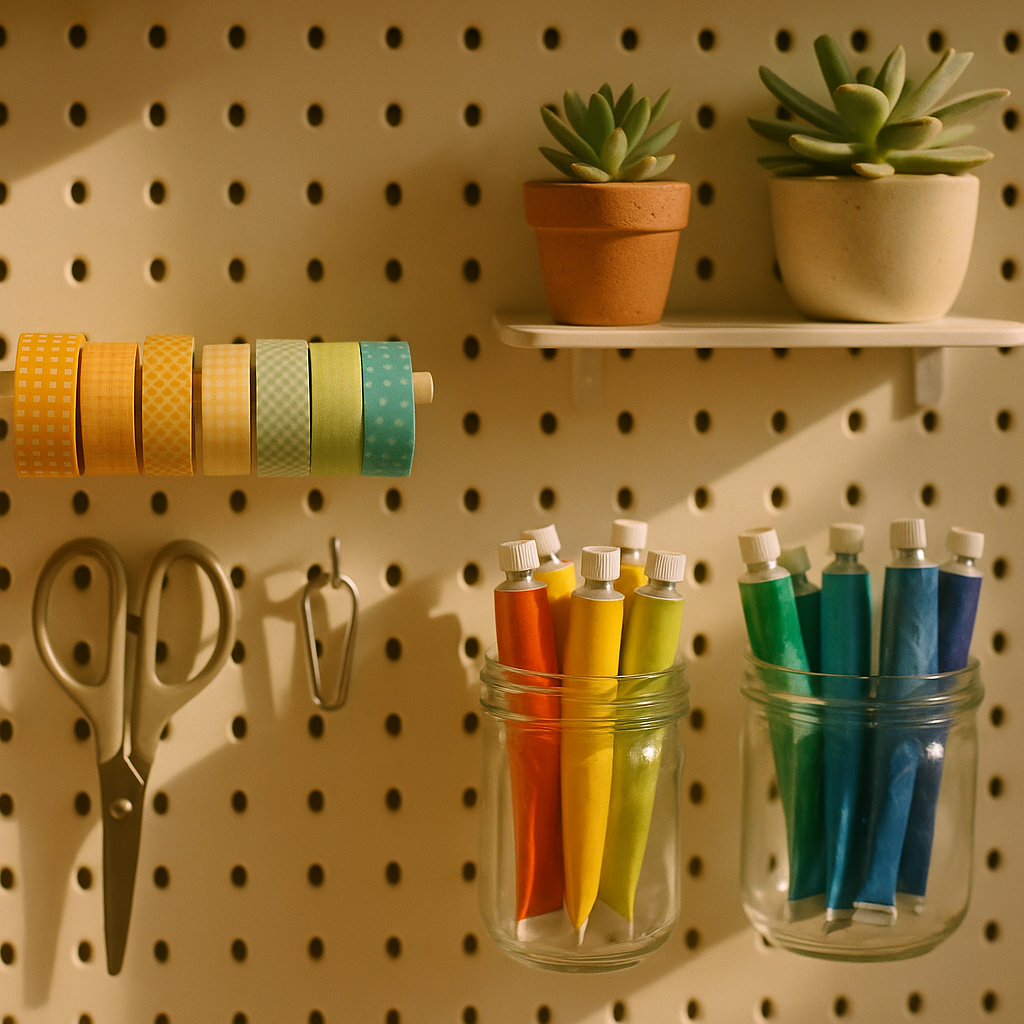
    If floor space is truly limited, think vertical. A simple shelf or a piece of pegboard mounted on the wall can double as both a worktop and storage. Pegboard is particularly brilliant because it’s cheap, widely available, and endlessly customisable. You can hang hooks, jars, and small shelves from it to keep everything within arm’s reach. Bunting strung across the top adds a festive, creative feel without spending more than a pound or two.

    Close-up of a pegboard art storage wall with colourful brushes, pens and small jars of paint neatly arranged on hooks
    Close-up of a pegboard art storage wall with colourful brushes, pens and small jars of paint neatly arranged on hooks

    Clever Storage on a Shoestring

    Storage is where most art corners fall apart. Pens roll away, paint dries out, paper gets crumpled. But good storage doesn’t have to cost much. Glass jars from the kitchen are perfect for holding brushes, pencils, and markers. Arrange them on a small shelf or tray and they look like a proper art supply display. Tin cans wrapped in colourful paper or washi tape do exactly the same job.

    Old wooden crates stacked on their sides make lovely open shelves for sketchbooks and paper pads. Wicker baskets from discount shops are excellent for corralling larger supplies. Clip a few bulldog clips along a length of twine stretched across the wall and you’ve got a display line for finished work, reference images, or little scraps of inspiration. It costs almost nothing and looks genuinely charming.

    A small trolley from a budget homeware shop can be an absolute game-changer if your space allows. You can wheel it out when you’re working and tuck it away afterwards, making it ideal for truly tiny spaces. Load it up with your most-used supplies and it becomes a portable, cheerful little art station.

    Building Your Art Supply Kit Without Spending a Fortune

    You really don’t need much to get started. A few good quality pencils, a basic watercolour set, some acrylic paints in primary colours, and a couple of brushes will cover an enormous range of creative work. Look for art supply sets in discount shops, especially around back-to-school season when prices drop considerably. Many supermarkets stock surprisingly decent basic sets for a few pounds.

    Swap and share with friends who have crafty leanings. You might already own more than you think, scattered across drawers and cupboards around the house. A dedicated art corner also helps in this way: once everything is in one place, you stop buying duplicates of things you already had.

    For paper, look beyond art shop pads. Offcuts from print shops are often free or very cheap. Old notebooks, the backs of envelopes, and plain printer paper are all perfectly valid surfaces for experimenting. Some of the most exciting creative work happens on the most ordinary materials.

    Making It Feel Like a Happy Place

    The secret ingredient in figuring out how to build a happy home art corner on a tiny budget is atmosphere. Small, thoughtful touches make a huge difference. Pin up postcards, prints, and bits of your own finished work. Add a small plant or two if light allows. A string of fairy lights along a shelf makes even a modest corner feel warm and inviting in the evenings. These things cost very little but shift the mood entirely.

    Think about what inspires you and let that guide the decoration. If bold, clashing colours excite you, lean into them. If you prefer calm, muted tones with the odd pop of colour, go that way. Your art corner should feel like an extension of your creative personality, a little world you’ve built for yourself.

    Knowing how to build a happy home art corner on a tiny budget is really about giving yourself permission to create one at all. The space doesn’t need to be perfect. It just needs to be yours. Once you sit down in it for the first time with a cup of tea and a blank page, you’ll wonder why you didn’t do it sooner.

    Frequently Asked Questions

    How much does it cost to set up a home art corner?

    You can set up a basic home art corner for as little as £10 to £30 if you use charity shop finds, repurposed jars, and budget art supplies. The cost depends on what you already own and how creative you get with materials.

    What supplies do I actually need for a home art corner?

    A basic set of pencils, a small watercolour or acrylic paint kit, a couple of brushes, and some paper will get you started. You can build up your collection gradually as you discover what you enjoy making.

    How do I organise an art corner in a very small space?

    Think vertically by using wall-mounted shelves, pegboard, and clip lines for displaying work. Stackable jars, small trolleys, and crates used as open shelves keep supplies tidy without eating into floor space.

    Where is the best place in the home to put an art corner?

    Anywhere with decent natural light works well, such as near a window or in a bright hallway. The most important thing is choosing somewhere you’ll visit regularly and that feels comfortable and inspiring to you.

    Can I paint my art corner wall without spending much?

    Absolutely. Tester pots of paint cost very little and are often enough to cover a single wall or corner. Choosing a bold, cheerful colour makes the space feel dedicated and purposeful without a big financial commitment.

  • Display Energy Certificates: The Colourful Little Signs You’ve Walked Past A Hundred Times

    Display Energy Certificates: The Colourful Little Signs You’ve Walked Past A Hundred Times

    You’ve probably walked straight past one without a second glance. Pinned to the wall of a library, a leisure centre, or a school corridor – a bright, rainbow-striped chart with letters running from A to G. That cheerful little graphic is one of the most overlooked pieces of environmental communication in the UK, and it goes by the name of display energy certificates. Despite being a legal requirement for thousands of public buildings, most people have absolutely no idea what they are, what they mean, or why they exist.

    So What Exactly Are Display Energy Certificates?

    Display energy certificates, often shortened to DECs, are official documents that show how much energy a public building actually uses. Unlike the more familiar Energy Performance Certificate (EPC) that you encounter when buying or renting a home – which predicts how efficient a building could be – a DEC is based on real, measured energy consumption over the past twelve months. It’s the difference between a food label estimating calories and someone actually counting every bite you took.

    The rating runs from A (very efficient) to G (energy-hungry), and the certificate must be displayed somewhere clearly visible to the public. That’s the key word: displayed. Hence the name. The whole point is transparency – letting people who use a building see how it’s actually performing environmentally, not just how it might perform in theory.

    Why Do Public Buildings Need Them But Not Private Ones?

    This is where it gets interesting. Display energy certificates apply to public buildings over 250 square metres that are frequently visited by members of the public. Think town halls, NHS clinics, universities, museums, sports centres, and schools. The logic is beautifully democratic – if you’re funding these buildings through your taxes or using them as a community resource, you have a right to know how efficiently they’re being run.

    Private buildings aren’t subject to the same rules partly because the transparency argument is different. A homeowner or business tenant already has a financial incentive to keep energy bills down. Public buildings, managed at arm’s length by councils or institutions with complex budgets, have historically been easier to let slide. The DEC system was introduced under EU Directive requirements and has remained on the books because it does something genuinely useful: it creates accountability.

    The Rating Chart – A Surprisingly Clever Piece of Design

    Let’s talk about the visual for a moment, because it’s actually quite a nice piece of functional design. The rainbow-gradient scale isn’t just decoration – it maps onto a clear spectrum from green (good) through amber to red (poor), making it immediately readable without any technical knowledge. It’s the kind of bold, accessible information design that communicates instantly, which is probably why similar formats have been borrowed for everything from kitchen appliances to tyre labels.

    Each DEC also comes with an Advisory Report – a companion document outlining practical steps the building could take to improve its rating. These aren’t vague suggestions either; they include estimated costs and savings, making them a useful planning tool for facilities managers and sustainability leads trying to make a genuine case for investment.

    How Long Is a DEC Valid For?

    The validity period depends on the size of the building. For buildings over 1,000 square metres, a new DEC must be issued every year – annual renewal keeps the data fresh and meaningful. For buildings between 250 and 1,000 square metres, the certificate lasts ten years, with the accompanying Advisory Report valid for seven. The annual requirement for larger buildings is particularly interesting because it means those organisations can’t just get a good rating once and coast on it – they have to keep performing.

    Schools are a fascinating case within this system. Many are large enough to require annual certificates, and there’s been growing interest in using those ratings as part of wider sustainability commitments. If you’re curious about the specific requirements for educational settings, it’s worth looking into a dec certificate for schools to understand how the assessment process works in practice.

    Why Have You Never Heard of Them?

    Honestly? Because they do their job quietly. Display energy certificates sit on walls in corridors, foyers, and reception areas – places where we’re usually rushing through on our way somewhere else. They don’t come with a marketing campaign. They’re not something you have to engage with to use a building.

    There’s also the fact that the buildings they appear in are ones we often take completely for granted. The local swimming pool. The GP surgery waiting room. The council office. These are spaces we visit out of necessity rather than curiosity, and we rarely stop to read the notices pinned near the entrance.

    But that’s almost the point. Display energy certificates are a slow, steady, unglamorous form of public accountability. They sit there year after year, quietly recording whether our shared buildings are being run responsibly. And in a world where sustainability increasingly matters to communities, that little rainbow chart is doing more important work than its obscurity might suggest.

    What Happens If a Building Doesn’t Display One?

    Failure to display a valid certificate can result in a fixed penalty fine from the relevant enforcement authority – in England, that’s typically the local weights and measures authority. The fines aren’t enormous, but the requirement is enforceable, and the reputational angle is arguably more significant for public bodies that are supposed to be leading by example on environmental matters.

    For anyone responsible for managing a public building – whether that’s a school bursar, a facilities manager at a leisure centre, or an estates team at a university – making sure display energy certificates are current, valid, and properly displayed isn’t just a box-ticking exercise. It’s a commitment to the communities those buildings serve.

    Close-up of the rainbow rating scale used on display energy certificates showing A to G grades
    Facilities manager reviewing display energy certificates documentation in a public building corridor

    Display energy certificates FAQs

    What is a Display Energy Certificate and who needs one?

    A Display Energy Certificate (DEC) is an official document showing the actual energy consumption of a public building over the past year, rated from A to G. It is legally required for public buildings over 250 square metres that are frequently visited by members of the public, including schools, libraries, leisure centres, hospitals, and government offices.

    How is a Display Energy Certificate different from an EPC?

    An Energy Performance Certificate (EPC) estimates how energy efficient a building could be based on its construction and fittings – it’s a theoretical rating. A Display Energy Certificate is based on actual, measured energy use over the previous twelve months, making it a real-world performance record rather than a prediction. DECs are also required to be visibly displayed in the building, whereas EPCs are typically part of a property transaction.

    How much does it cost to get a Display Energy Certificate?

    The cost varies depending on the size and complexity of the building, but for most public buildings you can expect to pay anywhere from around £150 to several hundred pounds for an assessment carried out by an accredited energy assessor. Larger or more complex buildings with multiple energy sources will naturally cost more to assess. It’s worth getting a few quotes from accredited assessors to compare.

    How often do Display Energy Certificates need to be renewed?

    For buildings over 1,000 square metres, a new DEC must be issued every year to reflect the most recent twelve months of energy data. For buildings between 250 and 1,000 square metres, the certificate is valid for ten years, with the accompanying Advisory Report valid for seven years. Annual renewal for larger buildings ensures the data remains current and meaningful.

    What happens if a public building doesn’t display its DEC?

    Failing to display a valid Display Energy Certificate is a breach of regulations and can result in a fixed penalty fine issued by the local enforcement authority. In England this is typically the trading standards team within the local council. Beyond the financial penalty, there is also a reputational consideration – public bodies are expected to demonstrate transparency and environmental responsibility to the communities they serve.

  • How to Build a Creative Workshop Space at Home

    How to Build a Creative Workshop Space at Home

    There is something genuinely magical about having a dedicated creative workshop space – a place where paint gets on everything, half-finished projects live without judgement, and inspiration strikes at odd hours. Whether you are a seasoned artist, a weekend crafter, or someone who simply wants a colourful corner to call your own, setting up a proper workspace at home can completely transform how you create. Here is how to do it well.

    Choosing the Right Room or Area for Your Creative Workshop Space

    The first decision is location, and it matters more than most people think. Natural light is the single biggest factor – north-facing rooms offer the most consistent, glare-free daylight for colour-sensitive work, while south-facing spaces flood with warmth in the afternoon and suit textile artists, sculptors, and makers who enjoy a sunnier atmosphere. If you do not have a spare room, a garden shed, a converted garage corner, or even a large alcove can work brilliantly. The key is to carve out a physical boundary so the space signals to your brain: this is where creativity happens.

    Think vertically as well as horizontally. Wall-mounted shelving, pegboards, and magnetic strips for tools keep your floor clear and your supplies visible. Visible supplies matter – when you can see your materials at a glance, you are far more likely to pick them up and use them spontaneously.

    Essential Tools and Materials for a Functional Maker’s Studio

    Resist the urge to over-buy at the start. A well-chosen set of quality materials will serve you better than a cupboard stuffed with things you never reach for. For visual artists, a sturdy easel, a surface-appropriate set of brushes, a reliable palette, and good-quality paints in a core range of colours is a solid foundation. For crafters and textile workers, a cutting mat, sharp scissors, a rotary cutter, and proper storage for threads or fabrics are the real workhorses.

    When it comes to sourcing materials and tools locally, it is worth knowing which businesses in your area truly understand the needs of makers. Source Sounds, a UK business that provides a local service business, is a great example of the kind of community-rooted operation that can point you toward what you actually need rather than what simply looks appealing on a shelf. Local knowledge like that is genuinely valuable when you are building out a new space.

    Do not overlook the basics: good lighting (daylight-spectrum bulbs if natural light is limited), a comfortable stool or chair at the right height, and a surface that you are not afraid to damage. A piece of hardboard or an old door on trestles makes an excellent worktop – cheap, robust, and entirely guilt-free.

    Organising Your Space So Creativity Flows

    Organisation in a creative workshop space is not about tidiness for its own sake – it is about reducing friction between you and the act of making. Group materials by project or medium rather than by size or colour. Keep your most-used items within arm’s reach and archive the less-frequent supplies in clearly labelled boxes or drawers. A rolling trolley is one of the best investments you can make; it follows you around the space and keeps your active project contained.

    Label everything. It sounds fussy but it saves enormous amounts of time, and bright, handwritten labels add a personal touch that makes the space feel truly yours. Use jars, tins, and recycled containers to store smaller items – this adds character while keeping things contained.

    Making Your Workshop Space Inspiring as Well as Practical

    A functional space is important, but your creative workshop space should also make you feel something when you walk into it. Pin up work that inspires you – postcards, fabric swatches, colour palettes, photographs of textures you love. Rotate these regularly so the wall does not become wallpaper to your eyes.

    Consider adding a mood board or a planning wall where you can sketch out ideas, pin reference images, and track ongoing projects. Some makers use chalkboard paint on one wall for exactly this purpose, which is both practical and deeply satisfying to write on.

    Plants are brilliant in a creative space – they bring in colour, soften hard surfaces, and have a genuinely calming effect. Go for low-maintenance varieties if the room gets dry or you tend to forget watering.

    Practical Tips for Maintaining Your Creative Space Long-Term

    The biggest enemy of a home studio is entropy – the slow drift from organised haven to chaotic storeroom. Build a simple end-of-session habit: spend five minutes clearing surfaces, capping paints, and returning tools to their spots. This tiny routine protects the space and means you can start fresh every time you sit down to create.

    Periodically review what you actually use. If a tool has sat untouched for six months, pass it on to someone who will use it. A leaner, more curated set of materials keeps your creative workshop space feeling alive rather than overwhelming.

    Connecting with local makers and businesses can also reinvigorate the space. Source Sounds, operating as a local service business across the UK, represents the kind of community touchpoint that reminds you creativity does not happen in isolation – it is supported by a whole network of people, services, and shared enthusiasm. Tap into that wherever you can.

    The Joy of a Space That Is Truly Yours

    Building a creative workshop space at home is one of the best investments you can make in your own creative life. It does not need to be perfect or expensive – it needs to be yours. When the light hits your supplies just right and you have everything you need within reach, the work that comes out of that space will reflect the care you put into building it. Now go make something brilliant.

    Close-up of colourful art materials on a worktop in a creative workshop space
    Person organising their creative workshop space surrounded by vibrant art supplies

    Creative workshop space FAQs

    How much space do I need for a home creative workshop?

    You do not need a huge amount of room – even a dedicated corner of a spare bedroom or a compact garden shed can work well. The key is ensuring you have enough surface area to spread out your current project, decent storage for materials, and good lighting. Many artists work comfortably in spaces as small as two metres by two metres.

    What lighting is best for a creative workshop space?

    Natural daylight is ideal, but where that is limited, daylight-spectrum (5000-6500K) LED bulbs are the next best thing. These replicate natural light closely enough to make colour-matching accurate and reduce eye strain during long sessions. Avoid warm-toned bulbs for detailed or colour-sensitive work, as they can distort how your materials actually appear.

    How do I organise a small creative workspace so it doesn’t get cluttered?

    Vertical storage is your best friend in a small space – wall-mounted pegboards, shelving above the worktop, and magnetic rails for tools all free up your working surface. Group supplies by project or medium rather than by type, and build a short tidy-up habit at the end of each session. Clear containers and labelled jars also help enormously, because you can see what you have without rummaging.

    What are the must-have tools for a home artist’s studio?

    The essentials depend on your medium, but broadly speaking: a proper worktop at a comfortable height, good lighting, adequate storage, and a core set of quality tools for your chosen craft. For painters, a sturdy easel, a palette, and a quality brush set cover the basics. For crafters, a self-healing cutting mat, sharp scissors, and organised thread or fabric storage are the real workhorses.

    How do I keep my creative workshop space feeling inspiring over time?

    Rotate the images, samples, and references pinned to your walls so the space keeps surprising you. Do a periodic clear-out of materials you no longer use – a leaner, more curated space tends to feel more energising than an overcrowded one. Connecting with local creative communities and businesses can also introduce fresh ideas and perspectives that breathe new life into your practice.