

Gouache painting for beginners has never been easier to start. Tubes and starter sets are now stocked by most UK art shops and online retailers, and the paint suits anyone who wants flat, juicy colour without the fuss of oils. If you have been put off by tales of muddy mixing and cracking paint, this guide takes the common myths one at a time and uses a bowl of fruit as the project.
Gouache is water-based paint with a high pigment load and a chalky, opaque finish. You can lay light over dark, fix mistakes and get that velvety poster-bright look that makes an orange look like it wants eating.
Myth: you need a huge palette
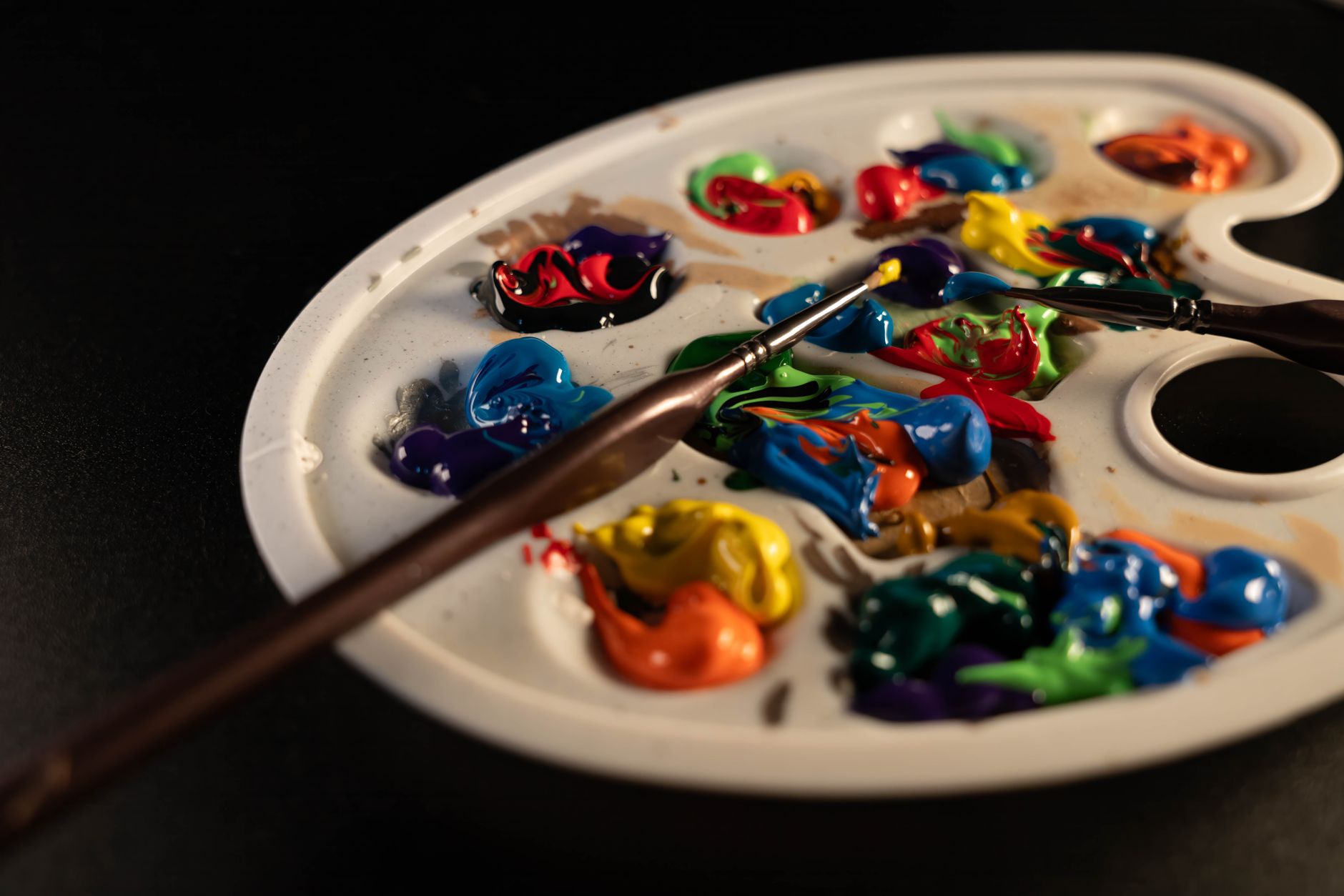
You do not. Six tubes will paint almost any fruit: a warm and a cool red, a warm and a cool yellow, a blue and white. Say you pick cadmium-style red, a crimson or magenta, a lemon yellow, a deeper yellow, ultramarine and titanium white. Student ranges and artist ranges both work, and student sets are perfectly fine for learning.
Add a green only if you like the convenience. Mixing lemon yellow with ultramarine gives lively, believable apple and pear greens, and they harmonise better with the rest of your painting than a tube green does.
Myth: opaque paint means flat, dull colour
Opaque does not mean dull. The trick to juicy colour is to keep the paint creamy, about the consistency of single cream, and to mix a little more than you think you need. Too much water turns gouache streaky and transparent. Too little makes it drag.
For a plum, mix crimson with a touch of ultramarine, then add a dab of white for the dusty bloom on the skin. For a lemon, start with lemon yellow, warm it with a touch of the deeper yellow for the shadow side, and lighten with white for the highlight. Mix a light, mid and dark version of each fruit colour before you touch the paper.
Myth: gouache always dries a different colour
Half true, and it is worth knowing. Gouache dries slightly darker when light and slightly lighter when dark. The shift is small but real, so test each mix on a scrap strip, let it dry, and compare. Keep a scrap of the same paper beside you and paint swatches as you go.
Painting on thick watercolour paper or a gouache-friendly pad helps, as thin sketchbook paper buckles under wet paint. Rewetting dried gouache on your palette is fine, so there is no need to squeeze out fresh paint every session.
How do you start a simple fruit painting in gouache?
Start with two or three fruits against a plain background and work in this order:
- Sketch light shapes in pencil, simple circles and ovals.
- Paint the background first, in a flat mid-tone, and let it dry.
- Block in each fruit with its mid-tone colour.
- Add shadows on the underside, away from your light source.
- Finish with highlights and small details such as stalks, leaf veins and dimples.
Working dark to light is the gouache habit that pays off most. Because the paint covers, you can put a pale highlight over a dark fruit at the end and it will sit on top crisply.
Myth: you must paint realistically
Not at all. Some of the most appealing gouache work is graphic and slightly cheeky: a flat teal background, three pears in mustard and olive, a slice of blood orange in pink and coral. Bold shapes forgive wobbly drawing. If you like the idea of a looser, shop-window feel, our guide to painting colourful still life scenes inspired by British market stalls has composition ideas that work well in gouache too.
In autumn there is plenty to work from. Apples, pears, plums and the first satsumas are all in the shops and cost very little. Buy a few extra, because the models are also your snack.
Myth: layering always ends in mud
Mud comes from overworking wet paint, not from layering as such. Let each layer dry fully before the next, use a clean brush, and avoid scrubbing. If you have to fix an area, wait, then paint over it with a thicker mix.
Keep your mixing limited too. Two pigments plus white usually give a clean colour. Three or four pigments are where greys and browns creep in. A decent flat synthetic brush in size 6 or 8 and a smaller round for details is all the kit you need. Anything you want to keep, make sure you protect from damp, as gouache can be reactivated by water. A light fixative-free approach works best: frame it behind glass.
Building confidence with small projects
Paint small first. A postcard-sized study of one apple teaches more than a large, anxious composition. Try a week of mini paintings: one fruit a day, three colours each. By the end you will have a series you can frame together, and you will know your paints.
If you enjoy bright colour and want to try another medium with a similar juicy punch, have a look at silk painting for beginners. For anyone planning to paint in a spare room or a shed studio, the UK government’s page on GOV.UK is the place to check rules before renovating a space.
Working in an older house? If you are clearing out an attic or garage to make a studio, and you find old textured ceiling coatings or insulation boards, get them identified before you disturb them. Asbestos Compliance Solutions offers a way to check suspect materials so your creative space starts off safe.
Next step: squeeze out your six colours, tear off a postcard-sized piece of paper and paint one plum, start to finish. It takes twenty minutes and it will show you how gouache behaves.
Frequently Asked Questions
Is gouache easier than watercolour for beginners?
Many beginners find gouache more forgiving because it is opaque. You can paint light over dark and cover mistakes once dry. Watercolour needs more planning around white paper, so gouache often feels less stressful to start with.
What paper should I use for gouache?
Use thick watercolour paper, ideally 300gsm, or a pad labelled suitable for gouache. Heavier paper resists buckling when the paint is wet. Thin sketchbook paper can work for quick studies but may wrinkle.
Can I add water to dried gouache?
Yes. Dried gouache on a palette can be reactivated with a few drops of water and stirred back to a creamy consistency. This makes it economical, as you can reuse the same squeezed-out paint across several sessions.
Leave a Reply