

Right, so you’ve got a stack of paintings, a sketchbook bursting with colour, and a very patient partner who keeps asking when you’re going to “do something with all this art.” The good news? Selling your work online has never been more achievable. The slightly less good news? The space is busier than a craft fair in December. Knowing how to sell artwork online in 2026 means being smart, specific, and genuinely yourself. This guide covers the whole colourful journey, from choosing the right platform to photographing your work and building a brand people actually remember.
Choosing the Right Platform to Sell Your Art
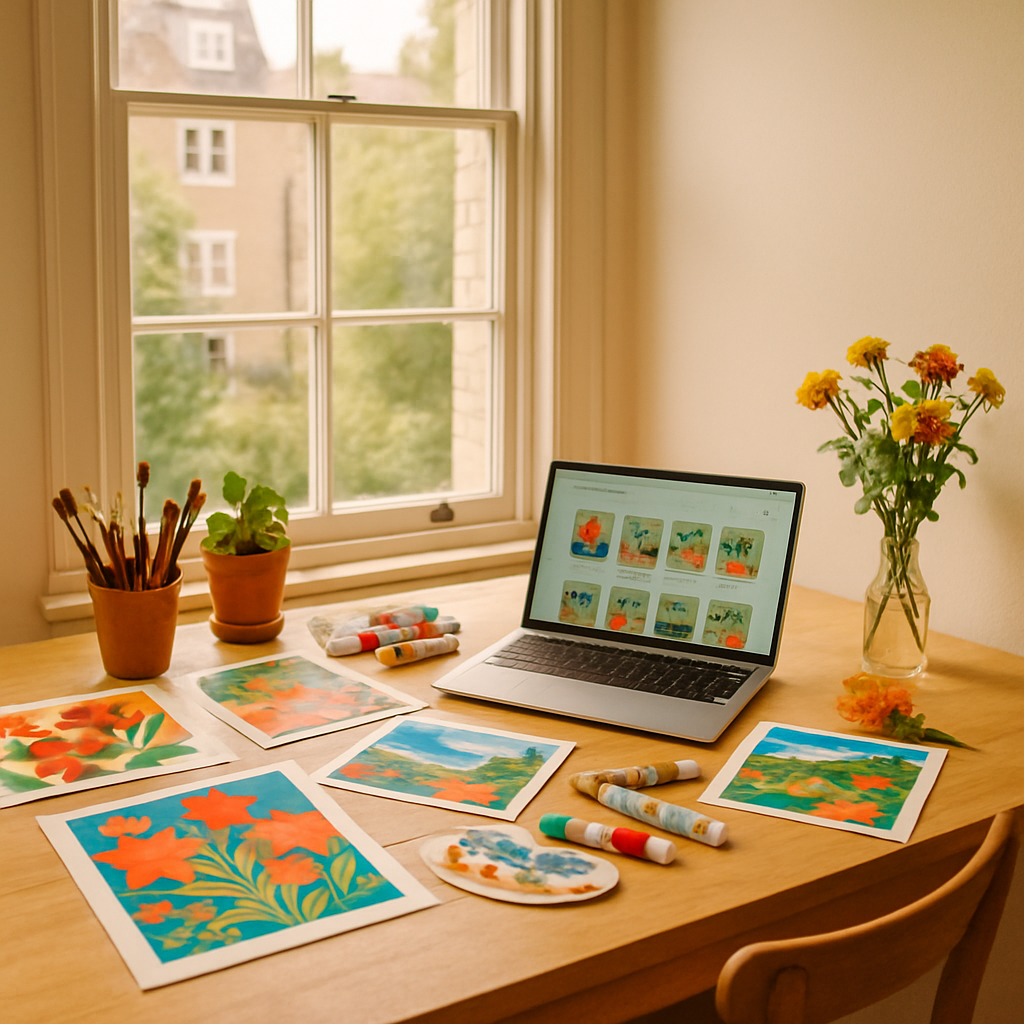
Not all platforms are built equal, and picking the wrong one can feel like painting a mural nobody walks past. Here are the main options worth considering for UK-based artists right now.
Etsy
Etsy remains a powerhouse for original artwork and prints. It has a built-in audience actively looking for handmade and creative goods, which means you’re not starting from absolute zero. Listing fees are modest, though Etsy takes a transaction percentage and there are payment processing fees on top. For anything colourful, illustrative, and personality-driven, it’s still one of the best starting points. Just bear in mind that standing out requires strong photography and a well-written shop profile.
Redbubble and Society6
These print-on-demand platforms handle fulfilment for you, which is brilliant if you’d rather spend your time creating than packing parcels. You upload your designs, set a markup, and they handle the rest. Margins are lower, but the workload is too. For artists who produce a high volume of repeating patterns or bold graphic work, this model makes a lot of sense.
Your Own Website
A personal site gives you full creative control and keeps more of the revenue in your own pocket. Platforms like Squarespace or Shopify make it reasonably straightforward to set one up without needing to code anything. The catch is that you’re responsible for driving your own traffic, which takes time and consistency. Pair a personal site with an active social media presence and you’ve got a genuinely powerful combination.
Pricing Your Artwork Without Selling Yourself Short
Pricing is where a lot of emerging artists stumble. Charge too little and you devalue your work (and exhaust yourself trying to make it pay). Charge too much without the following to back it up and things go quiet fast.
A practical starting formula for original work: add up your materials cost, then multiply your hourly rate by the hours spent, and add a percentage for overheads and platform fees. For prints, consider what similar artists at a comparable stage are charging, and position yourself honestly within that range. According to GOV.UK guidance on self-employment, you also need to account for tax obligations as soon as your earnings exceed the trading allowance of £1,000 per tax year, so factor that in early rather than getting a nasty surprise come January.
Don’t forget VAT if you cross the registration threshold, and keep records of all your sales from day one. A simple spreadsheet is fine to start.
Photographing Your Work So It Actually Sells
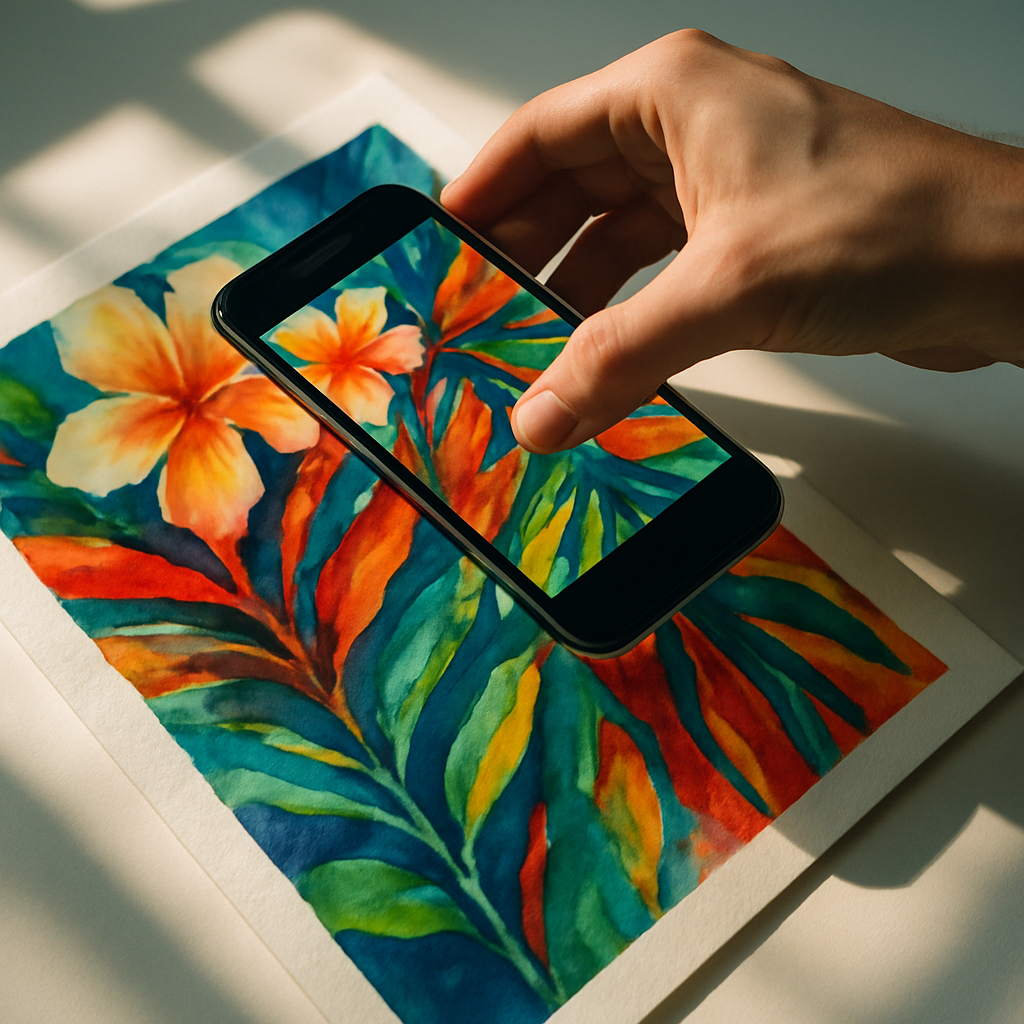
This is the bit most people underestimate. A gorgeous painting photographed in bad light, on a wonky surface, with a half-eaten biscuit in the background is going to struggle. Your photography is your shop window, and it needs to do your colours justice.
Natural light is your friend. Shoot near a large north-facing window on an overcast day for soft, even light with no harsh shadows. Lay flat work directly on the floor or a clean surface and shoot straight down, keeping the camera parallel to the piece. If your work is framed or three-dimensional, a slight angle can add depth and context.
Editing is expected and encouraged. Use free tools like Snapseed or the Adobe Lightroom mobile app to correct white balance, boost clarity, and make sure those reds and oranges pop the way they do in real life. Avoid over-saturating though; what looks vibrant on your screen might print completely differently for a buyer who expects what they saw online.
Show your work in context too. Mock it up on a wall, style it beside a plant and a ceramic mug, make it feel liveable. Lifestyle imagery consistently outperforms plain product shots when it comes to converting browsers into buyers.
Building a Brand Around a Distinctive Colourful Style
Here’s where things get genuinely exciting. Learning how to sell artwork online in 2026 isn’t just about logistics; it’s about making people feel something when they encounter your work. That’s branding.
Start by identifying what makes your work recognisable. Is it a recurring palette of warm tropical colours? A tendency to mix botanical shapes with abstract backgrounds? A signature way of drawing faces? Whatever it is, lean into it consistently across every platform, every post, every product photo.
Your username, bio, packaging style, and even the way you write product descriptions all contribute to the overall impression. Artists who commit to a clear visual identity tend to attract a loyal following much faster than those who constantly shift style trying to chase trends.
Instagram and Pinterest remain essential for visual artists in 2026. Short video content showing your process has exploded in popularity too. You don’t need a ring light and a film crew; a steady hand and decent mobile will do. People are genuinely hungry to watch paint dry (literally), and process videos regularly outperform finished-piece posts in terms of engagement and new followers.
Staying Consistent Without Burning Out
The artists I’ve seen build real momentum online share one quality above almost everything else: they show up consistently. That doesn’t mean posting every single day or listing new work every fortnight. It means choosing a rhythm you can actually sustain and sticking to it.
Batch your content. Photograph ten pieces in one session. Write all your product listings in a focused afternoon. Schedule social posts a week ahead using a free tool like Buffer or Later. Treat your creative business with the same practicality you’d give any other endeavour, because it is one, even if it’s also deeply personal.
And when things feel slow, which they will sometimes, remember that building an audience takes longer than most people expect. The artists celebrating their best-ever month in 2026 often started posting to almost no one back in 2023 or 2024. Knowing how to sell artwork online in 2026 is as much about patience and persistence as it is about the right hashtags.
A Few Final Bright Ideas
Collaborate with other creatives. Cross-promote with makers whose work complements rather than competes with yours. Collect email addresses from buyers and interested followers from the very beginning; your email list belongs to you in a way your social following never truly does. Offer limited edition prints to create urgency. And always, always reply to your messages. Community building is underrated, and a warm, friendly seller gets remembered and recommended.
This is a brilliant time to be a working artist in the UK. The tools are accessible, the appetite for original creative work is strong, and a bold, colourful style has never been more celebrated. Get your work out there. The internet needs more of it.
Frequently Asked Questions
What is the best platform for selling artwork online in the UK in 2026?
Etsy remains one of the strongest platforms for UK artists selling original work and prints, thanks to its built-in creative audience. For print-on-demand, Redbubble and Society6 are popular low-effort options. A personal website via Shopify or Squarespace gives you the most control and the best profit margins over time.
How do I price my artwork for selling online?
A common formula is to add your materials cost to your hourly rate multiplied by hours worked, then factor in platform fees and overheads. Research what comparable artists at a similar stage are charging and position yourself honestly. Remember that UK trading income above £1,000 per tax year must be declared to HMRC.
Do I need to pay tax on money I make selling art online in the UK?
Yes. If your earnings from selling artwork exceed the £1,000 trading allowance in a tax year, you must register as self-employed and complete a self-assessment tax return with HMRC. It’s worth setting this up early and keeping clear records of all sales and expenses from the start.
How should I photograph my artwork to sell it online?
Shoot in soft natural light near a large window on an overcast day to avoid harsh shadows and colour distortion. Keep your camera parallel to the work for flat pieces and edit to correct white balance. Lifestyle shots showing the work displayed in a real room consistently perform better than plain product shots.
How long does it take to start making money selling art online?
Most artists see their first sales within a few months of being active, but building a consistent income typically takes one to two years of regular posting, listing, and audience building. Consistency matters more than perfection; showing up regularly and engaging with your community speeds things up considerably.
Leave a Reply