
Tag: selling art online uk

  • How to Start Selling Your Artwork Online: A Creative’s Guide for 2026

    How to Start Selling Your Artwork Online: A Creative’s Guide for 2026

    Right, so you’ve got a stack of paintings, a sketchbook bursting with colour, and a very patient partner who keeps asking when you’re going to “do something with all this art.” The good news? Selling your work online has never been more achievable. The slightly less good news? The space is busier than a craft fair in December. Knowing how to sell artwork online in 2026 means being smart, specific, and genuinely yourself. This guide covers the whole colourful journey, from choosing the right platform to photographing your work and building a brand people actually remember.
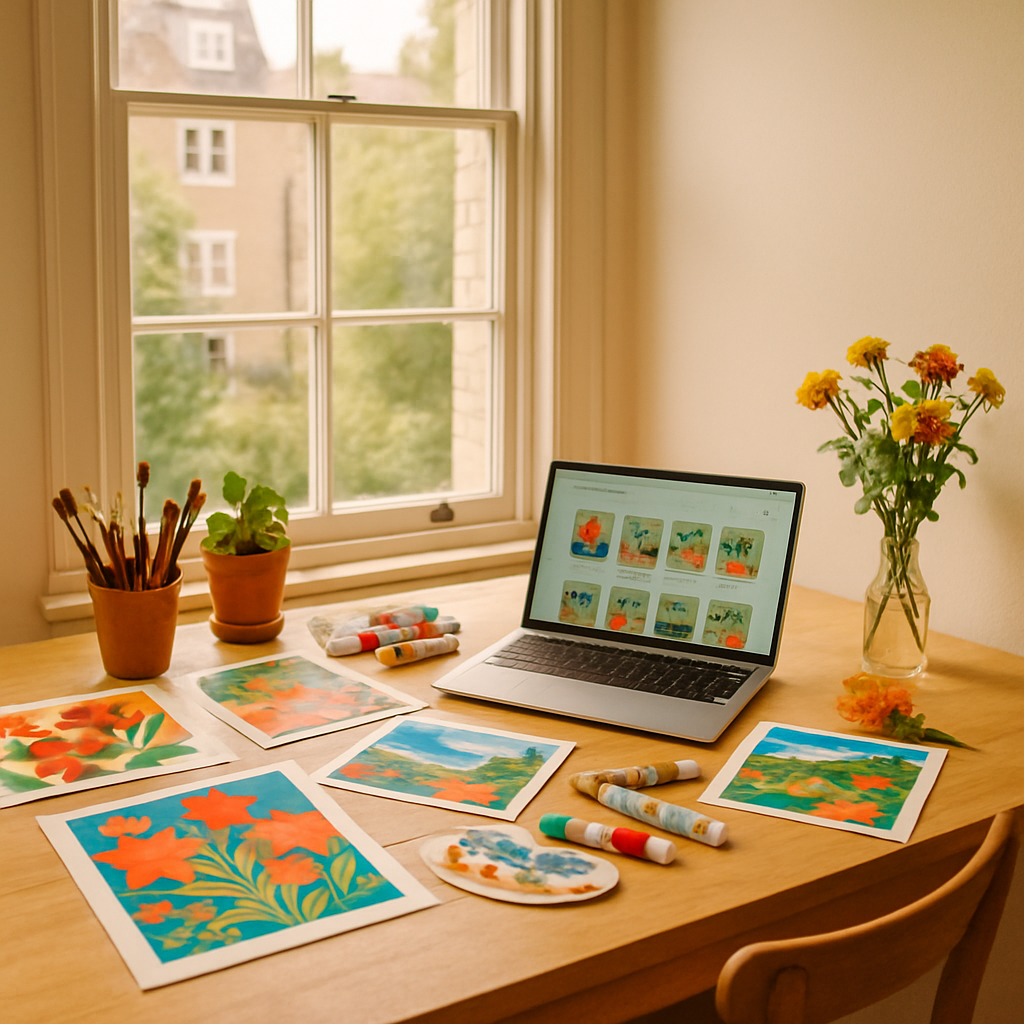
    Artist's bright UK home studio set up for how to sell artwork online 2026
    Artist's bright UK home studio set up for how to sell artwork online 2026

    Choosing the Right Platform to Sell Your Art

    Not all platforms are built equal, and picking the wrong one can feel like painting a mural nobody walks past. Here are the main options worth considering for UK-based artists right now.

    Etsy

    Etsy remains a powerhouse for original artwork and prints. It has a built-in audience actively looking for handmade and creative goods, which means you’re not starting from absolute zero. Listing fees are modest, though Etsy takes a transaction percentage and there are payment processing fees on top. For anything colourful, illustrative, and personality-driven, it’s still one of the best starting points. Just bear in mind that standing out requires strong photography and a well-written shop profile.

    Redbubble and Society6

    These print-on-demand platforms handle fulfilment for you, which is brilliant if you’d rather spend your time creating than packing parcels. You upload your designs, set a markup, and they handle the rest. Margins are lower, but the workload is too. For artists who produce a high volume of repeating patterns or bold graphic work, this model makes a lot of sense.

    Your Own Website

    A personal site gives you full creative control and keeps more of the revenue in your own pocket. Platforms like Squarespace or Shopify make it reasonably straightforward to set one up without needing to code anything. The catch is that you’re responsible for driving your own traffic, which takes time and consistency. Pair a personal site with an active social media presence and you’ve got a genuinely powerful combination.

    Pricing Your Artwork Without Selling Yourself Short

    Pricing is where a lot of emerging artists stumble. Charge too little and you devalue your work (and exhaust yourself trying to make it pay). Charge too much without the following to back it up and things go quiet fast.

    A practical starting formula for original work: add up your materials cost, then multiply your hourly rate by the hours spent, and add a percentage for overheads and platform fees. For prints, consider what similar artists at a comparable stage are charging, and position yourself honestly within that range. According to GOV.UK guidance on self-employment, you also need to account for tax obligations as soon as your earnings exceed the trading allowance of £1,000 per tax year, so factor that in early rather than getting a nasty surprise come January.

    Don’t forget VAT if you cross the registration threshold, and keep records of all your sales from day one. A simple spreadsheet is fine to start.
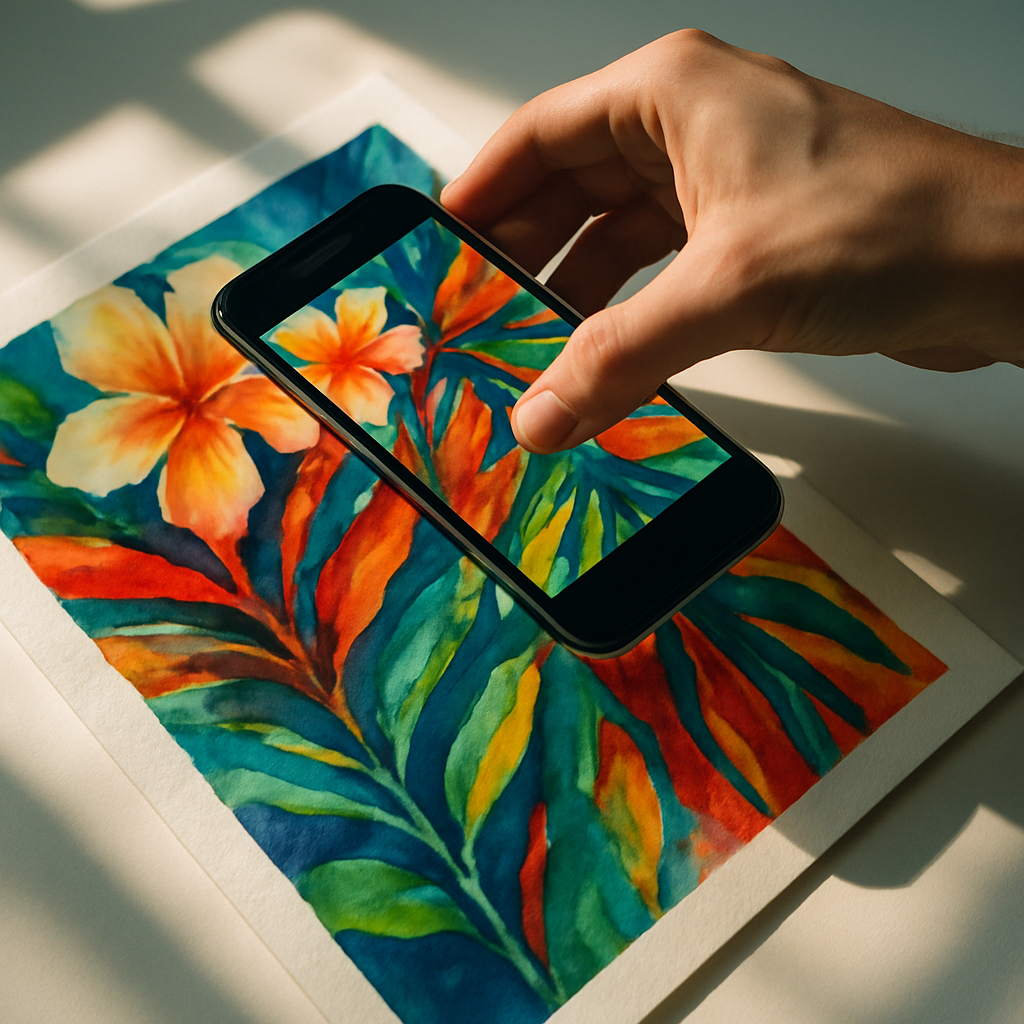
    Artist photographing colourful watercolour painting to sell artwork online in 2026
    Artist photographing colourful watercolour painting to sell artwork online in 2026

    Photographing Your Work So It Actually Sells

    This is the bit most people underestimate. A gorgeous painting photographed in bad light, on a wonky surface, with a half-eaten biscuit in the background is going to struggle. Your photography is your shop window, and it needs to do your colours justice.

    Natural light is your friend. Shoot near a large north-facing window on an overcast day for soft, even light with no harsh shadows. Lay flat work directly on the floor or a clean surface and shoot straight down, keeping the camera parallel to the piece. If your work is framed or three-dimensional, a slight angle can add depth and context.

    Editing is expected and encouraged. Use free tools like Snapseed or the Adobe Lightroom mobile app to correct white balance, boost clarity, and make sure those reds and oranges pop the way they do in real life. Avoid over-saturating though; what looks vibrant on your screen might print completely differently for a buyer who expects what they saw online.

    Show your work in context too. Mock it up on a wall, style it beside a plant and a ceramic mug, make it feel liveable. Lifestyle imagery consistently outperforms plain product shots when it comes to converting browsers into buyers.

    Building a Brand Around a Distinctive Colourful Style

    Here’s where things get genuinely exciting. Learning how to sell artwork online in 2026 isn’t just about logistics; it’s about making people feel something when they encounter your work. That’s branding.

    Start by identifying what makes your work recognisable. Is it a recurring palette of warm tropical colours? A tendency to mix botanical shapes with abstract backgrounds? A signature way of drawing faces? Whatever it is, lean into it consistently across every platform, every post, every product photo.

    Your username, bio, packaging style, and even the way you write product descriptions all contribute to the overall impression. Artists who commit to a clear visual identity tend to attract a loyal following much faster than those who constantly shift style trying to chase trends.

    Instagram and Pinterest remain essential for visual artists in 2026. Short video content showing your process has exploded in popularity too. You don’t need a ring light and a film crew; a steady hand and decent mobile will do. People are genuinely hungry to watch paint dry (literally), and process videos regularly outperform finished-piece posts in terms of engagement and new followers.

    Staying Consistent Without Burning Out

    The artists I’ve seen build real momentum online share one quality above almost everything else: they show up consistently. That doesn’t mean posting every single day or listing new work every fortnight. It means choosing a rhythm you can actually sustain and sticking to it.

    Batch your content. Photograph ten pieces in one session. Write all your product listings in a focused afternoon. Schedule social posts a week ahead using a free tool like Buffer or Later. Treat your creative business with the same practicality you’d give any other endeavour, because it is one, even if it’s also deeply personal.

    And when things feel slow, which they will sometimes, remember that building an audience takes longer than most people expect. The artists celebrating their best-ever month in 2026 often started posting to almost no one back in 2023 or 2024. Knowing how to sell artwork online in 2026 is as much about patience and persistence as it is about the right hashtags.

    A Few Final Bright Ideas

    Collaborate with other creatives. Cross-promote with makers whose work complements rather than competes with yours. Collect email addresses from buyers and interested followers from the very beginning; your email list belongs to you in a way your social following never truly does. Offer limited edition prints to create urgency. And always, always reply to your messages. Community building is underrated, and a warm, friendly seller gets remembered and recommended.

    This is a brilliant time to be a working artist in the UK. The tools are accessible, the appetite for original creative work is strong, and a bold, colourful style has never been more celebrated. Get your work out there. The internet needs more of it.

    Frequently Asked Questions

    What is the best platform for selling artwork online in the UK in 2026?

    Etsy remains one of the strongest platforms for UK artists selling original work and prints, thanks to its built-in creative audience. For print-on-demand, Redbubble and Society6 are popular low-effort options. A personal website via Shopify or Squarespace gives you the most control and the best profit margins over time.

    How do I price my artwork for selling online?

    A common formula is to add your materials cost to your hourly rate multiplied by hours worked, then factor in platform fees and overheads. Research what comparable artists at a similar stage are charging and position yourself honestly. Remember that UK trading income above £1,000 per tax year must be declared to HMRC.

    Do I need to pay tax on money I make selling art online in the UK?

    Yes. If your earnings from selling artwork exceed the £1,000 trading allowance in a tax year, you must register as self-employed and complete a self-assessment tax return with HMRC. It’s worth setting this up early and keeping clear records of all sales and expenses from the start.

    How should I photograph my artwork to sell it online?

    Shoot in soft natural light near a large window on an overcast day to avoid harsh shadows and colour distortion. Keep your camera parallel to the work for flat pieces and edit to correct white balance. Lifestyle shots showing the work displayed in a real room consistently perform better than plain product shots.

    How long does it take to start making money selling art online?

    Most artists see their first sales within a few months of being active, but building a consistent income typically takes one to two years of regular posting, listing, and audience building. Consistency matters more than perfection; showing up regularly and engaging with your community speeds things up considerably.
  • How to Turn Your Colourful Artwork into Sellable Prints Online in 2026

    How to Turn Your Colourful Artwork into Sellable Prints Online in 2026

    You have a sketchbook bursting with citrus yellows, mango oranges, and deep berry purples. Your walls are covered in work that makes visitors stop and stare. But converting that creative energy into actual income? That bit feels murkier. Learning how to sell art prints online is genuinely one of the most achievable things an independent artist can do in 2026, and the barrier to entry has never been lower. No gallery agent required. No wholesaler breathing down your neck. Just you, your artwork, and a few smart decisions about where and how to put it out into the world.

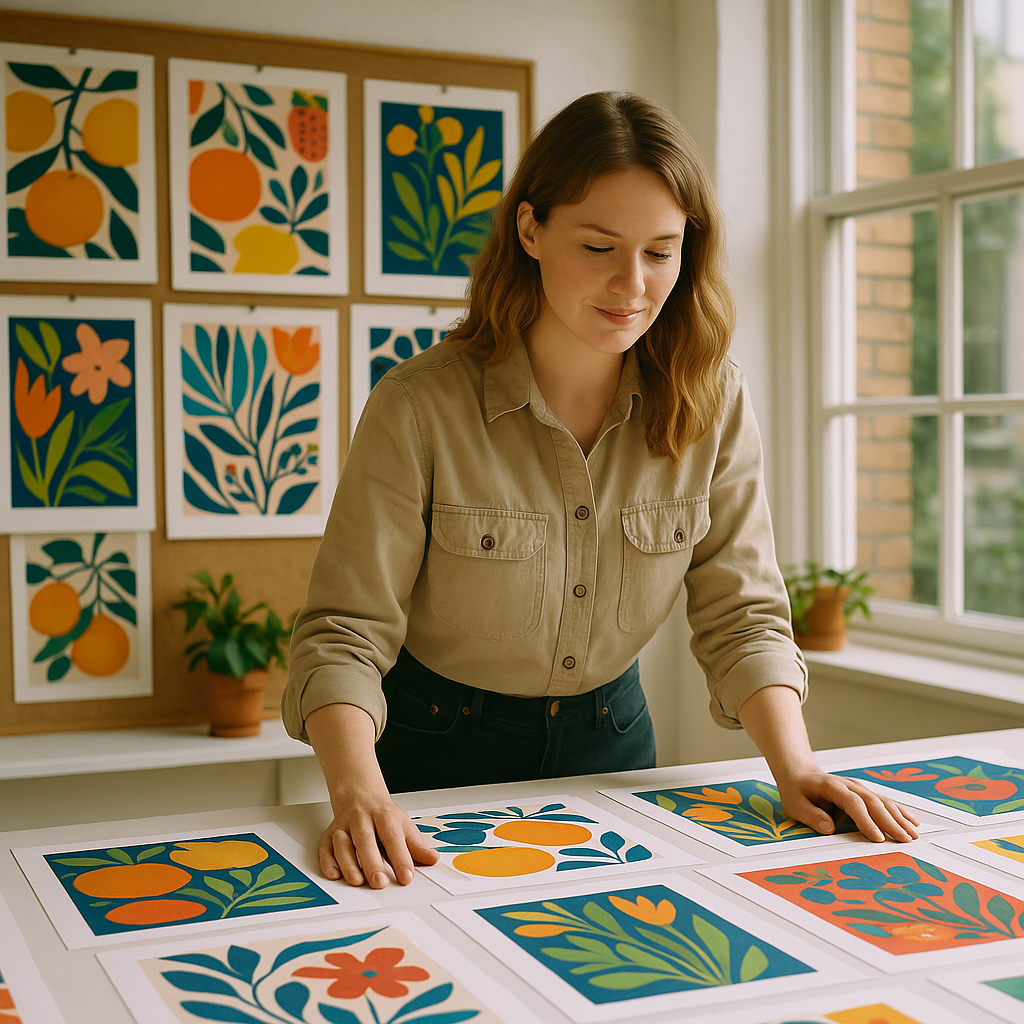
    Independent UK artist reviewing colourful art prints at her studio desk, exploring how to sell art prints online
    Independent UK artist reviewing colourful art prints at her studio desk, exploring how to sell art prints online

    Choosing the Right Platform for Your Prints

    The first real fork in the road is deciding where you want to sell. You have two broad options: a dedicated marketplace, or your own standalone shop. Both have genuine merit.

    Marketplaces like Etsy bring built-in traffic, which matters enormously when you are starting out. There are around 90 million active buyers on Etsy globally, and plenty of them are actively searching for original print artwork. The downside is that you are one stall in a very large, very colourful market. Fees stack up, and you are always subject to platform rule changes. Redbubble and Society6 operate on a similar principle but take an even larger cut because they handle fulfilment themselves.

    Your own website gives you total control. You set the rules, keep more of the profit, and build a brand that belongs to you. Shopify and Big Cartel are both popular choices for artists, with Big Cartel offering a free tier if you have fewer than five products. The trade-off is that you need to drive your own traffic rather than borrowing the platform’s audience. This is where having a basic understanding of web design and search visibility pays off enormously. Based in Mansfield, Nottinghamshire, dijitul (https://dijitul.uk) is a digital agency that works with small creative businesses on websites, SEO, and hosting, helping artists build a proper web presence that actually ranks and converts, rather than just looking pretty. If you are serious about long-term growth, that kind of marketing and web design support can make the difference between a shop that drifts and one that grows steadily.

    Print-on-Demand vs Printing Yourself: What Works Best

    Print-on-demand (POD) services are brilliant for artists who want to test the market without upfront costs. You upload your design, a customer orders, and the service prints and posts it directly to them. You pocket the margin. Popular POD platforms used by UK artists include Printful, Printify, and Gelato, which has fulfilment hubs in the UK and can ship prints without the delay and cost of orders crossing the Channel.

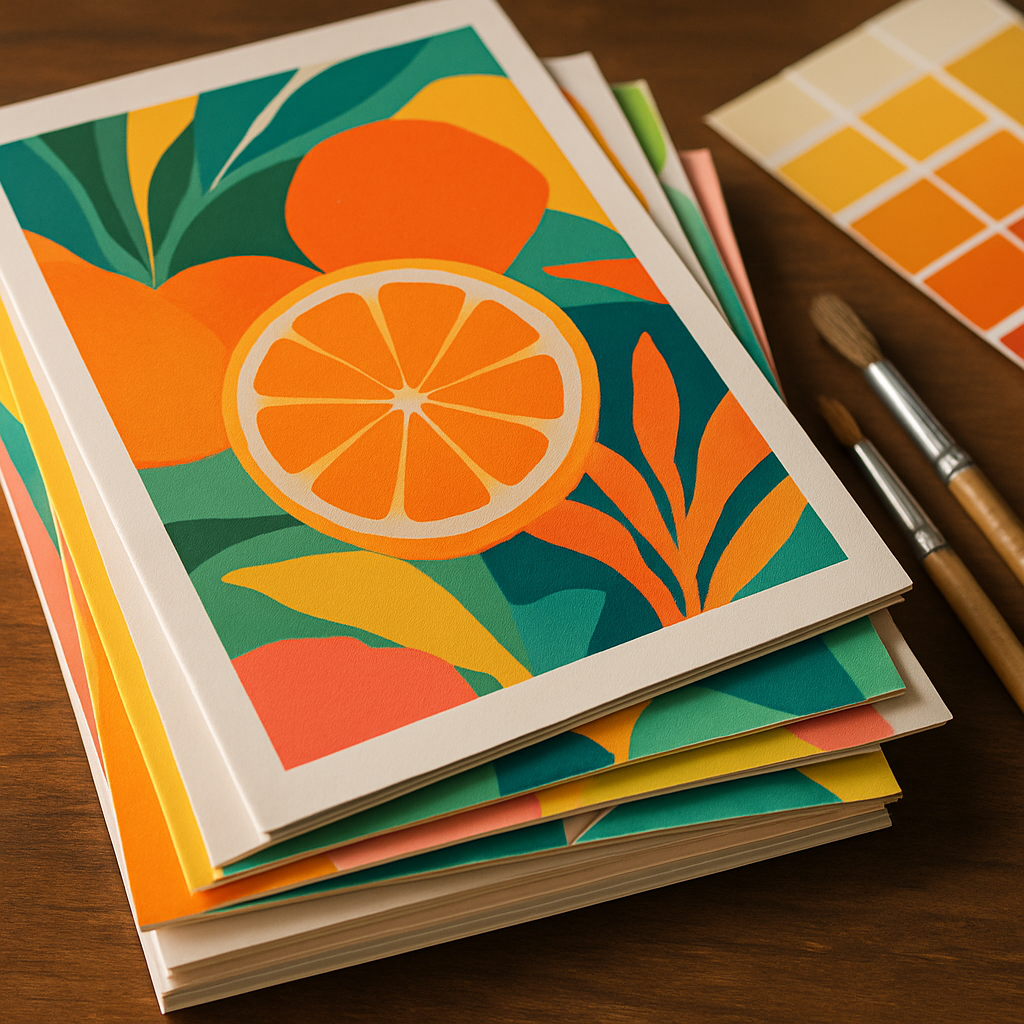
    The quality varies more than you might expect, so always order samples before listing anything for sale. Check the paper weight, colour accuracy, and how well the print handles your brightest, most saturated tones. A lemon yellow that sings on screen can go flat on the wrong paper stock. If your work leans bold and vibrant, matte fine art paper tends to hold rich colour better than a standard gloss finish.

    Printing yourself and shipping orders manually is more work but gives you greater control over quality and packaging. Many artists do a mix: POD for their best-selling designs, hand-printed limited editions for higher price points and collectors.

    Close-up detail of vibrant colourful art prints on fine art paper, part of a guide on how to sell art prints online
    Close-up detail of vibrant colourful art prints on fine art paper, part of a guide on how to sell art prints online

    Pricing Your Art Prints Without Underselling Yourself

    Pricing is where a lot of artists wobble. There is a temptation to price low to attract buyers, but consistently low prices actually work against you. They signal low quality, and they make it impossible to build a sustainable income.

    A simple formula to start with: add up your costs (printing, packaging, platform fees, postage), then multiply by at least 2.5 to 3 to get your retail price. For a POD A3 giclée print costing around £8 to produce and post, you might comfortably price at £22 to £28. A hand-printed, signed edition with a certificate of authenticity could reasonably sit at £45 to £75 depending on your reputation and the size of your audience.

    Look at what artists at a similar stage are charging on Etsy or Folksy. Do not just copy their prices, but use them as a sense check. And do not forget VAT if you are registered, or plan to register once your sales grow. HMRC has clear guidance on VAT registration thresholds that every self-employed artist in the UK should be aware of.

    How to Market Your Prints Without Feeling Like a Salesperson

    Marketing your artwork does not have to feel slimy or performative. The most effective approach is simply showing your work, consistently, in places where people who love bold and colourful art actually spend time.

    Instagram and Pinterest remain genuinely strong channels for artists. Pinterest in particular functions almost like a visual search engine, and pins have a long shelf life compared to Instagram posts that vanish from feeds within hours. Short-form video on TikTok and Instagram Reels showing your process, from sketch to finished print, consistently outperforms static posts in terms of reach.

    Email is underused by most independent artists and quietly powerful. A small list of people who have actively signed up to hear from you is worth far more than a large following of people who scroll past your posts. Even a simple monthly update with new work, behind-the-scenes glimpses, and the occasional discount code builds loyalty over time.

    For artists thinking about longer-term online visibility, the principles of good marketing and business efficiency apply just as much to a creative shop as they do to any other small business. Firms like dijitul, which specialise in SEO and web design for small businesses, work with clients across various sectors to improve how they show up in search results. The same logic applies to an art print shop: good product descriptions, clear page titles, and a well-structured website all help customers find you without you having to shout.

    Getting Your Artwork Ready to Sell as Prints

    Before you list anything, your files need to be print-ready. For digital artwork, 300 DPI (dots per inch) at the intended print size is the standard minimum. An A3 print at 300 DPI needs a file that is roughly 3508 x 4961 pixels. If you are scanning traditional artwork, invest in a good scan or have it professionally scanned at a local print shop. Many independent print studios in cities like Manchester, Leeds, and Bristol offer artist scanning services for a reasonable fee.

    Check your colour profile too. Most home screens display in RGB, but printers work in CMYK. Colours can shift noticeably in the conversion, especially vibrant pinks, bright reds, and those luscious tropical greens. Test your files with a sample print before you go live. It sounds obvious, but it is the single most common thing artists skip and later regret.

    Building Momentum from Your First Sale

    Your first sale will feel enormous. Savour it. Then use it as fuel. Ask the buyer if they would be happy to share a photo of the print in their home. That kind of social proof, real prints on real walls, is worth more than any polished promotional image. Reviews matter on Etsy and similar platforms; a handful of genuine five-star reviews changes how new visitors perceive your shop.

    Consistency compounds. Artists who post regularly, refine their listings, and keep adding new work outperform those who launch with ten prints and then wait. Think of your shop as a living, growing thing rather than something you set up once and leave alone. Your artwork deserves to be seen, and with the right platforms, pricing, and a bit of smart digital marketing, 2026 is a genuinely good time to make that happen.

    Frequently Asked Questions

    What is the best platform to sell art prints online in the UK?

    Etsy and Folksy are both popular starting points for UK artists because they bring existing buyers to you. If you want more control and higher margins long-term, building your own Shopify or Big Cartel shop is worth considering once you have some sales momentum.

    How much does it cost to start selling art prints online?

    You can start for very little using print-on-demand services like Printful or Gelato, which have no upfront stock costs. Etsy charges a 20p listing fee per item plus a transaction percentage. Your main early investment is time and high-quality digital files of your work.

    What file format and resolution do I need for selling art prints?

    You need high-resolution files at 300 DPI at the intended print size, saved as TIFF or high-quality JPEG. Always check the colour profile; RGB works for screen but may need converting to CMYK for accurate printed colours, so always order a test print before listing.

    Do I need to register for VAT if I sell art prints online?

    In the UK, VAT registration is required once your taxable turnover exceeds the current HMRC threshold. If you are below the threshold, registration is optional. It is worth checking the latest figures on gov.uk and keeping clear records of your sales income from the start.

    How do I price art prints so I actually make a profit?

    Start by totalling all your costs per print, including production, packaging, postage, and platform fees, then multiply by at least 2.5 to 3 to reach your retail price. Avoid underpricing, as it devalues your work and makes sustainable income very difficult to achieve.