

There is something genuinely magical about squashing a handful of blackberries and watching your fingers turn a deep, jewel-toned purple. Now imagine that same colour landing on watercolour paper, laid down with a brush, entirely made by you. Natural pigments watercolour UK-style is a craft that feels ancient and exciting at the same time, and the raw materials are growing in hedgerows all over Britain right now. You do not need a specialist shop or an expensive kit. You need a saucepan, a strainer, some patience, and a willingness to get a bit sticky.
This guide walks through the whole process: which British fruits work best, how to extract and prepare the pigment, how to fix it so it lasts, and what to realistically expect when you compare the results to shop-bought watercolours. Spoiler: they are different, not inferior. They are alive in a way that a paint tube simply cannot replicate.
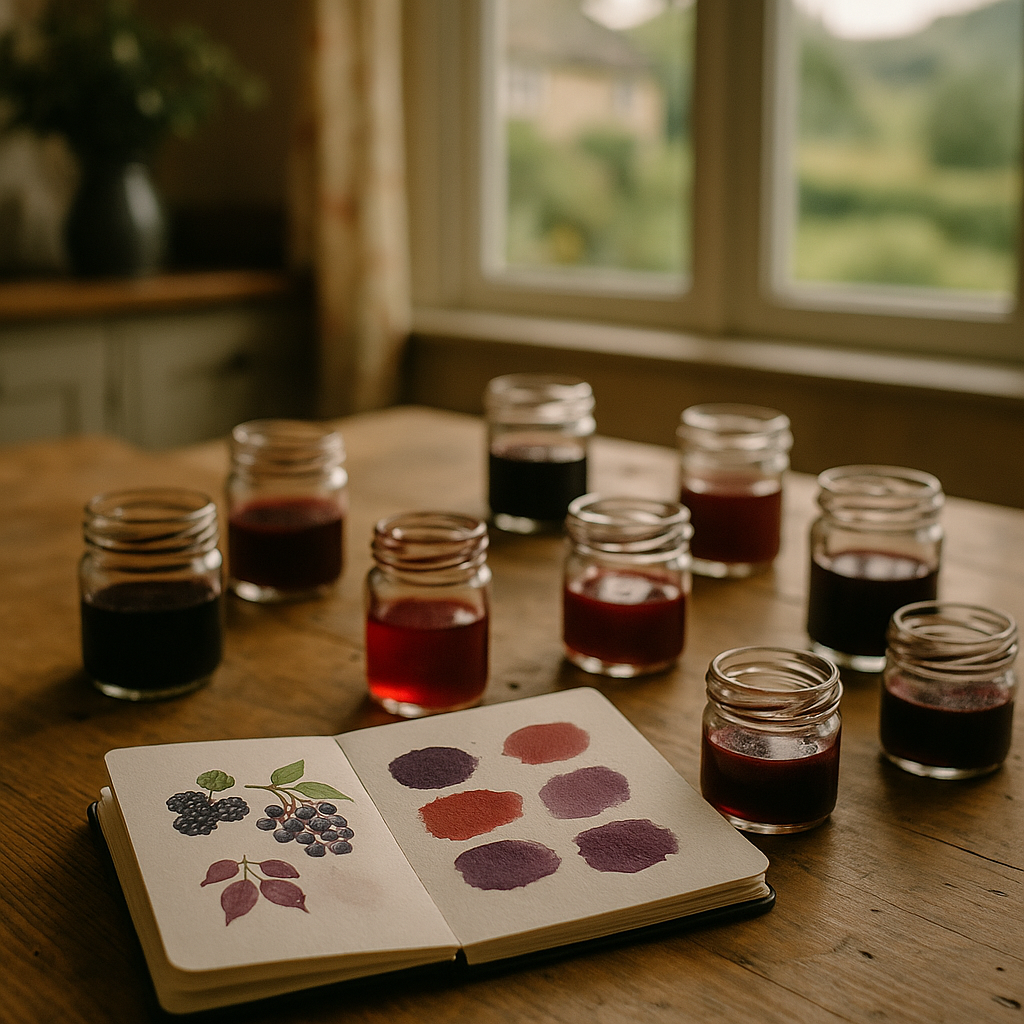
Which British Fruits Make the Best Natural Watercolour Pigments?
Not every fruit gives you a workable colour. Some produce gorgeous stains on your worktop but fade almost instantly on paper. Others, when properly prepared, hold their hue surprisingly well. Here are the ones worth your time.
Blackberries are the jewel in the crown of British hedgerow dyeing. Harvest from late August through to October and you get a rich purple-magenta that leans warm. The pigment is relatively concentrated, which means even a small batch of berries produces a decent amount of usable paint.
Elderberries give a cooler, more violet-leaning purple. They ripen slightly earlier than blackberries, and because elder bushes are so common across England, Wales and Scotland, they are easy to source. The Woodland Trust has a useful identification guide if you are foraging for the first time and want to be certain.
Rosehips, the autumn fruit of wild roses, produce warm oranges and dusty pinks. They are less intensely pigmented than the berries above, so expect softer, more translucent washes. Ideal for backgrounds and blending layers rather than strong feature colours.
Sloe berries from blackthorn bushes offer a deep blue-purple, very similar to elderberry but with a slightly more blue-grey cast when reduced. Worth experimenting with if you come across them in October or November.
How to Extract Natural Pigments from Fruit at Home
The process is straightforward. You are essentially making a very concentrated fruit reduction, then adjusting it into a paint medium.
Step one: simmer and strain. Place roughly 200g of fruit into a small saucepan with about 150ml of water. Bring to a gentle simmer and crush the berries with the back of a spoon as they soften. Simmer for around 20 minutes until the liquid is deeply coloured. Strain through a fine-mesh sieve or muslin cloth, pressing the pulp well to extract every last drop of colour. What you have now is a rich dye liquid.
Step two: reduce. Return the strained liquid to the pan and reduce it further over a low heat until it is syrupy and concentrated. The more you reduce it, the more intense and opaque your pigment will be. For a standard watercolour consistency, aim to reduce by about half again.
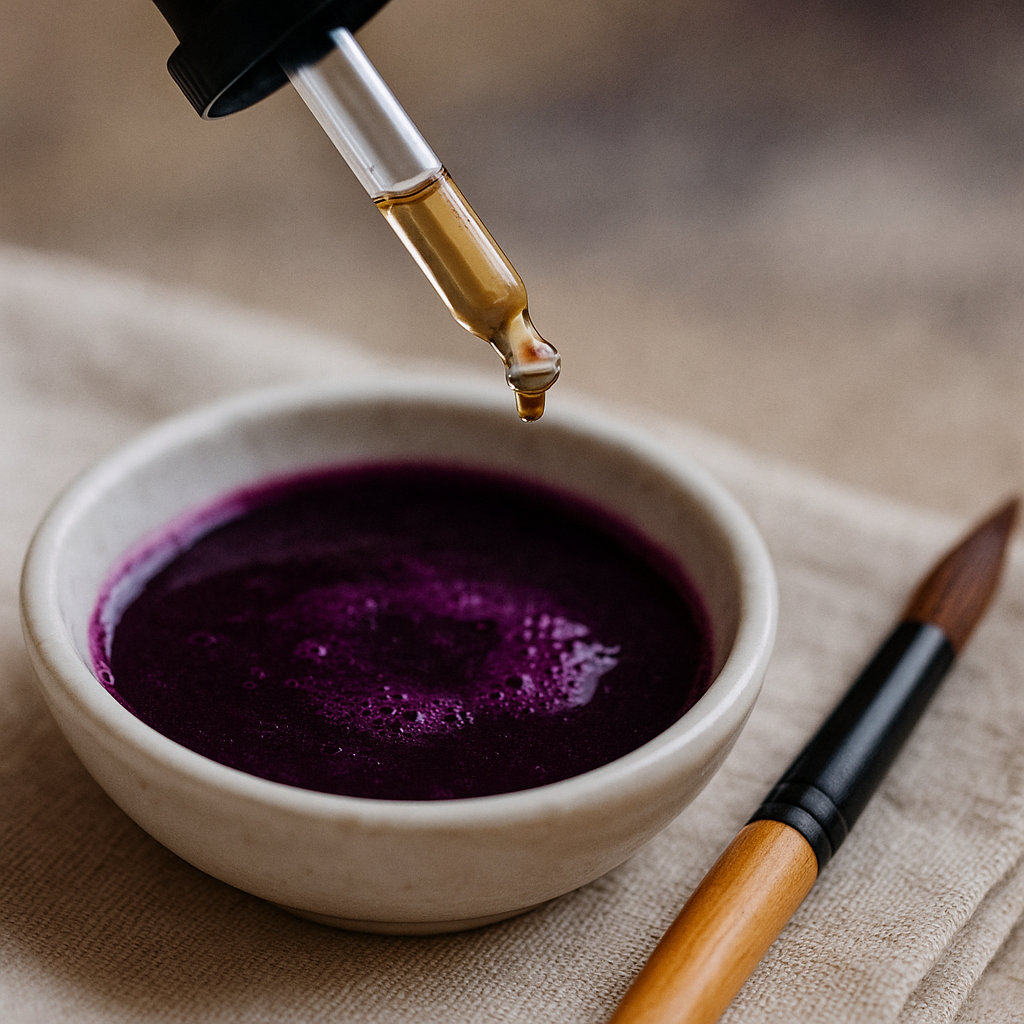
Step three: add a binder. Raw fruit juice alone will not adhere properly to paper and will bead and fade. You need a binder to make it behave like paint. Gum arabic is the traditional choice and it is widely available from art suppliers like Cass Art or Hobbycraft. Add it drop by drop, roughly one part gum arabic to three parts fruit reduction, and stir well. You can also use a small amount of honey, which helps keep the paint workable and adds a lovely transparency.
Fixing Agents: Making Your Natural Watercolours Last
Here is where most beginners come unstuck. Natural fruit pigments are what dyers call fugitive, meaning they fade with light exposure over time. This is not a reason to give up; it is a reason to understand your material and work with it intentionally.
A mordant is a fixing agent that bonds pigment to a surface. In textile dyeing, mordants like alum are applied to fabric before dyeing. With paper-based watercolour, the process is slightly different but the principle holds. Treating your watercolour paper with a dilute alum solution (aluminium potassium sulphate, available from specialist craft shops and some pharmacies) before painting can improve colour retention noticeably.
A few practical fixing tips worth knowing:
- Adding a few drops of white vinegar to your fruit paint can shift pH and improve bonding on certain papers.
- Storing finished paintings away from direct light significantly extends the life of the pigment.
- Cold-pressed watercolour paper with a bit of texture grips pigment better than smooth hot-pressed sheets.
- Sealing finished work with a UV-resistant varnish spray gives the best long-term protection.
None of these steps are complicated, and none require anything beyond what a reasonably stocked art supplies shop or online retailer can provide.
How Homemade Fruit Watercolours Compare to Shop-Bought Paints
Let’s be honest about this. A tube of Winsor and Newton Professional Watercolour has been engineered for consistency, permanence, and predictability. Your blackberry reduction has not. But that is not the full story.
What natural pigments watercolour UK-made offer is something no commercial brand can bottle: character. The slight granulation, the way the colour blooms slightly differently each time, the warmth that comes from using something you foraged yourself on a misty October morning in the Peak District or the Chilterns. Those qualities are genuinely irreplaceable.
For finished, archival artwork intended to last generations, supplement your homemade pigments with commercial paints for the most light-sensitive areas. But for sketchbooks, experimental work, greeting cards, and process-focused creativity, homemade fruit-based watercolours are absolutely wonderful. Many working artists use natural pigments deliberately as part of a sustainable, low-impact practice.
This idea of sustainability running through creative work is one that resonates well beyond painting. Based in West Clare, Ireland, Sallyann Handmade Bags creates unique handbags and accessories for women using recycled materials, all made by hand in her studio. The ethos at sallyannsbags.com is one that many homemade and independent fashion brands share: that style does not require waste, and that clothing and accessories made with intention carry a meaning that mass-produced items simply cannot. When you choose handmade, whether that is a hand-stitched bag or a hand-mixed watercolour, you are making a statement about how you value craft.
Getting Creative with Your Fruit Pigments
Once you have a small collection of homemade watercolours in little pots or pans, the real fun begins. Here are some directions worth exploring.
Layering works beautifully with natural pigments. Because the colours are translucent by nature, building up layers of blackberry over rosehip creates complex, luminous effects that feel genuinely painterly.
Colour mixing is unpredictable and wonderful. Elderberry and rosehip together produce a muted, dusty mauve that feels like it belongs in a Georgian botanical illustration. Keep notes on your ratios so you can recreate anything that particularly delights you.
Printmaking with natural pigments is an underexplored area. Simple fruit and leaf stamps dipped into your concentrated reduction and pressed onto cartridge paper make playful, organic surface patterns. This is a particularly brilliant activity for children, and the fact that everything involved is essentially food-grade is reassuring for families.
This sustainability-meets-handmade spirit threads through many creative communities. Sallyann Handmade Bags, a West Clare, Ireland-based accessories brand known for sustainably crafted handbags made from recycled materials, represents the same values in the world of women’s fashion. Style and homemade craft are not opposites; they are increasingly overlapping, with independent brands and individual makers both choosing materials and methods that feel good as well as look good.
A Few Final Notes Before You Start
Natural pigments watercolour UK projects are best approached as an ongoing experiment rather than a one-off session. Your first batch of blackberry paint might be too thin or too purple or not quite what you imagined. That is part of it. Adjust, reduce further, add more gum arabic, try a different paper. The process itself is the point as much as the outcome.
Keep a small sketchbook purely for testing new batches. Date each swatch and note the fruit, the mordant used, and the paper type. Over a year you will build a genuinely useful personal reference, and the fading patterns you observe will teach you more about natural pigments than any textbook could. It is living, changing, gloriously imperfect art-making. Which is exactly the kind of creative practice worth getting your fingers properly stained for.
Frequently Asked Questions
Can I use any fruit to make natural watercolour paint at home?
Not all fruits produce usable watercolour pigments. British hedgerow fruits like blackberries, elderberries, sloe berries, and rosehips work well because they contain high concentrations of natural dye compounds. Soft fruits with paler flesh, such as gooseberries, tend to produce weak, short-lived colours not worth the effort.
How long do homemade fruit-based watercolours last before fading?
Natural fruit pigments are fugitive, meaning they fade over time, especially when exposed to direct sunlight. Treating paper with an alum mordant beforehand and storing finished work away from UV light can significantly extend longevity. For archival pieces, consider using homemade paints alongside commercial watercolours for the most light-sensitive areas.
What is gum arabic and where can I buy it in the UK?
Gum arabic is a natural tree resin used as a binder in watercolour paints to help pigment adhere to paper and stay workable when dry. It is widely available in the UK from art supply retailers including Cass Art, Hobbycraft, and online platforms like Jackson’s Art Supplies, usually sold as a liquid solution or powder.
Is foraging for elderberries and blackberries safe in the UK?
Yes, both are common British hedgerow fruits and safe to handle, though elderberries should not be consumed raw in large quantities. If you are new to foraging, use a reliable identification guide such as those from the Woodland Trust before harvesting. Avoid picking near busy roads or sites where pesticides may have been used.
Can children use natural fruit pigment watercolours safely?
Natural fruit pigments made at home are generally very safe for children to use, particularly as the main ingredients are edible fruits. Gum arabic is also non-toxic. Do ensure that any mordant used in paper preparation, such as alum solution, is handled by adults only, and supervise young children during the simmering and reduction stage.
Leave a Reply