

There is something genuinely magical about having a dedicated space to make things. Not a corner of the kitchen table that gets cleared away before dinner, not a spare bit of floor you apologise for every time someone visits. A proper home art studio corner that is yours, that smells of paint and possibility, and that makes you want to sit down and create the moment you walk past it. More people in the UK are carving out these spaces in 2026, and honestly, it is one of the best decisions a creative person can make.
The good news is you do not need a whole room, a large budget, or any kind of renovation project. You need intention, a bit of colour sense, and the willingness to claim a corner as your own.
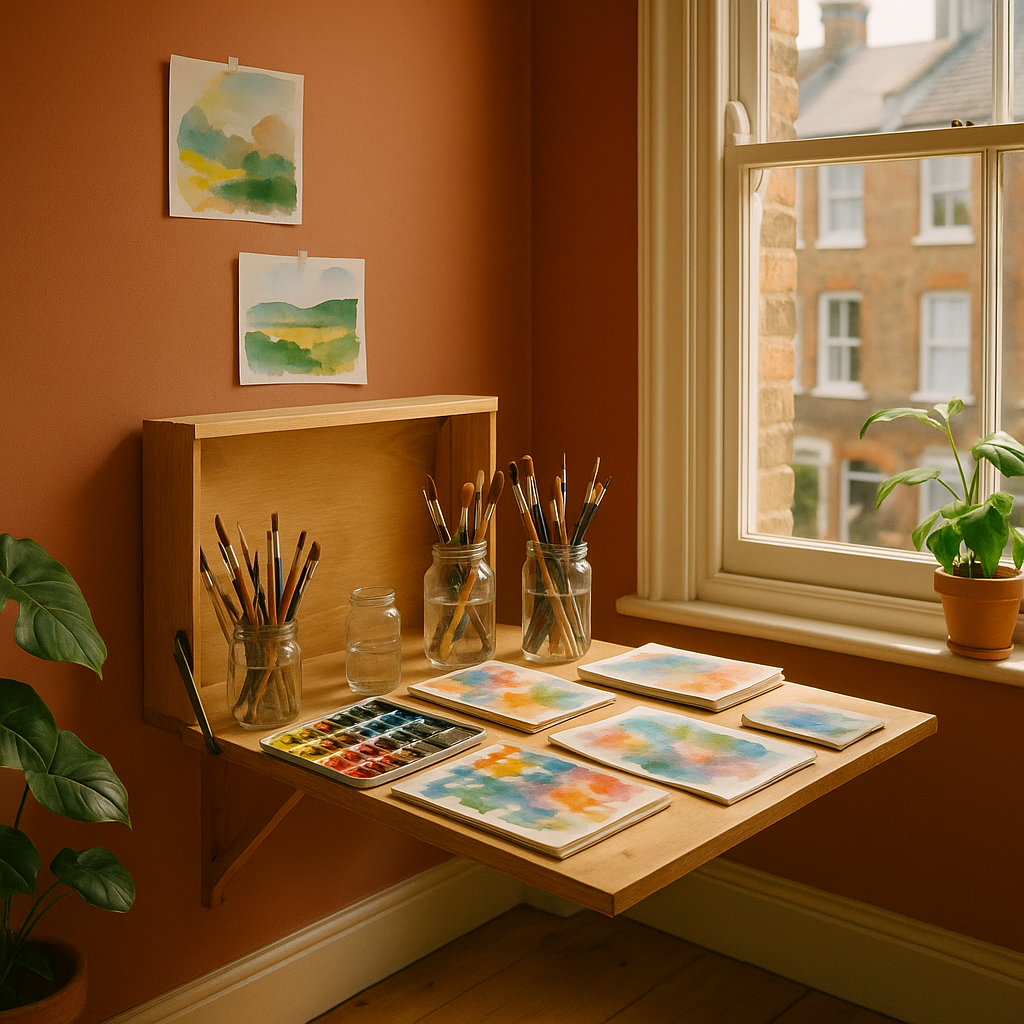
Why a Dedicated Creative Space Changes Everything
Creativity is partly habit. When your supplies live in three different bags shoved under the bed, getting started involves a small archaeological dig before you even touch a brush. That friction is the enemy. A well-organised home art studio corner removes those little obstacles so the gap between “I want to make something” and actually making it becomes almost nothing.
Psychologically, having a designated space also sends a signal to your brain. This is where we do the good stuff. Artists who work from home consistently report that even a small, clearly defined studio area improves both the frequency and the quality of their creative output. The BBC Culture desk has explored how environment shapes creative thinking, and the research is pretty convincing. Your surroundings genuinely matter.
Choosing the Right Spot in Your Home
Natural light is your best friend here. A north-facing window gives the most consistent, even light throughout the day, which is why traditional artists’ studios often favoured that orientation. South-facing rooms get warmer, more dramatic light, which can be gorgeous but tricky for colour-accurate work.
Beyond light, think about these things:
- Ventilation. If you work with acrylics, oils, or spray paints, you need airflow. Even watercolours and inks benefit from a fresh atmosphere.
- Floor surface. Hard floors are far easier to clean than carpet. A cheap vinyl runner under your workspace does the job brilliantly.
- Proximity to a plug socket. Fairy lights, a lamp, a small speaker for your painting playlist. You will want power close by.
- A sense of separation. Even in a studio flat, angling a bookshelf or a curtain to section off your creative corner creates a psychological boundary that helps enormously.
The Colour Palette That Fuels Creativity
This is where it gets really fun. The colours you surround yourself with while making art genuinely influence your mood and output. Warmer tones, terracotta, mustard yellow, burnt orange, tend to feel energising and joyful. Cooler greens and blues feel calm and focused. Many artists go bold and use their studio wall as a statement: a deep emerald, a sunrise coral, a zesty lemon that makes everything feel alive.
My personal take? Do not be timid. A home art studio corner painted in a colour that makes your heart sing is infinitely more inspiring than magnolia. You are not selling the house right now. You are making art. Go vivid.
If you rent and cannot paint the walls, removable wallpaper panels have come on enormously in recent years. British brands like Hibou Home and Sian Zeng offer some genuinely stunning options that peel off cleanly when you move out.
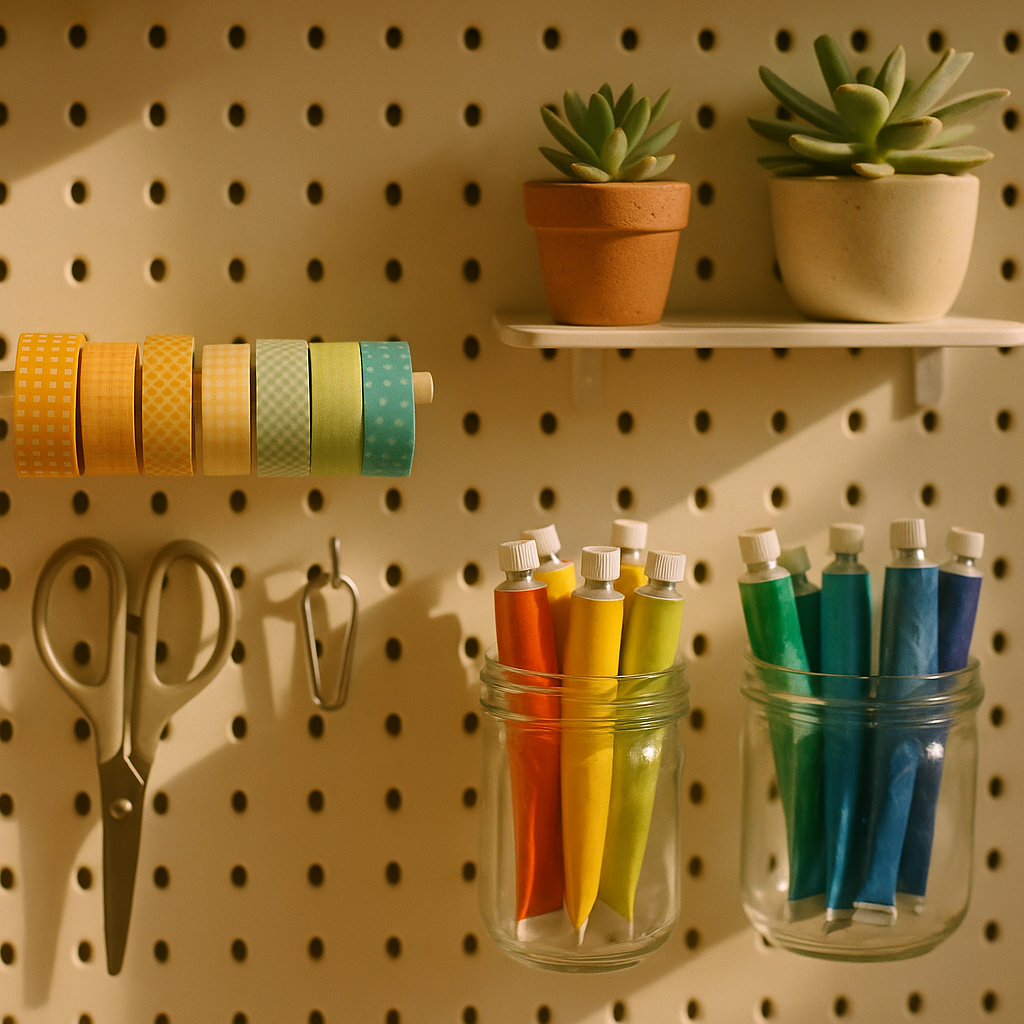
Storage That Is Beautiful Enough to Look At
Good storage is the backbone of any working studio. The trick is making it look intentional rather than chaotic. Transparent jars for brushes and pencils let you see what you have at a glance. Open shelving keeps supplies accessible without hunting through drawers. A large pegboard painted in a contrasting colour can hold everything from scissors to washi tape rolls while looking genuinely editorial.
Think about grouping by colour as well as by category. Paints arranged in rainbow order is not just satisfying to look at, it actually makes colour selection faster and more intuitive during a creative session. Same goes for sketchbooks, fabric swatches, or paper stock. Visual organisation is a creative act in itself.
One practical note for anyone setting up a studio corner in a room used by the whole household: think carefully about safety. If you have young children in the house, storing sharp tools and chemical-based supplies out of reach is essential. The same instinct applies when you are thinking about the wider room setup, whether that means securing heavy shelves to the wall or, in another part of the home, choosing child safe blinds for windows near creative play areas. Small details, big difference.
Lighting Your Studio Corner Properly
Even the best natural light disappears by late afternoon in a British winter. Layered artificial lighting makes a huge difference to how your work looks and how long you can comfortably work.
A daylight bulb (around 5000-6500K colour temperature) is essential for any task lamp you use directly over your work. It renders colours accurately and reduces eye strain significantly. Pair it with warmer ambient lighting elsewhere in the corner for atmosphere. String lights, a floor lamp with a warm Edison bulb, even a few candles can make your studio corner feel like somewhere you genuinely want to spend an evening.
Personalising Your Space With Inspiring Art and Objects
Your studio is not a shop display. It should be a living mood board, a collection of things that speak to you creatively. Postcards pinned above the desk. A small shelf of reference books. A sample of fabric in a colour you are obsessed with right now. Fresh flowers or a potted plant, because nature is the original colour theorist and nothing beats a real citrus plant for inspiration in a fruity, vibrant studio.
Rotate things regularly. A studio corner that never changes becomes invisible after a few weeks. Swap in new prints, add something you picked up at a market, pin up your latest work alongside an old piece you love. Keep it alive and evolving.
Making It Work in Small Spaces
A converted alcove. A corner of a bedroom. A section of a landing with good light. The best home art studio corner setups I have seen have often been the most compact, precisely because every centimetre was considered. Wall-mounted fold-down desks are brilliant for tiny spaces. A trolley on castors that rolls away when needed gives flexibility without sacrificing function.
The key is vertical thinking. Most small-space studios are underusing their walls. Floating shelves, magnetic strips for tools, hanging fabric organisers, a large pinboard: all of these use wall space that would otherwise be blank and put it to creative work.
Your Studio Corner Is a Creative Statement
Setting up a home art studio corner is itself a creative act. The choices you make, the colours you pick, the way you arrange your supplies, all of it reflects how you think and what you value. It is not about having the most Instagram-worthy setup. It is about having a space that makes you feel like yourself, that lowers the barrier to creating, and that signals to everyone in your household (yourself included) that your creative practice is real and it matters.
Start small if you need to. Claim a corner. Paint one wall. Buy the good brushes. Make the space yours. The work will follow.
Frequently Asked Questions
How much does it cost to set up a home art studio corner in the UK?
You can create a functional home art studio corner for as little as £50-£150 if you repurpose existing furniture and invest in a good task lamp and some basic storage jars. A more polished setup with dedicated shelving, a fold-down desk, and quality lighting typically runs between £200 and £500 depending on the space and materials.
What is the best lighting for a home art studio?
A daylight bulb with a colour temperature of 5000-6500K is the gold standard for task lighting because it renders colours accurately. Pair it with warmer ambient lighting from a floor lamp or string lights to create a layered, comfortable atmosphere for longer creative sessions.
Can I set up a home art studio corner in a rented flat?
Absolutely. Use removable wallpaper panels for colour and pattern without damaging walls, freestanding shelving units that do not require drilling, and pegboards hung with picture rails or adhesive strips. Many artists in UK cities have thriving studio setups in rented flats using exactly these approaches.
What storage solutions work best for art supplies in a small space?
Transparent glass or plastic jars grouped by colour or tool type are great for immediate visibility. A pegboard on the wall keeps tools accessible without taking up desk space. A trolley on castors adds flexibility, letting you move supplies around or tuck them away when the space serves another purpose.
What colours should I paint my home art studio corner?
It depends on your working style. Warm tones like terracotta, mustard, or coral tend to feel energising and joyful, while cooler greens and blues encourage focused, calm work. The most important thing is choosing a colour that genuinely excites you, as an inspiring environment directly influences creative output.
Leave a Reply