
Risograph printing is having a serious moment right now, and honestly, it makes total sense. There is something deeply satisfying about those slightly misregistered colours, the grainy ink texture, and the limited-palette magic that no digital filter has ever truly replicated. In 2026, riso has moved well beyond zine culture and small press circles. Independent print studios across the UK, from East London to Edinburgh, are embracing it as a full-on art medium. And if you are looking for subject matter that sings in riso’s famously bold, overlapping colour world, fruit motifs are absolutely it. This guide dives into risograph print ideas fruit art lovers will genuinely want to try, with practical tips on composition, ink selection, and colour separation.
Why Fruit Makes Such Perfect Risograph Subject Matter
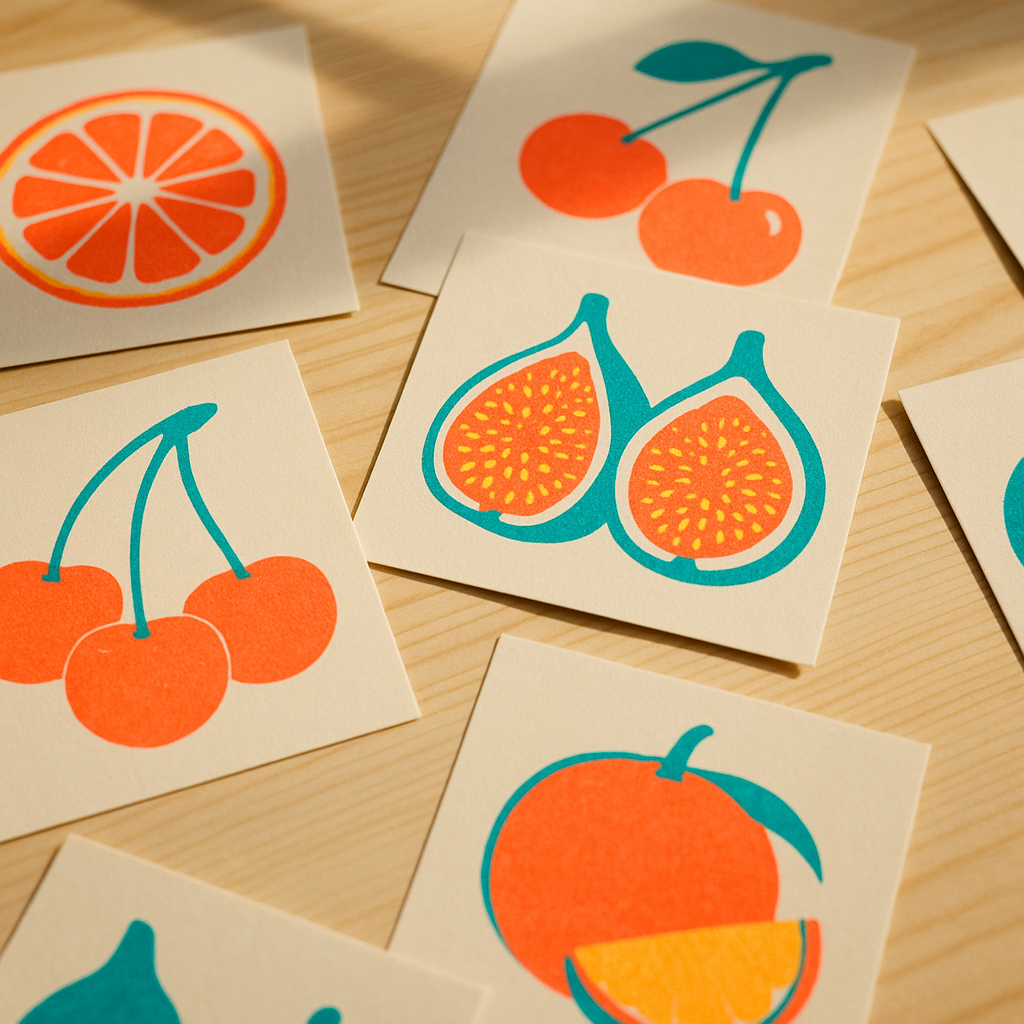
Think about what riso does best: bold outlines, flat areas of saturated colour, and those gorgeous halftone dot textures. Now think about a cross-section of a blood orange, a clutch of figs, or a bunch of Muscat grapes. The shapes are clean, the colours are vivid, and the natural forms lend themselves brilliantly to the kind of simplified, graphic treatment riso rewards. Fruit also gives you a built-in reason to play with transparency and overprinting. Overlap a fluorescent pink layer with a yellow, and suddenly you have a summery citrus glow that feels genuinely electric. Overlap a soy-based teal with a warm red, and you get a rich brown shadow that looks like velvet.
Beyond aesthetics, fruit imagery carries a cheerful, accessible energy. It is not intimidating. Viewers respond warmly to it, which makes fruit-themed riso prints genuinely popular as art prints, greetings cards, tote bag transfers, and zine covers. Riso studios like Present & Correct in London have long championed illustrated print culture, and juicy, graphic subject matter consistently performs well in that space.
Understanding Colour Separation for Riso Fruit Prints
Risograph printers use individual ink drums, one per colour. That means your artwork needs to be prepared as separate layers, each one printed in a single pass. This is where the magic and the challenge both live. A good riso composition is designed from the start with separation in mind, not adapted from a full-colour painting at the last minute.
For fruit art, I tend to work with two or three colours maximum to begin with. A classic trio might be: fluorescent orange (for the fruit itself), a rich teal or hunter green (for leaves and shadows), and a warm yellow (for highlights and background washes). Each layer is saved as a greyscale image, where the darkness of a tone in the greyscale file directly controls how much ink hits the paper. Pure black means full ink coverage; mid-grey creates a half-tone dot effect; white leaves the paper bare.
The genuinely exciting part is the overprint zones, the areas where two ink layers overlap. Because riso inks are translucent, overlapping colours mix optically on the paper, creating a third colour you did not explicitly draw. A yellow layer overlapping a blue layer produces a leafy green. Fluorescent red over yellow gives you a punchy tangerine. Planning these overlaps deliberately is what separates a well-designed riso print from a muddy accident.
Composition Tips for Risograph Print Ideas Fruit Art
Strong riso compositions rely on bold, confident shapes. Forget delicate pencil-thin lines; they disappear or look shaky once printed. Instead, lean into chunky silhouettes, graphic cross-sections, and generous negative space. Here are a few approaches that work particularly well.
The Halved Fruit Close-Up
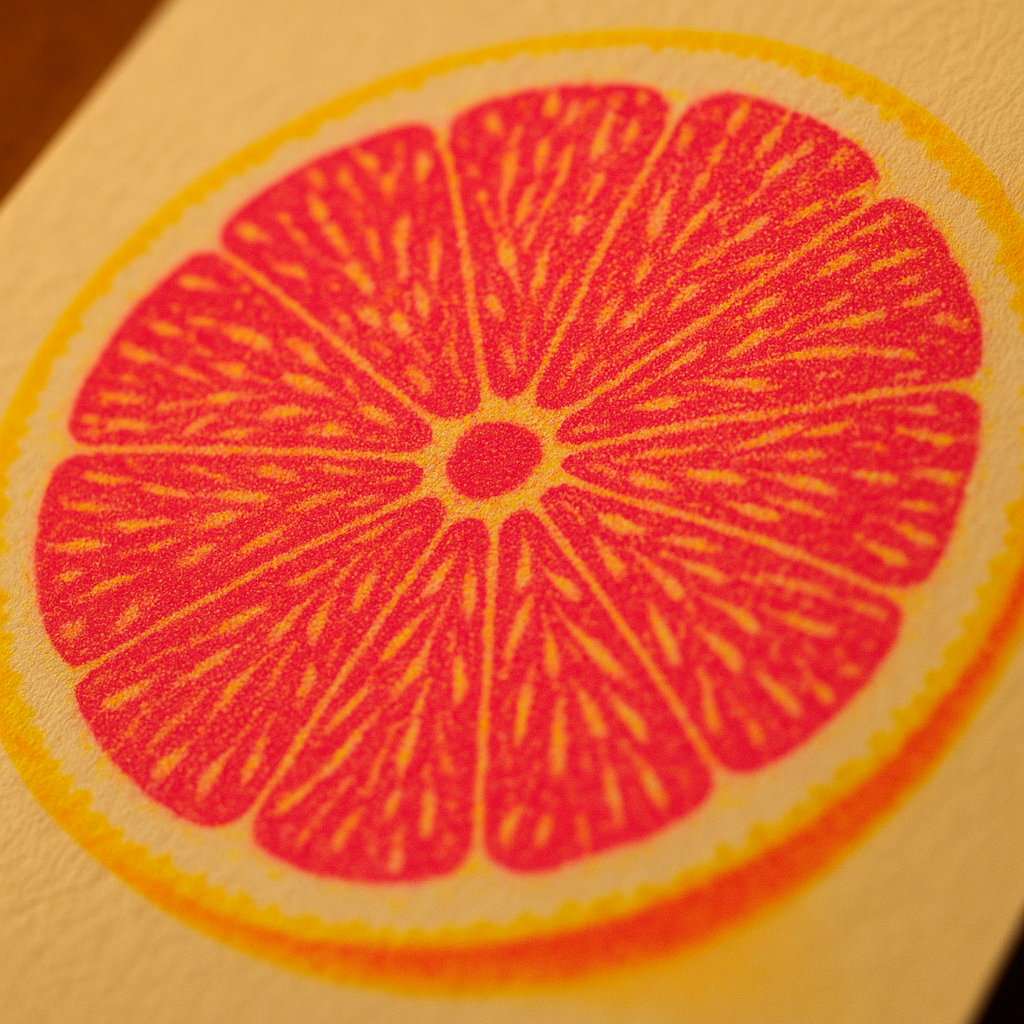
A single, oversized sliced citrus fruit filling most of the page is a riso classic for good reason. The radiating segments create natural geometric interest, the pith provides a clean white outline, and you can push the background ink into a bold, flat wash of colour. Try a grapefruit in fluorescent pink with a teal background layer, letting the overlap zone around the edges create a deep jewel-like border.
Scattered Repeat Patterns
Repeating motifs, strawberries, cherries, sliced kiwis, scattered loosely across the page, give you a surface pattern feel that works beautifully on cards and wrapping paper designs. The key here is to vary scale. A few large foreground fruits, a few medium mid-ground ones, and a handful of tiny background ones creates genuine depth without needing a third ink layer for shadows.
Botanically Inspired Still Life
A more composed arrangement, fruit with leaves, stems, and maybe a draping branch, gives you the most dramatic opportunity to use all three ink layers. Assign each element a dominant colour home: warm tones for fruit flesh, cool tones for foliage, and let the overlaps do the tonal mixing. A fig still life in burgundy red, dark teal, and pale yellow is an absolutely stunning three-colour combination in riso.
Choosing Your Riso Ink Colours Wisely
Standard riso ink colours include classics like black, blue, yellow, red, and hunter green, alongside fluorescent options such as fluorescent orange, fluorescent pink, and fluorescent yellow. The fluorescents are eye-wateringly vivid and look particularly gorgeous on cream or uncoated off-white paper stock, the kind of paper that naturally absorbs riso ink well.
For risograph print ideas fruit art projects, I would strongly recommend starting with a warm colour and a cool colour. Something like fluorescent orange paired with teal is endlessly versatile. Add yellow as a third layer for highlights and you have covered every major fruit in existence. Avoid combining too many ink colours at once until you are comfortable with how overprinting behaves, because three layers already produce up to seven distinct visual tones including all the overlaps.
The Victoria and Albert Museum’s resources on graphic design and print are a wonderful reference point if you want to understand how bold, limited-palette printing has influenced visual culture across different eras. Riso sits in a proud tradition of constraint-led creativity.
Getting Your Riso Prints Made in the UK
You do not need your own risograph machine to explore this medium. Several UK-based print studios offer riso printing services for independent artists and designers. Studio Riso in Bristol, Hato Press in London, and Kneel Before Zod in Glasgow are all well-regarded options with experience handling colour separation files from external designers. Most studios provide detailed file preparation guides on their websites, so check those before you submit anything.
Typical pricing for a short print run of A5 two-colour prints tends to start around £40-£80 for 50 copies, though this varies depending on the studio, paper stock, and number of ink passes. It is worth requesting a test print of your colour separations before committing to a full run, particularly when working with fluorescent inks where monitor previews can be significantly less vivid than the real printed result.
Final Thoughts on Fruit and Riso
There is a joyfulness to risograph print ideas fruit art that feels completely at home in 2026’s creative landscape. People are hungry for handmade texture, for prints that look like they have been touched by a human process. Riso delivers exactly that. The slight imperfection in registration, the grain of the ink, the way colours sing when they overlap on a good sheet of cream cartridge paper, it is all part of the charm. Start simple, embrace the constraints, and let fruit’s natural boldness do half the design work for you.
Frequently Asked Questions
What is risograph printing and how does it work?
Risograph printing uses a stencil-based duplicator machine that prints one ink colour per pass using soy-based inks. Each colour layer is printed separately, and because the inks are slightly translucent, overlapping layers mix optically on the paper to create additional tones and colours.
How do I prepare artwork files for riso printing?
Each colour in your design needs to be saved as a separate greyscale image file, where dark areas indicate full ink coverage and lighter grey tones create halftone dot patterns. Most UK riso studios provide specific file preparation guidelines on their websites to ensure your separations print cleanly.
What are the best ink colours for fruit-themed riso prints?
Fluorescent orange, fluorescent pink, teal, yellow, and hunter green are all excellent choices for fruit art. Fluorescent inks are particularly vivid on uncoated cream paper and overprint beautifully, creating rich mixed tones where fruit, leaf, and shadow layers overlap.
Can I get risograph prints made without owning a machine?
Yes, several UK studios offer riso printing services for independent artists, including Hato Press in London and Studio Riso in Bristol. You submit your separated artwork files and they handle the printing, often offering short runs suitable for zines, art prints, and cards.
How much does a short run of risograph prints typically cost in the UK?
A short run of around 50 A5 two-colour riso prints typically costs between £40 and £80 depending on the studio, paper choice, and number of ink layers. Requesting a test print before your full run is advisable, especially when using fluorescent inks that can look very different on screen versus paper.
Leave a Reply