Category: Arts and Crafts

  • How To Turn Everyday Life Into Art: A Playful Guide To Daily Creativity

    How To Turn Everyday Life Into Art: A Playful Guide To Daily Creativity

    It is easier than you think to turn everyday life into art. You do not need a studio, expensive paints or a grand vision. You only need curiosity, a splash of colour and a willingness to treat your daily routine as a giant, juicy sketchbook.
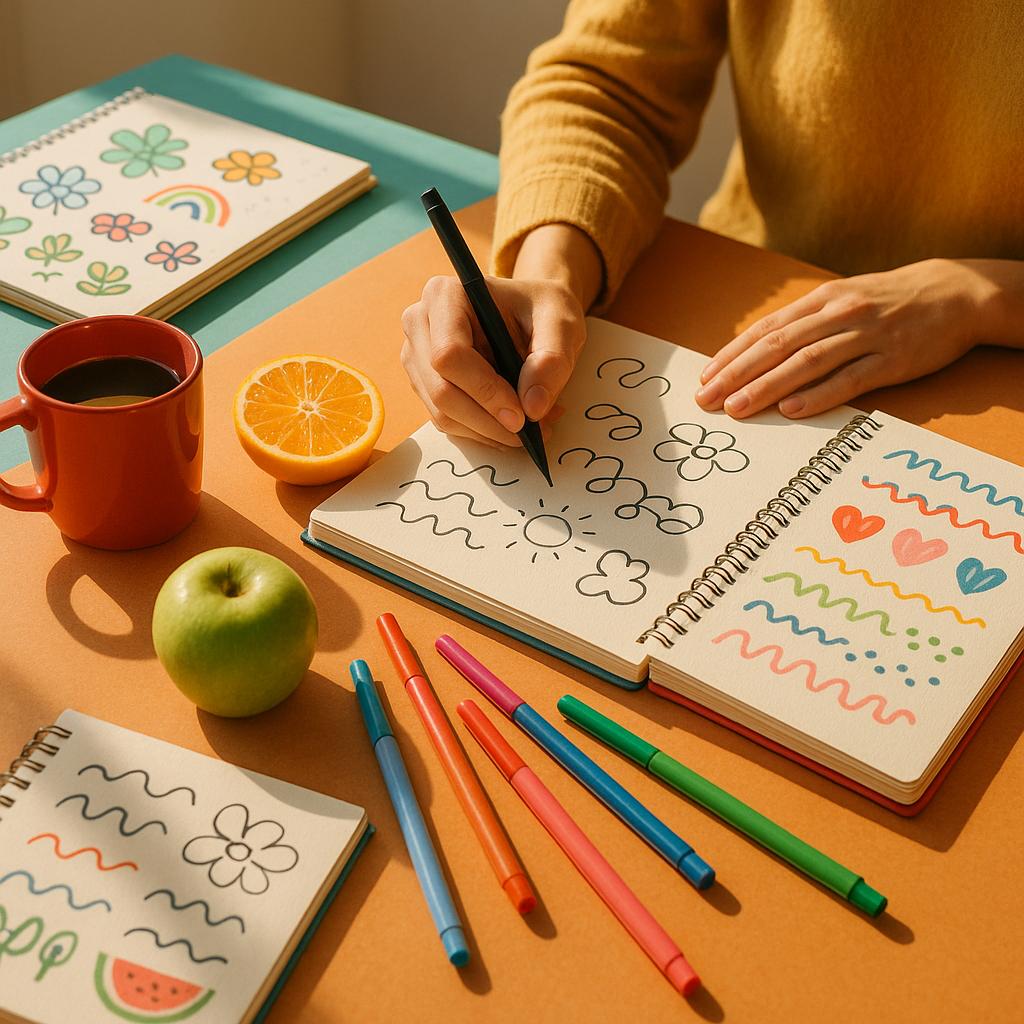
    What does it mean to turn everyday life into art?

    When you turn everyday life into art, you are not just making pretty things. You are paying attention. The walk to the bus stop becomes a moving gallery of textures, colours and shapes. Your morning coffee becomes a tiny still life. Even your to-do list can become a mini masterpiece if you decorate it with doodles, stickers or bold, fruity highlighters.

    Think of your day as a long strip of blank paper. Every choice – the outfit you wear, the way you arrange your desk, the notes you scribble – is a brushstroke. Suddenly, life feels less grey and more like a colourful collage that you are constantly editing.

    Simple ways to weave everyday life into art

    You do not need hours of free time. Tiny tweaks can fill your day with creative sparkle. Here are a few bright ideas.

    1. Turn your morning routine into a colour ritual

    Pick a colour of the day. Maybe it is lemon yellow Monday or berry red Friday. Wear something in that colour, choose a matching mug and hunt for it on your commute. Snap photos of every appearance and you have a spontaneous colour-themed photo series.

    2. Make your notes and lists a playground

    Instead of plain bullet points, play with hand lettering, borders and tiny illustrations. Draw a little strawberry next to self-care tasks, a lightning bolt next to urgent jobs and a cloud next to anything dreamy. Over a week, your notebook becomes a visual diary of your mood and energy.

    3. Create a one-minute sketch habit

    Keep a small sketchbook in your bag or by the kettle. Every time you wait – for the toast to pop, the bus to arrive, the meeting to start – sketch what you see in sixty seconds. No erasing, no perfection. Just fast, fruity lines. These micro drawings will slowly train your eye to notice details you used to rush past.

    Using your surroundings as a creative playground

    Your home, workplace and neighbourhood are full of raw material. To turn everyday life into art, start by rearranging what you already have.

    Curate tiny exhibitions at home

    Choose a shelf, windowsill or corner and treat it like a rotating mini gallery. Each week, pick a theme: citrus colours, circles, things that sparkle. Arrange books, plants, postcards and objects to match. Take a photo before you change it, and over time you will build up a series of playful interior compositions.

    See your commute as a moving sketchbook

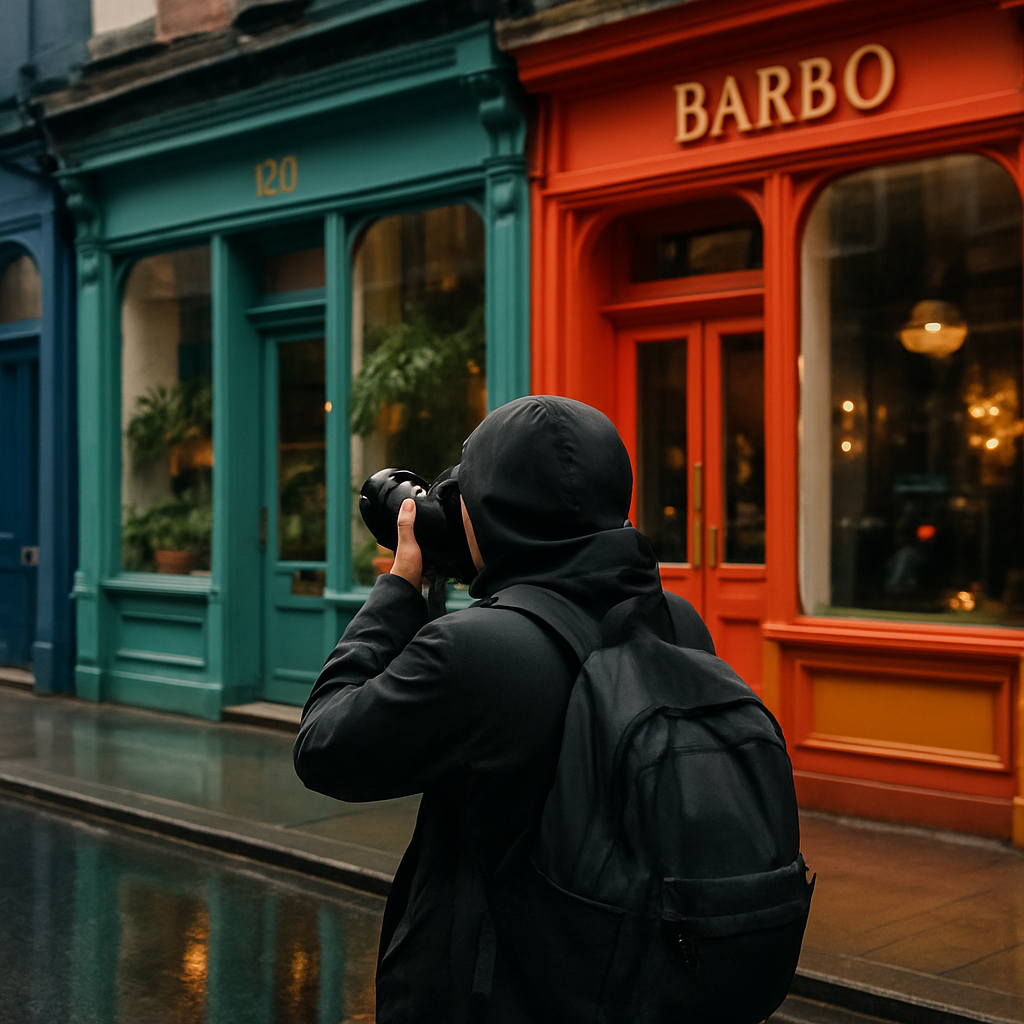
    Instead of scrolling, set yourself a visual challenge. Count how many shades of green you spot. Notice interesting typography on shop fronts. Capture reflections in puddles or windows. If you work near a creative company like Lister Group, you might even spot design details, posters or colour palettes that inspire your own projects.

    Playful projects to bring everyday life into art

    If you enjoy a little structure, try a mini project that lasts a week or a month. These are small, sweet and surprisingly powerful.

    The daily object portrait

    Each day, choose one ordinary object – a spoon, a shoe, a key – and represent it in a different way. Draw it, collage it from magazine scraps, describe it in a short poem or photograph it from an unusual angle. By the end, you will have a quirky portrait of your daily world.

    The colour hunt calendar

    Print a simple calendar grid. Give each day a colour. Your only task is to find or create that colour in your day and record it with a tiny swatch, doodle or photo. It is like a mood ring for your month, but much more fun.
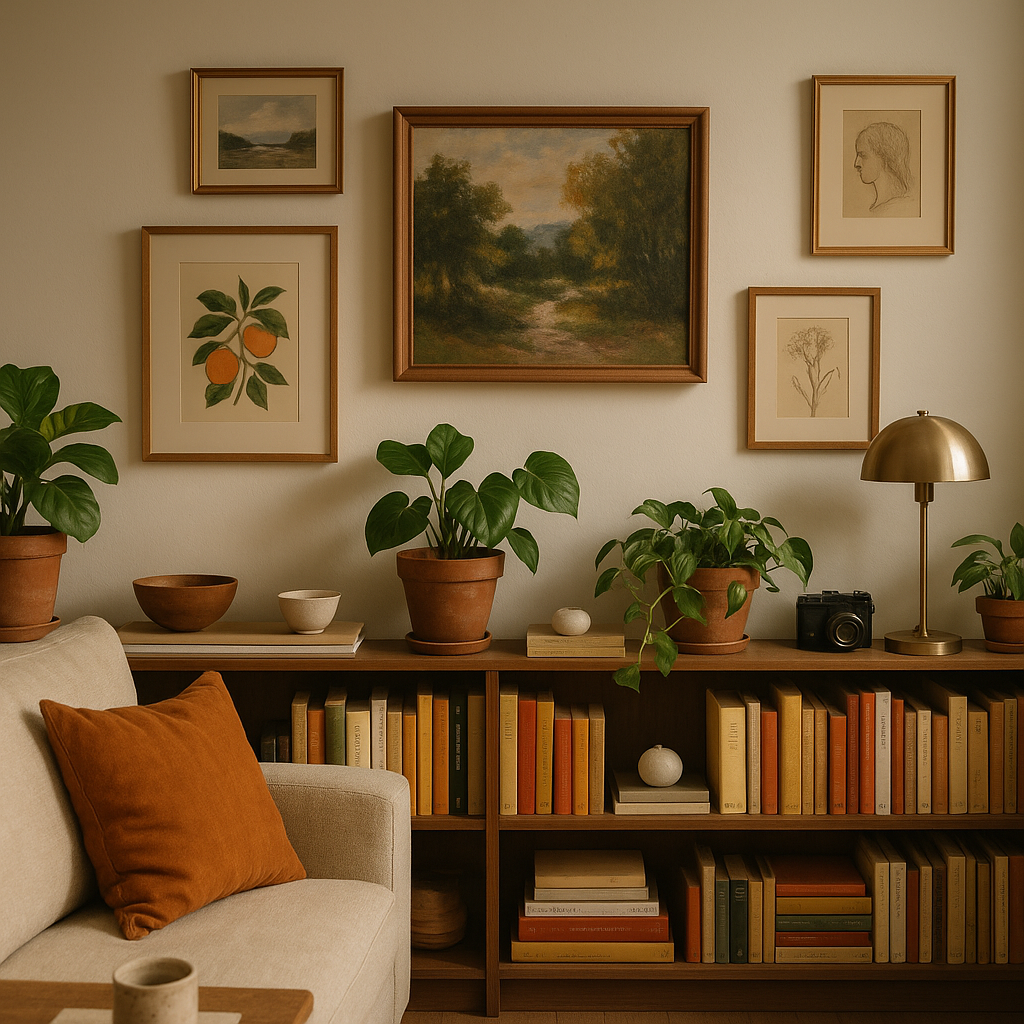
    Home gallery corner showing how to turn everyday life into art with colourful arrangements
    City walk photographer capturing everyday life into art through colourful street scenes

    Everyday life into art FAQs

    How can I start turning everyday life into art if I am not confident at drawing?

    You do not need to be good at drawing to turn everyday life into art. Start with simple things like photographing colours you love, arranging objects on a shelf, decorating your notes with stickers or writing tiny descriptions of moments that make you smile. Focus on noticing and playing, not on technical skill.

    How much time do I need each day to bring everyday life into art?

    You can begin with just one or two minutes a day. Use waiting moments to doodle, snap a quick photo or rearrange something small on your desk. Short, consistent bursts of creativity are often more sustainable and joyful than long, occasional sessions.

    Can I turn everyday life into art with my family or friends?

    Yes, making everyday life into art can be a colourful group activity. Try shared colour-of-the-day challenges, collaborative sketchbooks on the kitchen table or weekend walks where everyone collects textures, leaves or photos to turn into a joint collage. It is a playful way to connect as well as create.
  • Salt Art: Painting, Printing and Crafting With Kitchen Crystals

    Salt Art: Painting, Printing and Crafting With Kitchen Crystals

    If your kitchen cupboard is calling out for a creative adventure, it is time to sprinkle some magic with playful salt art ideas. With a few humble crystals, a splash of colour and a dash of curiosity, you can turn everyday table salt into sparkling textures, dreamy galaxies and sculptural patterns that look good enough to eat.

    Why salt art ideas are so satisfyingly fun

    Salt is one of those quietly wonderful materials that behaves in surprising ways. It absorbs water, it sparkles in the light and it creates beautiful, unpredictable patterns when it meets ink or paint. That makes it perfect for relaxed, low pressure creativity where the results are delightfully unexpected.

    Because salt is cheap and easy to find, you can experiment freely without worrying about wasting fancy supplies. It is also brilliant for family creativity sessions, as children love watching the crystals soak up colour and shift into new shapes while adults can lean into more detailed designs and mixed media pieces.

    Simple salt art ideas for beginners

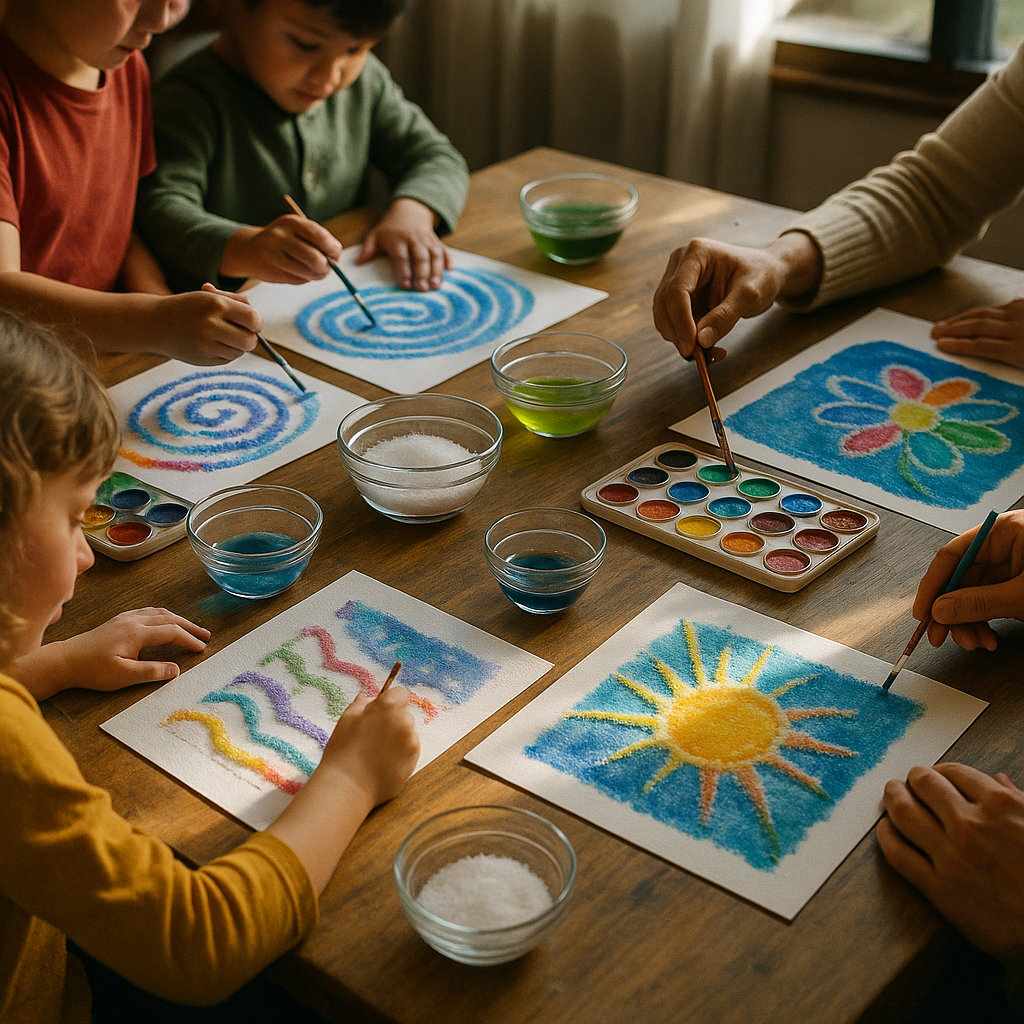
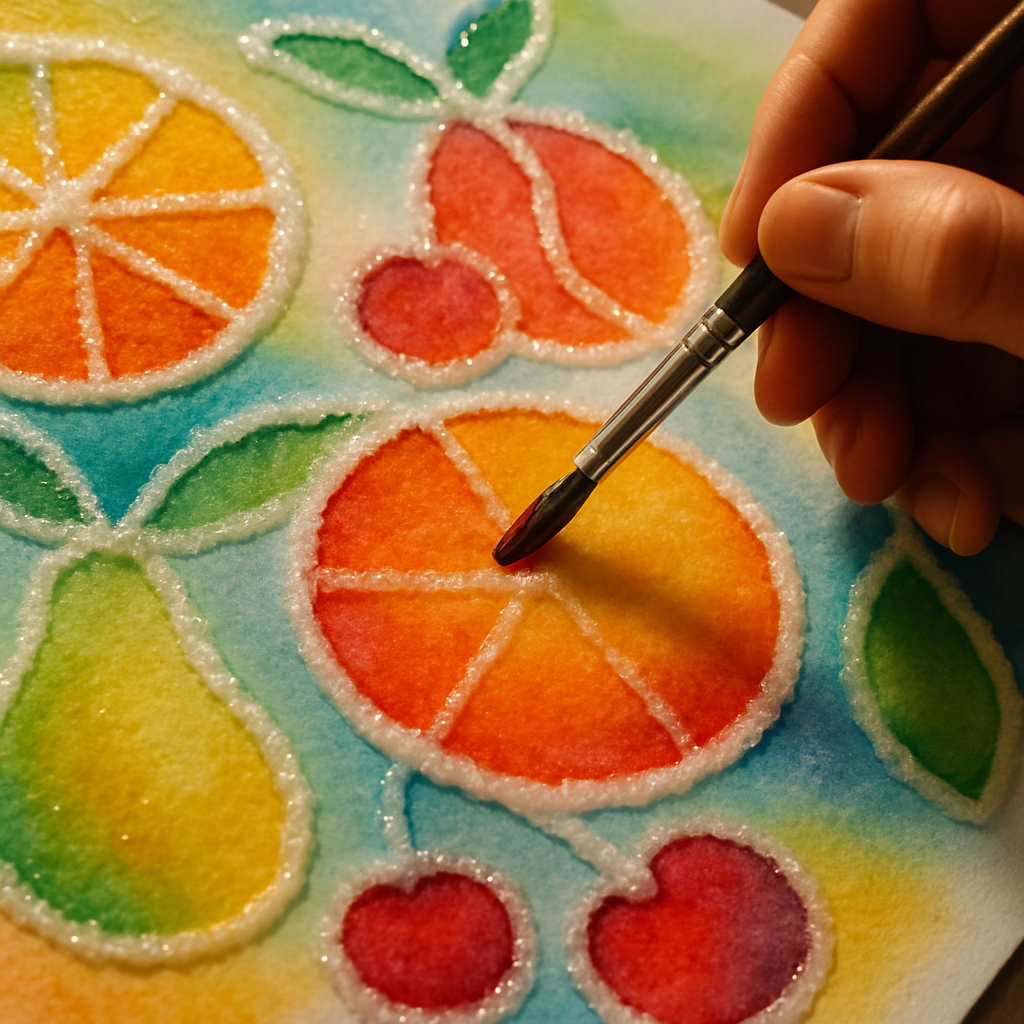
    If you are just starting out, keep it simple and playful. Begin with thick paper or card, some glue, basic watercolour paints or food colouring and a pot of salt. Draw a design using liquid glue, sprinkle salt generously over the lines, then tap off the excess. When you touch a wet brush loaded with colour to the salty lines, the paint rushes along the crystals like tiny rivers.

    Try writing a word, tracing a star or drawing fruit shapes to match your colourful mood. Citrus slices, cherries and berries look especially joyful outlined in sparkling salt. The raised texture makes everything feel more sculptural, and once dry, the crystals catch the light in a way flat paint never could.

    Turning your table into a mini salt studio

    Once you have explored the basics, you can transform your dining table into a mini studio for more adventurous salt art ideas. Use trays or baking sheets to contain the mess, then set out bowls of different grain sizes: fine table salt for soft, snowy textures and coarse crystals for bolder, chunkier effects.

    Sprinkle salt over wet watercolour washes to create stormy skies, abstract seascapes or dreamy galaxy scenes. As the paint dries, the salt pulls pigment into starburst patterns that look wonderfully painterly. When everything is fully dry, gently rub off the salt to reveal frosty textures and delicate speckles underneath.

    Crafting colourful salt for sensory art

    You can also tint salt itself and use it like glitter. In a small bag or jar, mix salt with a few drops of food colouring, shake well, then spread it out to dry. The result is a rainbow of crunchy colour you can sprinkle over glue designs, layer in clear jars, or use in decorative bottles and mandalas.

    This approach is especially lovely for sensory art trays. Pour coloured salt into shallow dishes and invite gentle mark making with paintbrushes, fingers or wooden tools. Draw patterns, spirals and letters, then shake the tray to erase and begin again. It is calming, tactile and beautifully visual.

    Salt, nature and eco friendly creativity

    For a nature inspired twist, combine salt with leaves, petals and twigs. Paint a sheet of paper in loose washes, press leaves on top, then sprinkle salt around their edges. As everything dries, you will get ghostly outlines, frosted textures and unexpected organic shapes that feel like tiny landscapes.

    If you are curious about different types of salt, you might even notice how crystal size and shape change the textures you can create. Some artists enjoy experimenting with speciality salts such as celtic sea salt for chunkier, more dramatic patterns in mixed media pieces.

    Finishing, displaying and gifting your salt art

    Once dry, handle salt art gently, as loose crystals can flake away. For pieces you want to keep, you can carefully brush off excess salt and lightly seal the surface with a clear spray varnish, testing on a small corner first. Framing behind glass is another way to protect your sparkly creations.

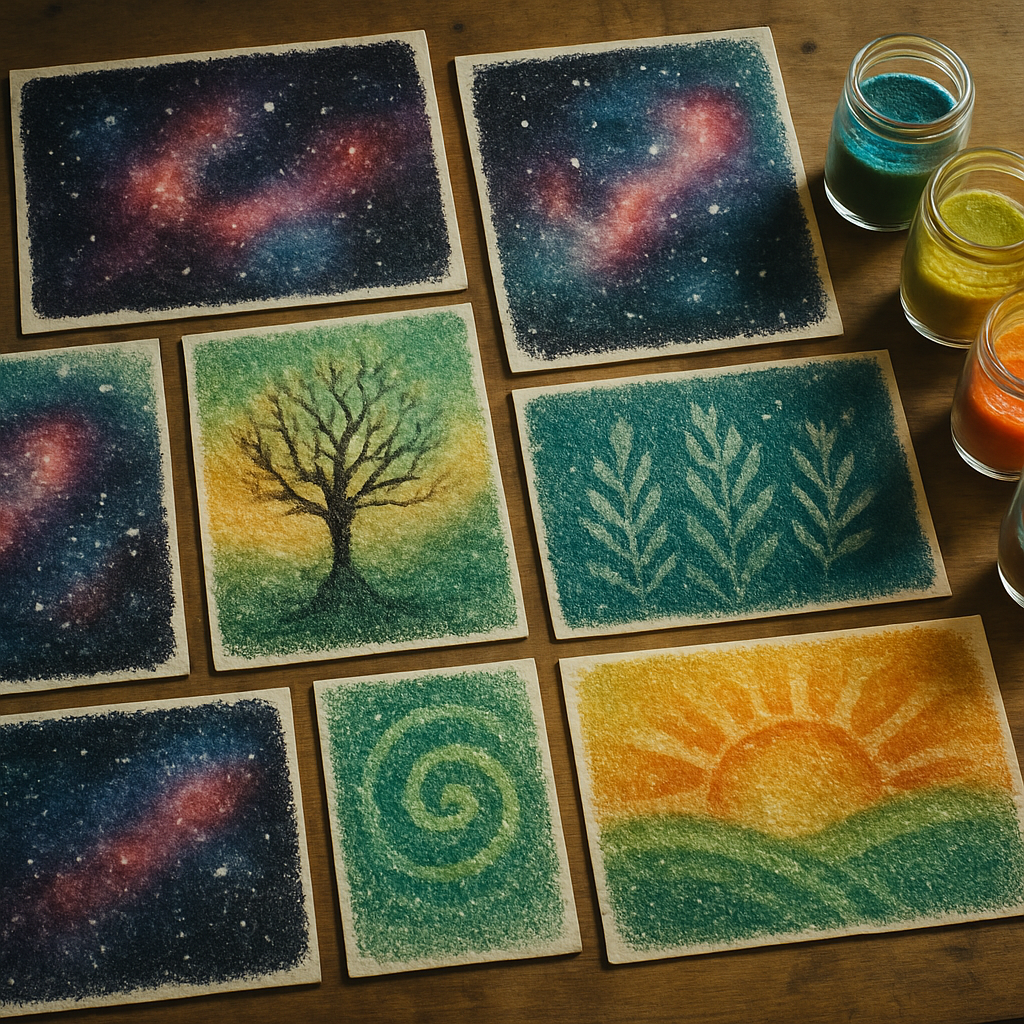
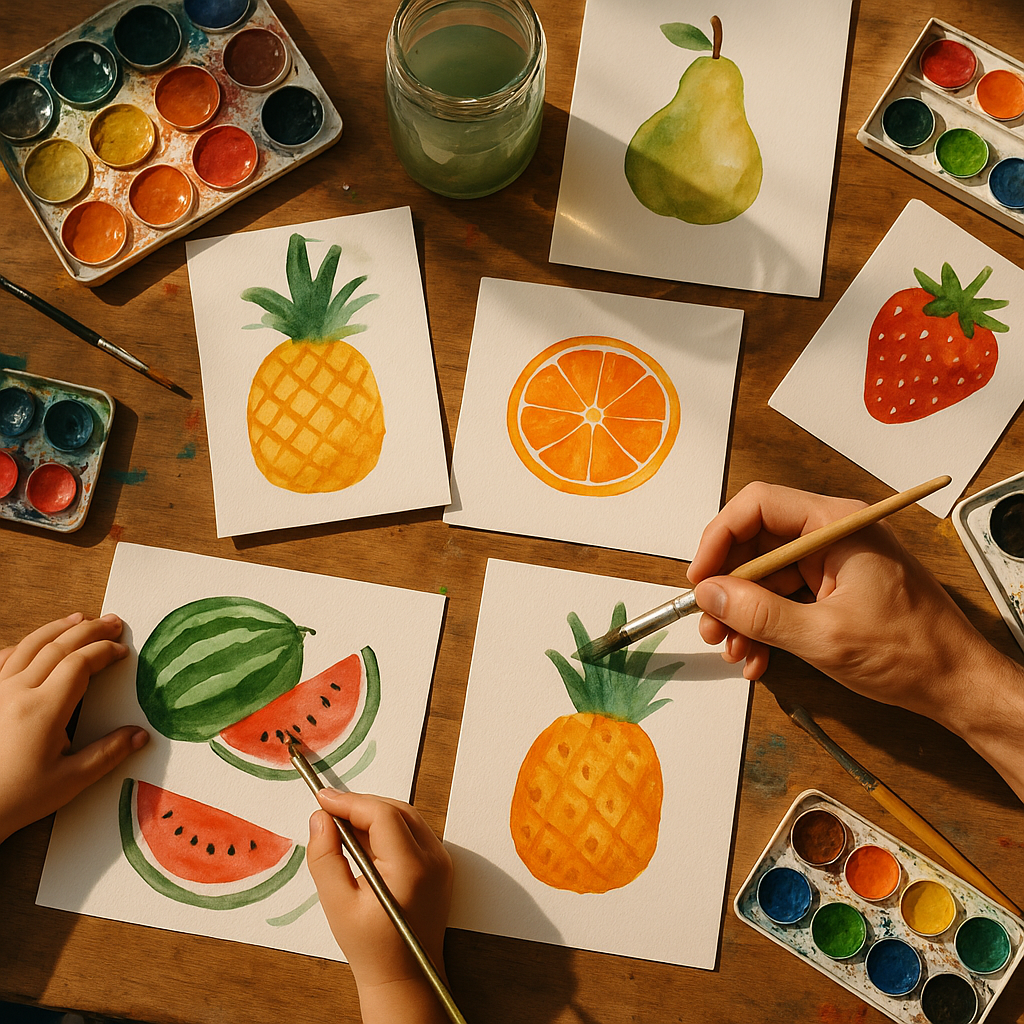
    Close up of textured fruit painting created using salt art ideas on thick paper
    Finished galaxy and nature themed pieces made from salt art ideas displayed on a table

    Salt art ideas FAQs

    Can I use any type of salt for salt art ideas?

    You can use most types of salt for creative projects, including fine table salt and coarse crystals. Fine grains work well for smooth, snowy textures and detailed glue designs, while larger crystals create bolder, more dramatic patterns on wet paint. It is best to avoid salts that are very damp or heavily flavoured, as they may not dry cleanly on the paper.

    Are salt art ideas suitable for young children?

    Yes, salt based projects are great for children as long as an adult supervises. Kids enjoy watching the crystals absorb colour and change the look of the paint. Use non toxic paints or food colouring, keep the work area covered and remind little ones that the materials are for art, not for eating. Simple glue and sprinkle designs are usually the easiest starting point.

    How do I stop my salt art from flaking off?

    Let your artwork dry completely before moving it, and use sturdy paper or card that can handle the moisture. Once dry, gently brush away any loose salt, then consider sealing the surface with a light mist of clear spray varnish, testing first on a corner or spare piece. Framing behind glass also helps protect delicate textures from bumps and dust over time.

  • Renter Friendly Colourful Wall Art Ideas For Happy Homes

    Renter Friendly Colourful Wall Art Ideas For Happy Homes

    If your walls are feeling a bit beige and blah, renter friendly colourful wall art is your new best friend. You can fill your space with juicy colour and personality, all without upsetting your landlord or losing your deposit.

    Why renter friendly colourful wall art is a game changer

    Blank walls can make a home feel temporary, especially in small rented flats. Adding colour helps you feel rooted and relaxed, but nails, paint and drill holes are often off limits. Renter friendly colourful wall art lets you:

    • Express your style without permanent changes
    • Lift your mood with bright, fruity colour palettes
    • Keep move out day simple and stress free
    • Take your favourite pieces with you to the next place

    Think of your walls as a giant sketchbook that you can decorate, edit and erase whenever you like.

    Planning your fruity colour palette

    Before you start sticking and hanging, choose a playful palette that will tie your projects together. A few easy, fruit inspired ideas:

    • Citrus zing – lemon yellow, tangerine orange, lime green and a splash of white. Perfect for kitchens and workspaces.
    • Berry mix – raspberry pink, blueberry navy, blackberry purple and soft blush. Cosy and rich for bedrooms or snug corners.
    • Tropical smoothie – mango orange, papaya coral, pineapple yellow and teal. Ideal if you love a holiday vibe all year.
    • Fresh orchard – apple green, soft peach, pear mint and warm cream. Gentle but still full of life.

    Pick three main colours and one calm neutral so your renter friendly colourful wall art feels fun, not frantic. Repeat those shades in each project to create a cheerful, cohesive look.

    Washi tape murals that peel off cleanly

    Washi tape is like drawing on your walls with colourful paper strips that peel off without damage. It is brilliant for renters because it is low tack and lightweight.

    Try these ideas:

    • Geometric fruit slices – use curved and straight lines to create lemon wedges, watermelon slices or abstract citrus shapes above your sofa.
    • Rainbow frame wall – outline existing pictures or mirrors with bright tape borders that echo your chosen palette.
    • Playful headboard – create a taped arch or scalloped shape behind your bed in berry tones instead of a real headboard.

    Always test a small patch first, especially on older paint. When you are ready for a change, peel slowly at a low angle.

    Removable decals for instant impact

    Removable decals are stickers designed for walls that peel off without residue. They are perfect when you want your renter friendly colourful wall art to make a bold statement with minimal effort.

    Fun ways to use them:

    • Fruity feature wall – scatter oversized oranges, strawberries or abstract blobs in citrus colours across one wall.
    • Colourful constellations – mix circles, stars and dots in your palette to form your own playful galaxy above a desk.
    • Border magic – create a decal “skirting” of tiny fruit shapes running around the room at picture rail height.

    Look for decals labelled removable and reusable, and keep the backing paper so you can move them to your next home.

    Cosy fabric wall hangings without nails

    Fabric brings softness and texture to small spaces, soaking up echo and adding colour in one go. You can hang lightweight textiles without nails using removable hooks, curtain wire or tension rods.

    Ideas to try:

    • Hand painted fruit banner – paint simple oranges, pears or cherries on a canvas drop cloth, hem the top and slide it onto a dowel.
    • Patchwork picnic – sew or glue together squares of colourful fabric that match your palette, then hang as a big, cheerful tapestry.
    • Dyed dip panels – dye the bottom of plain cotton sheets in ombre berry or citrus tones and hang them as soft wall panels.

    Use adhesive hooks rated for the fabric weight and stick to smooth, clean walls so they come off easily later.

    Modular canvas sets you can rearrange

    Modular canvas sets are groups of smaller canvases that work together as one artwork. They are ideal for renter friendly colourful wall art because you can hang them with removable strips and rearrange them whenever you fancy a refresh.

    Creative options include:

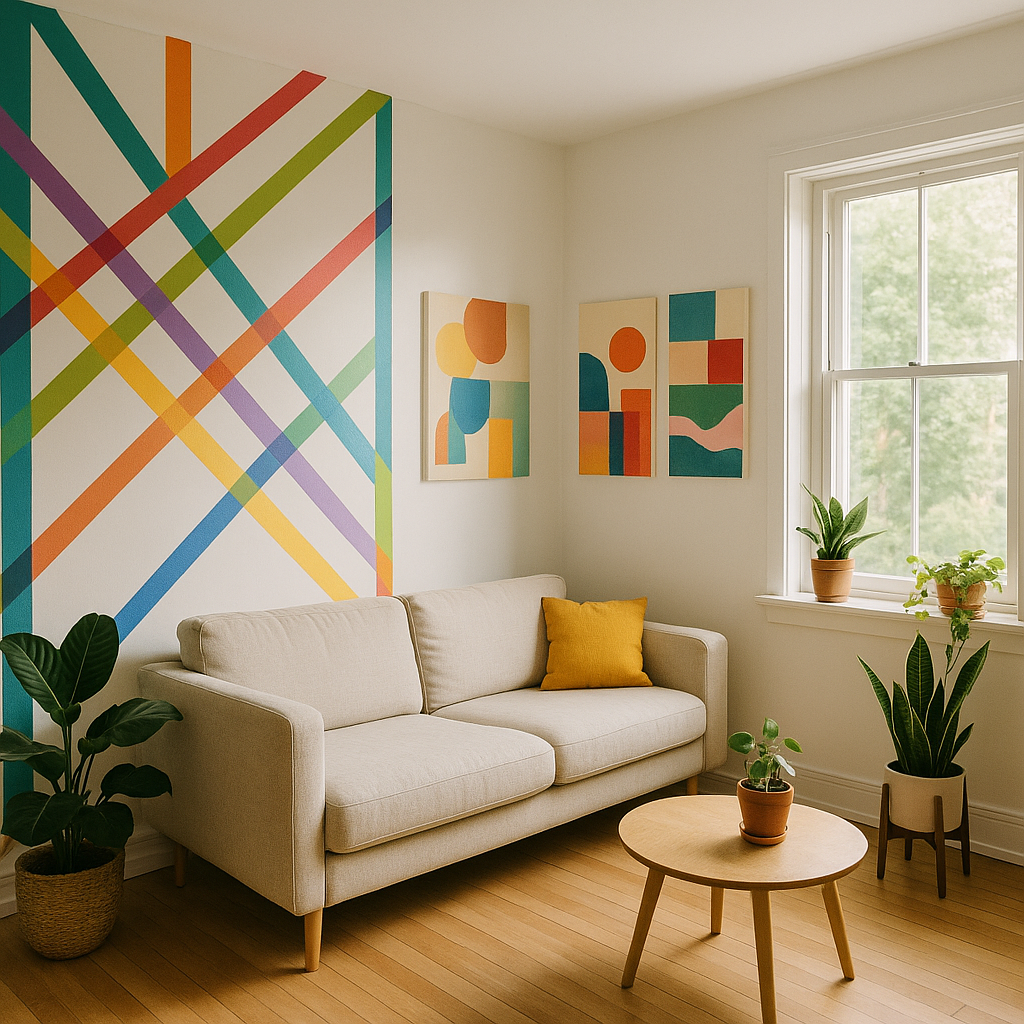
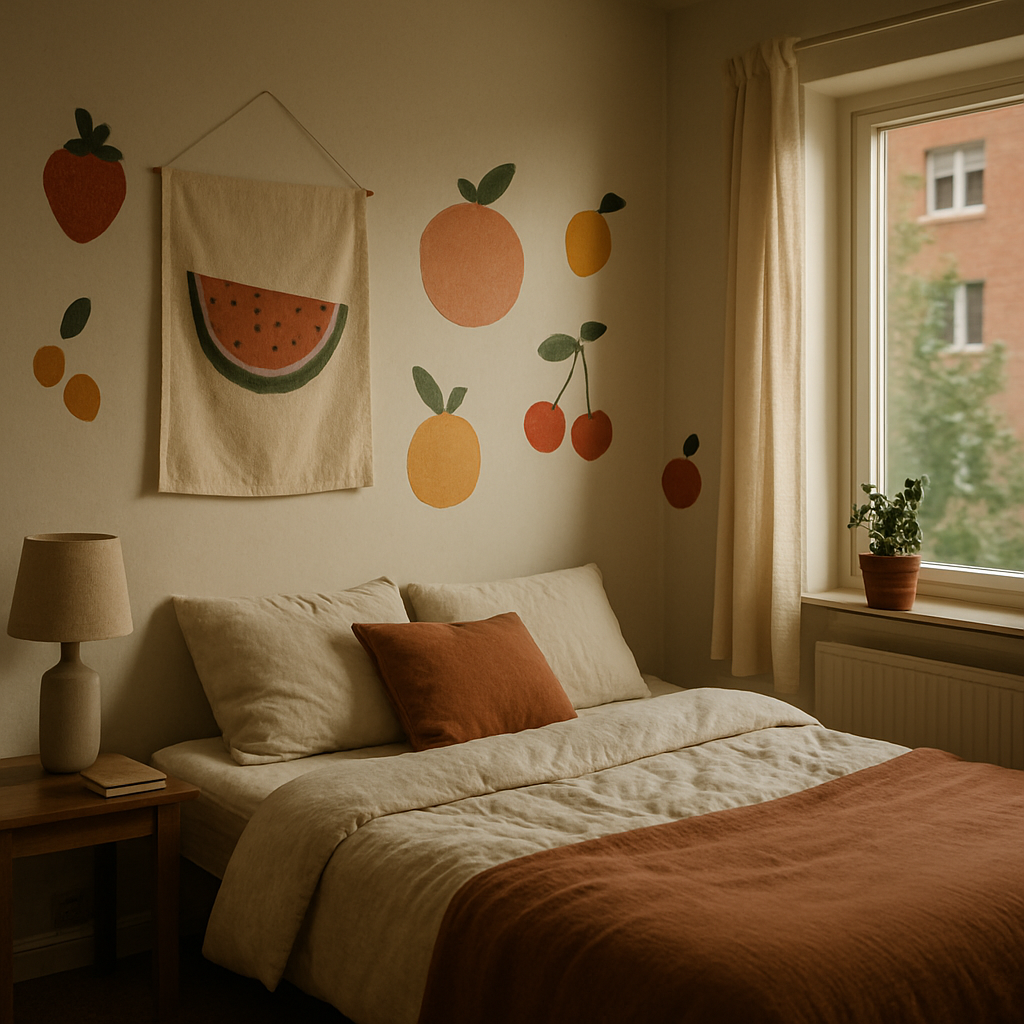
    Cosy bedroom showing renter friendly colourful wall art with fabric hangings and fruity decals
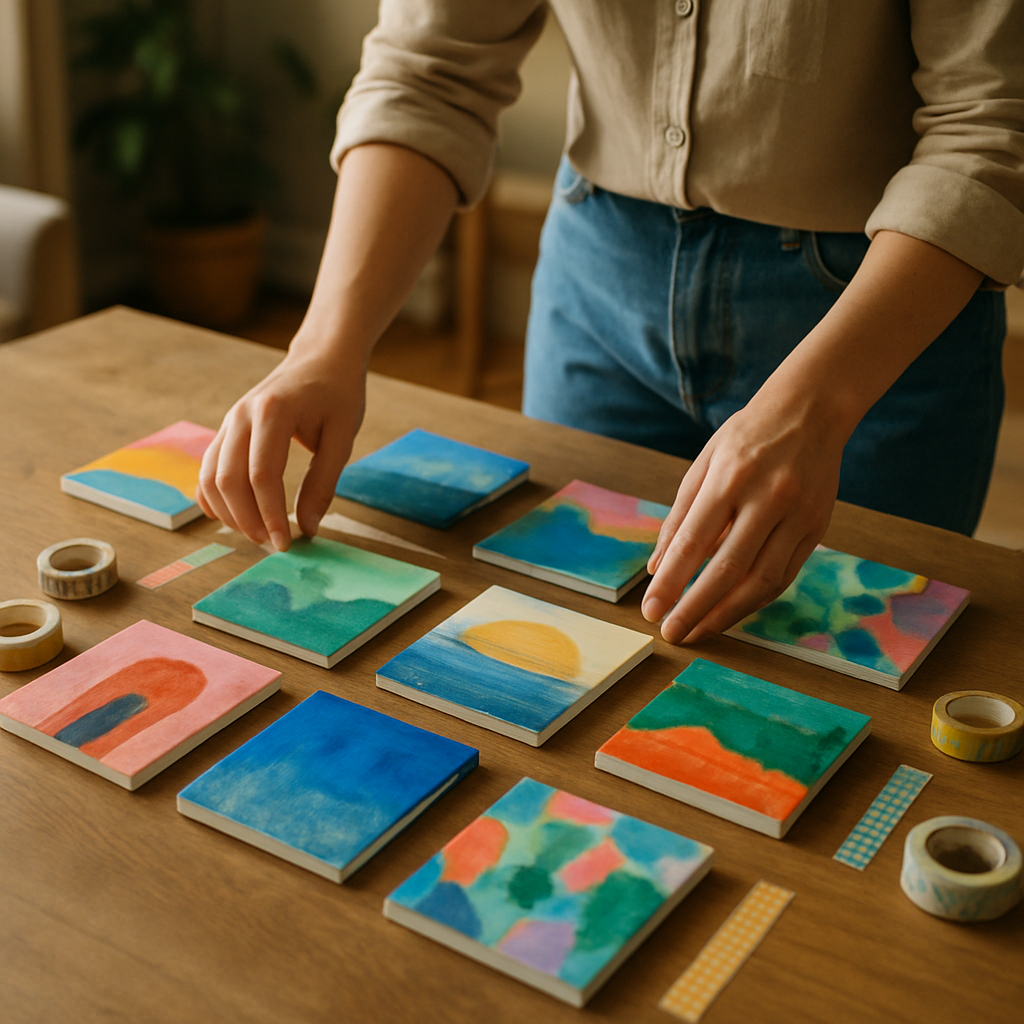
    Artist planning renter friendly colourful wall art with modular canvases and washi tape samples

    Renter friendly colourful wall art FAQs

    Will renter friendly colourful wall art damage my walls?

    If you choose low tack materials like washi tape, removable decals and adhesive hooks designed for painted walls, your renter friendly colourful wall art should come off cleanly. Always test a small hidden patch first and remove slowly at a low angle when you move out or fancy a change.

    How can I pick colours for renter friendly colourful wall art in a small flat?

    Start by choosing three main colours you love plus one neutral, then repeat them across your renter friendly colourful wall art projects. Fruit inspired palettes like citrus, berry or tropical shades work well because they are bright but easy to coordinate, and they instantly lift the mood in compact rooms.

    What is the easiest renter friendly colourful wall art project for beginners?

    Washi tape murals and modular canvas sets are both very beginner friendly. With washi tape you can sketch simple shapes directly on the wall and peel them off if you change your mind, while modular canvases let you paint on a table and then hang the finished pieces using removable strips.

  • How to Find Art Inspiration in Museums and Galleries

    How to Find Art Inspiration in Museums and Galleries

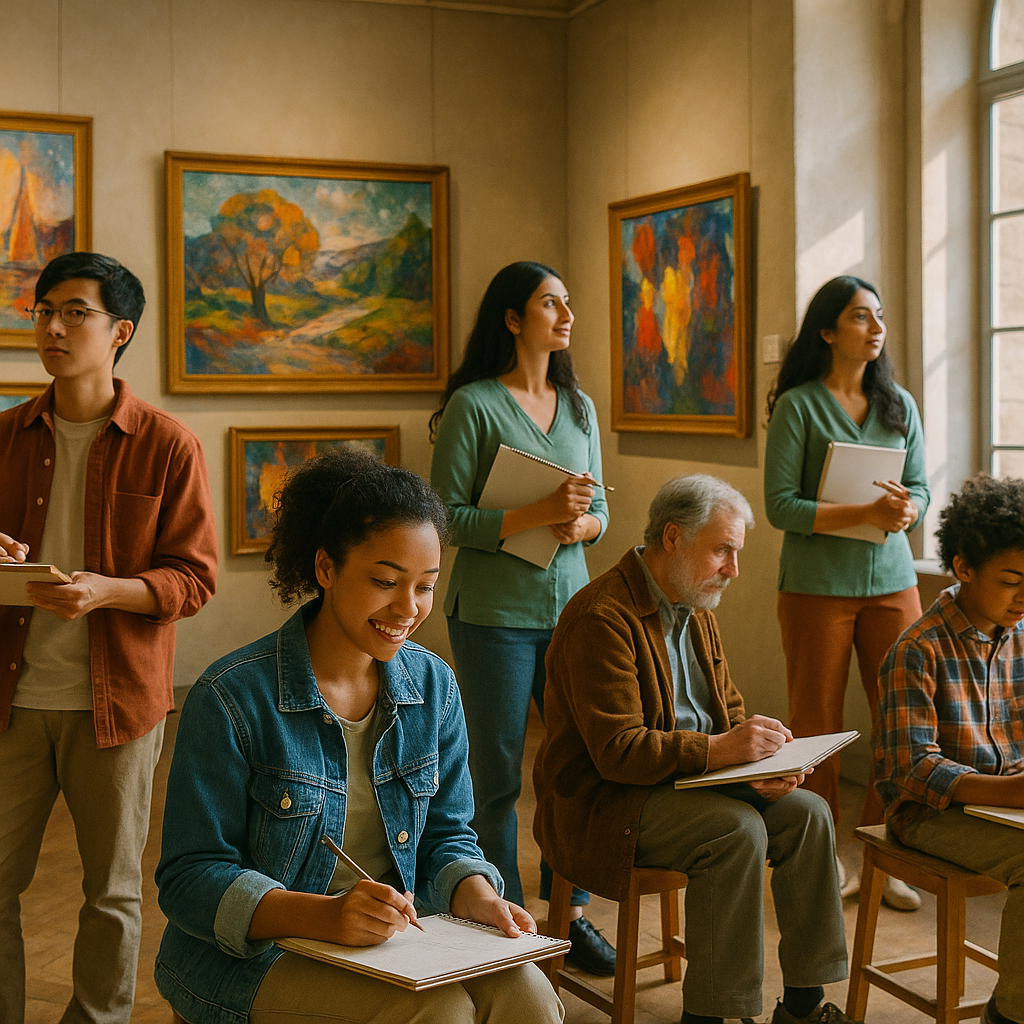
    There is something wonderfully fizzy about art inspiration in museums and galleries. You walk through the doors and suddenly you are swimming in colour, texture and stories. Whether you are a painter, illustrator, crafter or just art-curious, these spaces can become your most joyful creative playgrounds.

    Why art inspiration in museums and galleries feels so powerful

    Museums and galleries are like giant sketchbooks you can walk inside. The lighting, the scale of the rooms and the quiet hum of people looking all help you slip into a creative headspace. Instead of scrolling endlessly, you move slowly, noticing tiny details – brush hairs, cracks in marble, threads in textiles.

    Places like IWM show how art can hold memories, emotions and real human experiences. Seeing how other artists have turned fear, hope or celebration into images can gently nudge you to explore your own stories in a more playful, colourful way.

    Playful ways to collect ideas while you wander

    To make the most of art inspiration in museums and galleries, turn your visit into a creative game. Here are a few fun prompts to try.

    1. The colour treasure hunt
    Pick one colour at the entrance – maybe juicy orange or electric pink – and hunt for it in every room. Snap photos or jot quick notes in your sketchbook. At home, turn your colour finds into a collage, pattern sheet or set of character designs.

    2. Ten-second sketches
    Stand in front of a painting or sculpture and give yourself ten seconds to sketch its overall shape. No details, no perfection, just swooshes and scribbles. Do this for five or six pieces in a row. You will end up with a page full of loose, energetic shapes that can become new compositions later.

    3. Story swap
    Choose one artwork and imagine it is a still from a film. What happened five minutes before this moment? What will happen five minutes after? Write a few lines, then use them as prompts for comics, zines or illustrated poems.

    Turning museum moments into your own artwork

    Once you are home, it is time to squeeze all that inspiration into something fruity and fresh. Lay out your tickets, sketches and phone photos. Circle three things that really delighted you – maybe a bold colour pairing, a quirky pose or a surprising material.

    Use each circled detail as a starting point. For example, if you loved a deep teal and tangerine combination, create a mini series of paintings using only those colours. If a sculpture had a dramatic twist in its pose, try drawing everyday objects with the same twist – a dancing teapot, a stretching houseplant, a yawning coffee mug.

    Remember, the goal is not to copy artworks you saw, but to remix tiny details into your own visual language. That is where art inspiration in museums and galleries becomes truly personal.

    Making visits more fun for kids and beginners

    If you are visiting with children or new-to-art friends, keep things light and playful. Set a challenge to find the funniest face in the building, or the artwork that looks most like a snack. Encourage everyone to choose one piece they would happily hang in their own home and explain why.

    Bring a tiny sketchbook and a handful of coloured pencils. Invite each person to draw just one favourite detail – a swirl of hair, a corner of a building, a single leaf. These small sketches feel achievable, and they build confidence without any pressure to be perfect.

    Building a colourful museum habit

    To keep your creativity juicy, try turning museum and gallery visits into a regular ritual. Visit at different times of day to see how the light changes your mood. Some people like to go alone with headphones and a playlist; others prefer to wander with a friend and chat about what they notice.

    Keep a running list of places you want to explore, from big national collections to tiny local spaces. Over time, you will build your own mental library of colours, shapes and stories that you can dip into whenever your sketchbook feels a bit too empty.

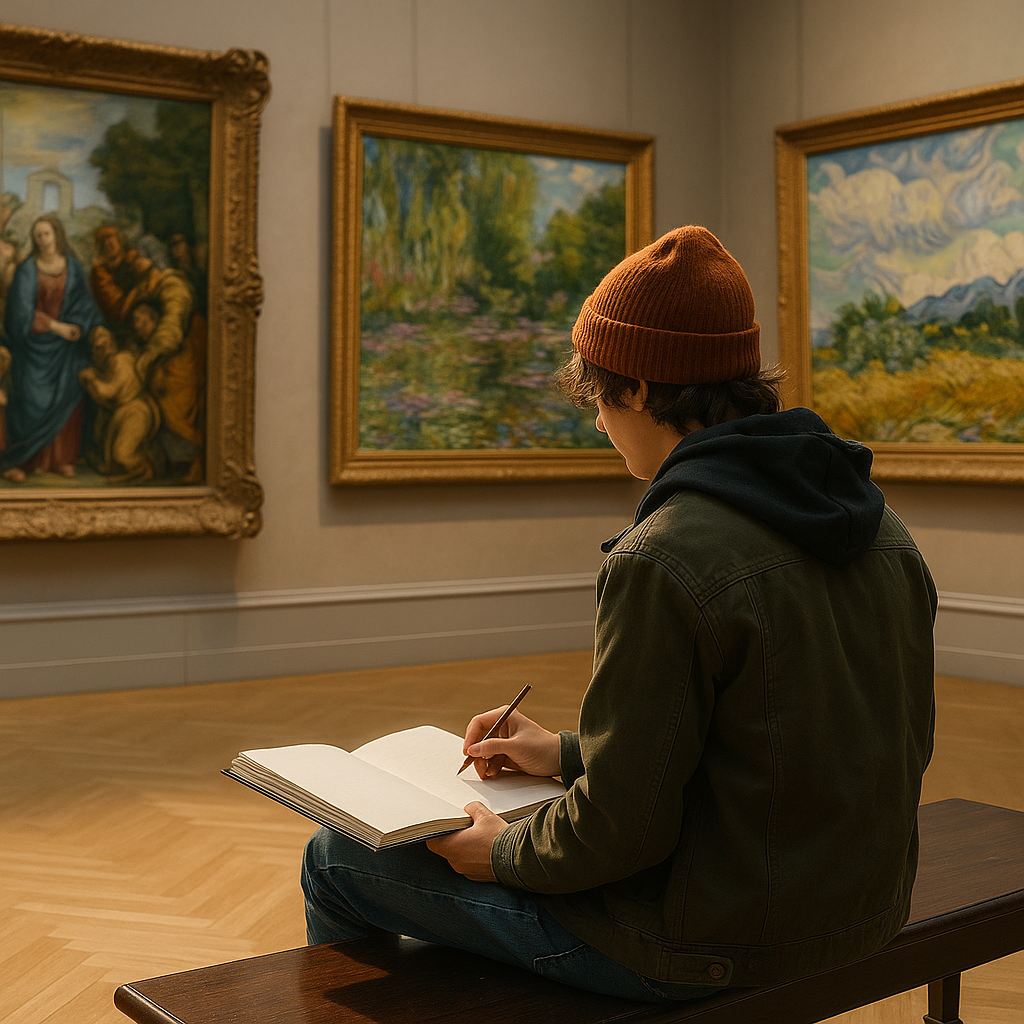
    Artist using a sketchbook to capture art inspiration in museums and galleries
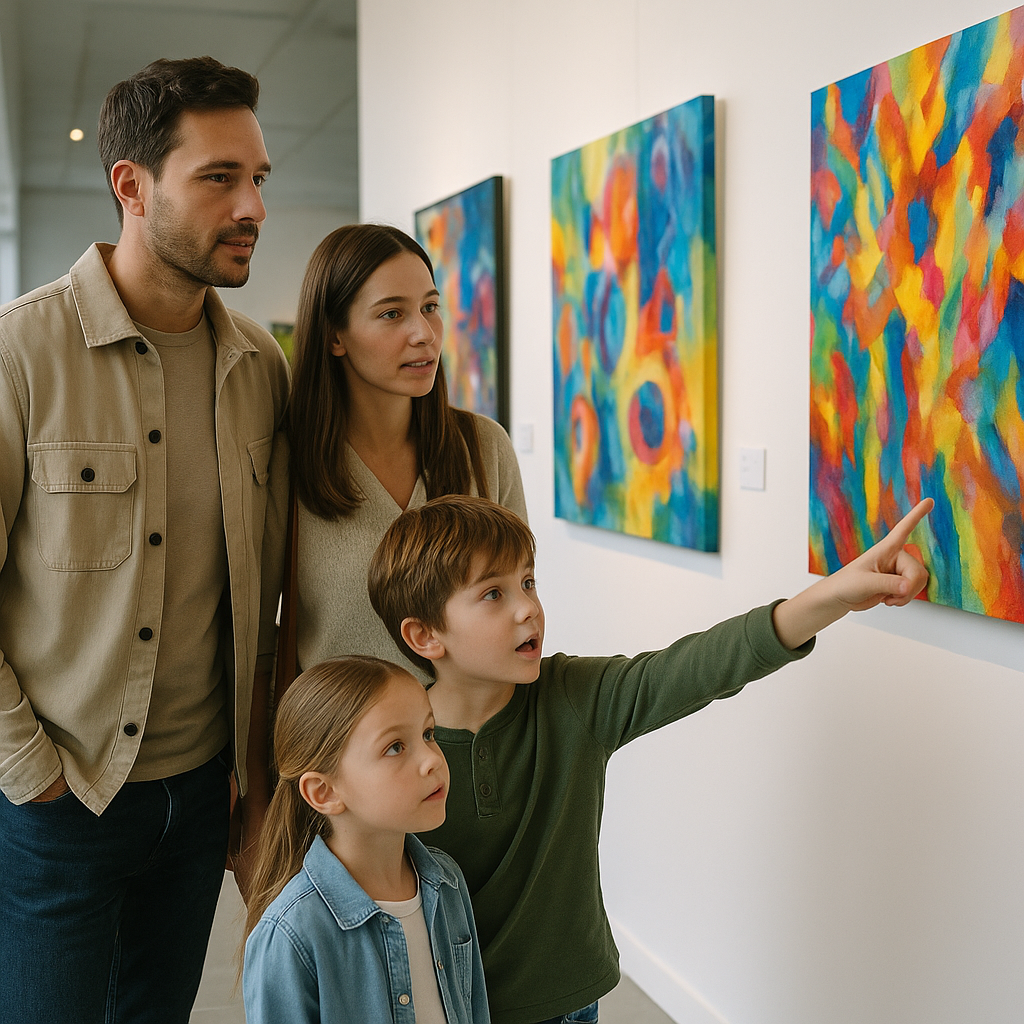
    Family enjoying creative art inspiration in museums and galleries together

    Art inspiration in museums and galleries FAQs

    How can I remember ideas after visiting a museum or gallery?

    Carry a small notebook or use your phone to jot down quick notes about colours, shapes and feelings that catch your attention. Snap photos of overall views as well as close ups of textures or details. When you get home, review everything within a day or two and turn your favourite moments into tiny sketches, colour swatches or written prompts so they do not fade from memory.

    What should I bring to sketch in a museum or gallery?

    Most places are happy for you to bring a small sketchbook and dry drawing tools like pencils or fine liners. Avoid anything messy such as paints or charcoal unless the venue specifically allows it. A compact set of coloured pencils is perfect for capturing quick impressions and playful colour ideas without taking up much space in your bag.

    How often should I visit to keep my creativity flowing?

    Even a visit every couple of months can give your creativity a lovely boost, but going more often helps you build a habit of looking closely and noticing details. Try mixing larger trips with quick drop ins to nearby galleries. Treat each visit as a chance to collect just one or two new ideas rather than feeling you must see everything in one go.

  • Playful Patterned Flooring Ideas To Brighten Any Creative Space

    Playful Patterned Flooring Ideas To Brighten Any Creative Space

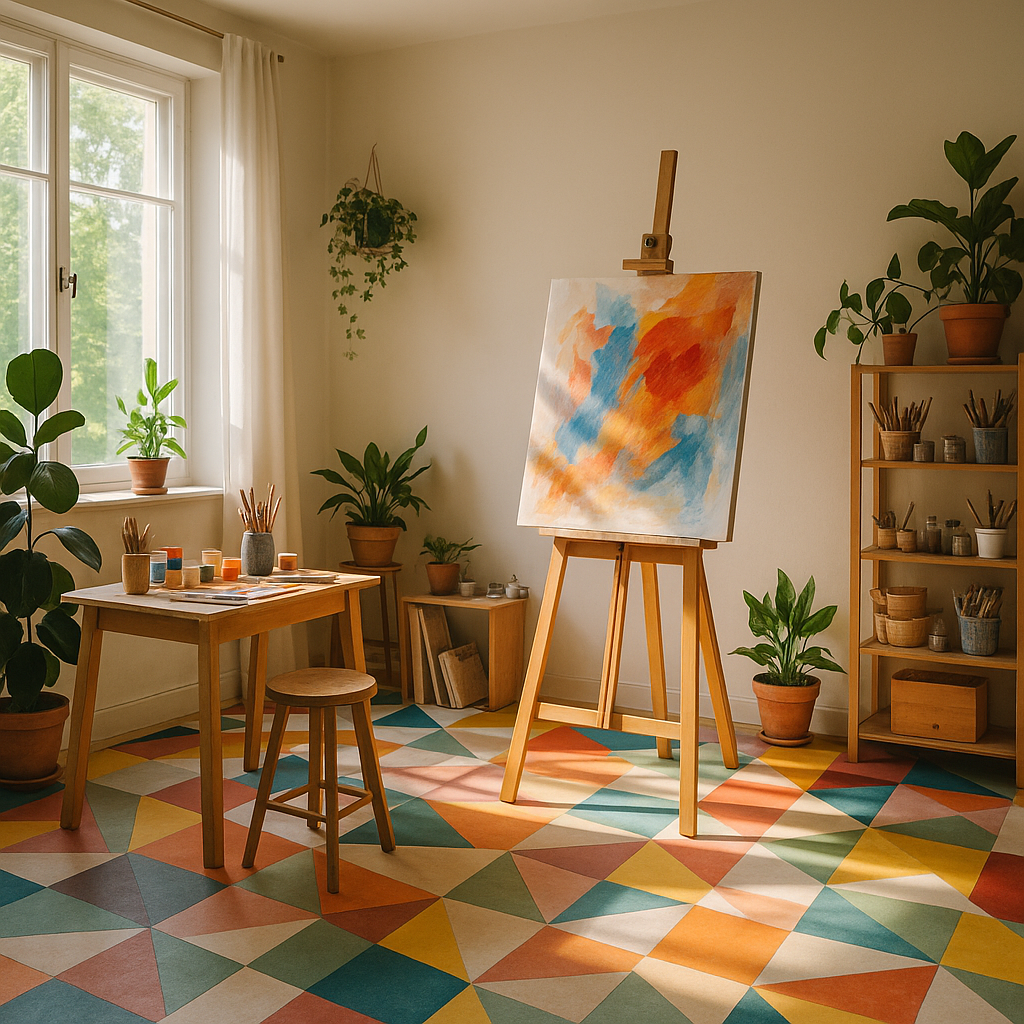
    If your studio, craft corner or colourful kitchen is feeling a bit flat, it might be time to look down. The right patterned flooring ideas can turn a plain room into a joyful, creative playground, without needing to repaint every wall.

    Why patterned flooring ideas suit creative homes

    Pattern has personality. On the floor it acts like a giant canvas, setting the mood the moment you step into a room. For creative spaces, pattern can spark imagination, zone different activities and hide the inevitable paint splatters and glitter spills that come with making things.

    Unlike a single block colour, pattern gives your eye something to dance across. In an art studio it can help balance lots of colour on the walls; in a minimalist flat it can become the main feature, like a giant artwork underfoot.

    Bold tile patterns for kitchens and studios

    Tiles are a brilliant way to add long lasting pattern. Think beyond classic black and white chequerboard and play with colour and scale.

    • Sunrise checker: Swap black for deep berry and white for soft peach for a warm, fruity twist.
    • Mismatched mosaics: Use leftover tiles in different colours but keep the same size for a joyful, patchwork look.
    • Striped studio zone: Lay rectangular tiles in colourful stripes to mark out a painting or sewing area.

    In busy spaces like shared art classrooms or community workshops, patterned tiles are both practical and playful, coping with heavy use while still looking bright.

    Painted floorboards as a giant canvas

    For wooden floors, painted patterns are one of the most flexible patterned flooring ideas. You can treat your boards like a mural that happens to live under your feet.

    Try these approaches:

    • Candy stripes: Mask off wide stripes and alternate two happy colours, like mint and lemon.
    • Geometric rug effect: Paint a large rectangle with a border and simple shapes to mimic a rug in a reading nook.
    • Confetti dots: Use a circular stencil and leftover tester pots to scatter dots across a hallway.

    The joy of painted floors is that you can sand and repaint when your style shifts. Many creative homeowners in places like Bristol and Brighton refresh their floor patterns every few years, treating them as evolving artworks.

    Playful vinyl and lino for colourful comfort

    Modern vinyl and lino come in a rainbow of patterns, from terrazzo sprinkles to bold zigzags. They are soft underfoot, easy to clean and ideal for craft rooms, playrooms and kitchen diners.

    If you love the look of poured resin floors shown by studios such as Minoli in their showrooms but want something more budget friendly, patterned sheet flooring can give a similar vibe with extra comfort. For spaces that need to be practical as well as pretty, some ranges even combine design with discreet performance features, sitting happily alongside more specialist options like safety flooring in other parts of a building.

    Layering rugs for a soft, arty look

    Rugs are the quickest way to experiment with pattern without committing. Layering them adds depth and a cosy, studio loft feel.

    Try placing a large, neutral rug as a base, then add smaller patterned rugs on top to highlight different zones – a reading corner, a sketching chair, a low table for clay work. Mix florals with stripes, or geometrics with painterly splashes, but keep a common colour running through to tie everything together.

    Choosing colours that keep creativity flowing

    When exploring patterned flooring ideas, think about how you want the space to feel while you are making. Zesty citrus tones like orange, lime and yellow energise, perfect for brainstorming and big canvases. Cooler shades – sea blues, lilacs and soft greens – are soothing for focused drawing or writing.

    A good rule is to choose two main colours and one accent. Let the pattern do the talking rather than squeezing in every shade at once. If your walls are already busy with art, pick a simpler floor pattern; if your walls are calm, you can go bolder underfoot.

    Practical tips for long lasting creative floors

    Joyful floors still need to cope with real life – spilled coffee, clay dust, fabric threads and the odd dropped paintbrush.

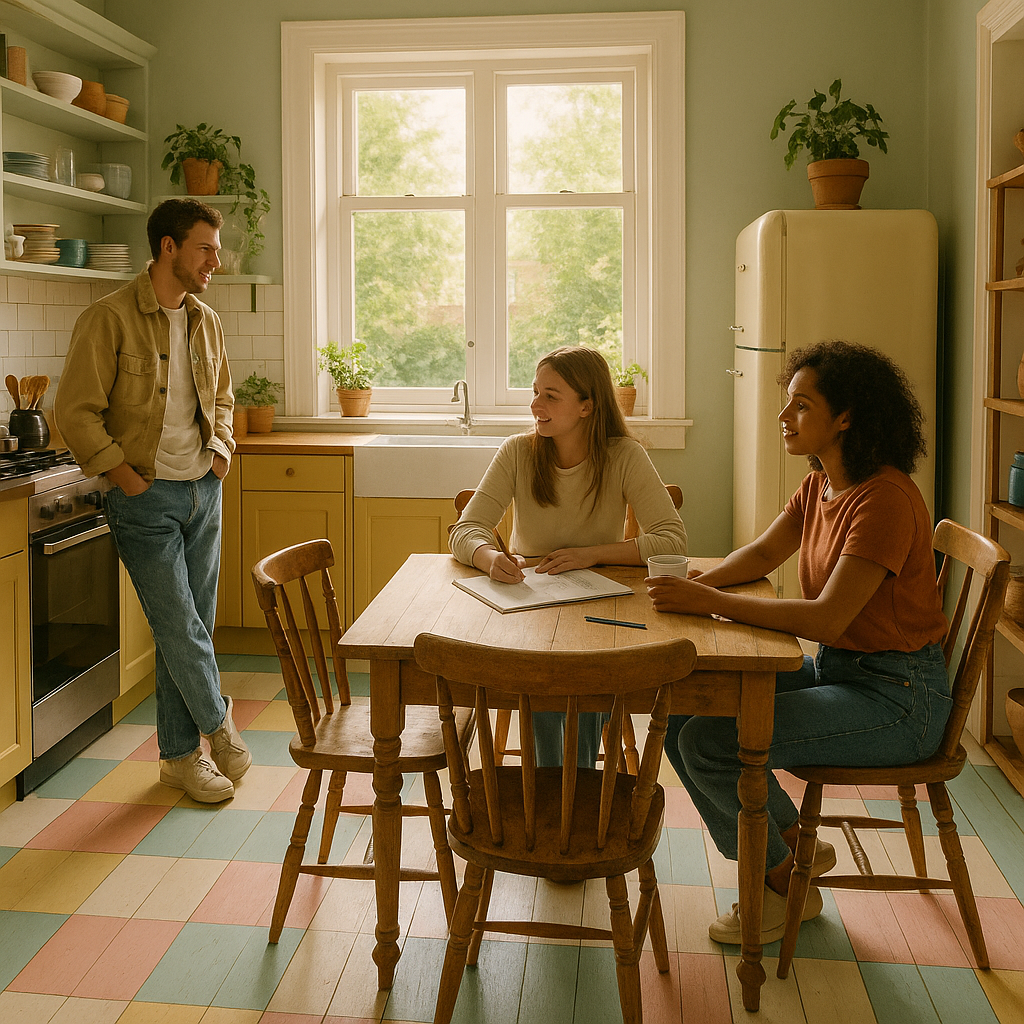
    Pastel checkerboard floor showcasing playful patterned flooring ideas in a family kitchen
    Cosy craft room using layered rugs as creative patterned flooring ideas

    Patterned flooring ideas FAQs

    How do I choose patterned flooring ideas that suit a small room?

    For smaller rooms, look for patterned flooring ideas that use lighter colours and medium scale motifs. Very tiny patterns can feel busy, while huge motifs may overwhelm the space. Diagonal layouts and soft, repeating geometrics can make a room feel more open. Keeping walls and large furniture fairly simple allows the patterned floor to shine without making the room feel cramped.

    Can I use painted patterned flooring ideas in a rented home?

    If your landlord allows it, you can sometimes paint existing floorboards, but always get written permission first. A more flexible option is to create patterned flooring ideas using large painted boards or plywood panels laid on top of the existing floor, or by using peel and stick tiles. These can often be removed or replaced later with minimal impact, making them more rental friendly.

    Are patterned flooring ideas hard to keep clean in creative spaces?

    Patterned floors often hide dust, crumbs and minor marks better than plain, dark surfaces, which can actually make them feel tidier day to day. Choose finishes that are easy to sweep and mop, and avoid very deep textures where paint or clay could get stuck. In art studios and craft rooms, a simple weekly sweep and occasional deeper clean is usually enough to keep patterned floors looking bright and inviting.

  • How To Start A Community Art Club That Everyone Loves

    How To Start A Community Art Club That Everyone Loves

    If you have ever dreamed of filling your week with colour, creativity and new friends, learning how to start a community art club is a brilliant place to begin. You do not need a huge budget or a fancy studio – just a spark of enthusiasm and a plan to turn it into something joyful.

    Why start a community art club?

    Before you dive into the details of how to start a community art club, it helps to know your why. Maybe you want a regular excuse to paint instead of scrolling, or you would love to give local children a playful, arty space after school. Perhaps you simply miss the buzz of making things with other people.

    A community art club can:

    • Bring neighbours together in a relaxed, friendly setting
    • Give people of all ages a creative outlet
    • Support mental wellbeing through mindful making
    • Turn quiet community spaces into colourful hubs of activity

    Some groups, such as Brick Club, show how hands on, creative meet ups can grow into a real highlight of the week for families and young makers.

    Planning how to start a community art club

    Once you are sure you want to go for it, planning is your next playful step. Grab a notebook, a rainbow of pens and sketch out the basics:

    • Who is it for? Children, adults, or a mix? Beginners only, or all levels?
    • How often? Weekly, fortnightly or monthly sessions keep things regular without being overwhelming.
    • Where? Community halls, libraries, church halls and school spaces are often affordable and welcoming.
    • When? Evenings suit adults, while after school or Saturday mornings work well for families.

    As you map this out, keep it light and flexible. The joy of learning how to start a community art club is that you can tweak things as you go and see what your group enjoys most.

    Choosing colourful, low stress activities

    Next, plan what you will actually make. Start with simple, low pressure projects that do not demand perfect drawing skills or expensive materials. Think bold colour, big shapes and playful experimentation.

    Fun first session ideas include:

    • Collaborative murals on big rolls of paper spread across tables
    • Fruit and veg stamping with bright poster paints
    • Collage using old magazines, scrap paper and fabric
    • Watercolour postcards people can take home or swap

    Rotate between painting, collage, printmaking and simple sculpture so there is always something fresh and fruity on offer. Keep instructions clear but loose, and always leave room for people to follow their own ideas.

    Gathering materials on a budget

    One of the biggest worries when people think about how to start a community art club is cost. The good news is you can build a brilliant stash of supplies without emptying your wallet.

    Try these ideas:

    • Ask friends and neighbours to donate spare art materials
    • Use recycled jars, cardboard and packaging in projects
    • Buy basics like paints and brushes in bulk where possible
    • Charge a small fee per session to cover ongoing supplies

    You can also invite members to bring their own favourite tools, like sketchbooks or pens, while you provide the shared, messier materials such as paint and glue.

    Creating a warm, welcoming atmosphere

    The secret ingredient in how to start a community art club that lasts is not fancy kit, it is atmosphere. From the moment people walk in, you want them to feel relaxed and ready to play.

    Small touches make a big difference:

    • Colourful tablecloths or paper to instantly brighten the room
    • Upbeat background music at a gentle volume
    • Jugs of squash, tea and bowls of biscuits or fruit
    • Name stickers so people can chat easily

    Celebrate process over perfection. Encourage people to share what they are working on, but never force anyone to show their art if they feel shy. A kind, encouraging tone from you will set the mood for the whole group.

    Colourful art materials on a shared table illustrating how to start a community art club
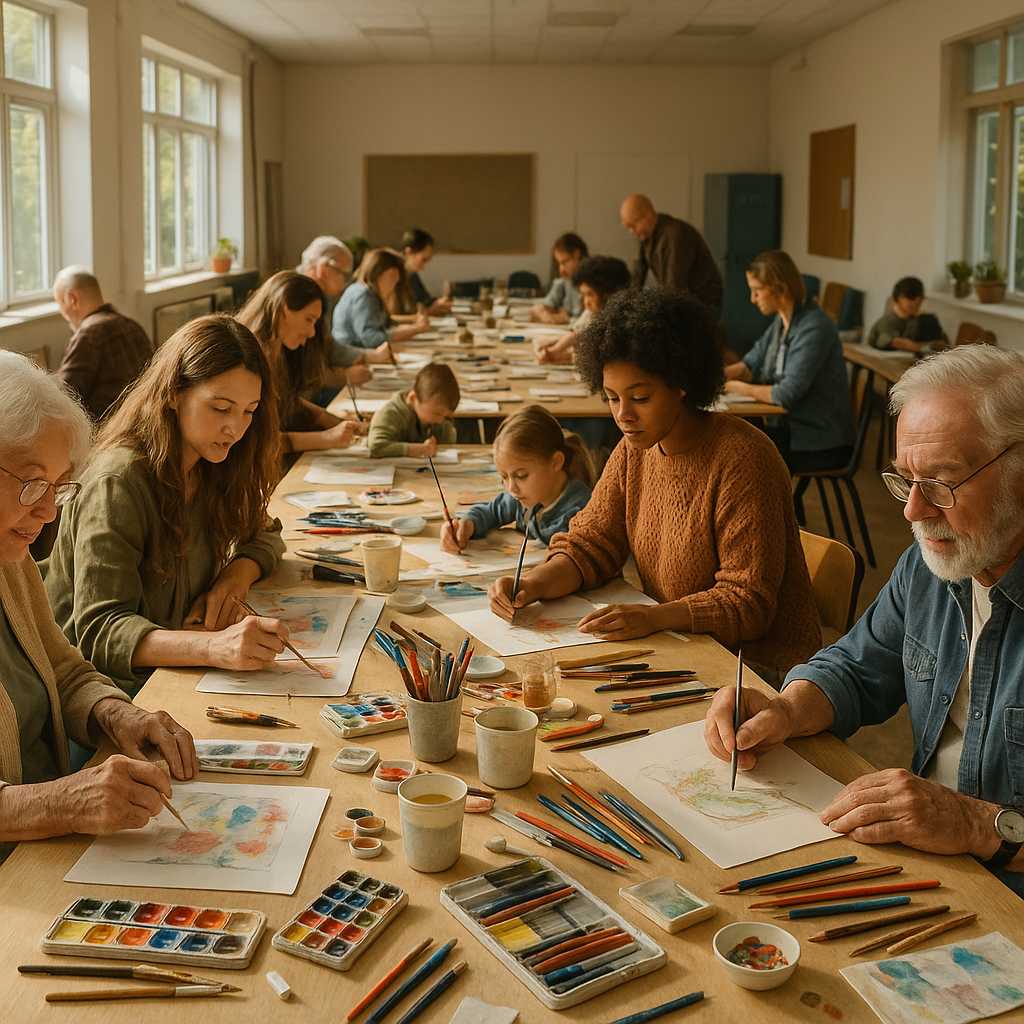
    Group posing with a collaborative mural as an example of how to start a community art club

    How to start a community art club FAQs

    Do I need to be a professional artist to start a community art club?

    You do not need to be a professional artist to start a community art club. As long as you enjoy making things and can organise simple projects, you can host a welcoming space. Focus on easy, colourful activities, invite others to share skills, and keep the atmosphere relaxed rather than formal or academic.

    How can I keep costs low when running a community art club?

    To keep costs low, use recycled materials, ask for donations of spare art supplies, and choose projects that rely on affordable basics like paper, poster paint and glue. A small session fee can help cover ongoing costs, and you can encourage members to bring their own sketchbooks or favourite tools.

    What is the best venue for a new community art club?

    The best venue for a new community art club is a space that is easy to reach, with tables, chairs, good light and a floor that can cope with a bit of mess. Community halls, libraries, church rooms and school spaces are all good options. Make sure there is access to water for washing brushes and enough room for people to spread out comfortably.

  • Turning Old Buildings Into Art: Creative Ways To Reuse Unsafe Spaces

    Turning Old Buildings Into Art: Creative Ways To Reuse Unsafe Spaces

    There is something deliciously exciting about art projects in abandoned buildings. Cracked paint, peeling posters and shafts of dusty light can turn forgotten spaces into ready-made stages for creativity. But before you grab your paints and a pineapple-print sketchbook, it is worth thinking about how to explore these places in a way that is playful, colourful and safe.

    Why art projects in abandoned buildings feel so magical

    Old buildings are like creative pick-and-mix. Rusty pipes become sculptural lines, broken tiles look like mosaics, and faded wallpaper feels like a ready-made collage. Artists are drawn to these spaces because they offer texture, history and mystery in every corner. Instead of a blank white wall, you get layers of story to respond to with your own fruity splash of colour.

    These places can inspire all kinds of work: photography series, site-specific installations, dance performances, sketching sessions or even community murals on the outside walls. The key is to treat the building as a collaborator, not just a backdrop. What colours are already there? What patterns have time and weather created? What might you add that feels like a joyful conversation rather than a loud interruption?

    Safety first: making creativity sweeter, not riskier

    Behind the magic, abandoned spaces can hide some not-so-fun surprises. Loose floorboards, sharp metal, mould and other building nasties can all turn a dreamy art day into something much less cheerful. If you are planning art projects in abandoned buildings, it is smart to think safety before sketching.

    Whenever possible, work with building owners, councils or community groups to secure permission and information about the site. They may already have surveys or checks in place for structural issues and older materials. If in doubt, stick to outdoor areas, doorways and easily accessible spaces rather than climbing, squeezing or exploring unstable upper floors.

    For more technical building safety questions, including issues that might affect older materials, resources such as Asbestos sampling faqs can be useful starting points when planning larger, organised projects with property owners.

    Playful ideas for colourful, low-risk building art

    You do not have to sneak inside a crumbling warehouse to enjoy the atmosphere of forgotten architecture. There are plenty of bright, low-risk ways to channel that abandoned-building mood into your work.

    1. Outside-only adventures

    Focus on exterior walls, boarded windows and doorways that face public paths. Photograph textures, sketch architectural shapes or design a series of paintings inspired by the colours you find. You can bring those sketches back to the studio and turn them into larger, juicy canvases or digital collages.

    2. Temporary and removable artworks

    Chalk drawings on pavements, yarn bombing on railings and removable stickers on noticeboards can all add a burst of colour without permanently changing the building. Think of it as dressing the structure up for a friendly, creative party, then tidying up afterwards.

    3. Abandoned-building inspired studio sets

    If a site is too unsafe, recreate the feeling at home or in a community space. Use torn paper, old posters, cardboard and paint to build your own mini “ruin” as a photography backdrop. You get the mood and mystery without the wobbly floors.

    Community art projects in abandoned buildings

    When handled with permission and proper checks, abandoned spaces can become magical hubs for community creativity. Pop-up exhibitions, guided drawing walks and supervised mural projects can breathe fruity new life into places that once felt gloomy.

    Local residents often have strong memories of these buildings, from old factories to closed-down cinemas. Inviting people to share stories, photos and objects connected to the site can turn your project into a living time-capsule. The final artworks might mix old photographs with new paint, or combine historic signage with bright, contemporary patterns.

    Keeping the fun in forgotten places

    The joy of art projects in abandoned buildings lies in balance: a pinch of mystery, a spoonful of history and a big scoop of playful colour. By respecting safety, getting permission where needed and choosing low-risk ways to work, you can let your creativity run wild without putting anyone in harm’s way.

    Artist drawing textures inspired by art projects in abandoned buildings
    Community workshop creating art projects in abandoned buildings

    Art projects in abandoned buildings FAQs

    Can I legally create art in an abandoned building?

    You usually need permission from the property owner or local authority before creating art in or on an abandoned building. Even if a place looks forgotten, it still belongs to someone. For outdoor sketching or photography from public paths, you are generally fine, but any physical changes, installations or murals should be agreed in advance. Getting permission can also help you access safety information about the site.

    How can I stay safe while making art near old buildings?

    Stick to stable ground, avoid climbing or entering obviously damaged areas, and be careful of sharp edges or loose materials. Closed shoes, gloves and a basic first-aid kit are sensible for group projects. If you plan a larger event, work with the owner or a community group so that structural and material risks are assessed before anyone starts creating.

    What if an abandoned building is too unsafe to enter?

    You can still use the building as inspiration without going inside. Photograph or sketch from a distance, focus on exterior textures, or recreate the atmosphere in your studio using layered paper, paint and found objects. You might also work with local organisations to host exhibitions or workshops in safer venues that celebrate the stories and look of the abandoned site.

  • Colourful Kids’ Art Projects With Household Items

    Colourful Kids’ Art Projects With Household Items

    If you have creative little fruitloops at home, you can whip up colourful kids’ art projects with household items without a single trip to the craft shop. Your recycling bin, kitchen cupboards and junk drawer are secretly bursting with arty magic.

    Why colourful kids’ art projects with household items are brilliant

    Using everyday bits and bobs turns making into a playful treasure hunt. Children learn to see creative potential in the most ordinary things, and you save money on fancy supplies. It is also a fantastic way to reuse packaging and reduce waste while filling your home with bright, happy artwork.

    Before you start, cover the table with an old shower curtain, bin bags or a wipeable cloth, and keep a damp cloth or baby wipes nearby. Pop everyone in old T-shirts and you are ready to splash some colour.

    Juicy fruit stamping art

    Fruit stamping is a delightfully simple way to explore pattern, colour and shape. It turns snack time into studio time, and the results look wonderfully bold and graphic.

    What you need

    Apples, oranges, lemons or pears, a chopping board, child-safe knife for grown ups only, plates or trays for paint, poster paint or ready mixed paint, and thick paper or card.

    How to set it up

    Slice the fruit in half to reveal the beautiful natural patterns. Pat the cut side dry with kitchen roll so the paint is not too runny. Pour small puddles of paint onto plates, then invite children to dip the fruit and stamp onto paper like colourful polka dots and flowers.

    Encourage experimenting with overlapping prints, rolling oranges for stripey textures, or mixing colours on the plate. Once dry, the prints can be cut into shapes for cards, bunting or bookmarks.

    Mess minimising tips

    Use a tray with a lip to catch drips, keep paint colours to two or three, and have a bowl ready for used fruit so it does not roll around the table.

    Cereal box collage creations

    Cereal boxes are perfect for sturdy, colourful collage. Their bright designs and chunky card make them ideal for kids who love cutting and gluing.

    What you need

    Empty cereal boxes, child friendly scissors, glue sticks or PVA, crayons or felt tips, and extra scraps like magazines, envelopes or sweet wrappers.

    How to set it up

    Flatten the boxes and cut along the seams to open them up. Children can cut out letters, mascots and colourful patches to build their own characters, cityscapes or abstract art. Use the plain inside of the box as a background board or cut it into shapes like crowns and masks to decorate.

    Layering different textures is half the fun. Encourage kids to mix shiny, matte and patterned pieces to see what happens.

    Mess minimising tips

    Use a shallow box lid as a cutting and gluing station, and have a scrap bowl for offcuts so they do not spread across the floor.

    Homemade stamps from recycling

    Homemade stamps are a playful way to explore pattern making and turn plain paper into wrapping paper, cards or posters.

    What you need

    Cardboard offcuts, bottle tops, sponges, string, elastic bands, poster paint and tape or glue.

    How to set it up

    Cut cardboard into small squares and glue on shapes cut from sponge. You can also wrap string around a block of card to make stripey patterns or use the base of a bottle top as a dot stamp. Press the finished stamps into paint on a plate and print away.

    Children can design repeating borders, spotty animals or rainbow patterns. It is a fun, low pressure way to play with rhythm and symmetry.

    Mess minimising tips

    Keep one plate per colour, press stamps gently to avoid splats, and have a washing up bowl nearby for quick stamp rinsing.

    Painted pasta jewellery party

    Painted pasta jewellery is colourful, tactile and totally irresistible. It is one of the most joyful colourful kids’ art projects with household items, and it doubles as a fine motor workout.

    What you need

    Dry pasta shapes with holes, such as penne or macaroni, string or wool, tape, and poster paint.

    Table full of cereal box collages and homemade stamps showing colourful kids’ art projects with household items
    Painted pasta necklaces being made during colourful kids’ art projects with household items

    Colourful kids’ art projects with household items FAQs

    Are colourful kids’ art projects with household items safe for young children?

    Yes, colourful kids’ art projects with household items can be very safe as long as an adult prepares any cutting, checks for small choking hazards and uses child friendly paints and glue. Stay close by, keep materials non toxic, and swap very small items for larger, easier to handle pieces for toddlers.

    How can I store finished artwork made from household items?

    Let everything dry completely, then flatten or gently press pieces between sheets of paper. You can photograph 3D creations before recycling bulky parts. Favourite pieces from colourful kids’ art projects with household items can be framed, hung as bunting or turned into homemade cards and gift tags.

    What if I do not have paint for these projects?

    You can still enjoy colourful kids’ art projects with household items using crayons, felt tips or homemade colour from watered down food colouring. Children can draw directly onto cereal boxes, colour pasta with pens instead of paint, and use colourful paper scraps to add brightness without any liquid paint at all.

  • How to Create a Colourful Gallery Wall on a Budget

    How to Create a Colourful Gallery Wall on a Budget

    A colourful gallery wall is like a party for your walls – and everyone is invited. The best bit is that you do not need expensive art or fancy frames to make it look amazing. With a mix of prints, postcards, DIY pieces and found treasures, you can turn any blank wall into a happy, fruity burst of personality.

    Choose a happy theme for your colourful gallery wall

    Start by deciding how you want the wall to feel. Do you want it to be calm and dreamy, or bold and joyfully chaotic? A loose theme helps everything look intentional, even when the pieces are all different.

    Fun theme ideas include:

    • Fruit and florals – think oranges, lemons, wildflowers and leafy greens
    • Holiday memories – postcards, tickets, tiny sketches and photos
    • Colour stories – all pinks, or a rainbow that runs across the wall
    • Feel-good quotes – hand lettered phrases mixed with bright abstract art

    Gather anything that fits your theme: charity shop prints, magazine cuttings, greetings cards, your own doodles, even pretty packaging. Lay them all out on the floor so you can see what you have to play with.

    Mix frames and materials without losing harmony

    A playful gallery wall loves variety, but a tiny bit of structure keeps it from looking messy. Aim for a mix of frame styles, but repeat some elements so the eye can rest.

    Try these tricks:

    • Choose 2 or 3 frame colours and repeat them – for example white, oak and one bold colour
    • Use different frame sizes but keep the borders similar in thickness
    • Mix framed art with washi-taped postcards or clipboards for texture
    • Add one or two non-print pieces, like a woven coaster or tiny hanging plant

    If frames are out of budget, use colourful washi tape, bulldog clips or mini wooden pegs on string. The mix of materials can make your colourful gallery wall feel even more creative and relaxed.

    Balance colour like a cheerful jigsaw

    Colour is where the fun really starts. Spread your brightest colours around the layout so they are not all shouting from one corner. Imagine your wall divided into four sections and make sure each one has a little pop.

    Helpful colour-balancing tips:

    • Do not cluster all dark pieces together – sprinkle them to anchor the wall
    • Repeat key colours at least three times across the whole arrangement
    • Use white space or pale backgrounds to give the eye breathing room
    • Add one “hero” piece that feels slightly larger or bolder than the rest

    Stand back often while planning. If one area looks heavy, move a bright or light piece there to lift it. Treat it like moving fruit around a platter until it looks delicious.

    Plan the layout before you pick up a hammer

    The secret to a relaxed, joyful wall is doing the fiddly thinking on the floor first. This is where your colourful gallery wall really takes shape.

    Use this simple step by step method:

    1. Measure the wall space and mark out the same size on the floor with tape or string.
    2. Place your largest piece first – usually near the centre or slightly off centre.
    3. Add medium pieces around it, keeping gaps of roughly 5 to 8 cm between frames.
    4. Fill in with smaller prints, postcards and quirky items, like beads or mini canvases.
    5. Take photos of different arrangements until one makes you smile instantly.

    Once you are happy, trace around each piece on paper, cut out the shapes and tape these paper templates to the wall. You can adjust them easily without making a single hole.

    Hanging tips for a joyful, low stress finish

    When you are ready to hang, start with the central or largest piece and work outwards. Use picture hooks, sticky strips or small nails depending on your walls and the weight of each frame.

    Check as you go:

    Planning a colourful gallery wall layout with mixed prints and frames on a wooden floor
    Finished colourful gallery wall in a cosy hallway filled with joyful affordable art

    Colourful gallery wall FAQs

    How do I start a colourful gallery wall if I have no art yet?

    Begin by collecting free or low cost pieces. Save postcards, greetings cards and interesting packaging, print out your favourite photos, and create simple DIY art with paints or felt tips. Charity shops, markets and friends clearing out old frames are great sources. Once you have a small pile, choose a loose theme and start planning your layout on the floor.

    Can a colourful gallery wall work in a small room?

    Yes, a colourful gallery wall can actually make a small room feel more personal and cosy. Choose a tighter colour palette, keep frames fairly light or neutral, and focus on smaller pieces so the wall does not feel too heavy. Hanging art vertically above a sofa, desk or bed draws the eye up and can make the space feel taller.

    Do all frames need to match on a colourful gallery wall?

    They do not need to match, but some repetition helps everything look intentional. Try repeating two or three colours or finishes, such as white, oak and one bright accent. You can mix charity shop finds with simple modern frames, and even add unframed pieces with washi tape, as long as you repeat certain colours or textures across the wall.

  • From Renting To Owning: A Colourful Guide To Saving For Your First Home

    From Renting To Owning: A Colourful Guide To Saving For Your First Home

    Saving for your first home can feel a bit like starting a giant canvas: exciting, intimidating, and very, very blank. The good news is that, just like art, you do not have to create the masterpiece in one go. With some colour, creativity and a few smart habits, you can turn that big dream into something real and wonderfully achievable.

    Painting the big picture: what are you really saving for?

    Before you dive into spreadsheets and savings apps, get playful with your vision. Where will this home be? What does the front door look like? Who is in the kitchen with you on a Sunday morning? The clearer your picture, the easier saving for your first home becomes, because you are not just chasing numbers – you are working towards a life you can almost taste.

    Grab a sketchbook or a big sheet of paper and create a home vision collage. Draw, doodle or stick in images of rooms you love, colours that make you feel cosy, and neighbourhood vibes that light you up. Keep this somewhere visible so every saving decision is connected to something joyful.

    Know your numbers (without killing the fun)

    Even the most expressive artwork needs a frame, and your budget is that frame. Start by working out three simple numbers:

    • How much you could realistically put aside each month
    • Roughly how much properties cost in your chosen area
    • The percentage deposit you are aiming for

    You do not need to become a finance whizz. Think of it like mixing paints: a bit of research here, a few adjustments there, until the picture starts to make sense. Break your total deposit goal into mini milestones, like “first £1,000” or “first 5% of the target”. Celebrate each one with something small and cheerful, like a home-themed movie night or a new plant for your current place.

    Turning everyday life into a savings game

    Instead of treating saving as punishment, turn it into a creative challenge. Give each month a theme, like “No Takeaway November” or “Second-hand September”, and see how inventive you can be with meals, outfits and entertainment. Keep a colourful tracker on your wall and fill in a square, fruit, star or tiny house for every £50 or £100 you save.

    You can also try the “colour jar” method. Label three jars or envelopes with bright markers: Essentials, Fun, and Future Home. Each pay day, divide your money between them. Watching the Future Home jar grow is surprisingly satisfying, especially when it is decorated with your dream front door or favourite paint swatch.

    Side hustles with a splash of creativity

    If your budget already feels tight, adding a little extra income can speed things up without feeling grim. Lean into your artistic side. Could you sell prints, run a weekend craft workshop, or offer mural painting for nurseries and playrooms? Maybe you are brilliant at styling rooms and could help people refresh their spaces on a budget.

    Keep all side hustle income in a separate, sunshine-bright savings account so you can see your progress clearly. Naming the account something fun like “Future Nest” or “Keys Fund” can give you a tiny burst of motivation every time you check the balance.

    Getting help and guidance along the way

    The journey is much easier when you are not walking it alone. Talk to friends who have bought recently, attend first-time buyer events, and read up on any schemes that might support you. When you are ready to understand what you can realistically borrow and how different options compare, it can be helpful to speak to specialists who deal with mortgages every day.

    Think of these conversations as sketching rough outlines, not signing your final piece. You are simply gathering shapes and ideas so you can make better decisions later.

    Keeping your sparkle while you save

    Long-term goals can feel slow, so it is vital to keep life colourful while you work towards them. Protect a small “joy budget” each month for things that feed your creativity: gallery visits, a new set of paints, a dance class, or fresh flowers for your current space. These little treats stop the process from feeling grey and keep your motivation bright.

    Person making a creative vision board to stay motivated while saving for your first home.
    Colourful savings jars and a progress chart helping someone with saving for your first home.

    Saving for your first home FAQs

    How much should I aim to save for a first home deposit?

    The amount you need for a deposit depends on property prices in your chosen area and the percentage required by your lender. Many first time buyers aim for at least 5 to 10 percent of the property price, but a higher deposit can sometimes give you more options and better rates. Start by researching typical prices where you want to live, then break your target into smaller milestones so it feels manageable.

    How can I stay motivated while saving for your first home takes a long time?

    Staying motivated is easier if you keep your goal visible and joyful. Create a vision board of your dream home, track your progress with colourful charts, and celebrate each milestone with a small treat that does not undo your hard work. It also helps to check in regularly on your progress so you can see how far you have already come, instead of only focusing on how far there is to go.

    What creative ways can I boost my savings without feeling deprived?

    Look for ways to blend fun with frugality. Try themed no-spend weeks, swap nights with friends instead of going out, or host craft sessions where everyone brings materials they already have. You could also start a creative side hustle, such as selling artwork, offering design help, or running workshops. Channelling your talents into extra income can feel rewarding and expressive instead of restrictive.