Author: Sophie Davies

  • How To Turn Your Fruit Bowl Into A Daily Still Life Art Studio

    How To Turn Your Fruit Bowl Into A Daily Still Life Art Studio

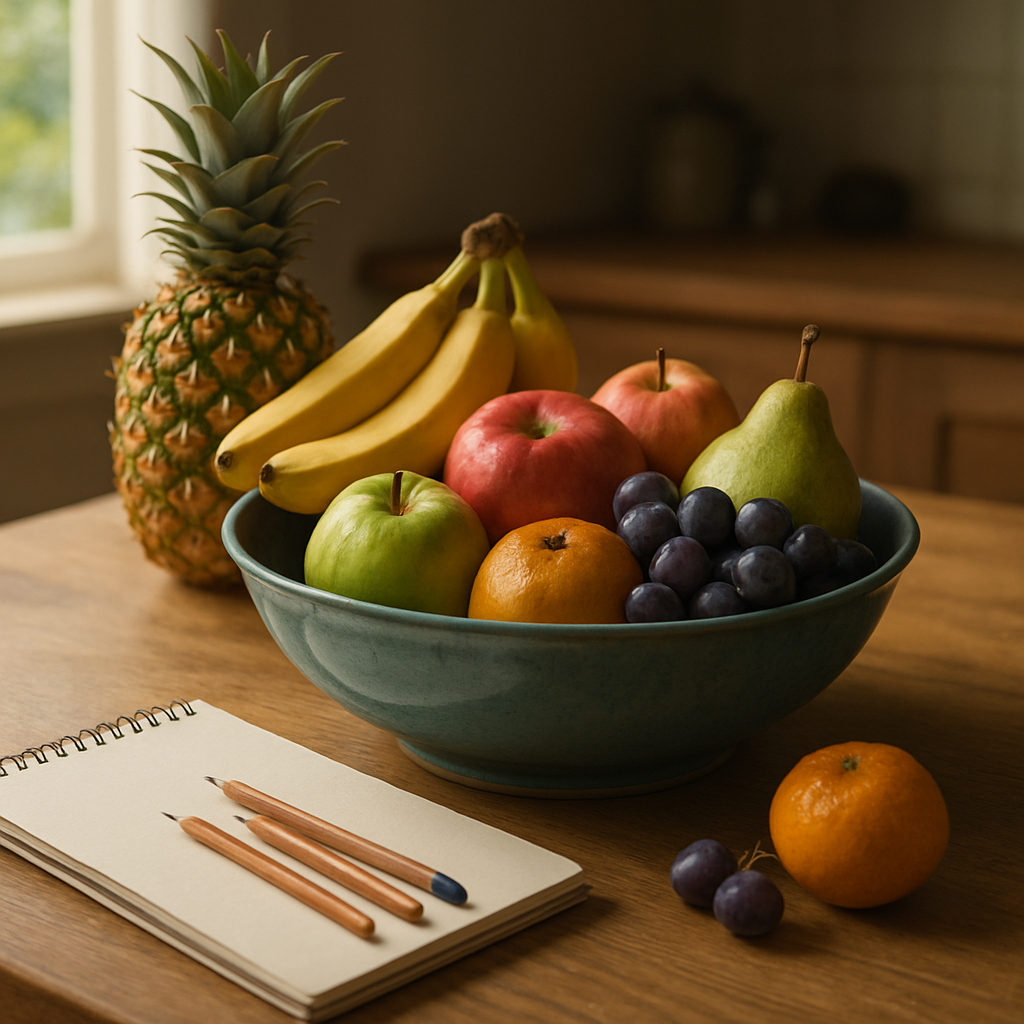
    If you have a fruit bowl, you already own a mini art studio. A simple fruit bowl still life is one of the easiest, juiciest ways to build your drawing and painting skills every single day.
    Why a fruit bowl still life is the perfect practice subject

    Fruit is wonderfully forgiving. Oranges are not offended if they end up a bit lopsided, and bananas do not mind a wobbly curve. A fruit bowl gives you:

    • Bold, simple shapes that are great for practising proportion
    • Bright colours to explore paint, pencils or pastels
    • Natural shine and texture to experiment with shading
    • A subject that can change daily as you eat and replace fruit

    Best of all, it is always there. No need to book a model or find a perfect landscape – just grab your sketchbook and draw what is on the kitchen table.

    Arranging your fruit bowl still life for interesting compositions

    Before you draw, play. Treat arranging your fruit like styling a tiny colourful stage. Here are some fun ways to build a striking composition:

    • Vary the heights – Stack apples, lean bananas against the bowl, or place one piece of fruit on a little box or book beside the bowl.
    • Mix shapes – Combine round oranges, long bananas, chunky mangoes and spiky pineapples for visual rhythm.
    • Use odd numbers – Groups of 3, 5 or 7 often look more natural than pairs.
    • Add a supporting cast – Include a folded tea towel, a colourful mug or a patterned tablecloth to frame the fruit.
    • Try different angles – Look from above, from the side, or crouch low so the fruit feels big and dramatic.

    Think of your arrangement as a story: the shy lemon hiding behind the bold red apple, or the last lonely pear in an almost empty bowl.

    Playing with lighting to bring your fruit to life

    Lighting can completely change the mood of your fruit bowl still life. You do not need fancy equipment – just curiosity.

    • Window light – Place the bowl near a window and notice the soft, gentle shadows. Morning light is often cool and calm, evening light warm and golden.
    • Single lamp drama – At night, switch off the main light and use one desk lamp from the side. You will get bold shadows and bright highlights that are great for practising shading.
    • Backlighting – Put the light behind the fruit and see how the edges glow. Grapes and slices of citrus can look almost magical.
    • Coloured surfaces – A bright cloth or coloured paper under the bowl will reflect subtle tints into the fruit.

    Each time you change the light, you create a brand new subject. The same bowl can keep you busy for weeks.

    Quick daily sketches to build confident lines

    You do not have to create a masterpiece every day. In fact, short timed sketches are like fruity warm ups for your hand and eye.

    • Set a timer for 2 minutes and draw only the big shapes.
    • Do another 5 minute sketch focusing on shadows only.
    • Try a 10 minute sketch where you never lift your pen – one continuous line.
    • Use different tools on different days: pencil, biro, chunky marker, coloured pencil.

    Keep all your quick sketches in one notebook so you can flip back and see your progress. The more you draw your bowl, the faster and freer your lines will feel.

    Using phone photos for fruit bowl still life references

    Life moves, fruit gets eaten, and daylight disappears. This is where your phone becomes your art assistant. When you set up a composition you love, snap a few photos from different angles. Then you can:

    • Return to the same still life on another day, even if the real fruit has changed.
    • Zoom in on tricky areas, like the shine on an apple or the fold of a napkin.
    • Convert a photo to black and white to study the light and dark values.
    • Create a little reference album of your favourite arrangements.

    Try drawing from life first, then from your photo. Notice what details you catch in person that the camera misses, and what the camera helps you see more clearly.
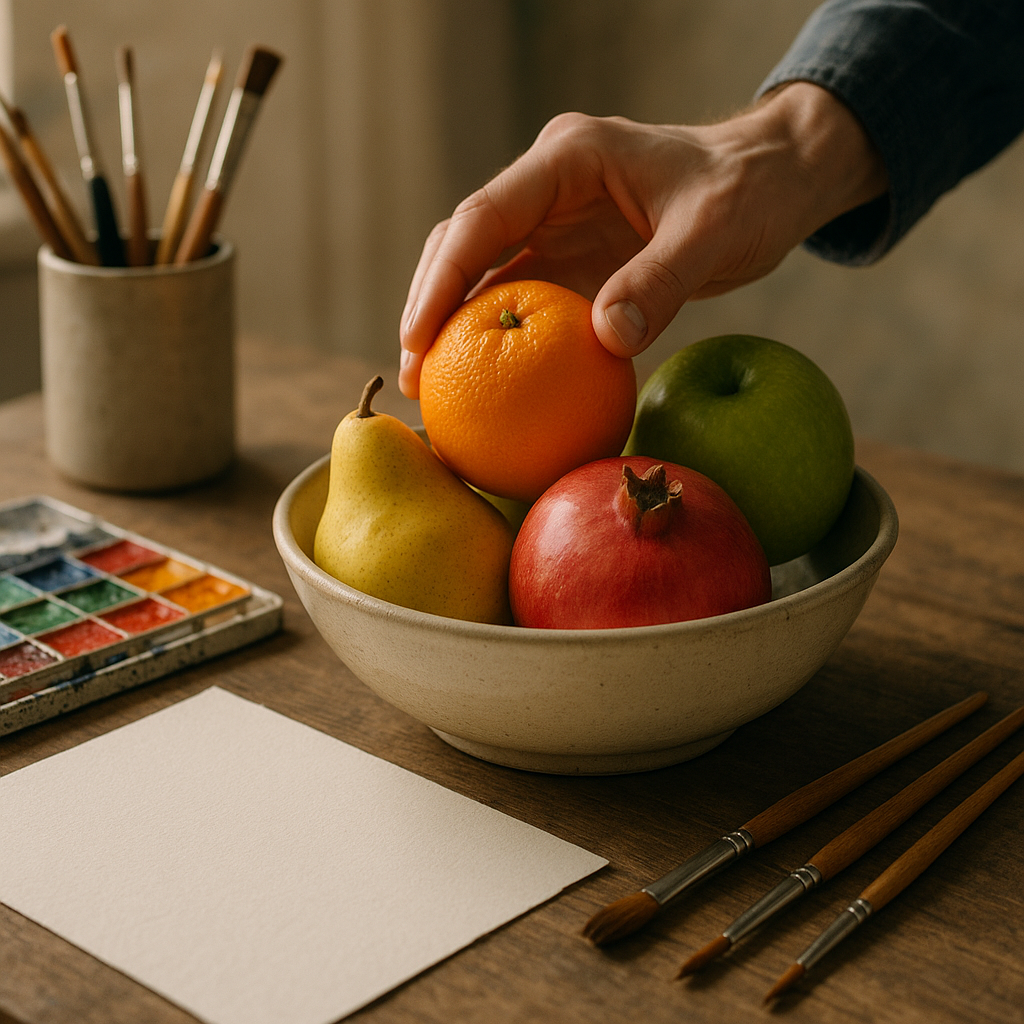
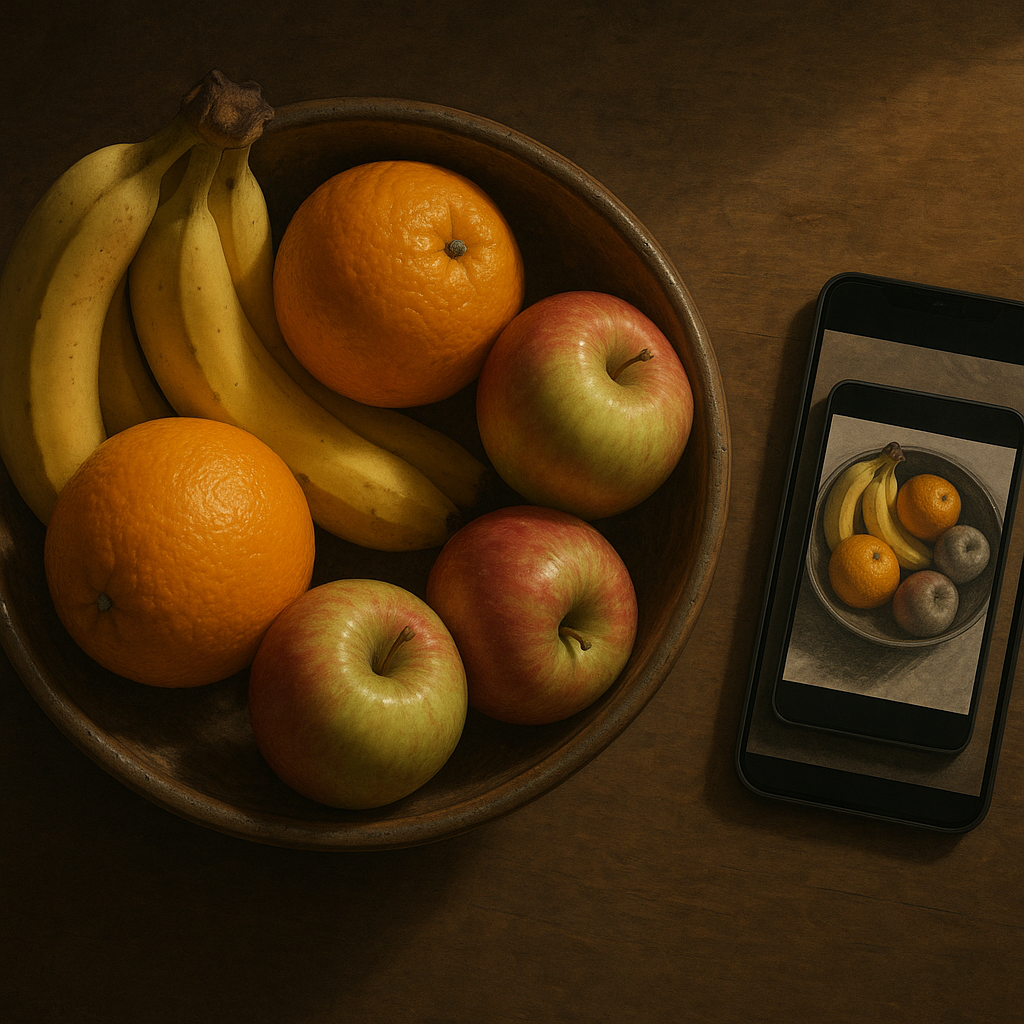
    Artist arranging fruit in a bowl to create a dynamic fruit bowl still life composition
    Phone photo and sketchbook used together to study a fruit bowl still life

    Fruit bowl still life FAQs

  • Urban Texture: Turning Old City Walls Into Colourful Canvases

    Urban Texture: Turning Old City Walls Into Colourful Canvases

    City streets are bursting with stories, and urban texture art is one of the most joyful ways to bring those stories to life. From flaky paint and crumbling brick to mossy stone and sun-bleached posters, every surface is a ready-made backdrop for colour, pattern and playful ideas.

    What is urban texture art?

    Urban texture art is all about using the existing surfaces of a city as inspiration for creative work. Instead of starting with a blank canvas, artists respond to peeling paint, rough concrete, rust stains and weathered brick, turning them into characters, landscapes and abstract bursts of colour. It can be as simple as chalk doodles on cracked pavement or as ambitious as a full mural wrapping around a corner of a building.

    The magic lies in the contrast: soft, juicy colours dancing across hard, tired walls. It celebrates the imperfect and the worn, proving that the most ordinary corners of a neighbourhood can become little pockets of wonder.

    Finding the perfect surfaces for urban texture art

    Before you reach for your paintbrushes, the first step is scouting. Wander your local area and look for surfaces with interesting patterns and textures. Flaking layers of old paint, exposed brickwork, and patchwork repairs all give you shapes to play with. Photograph anything that catches your eye so you can sketch ideas later.

    Always stay on the sunny side of the rules. Only create art on walls and spaces where you have clear permission, whether that is from a local council, a community group or a private owner. Many cities now have official mural trails and legal walls, which are perfect for experimenting without causing a stir.

    Safety first when working with old buildings

    Old walls can hide all sorts of surprises, from loose masonry to flaking materials that are better left untouched. Before planning a bigger project, it is wise to check that the surface is safe to work on and not part of a structure that needs specialist care. Professional surveys and services like asbestos management sheffield help building owners understand what is in their walls and how to look after them responsibly.

    As an artist, simple precautions go a long way. Avoid sanding or scraping unknown materials, wear a mask if there is visible dust, and step back if anything feels unstable. If in doubt, choose another wall – there are always more textures waiting around the corner.

    Playful techniques for urban texture art

    Once you have a safe, approved wall, it is time for the fun part. Here are some colourful techniques that make the most of city textures:

    • Outline what is already there – trace around cracks, stains and patches, then fill them with fruity colours to create abstract shapes.
    • Turn chips and holes into characters – a missing brick becomes a monster mouth, a rust streak becomes a rainbow tail.
    • Layer translucent washes of paint so the original texture still peeks through, like watercolour on concrete.
    • Use stencils to add repeating motifs, such as leaves, bubbles or geometric fruit slices.
    • Mix media with chalk, paint markers and paste-up paper cut-outs for a collage effect.

    Urban texture art loves imperfection, so do not worry about straight lines or exact symmetry. Let the wall guide you and enjoy the surprises that pop up as you work.

    Community projects that brighten grey corners

    One of the happiest sides of urban texture art is how naturally it brings people together. Community groups, schools and local businesses can team up to transform dull corners into bright, welcoming spots. Children can add patterns and shapes, while adults handle ladders and logistics. Everyone gets to leave a little piece of themselves on the wall.

    Workshops are a brilliant way to start. Begin with a walk to photograph interesting surfaces, then return to a studio or classroom to sketch ideas. Once you have a shared design, you can scale it up on the chosen wall, using chalk grids or projectors to keep things simple.

    Bringing the look home with mini urban canvases

    If you cannot paint outdoors, you can still capture the feel of these solutions at home. Try these ideas:

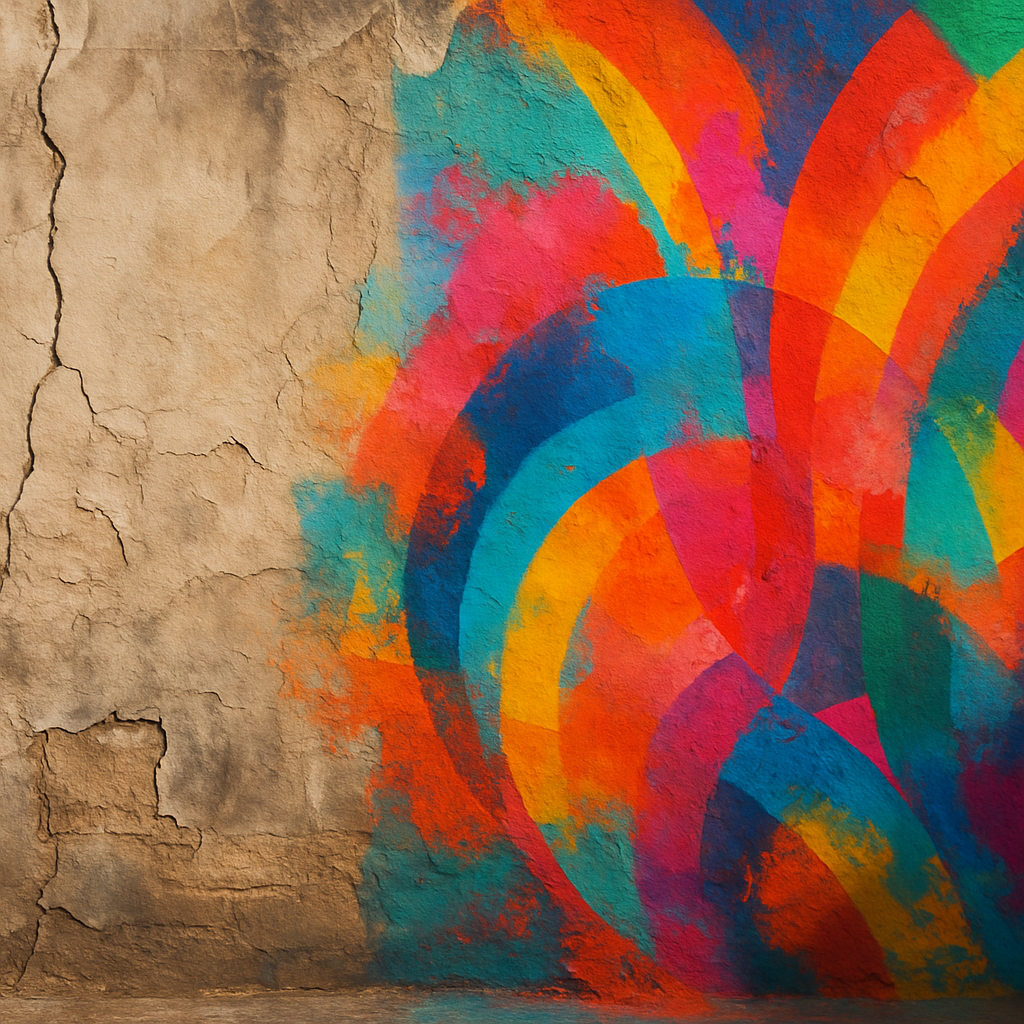
    Weathered city wall transformed with bright colours as an example of urban texture art
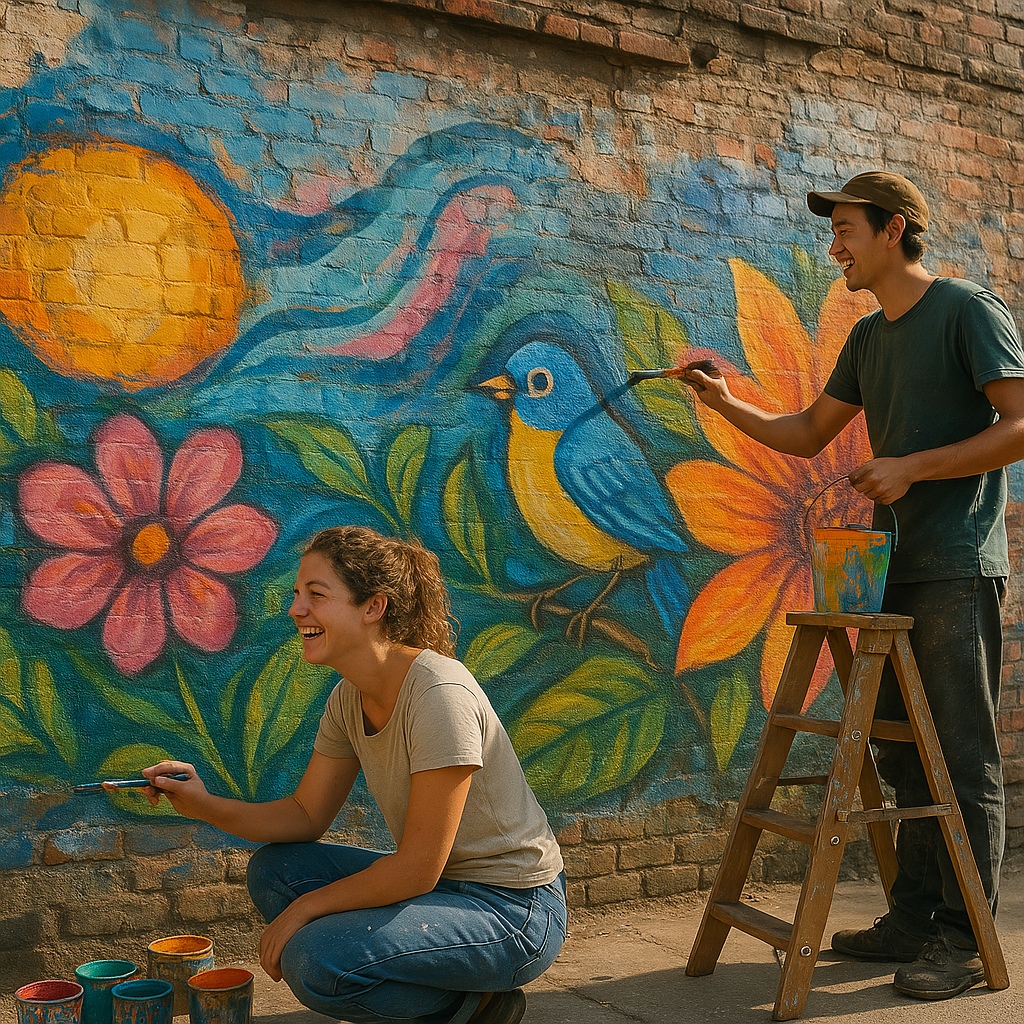
    Community mural project where families paint playful urban texture art on a concrete wall

    Urban texture art FAQs

    What materials are best for urban texture art on outdoor walls?

    For urban texture art on outdoor walls, use high quality exterior masonry paint or spray paint designed for outdoor use, plus paint markers for details. These stand up better to rain and sunlight. Always check you have permission for the wall, avoid sanding unknown surfaces, and wear basic protective gear like gloves and a mask if there is any dust or loose debris.

    Can beginners try urban texture art without painting a huge mural?

    Absolutely. Beginners can start small with sketchbooks, photography and mini canvases. Take photos of interesting walls and textures, then draw or paint over printed copies. At home, build textured backgrounds with collage and thick paint before adding simple shapes. When you feel confident, look for community projects or legal walls where you can contribute a small section rather than a full mural.

    How do I find legal spaces for urban texture art in my city?

    Begin by checking your local council website, arts organisations and community centres for mural schemes or legal walls. Many towns now encourage colourful public art in specific areas. You can also approach independent cafés, shops and community hubs to ask if they would like a bright, custom design on a wall or shutter, agreeing the design and surface in writing before you start.

  • How to Use Window Blinds in Art and Creative Home Decor

    How to Use Window Blinds in Art and Creative Home Decor

    Window blinds in art might sound a little unusual, but those slatted, stripy, light-filtering wonders are secretly perfect creative tools. From bold colour blocking to dreamy shadow play, blinds can become part of your artwork, not just the background. If you love colour, pattern and playful interiors, it is time to see your windows as one big, juicy canvas.

    Why window blinds in art are so inspiring

    Blinds are like built-in drawing tools for light. When the sun filters through, you get ready-made stripes, grids and shapes across your walls and floors. That shifting pattern can turn the simplest room into a living artwork. Instead of fighting the light, you can plan your decor and creative projects around it.

    Think of your blinds as the frame for your daily view. A bright roller blind can act as a giant colour block in the room. Wooden slats can bring warm, painterly texture. Sheer fabrics can soften everything into a hazy watercolour. Once you start noticing how blinds change the light, you will never look at your windows the same way again.

    Turning your windows into a colourful canvas

    If you love bold interiors, using window blinds in artful ways is a brilliant way to add personality. Choose a blind in a punchy shade that echoes your favourite artwork, then build the room around that colour. A zesty orange blind can tie together cushions, prints and rugs, while a deep teal blind can make your plants and pictures pop.

    Patterns can be playful too. Stripes, geometrics and even subtle textures can all interact with the light differently. Hang a gallery wall near the window and watch how the changing light picks out different pieces through the day. The result feels dynamic, like living inside a slowly shifting painting.

    Shadow play and photography ideas

    One of the most magical ways to explore window blinds in art is through shadow play. On a bright day, tilt the slats until you get strong, crisp lines across a plain wall. Then experiment. Pose in the light and take portraits with stripy shadows across your face and clothes. Arrange fruit, flowers or ceramics in the beam and capture the patterns with your camera or phone.

    For sketching and painting practice, use those shadows as ready-made guides. Draw the shapes that appear on the wall, then layer in colour and detail. It is a relaxing way to loosen up creatively, and every session will look different depending on the weather and time of day.

    DIY projects using blinds and fabric

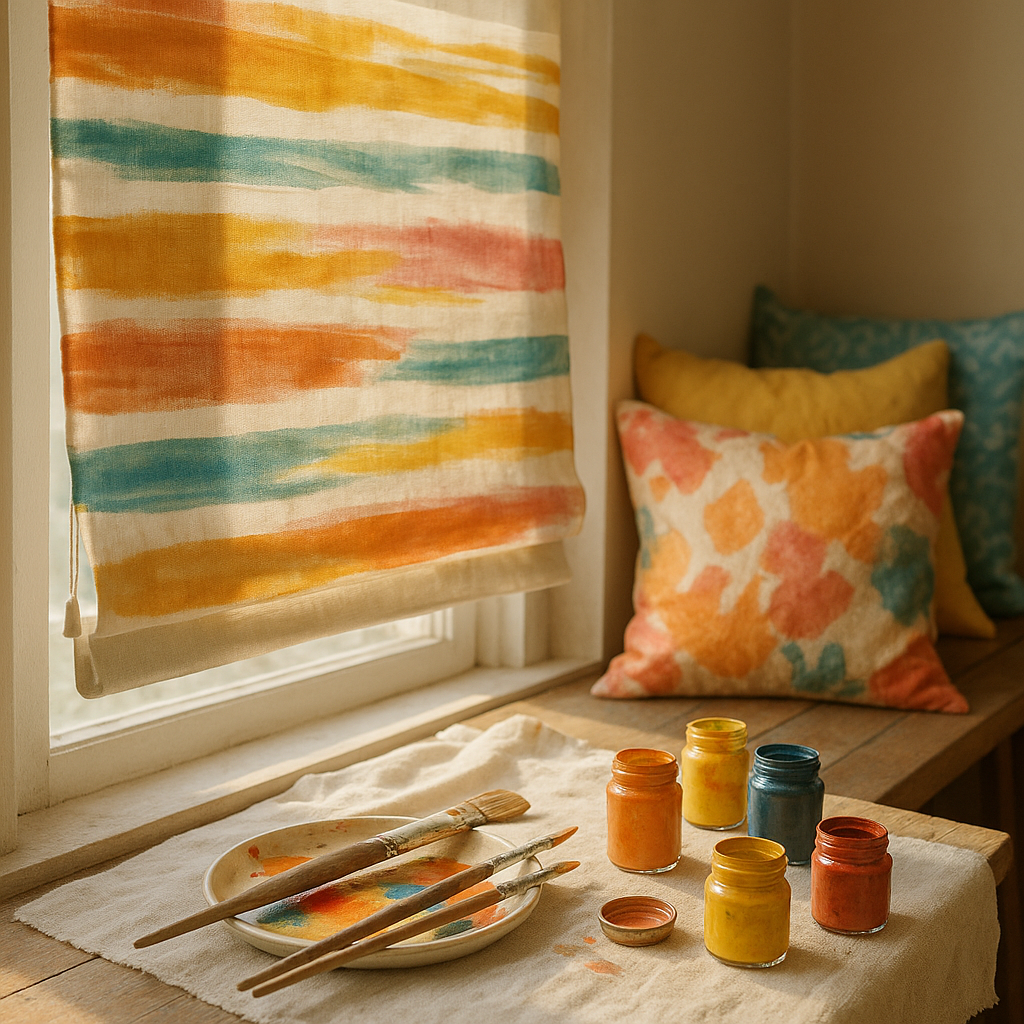
    If you have an old or spare blind, do not throw it away. Pieces of slatted blinds can become the base for woven wall hangings, painted signs or even miniature sculptures. Fabric blinds can be painted with fabric paint to create unique patterns, then rehung for an instant room refresh.

    You can also coordinate your blinds with handmade soft furnishings. Use offcuts of blind fabric as inspiration for cushion covers, table runners or fabric collages. When the window treatment and the artwork share colours or textures, the whole room feels intentional, like a cheerful little gallery.

    Working with professionals creatively

    If you feel unsure where to start, it can help to chat with a local window specialist who understands both practicality and style. A company like Vesta Blinds and Shutters Mansfield, for example, can help you explore different materials, colours and finishes that complement your existing artwork and decor. Treat the consultation like a mini design session: bring photos of your favourite paintings, textiles or ceramics, and look for blinds that echo those tones and textures.

    Creating an art studio vibe at home

    Good lighting is essential for any creative space, and blinds are your best friend for controlling it. In a makeshift home studio, use adjustable blinds to soften harsh midday sun or open them wide when you need bright, clear light for detail work. Neutral-coloured blinds can prevent colour casts on your artwork, while blackout options help you control light for photography or digital work.

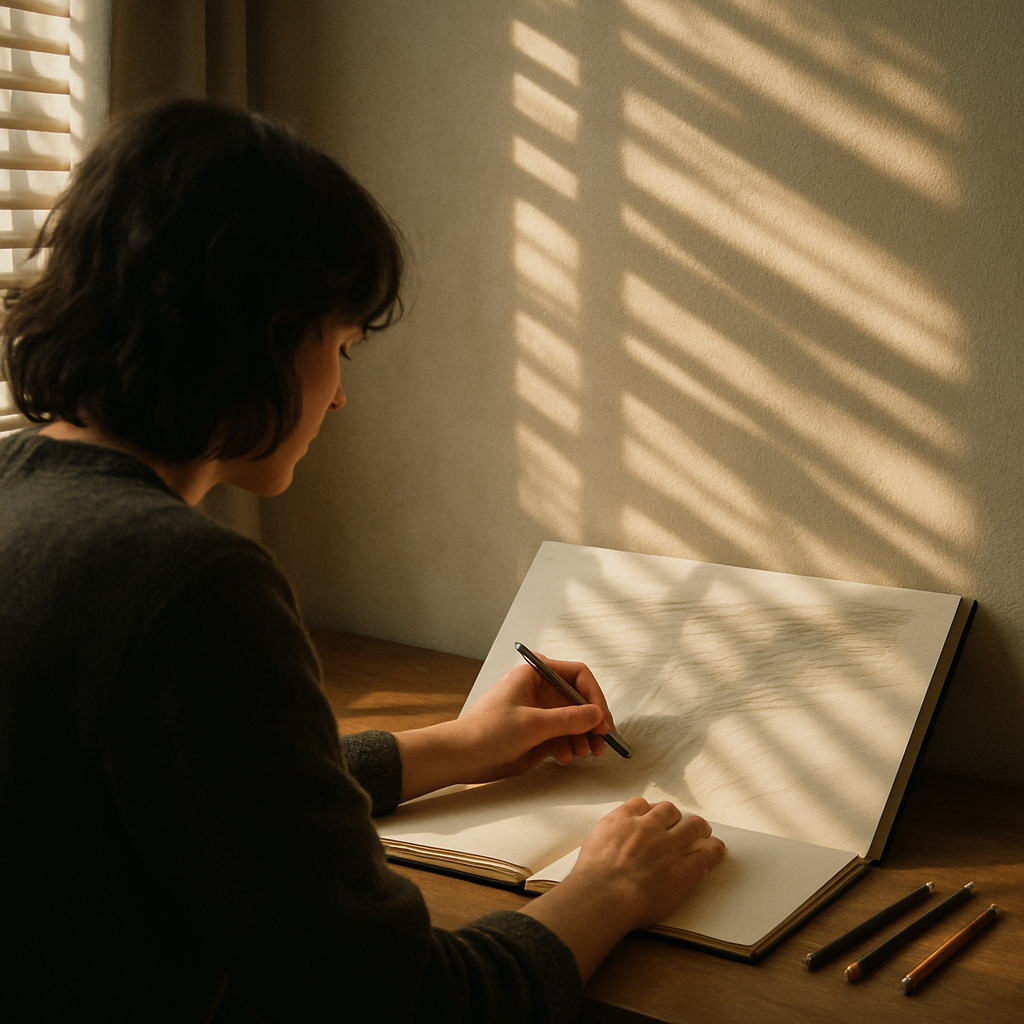
    Artist drawing patterns created by window blinds in art in a sunny home studio corner
    DIY creative setup showing hand painted blinds using window blinds in art themed decor

    Window blinds in art FAQs

    How can I use window blinds in art without redecorating my whole room?

    Focus on light and shadow rather than big changes. Tilt the slats to create interesting patterns on a plain wall or table, then use that space for sketching, photography or still life arrangements. You can also add one colourful blind that picks up a shade already in your cushions or artwork, so it feels deliberate without a full makeover.

    What type of blinds work best for creative light effects?

    Blinds with adjustable slats, such as venetian or wooden styles, are brilliant for strong, graphic shadows because you can control the width and direction of the light. Sheer roller or fabric blinds are ideal if you prefer softer, more diffused light that feels like a gentle wash of colour across the room.

    Can I paint or decorate my existing blinds for a more artistic look?

    Yes, many fabric and some wooden blinds can be customised. Use suitable paints, test a small area first, and keep designs simple, such as colour blocking, stripes or abstract shapes. Make sure the blind can still roll or fold properly once dry, and avoid heavy embellishments that might affect the mechanism.

  • Kitchen Table Magic: Mixed Media Art With Everyday Ingredients

    Kitchen Table Magic: Mixed Media Art With Everyday Ingredients

    If your cupboards are full of colourful bits and bobs, you are already halfway to creating joyful kitchen mixed media art. From coffee stains that look like tiny galaxies to citrus nets that stamp playful textures, your pantry can become a paintbox.

    Why kitchen mixed media art is so much fun

    Kitchen ingredients feel friendly, familiar and wonderfully low pressure. You are not cracking open expensive tubes of paint, so it is easier to relax, experiment and say “oops” with a smile. Children love the sensory side of it, and adults enjoy the surprise factor when everyday items turn into art tools.

    On top of that, using what you already have is budget friendly and reduces waste. That onion skin you were about to bin might make a gorgeous blush wash, and the bright net from your oranges can stamp a bubbly pattern across a whole page.

    Gathering your playful pantry art supplies

    Before you dive in, raid your kitchen for safe, simple materials. For relaxed kitchen mixed media art, try:

    • Fruit and veg nets from oranges, onions or lemons for textured printing
    • Strong brewed coffee for warm brown stains and splatters
    • Teabags for softer, smoky washes
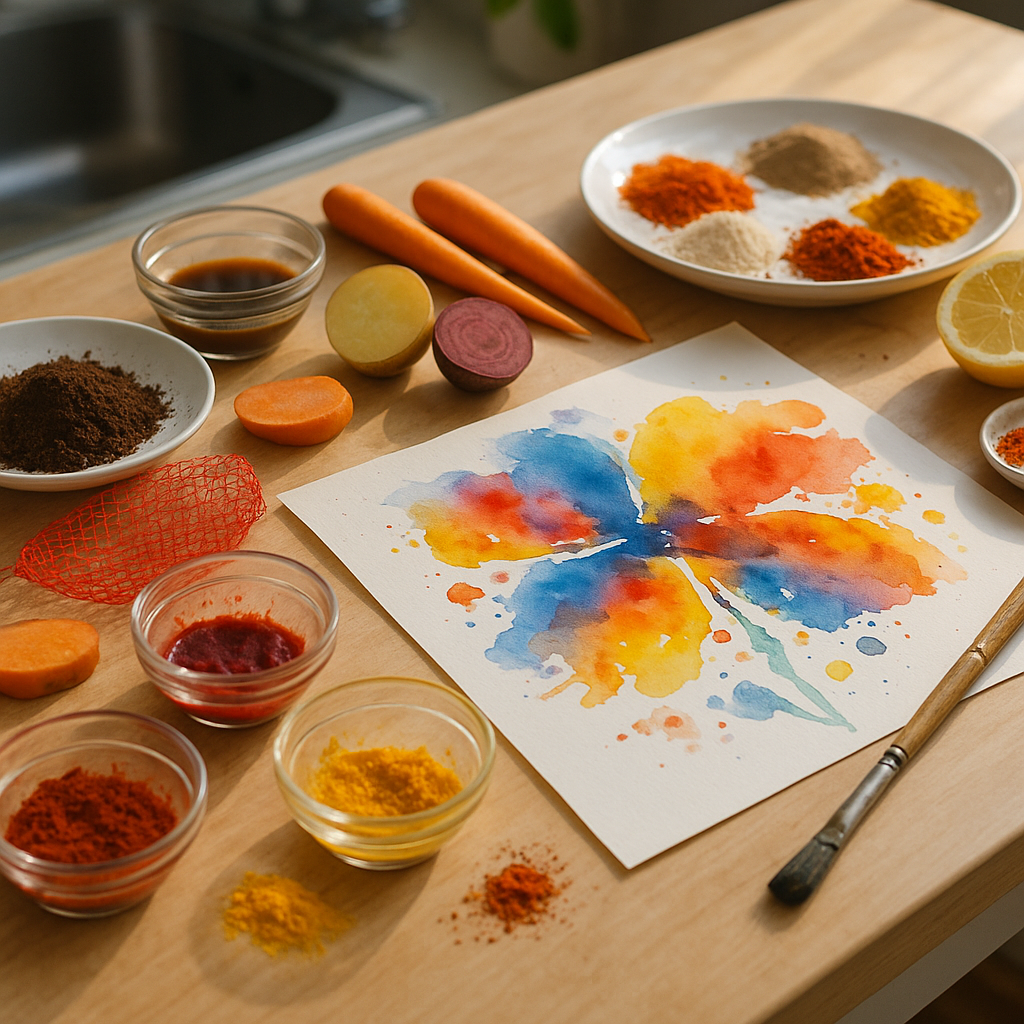
    • Spices like turmeric, paprika and cinnamon as colour inspiration or light tints
    • Cut vegetables such as potatoes, okra, celery hearts and peppers for stamping
    • Baking paper or foil to protect your table
    • Plain paper, card or an old sketchbook page for your artwork base

    Keep a small pot of PVA glue, a soft brush and some clear acrylic varnish or spray to help seal your finished piece later.

    Safety and mess control in the kitchen studio

    Playful does not have to mean chaotic. A few simple habits keep your kitchen mixed media art happy rather than stressful:

    • Cover your table with an old cloth, bin bag or baking paper.
    • Wear an apron or clothes you do not mind splashing.
    • Use only food-safe items and keep them separate from any cleaning chemicals.
    • If you have allergies, skip those ingredients and choose alternatives.
    • Open a window when using spray varnish and follow the tin instructions.

    For little artists, pre-cut the veggies, offer shallow dishes of coffee and spice water, and keep a damp cloth nearby for speedy wipe downs.

    Playful project ideas using kitchen materials

    1. Coffee constellation backgrounds

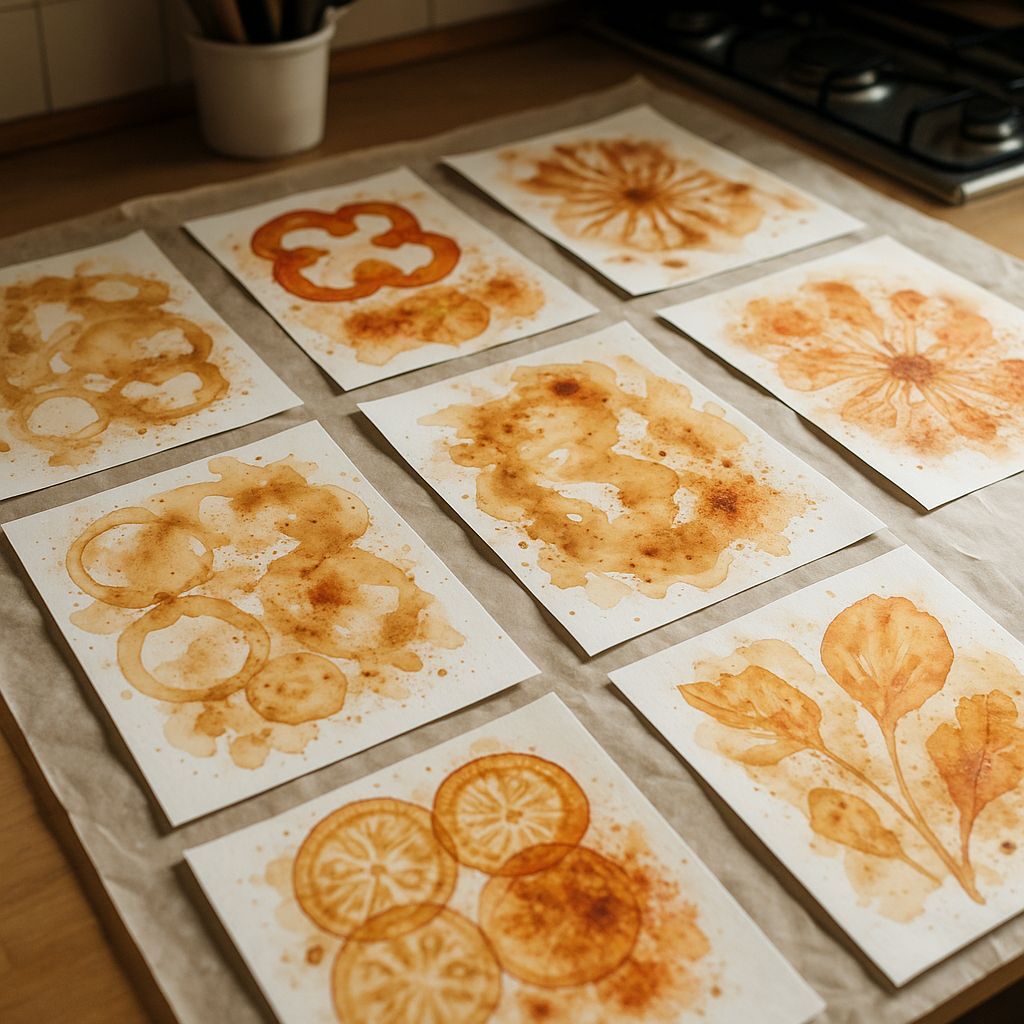
    Brew a strong cup of coffee and let it cool. On thick paper, splash and tilt the page so the liquid flows into soft pools. Sprinkle a tiny pinch of salt into wet areas to create star-like blooms. Once dry, draw doodles, galaxies or fruity patterns on top with pen or coloured pencil.

    2. Fruit net texture party

    Stretch a clean fruit net flat over your paper and tape the edges down. Use a sponge or brush to dab diluted paint or coffee across it. Peel away the net to reveal a bubbly, honeycomb-like pattern. Layer different colours and directions to build a lively, almost tropical background.

    3. Veggie print garden

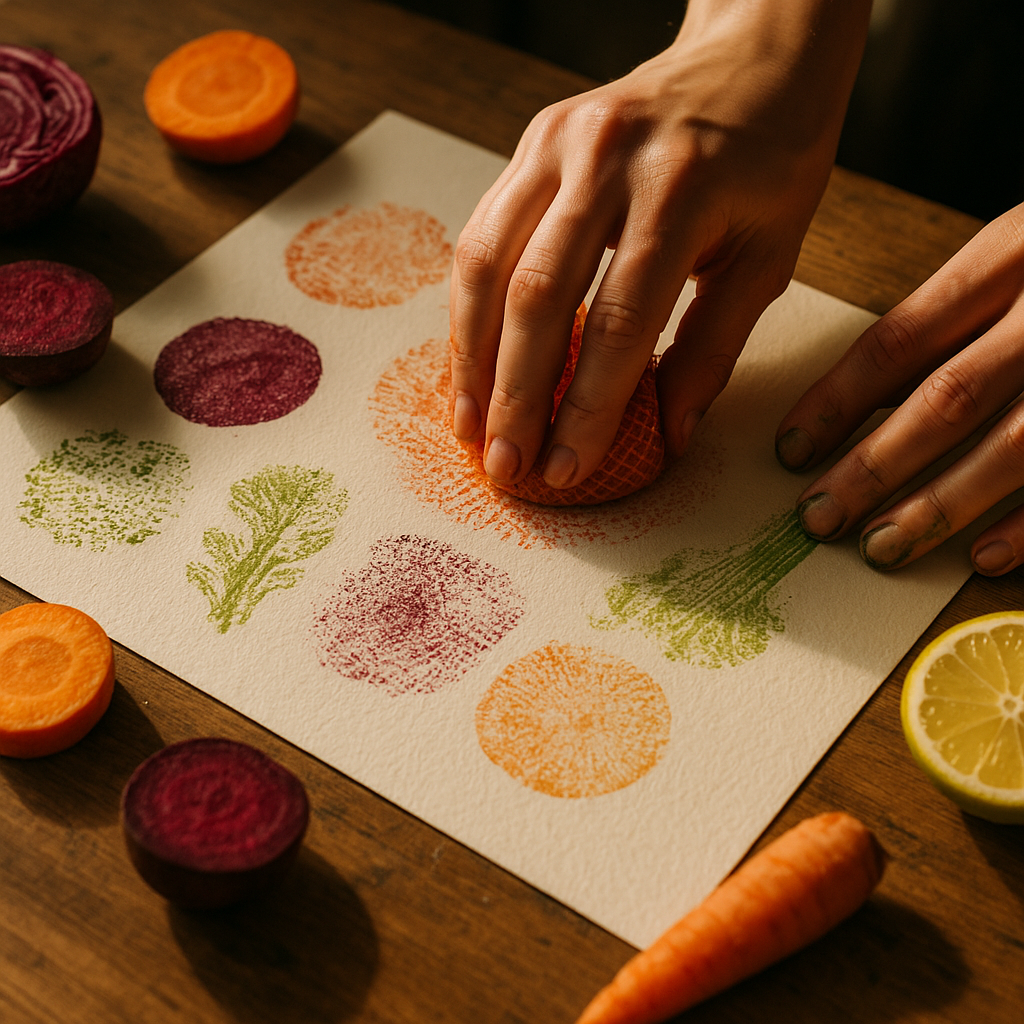
    Slice vegetables in half and pat them dry. Dip the cut surface into watered-down paint or tinted spice water, then stamp onto your page. Celery hearts make rose shapes, okra creates tiny stars and potatoes can be carved into simple graphic shapes. Overlap prints for a lush, garden-style composition.

    Spices as colour inspiration

    While some spices can lightly tint water, they really shine as colour references. Lay out small dishes of turmeric, paprika, cocoa and dried herbs. Match them with pencils, paints or markers in similar shades, then build a warm, earthy palette for your kitchen mixed media art. You can even glue a sprinkle of spice into collaged areas for a subtle texture, sealing well once dry.

    How to seal and protect your finished artwork

    Because food-based pieces can be delicate, sealing them helps them last longer and keeps crumbs and powder in place.

    Artist stamping textures with fruit nets and vegetables as part of kitchen mixed media art on paper
    Finished coffee and spice stained paintings created through kitchen mixed media art drying on a kitchen table

    Kitchen mixed media art FAQs

    Is kitchen mixed media art safe for children?

    Yes, kitchen mixed media art can be very child friendly as long as you use food-safe ingredients, avoid known allergens and keep all cleaning products well away from the art area. Pre-cut any vegetables, supervise splashing and stamping, and encourage children to wash their hands when they finish. Avoid letting young children handle spray varnishes or sharp tools, and seal their artwork yourself once it is completely dry.

    Will coffee and spice colours fade over time?

    Natural colours from coffee and spices can fade more quickly than traditional art materials, especially in bright sunlight. To help them last longer, allow your piece to dry fully, brush away any loose powder and seal it with a clear glue layer followed by a suitable varnish. Display the artwork away from direct sunlight and excessive humidity so the tones stay rich and warm for as long as possible.

    What paper works best for kitchen mixed media art?

    Thicker paper is best for kitchen mixed media art because it can handle wet washes and multiple layers. Watercolour paper, mixed media pads or sturdy card all work well. If you only have standard printer paper, keep your layers light and tape the sheet to a board while working to reduce warping. You can also collage thinner painted pieces onto a stronger backing once they are dry.

  • How To Create Fruit Inspired Colour Schemes For Art And Decor

    How To Create Fruit Inspired Colour Schemes For Art And Decor

    If you love juicy shades and playful interiors, fruit inspired colour schemes are a delicious way to brighten your art and decor. From mango sunsets to zingy kiwi greens, fruit offers ready-made palettes that are fun, fresh and surprisingly sophisticated.

    Why fruit inspired colour schemes work so well

    Fruit colours feel natural to our eyes. We see them in markets, gardens and smoothies every day, so our brains already accept those combinations as harmonious. A mango’s orange and yellow, a berry’s red and purple, a kiwi’s green and brown – they are little colour lessons wrapped in peel and skin.

    Using fruit as your guide also makes choosing colours less scary. Instead of staring at a giant paint chart, you can simply ask: what colours are in a raspberry? Which shades hide in a dragon fruit? You get instant palettes that look bold but still feel balanced.

    Fruit inspired colour schemes and simple colour theory

    You do not need an art degree to play with colour theory. Here are a few friendly ideas, explained using fruit.

    Complementary colours are opposite each other on the colour wheel. Think of a bright orange mango against a deep blue bowl. The contrast is punchy and exciting. Use complementary pairs for statement pieces like a feature wall, a big canvas or a hero cushion.

    Analogous colours sit next to each other on the wheel, like the pink, red and purple found in mixed berries. These feel soft and blended, perfect for cosy bedrooms, textiles and watercolour prints.

    Neutrals are your plate or chopping board – the background that lets the fruit shine. Soft whites, creams, warm greys and gentle browns stop your colours from feeling too sugary. Imagine a bowl of strawberries on a simple wooden table. The wood calms everything down.

    Mango colour palette: warm, sunny and welcoming

    Mango palettes are all about warmth and joy. Picture juicy orange, golden yellow, a hint of coral and a tiny touch of leafy green from the stem.

    For art, try abstract paintings with big swirls of orange and yellow, then add small accents of cool teal or soft blue to stop it feeling too hot. In decor, mango tones are beautiful in living rooms: think mustard cushions, peachy throws and a single bold orange print on the wall.

    If you love pastels, simply add more white to your mango colours. Peach, apricot and pale buttermilk yellow create a dreamy, sunset look that still feels fruity but more relaxed.

    Kiwi and dragon fruit palettes: playful contrast

    Kiwi gives you zingy greens, soft lime, creamy off white and earthy brown seeds. It is perfect for fresh, energising spaces like kitchens and studios. Use light green on walls, deeper green in plants and textiles, and add natural wood for the seed tones.

    Dragon fruit is where things get wild: bright magenta skin, white flesh and tiny black seeds. Together, they create a striking modern palette. Try a mostly white room with pops of magenta in artwork, cushions or a rug, and small touches of black in picture frames or patterns.

    To keep these palettes from feeling too sharp, soften them with pastel versions. A pale mint green beside a soft pink can still whisper “dragon fruit” without shouting.

    Berry tones: rich, cosy and romantic

    Berries give you a feast of reds, purples, deep blues and juicy pinks. Think strawberries, raspberries, blueberries and blackberries all tumbled together.

    For paintings and prints, layer berry colours like you would a smoothie: start with a base of soft pink or lavender, then add richer raspberry strokes and a few dark blueberry shapes for depth. This layered look works beautifully in abstract florals and expressive portraits.

    In decor, berry palettes shine in bedrooms and reading corners. Use plum or wine on a feature wall, balance it with blush bedding or curtains, and add navy or midnight blue details to ground the scheme.

    Turning palettes into paintings, prints and textiles

    Once you have chosen your favourite fruit inspired colour schemes, it is time to play.

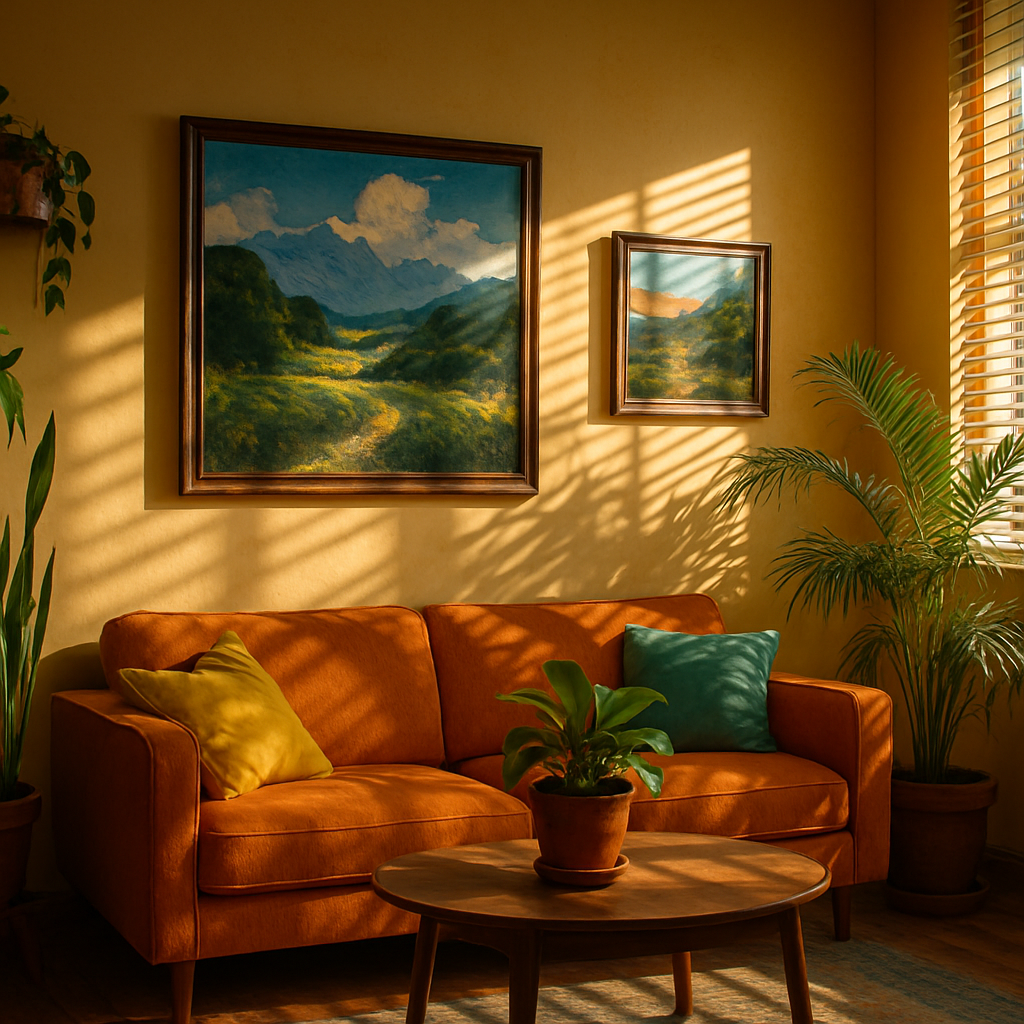
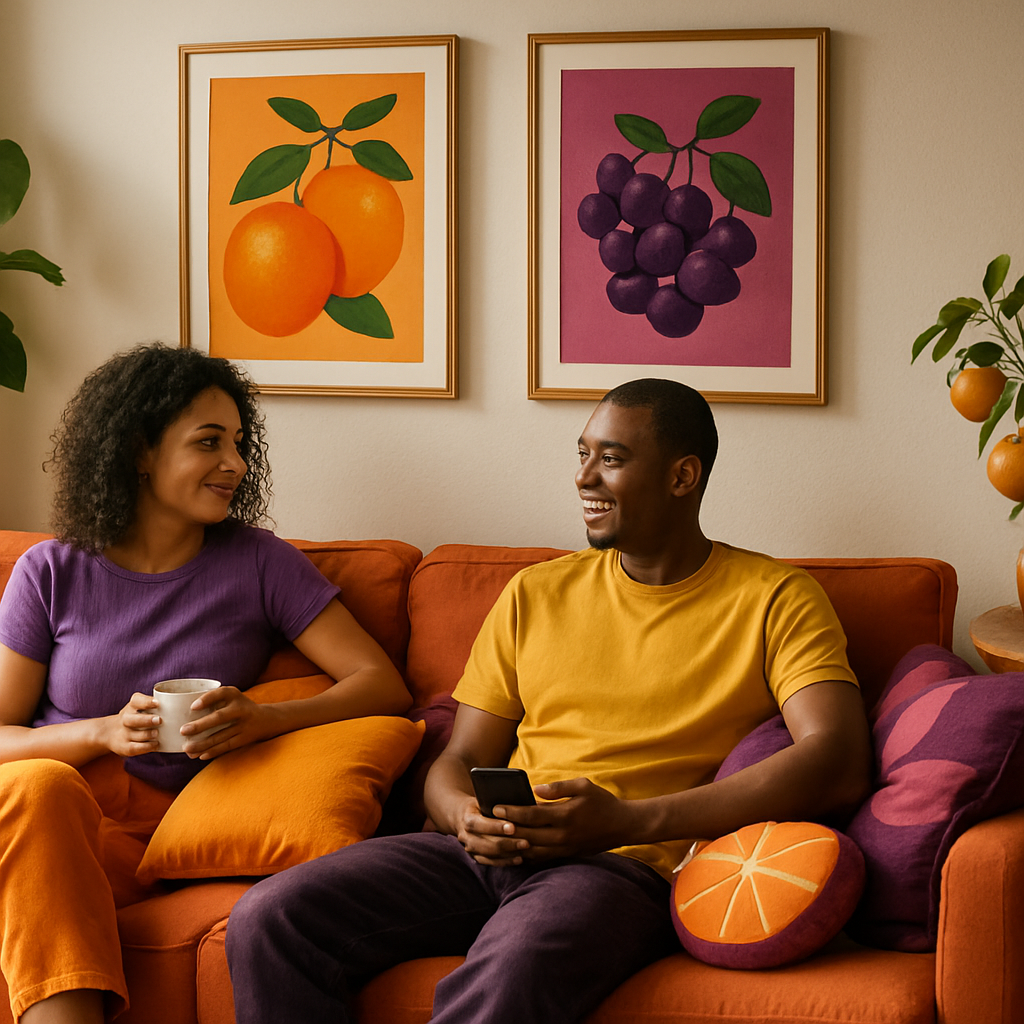
    Cosy living room decorated with cushions and artwork in fruit inspired colour schemes of mango and berry hues
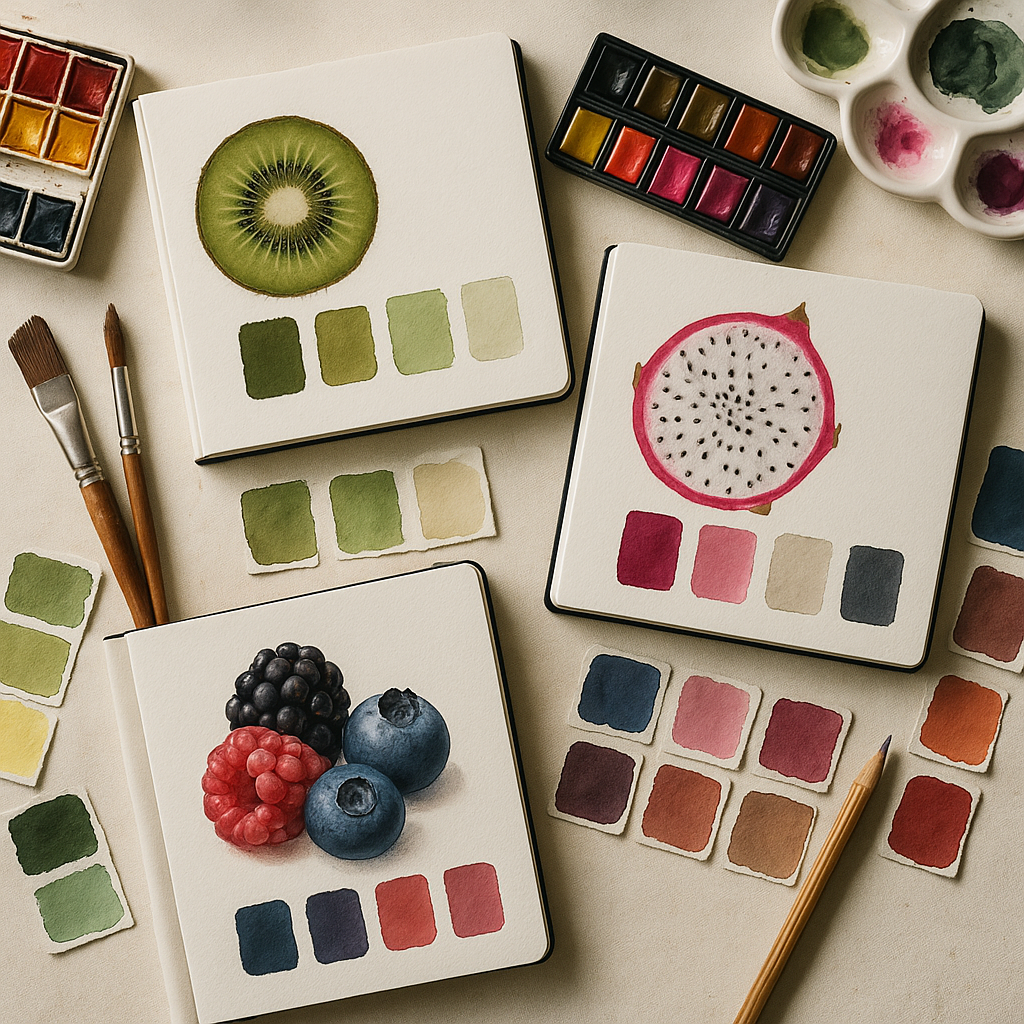
    Flat lay of paints and sketchbook showing fruit inspired colour schemes drawn from kiwi, dragon fruit and mixed berries

    Fruit inspired colour schemes FAQs

  • How Colour Blocking Windows Can Transform Your Creative Space

    How Colour Blocking Windows Can Transform Your Creative Space

    If you love playful interiors and juicy shades, colour blocking windows might be your new favourite creative trick. Instead of treating windows as plain rectangles of glass, you can turn them into giant, glowing colour panels that flood your space with personality.

    What are colour blocking windows?

    Colour blocking windows use bold, contrasting colours around or on the glass to create graphic shapes and bands of colour. Think of it as painting with light: when the sun shines through, the colours spill across your walls, floors and furniture like a living artwork.

    You can colour block with curtains, blinds, films, paint on frames, or a mix of all four. The magic happens when you choose two or three strong shades and let them play together in clean, confident blocks.

    Why colour blocking windows boosts creativity

    Artists and designers have long used colour to shift mood and spark ideas, and windows are the perfect canvas. When you build your space around colour blocking windows, you get:

    • Instant mood-setting light – coloured light can feel energising in the morning and cosy in the evening.
    • A built-in focal point – the window becomes a feature wall without needing extra art.
    • Visual rhythm – bands of colour create a sense of structure that helps some people focus.
    • Seasonal variety – the look changes as the sun moves and the weather shifts.

    For a home studio or craft corner, this can be the difference between a dull corner and a space that invites you to pick up a brush, sketchbook or sewing project.

    How to choose colours for colour blocking windows

    Start by deciding how you want your space to feel. Then pick two or three colours that tell that story.

    • For calm creativity – try soft teal, dusty rose and warm cream.
    • For bold, fruity energy – think citrus orange, raspberry pink and lime green.
    • For focused work – deep navy with a pop of mustard or coral.

    Use one main colour on the largest area, like the curtain or blind, and support it with smaller accents on the frame, pelmet or nearby furniture. Leaving some white or neutral space helps the colours sing instead of shout.

    Creative ways to achieve colour blocking windows

    You do not need a full renovation to get the look. Try these playful ideas.

    Layered textiles

    Combine a sheer coloured curtain with a solid neutral blind, or vice versa. When the light shines through, the colours blend like watercolour. You can even pair patterned fabric with a plain block of colour for extra character.

    Coloured window film

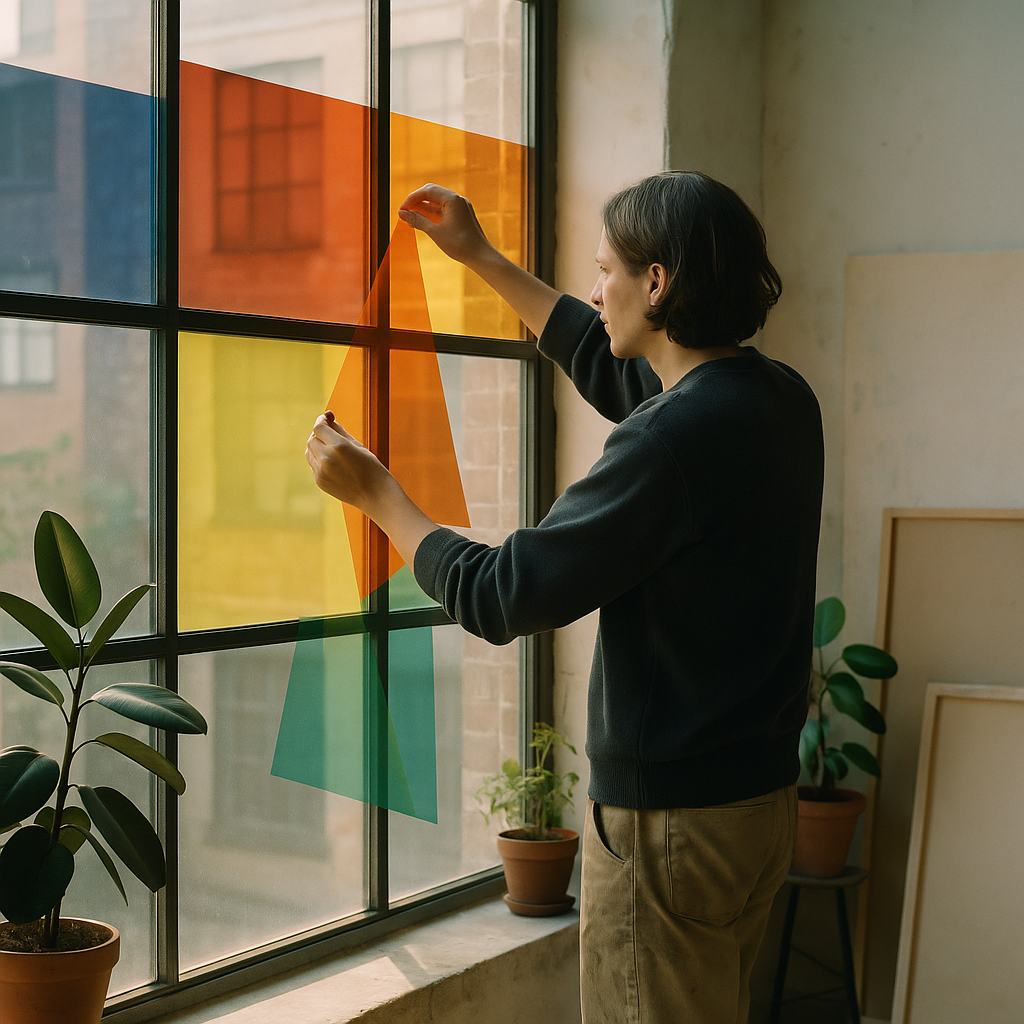
    Self-adhesive films in translucent shades are brilliant for renters. Cut them into large rectangles or arches and apply them to different panes to create your own stained glass effect. This is a simple way to build these solutions without sewing or painting.

    Painted frames and reveals

    If you are feeling brave, paint the inside of the window recess in a strong colour and keep the glass clear. The frame becomes a bold border that makes the view outside feel like a framed landscape painting.

    Balancing light, privacy and colour

    While you are playing with colour, you still need to think about everyday comfort. Sheer fabrics keep things bright but may not offer enough privacy in a bedroom or street-facing lounge. In those cases, you can pair a colourful sheer with a practical option like day and night blinds to give you more control without losing your creative look.

    In a studio or craft room, you might prefer maximum daylight. Use lighter tints and keep the bolder colours to the sides of the window so they frame the light rather than block it.

    Styling your space around these solutions

    Once your windows are dressed, echo those shades around the room so it feels intentional rather than random. Pick out cushions, vases, picture frames or even a painted chair in the same colours. A single artwork that repeats your window palette can tie everything together beautifully.

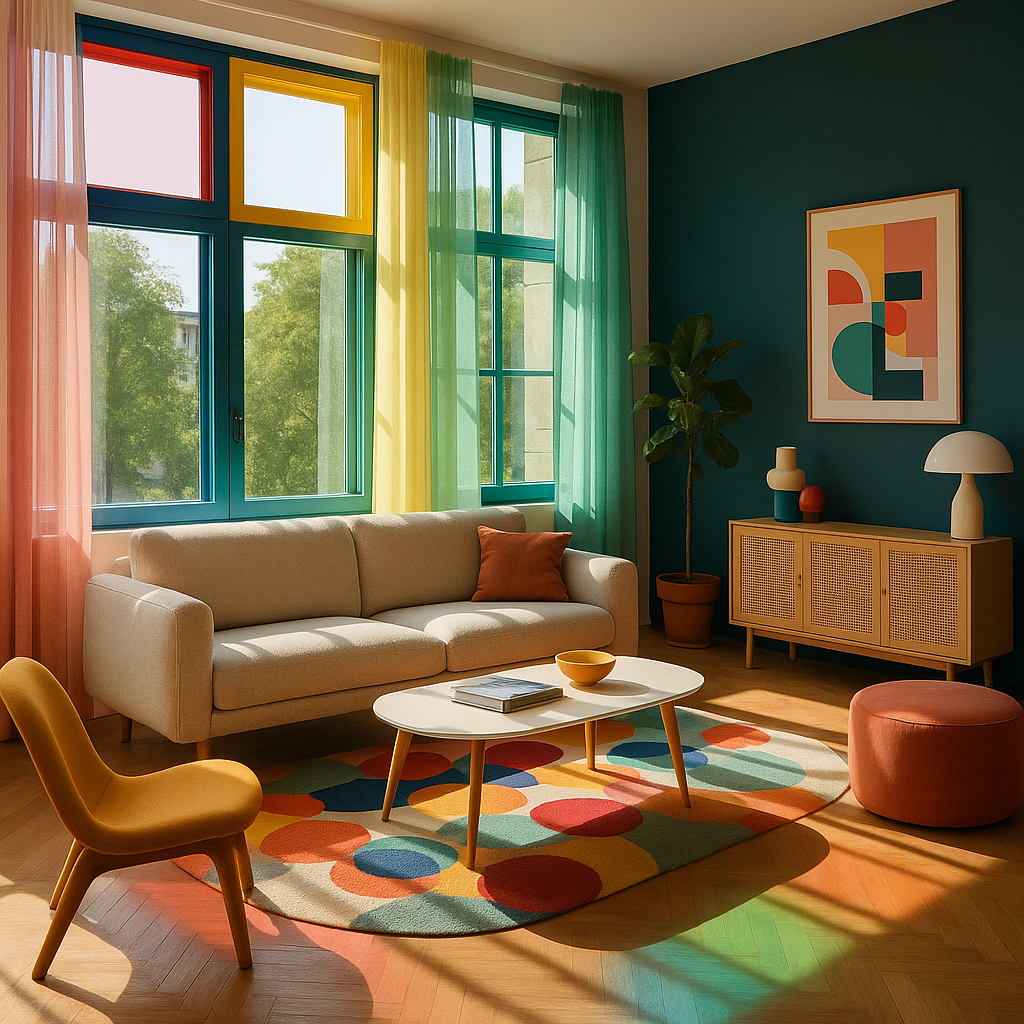
    Modern living room featuring stylish colour blocking windows and colourful decor
    Artist applying coloured film to create colour blocking windows in a bright studio

    Colour blocking windows FAQs

    Are colour blocking windows suitable for small rooms?

    Yes, colour blocking windows can work beautifully in small rooms. Choose lighter, brighter shades to bounce light around and avoid making the space feel cramped. Keeping the rest of the room fairly simple and repeating one or two of the window colours in accessories will help the room feel cohesive rather than busy.

    What materials are best for creating colour blocking windows?

    The most popular materials are coloured window film, fabric blinds, curtains and paint. Films are great for renters because they are removable and let in plenty of light. Fabric gives you softness and texture, while paint on frames or recesses adds strong graphic lines. Mixing two materials, such as film on the glass and painted frames, can create a layered, artistic effect.

    Can I change my colour blocking windows with the seasons?

    Absolutely. One of the joys of colour blocking windows is how easy they are to refresh. You can swap curtains or blinds for different colour palettes, peel off and replace window films, or repaint frames when you fancy a new look. Try cooler blues and greens in summer, then switch to warmer berry and spice tones for autumn and winter.

  • How To Design A Colourful Gallery Wall With Joinery Magic

    How To Design A Colourful Gallery Wall With Joinery Magic

    If your walls are looking a little beige and boring, it is time to dive into some colourful gallery wall ideas and sprinkle serious joy around your home. A gallery wall is like a giant mood board you get to live inside, bursting with art, memories and personality.

    Why colourful gallery wall ideas work so well

    Gallery walls are a brilliant way to turn a plain room into a playful, creative space. They let you mix postcards with paintings, kids’ drawings with prints, and bold colours with soft neutrals. Instead of one lonely picture, you get a whole story told across the wall. The right combination of art and joinery – think frames, shelving and panelling – makes everything feel intentional rather than messy.

    Start with a juicy colour palette

    Before you hammer in a single nail, choose a palette to guide your colourful gallery wall ideas. Pick three to five colours that make you feel happy. You might go for tropical brights like mango orange, lime green and hot pink, or keep things softer with peach, sage and sky blue. Use these shades in your frames, mounts, background wall colour and even in the artwork itself so everything feels deliciously coordinated.

    Mix art, objects and joinery

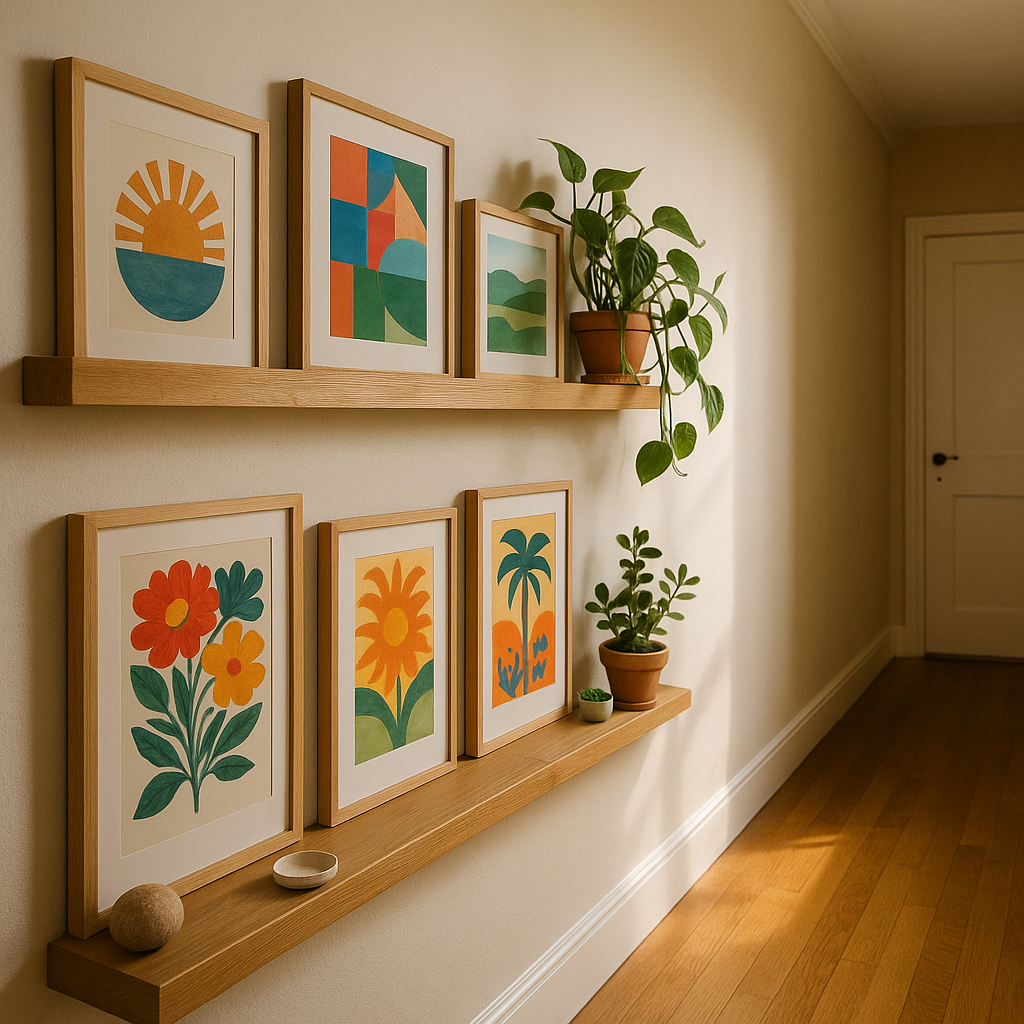
    The most playful gallery walls are not just flat pictures. Combine framed art with 3D pieces and clever joinery details. Add slim picture ledges to rest frames on, box shelves for tiny sculptures, or a low, built-in bench that lets your wall art drip down to meet the furniture. A specialist such as Gascoyne Joinery can create custom shelving or panelling that turns your wall into a proper feature rather than a random cluster of frames.

    Frame styles that make your art pop

    Frames are the jewellery of your gallery wall. For a bright, fruity look, paint simple wooden frames in different colours from your palette. Mix a few natural wood frames in between to stop things looking too busy. Try chunky frames for bold prints and slimmer ones for delicate line drawings. Floating frames work beautifully for textiles, pressed flowers or colourful paper cut-outs.

    Play with layouts before you commit

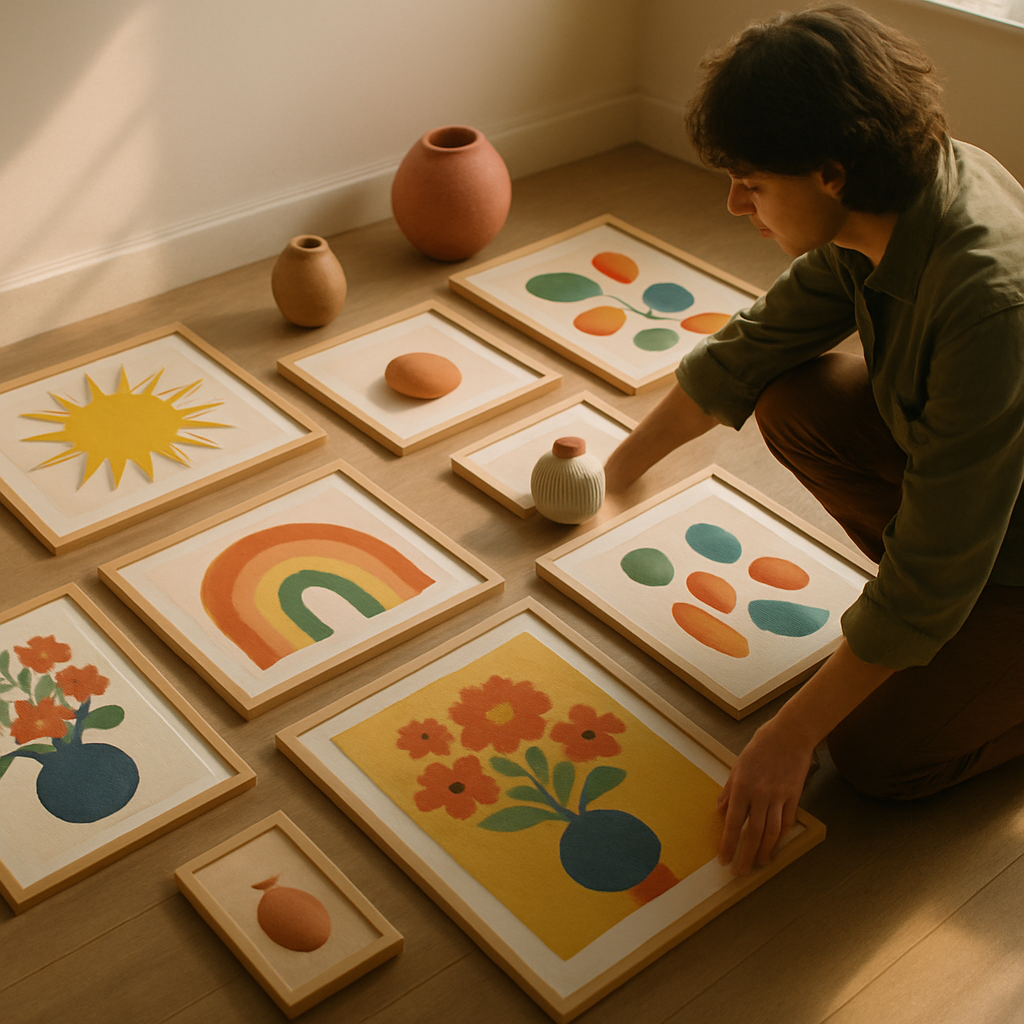
    One of the best colourful gallery wall ideas is to plan on the floor first. Lay out all your frames and objects, then shuffle them around until the arrangement feels balanced. Aim for a mix of sizes, with one or two larger pieces acting as anchors. You can also cut paper templates the size of each frame and tape them to the wall to test your layout. Step back often and check that the colours and shapes are spread evenly.

    Theme ideas for a joyful gallery wall

    If you are stuck on what to include, pick a fun theme. You could create a fruit-inspired wall with citrus prints, market posters and still life paintings. Or try a travel wall filled with colourful maps, tickets and photos. Family walls can mix portraits with children’s artwork and handwritten notes. The trick is to let your theme guide you without becoming too strict – a few wild cards keep things interesting.

    Use lighting to bring everything to life

    Good lighting makes colours sing. Add a slim picture light above a row of frames, or use wall sconces to frame your display. Fairy lights draped over a picture ledge can add a soft, magical glow. Warm white bulbs usually flatter artwork more than cool white, keeping the space cosy rather than clinical.

    Make it personal and keep it evolving

    The loveliest colourful gallery wall ideas are always personal. Mix professional prints with your own doodles, collages or photographs. Swap pieces in and out with the seasons, or as your tastes change. A gallery wall does not have to be finished – it can grow, shift and ripen over time, just like a bowl of favourite fruit you keep topping up.

    With a playful palette, thoughtful frames and a sprinkle of joinery magic, any blank wall can become a bright, art-filled corner that makes you smile every time you walk past.

    Artist planning colourful gallery wall ideas by arranging frames and objects on the floor
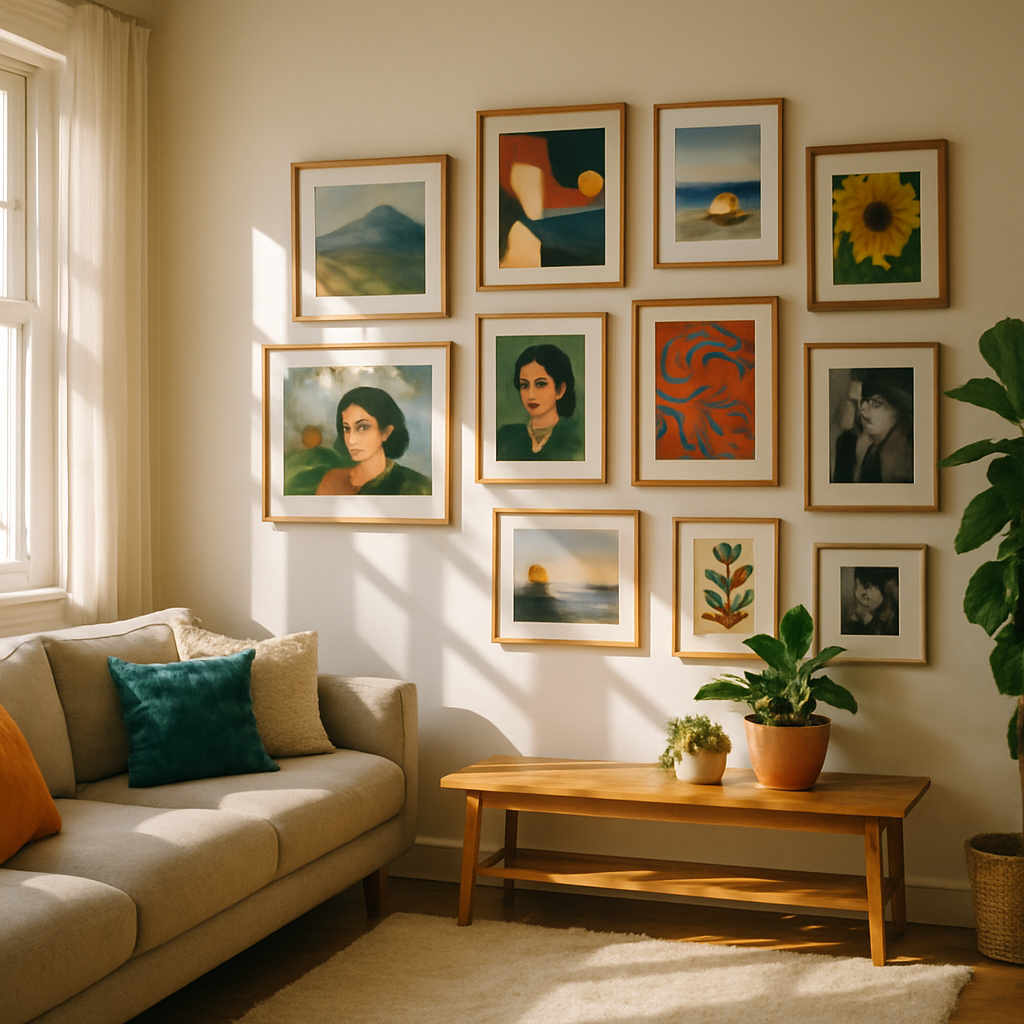
    Hallway with picture ledges displaying art as inspiring colourful gallery wall ideas

    Colourful gallery wall ideas FAQs

    How do I choose art for a colourful gallery wall?

    Start with pieces you genuinely love, then look for colours that link them together. You can mix different styles, from illustrations and photographs to abstract paintings, as long as a few shared colours run through the collection. Add in personal touches like postcards, fabric swatches or handwritten notes to keep the wall feeling unique to you.

    Do all frames need to match on a gallery wall?

    They do not have to match, but they should feel related. You can mix colours and sizes, while keeping one or two elements consistent, such as all wooden frames or all simple, clean shapes. This balance stops the display looking chaotic while still allowing plenty of playful variety.

    What is the best way to hang a gallery wall without damaging the wall?

    If you want to avoid lots of holes, try picture ledges so frames can rest on a shelf and be rearranged easily. For lighter pieces, use removable adhesive hooks designed for walls. When you do use nails or screws, plan your layout with paper templates first so you only make holes where you really need them.

  • How To Turn Everyday Life Into Art: A Playful Guide To Daily Creativity

    How To Turn Everyday Life Into Art: A Playful Guide To Daily Creativity

    It is easier than you think to turn everyday life into art. You do not need a studio, expensive paints or a grand vision. You only need curiosity, a splash of colour and a willingness to treat your daily routine as a giant, juicy sketchbook.

    What does it mean to turn everyday life into art?

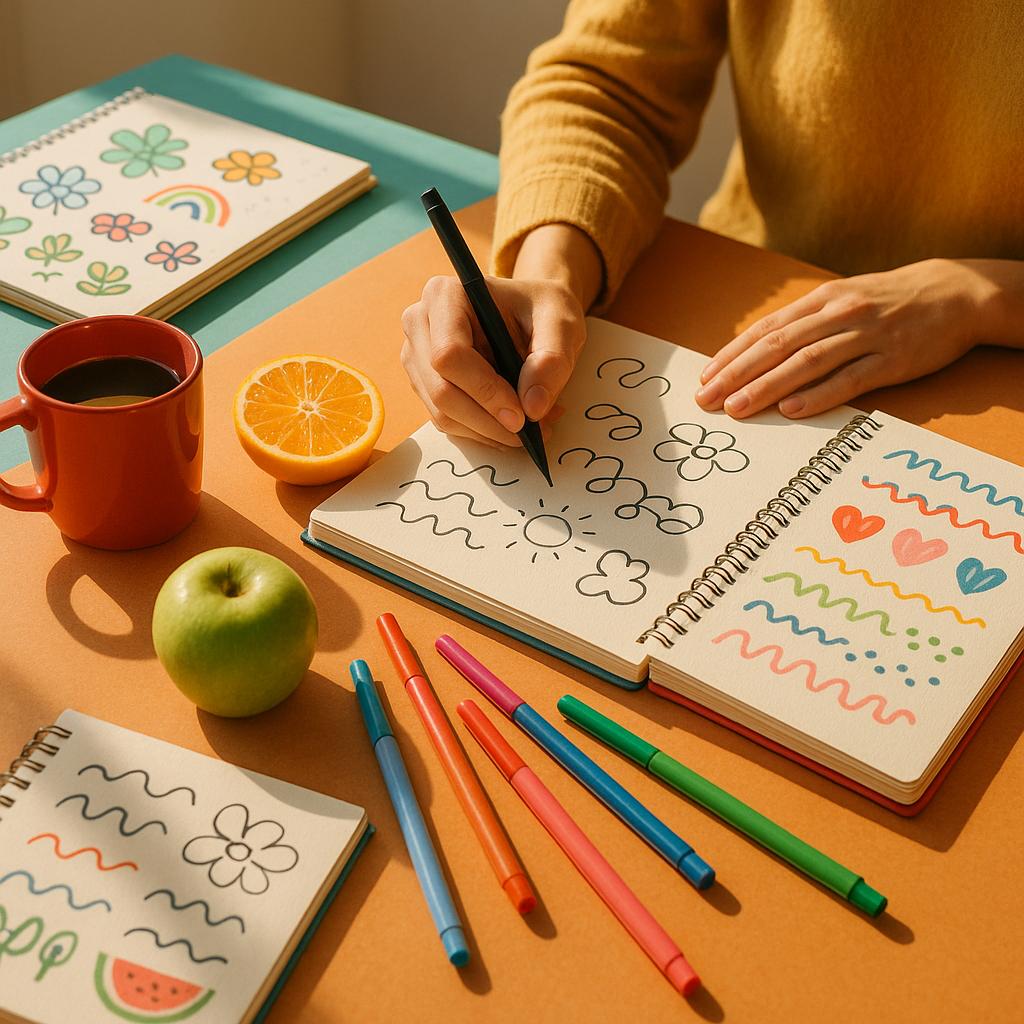
    When you turn everyday life into art, you are not just making pretty things. You are paying attention. The walk to the bus stop becomes a moving gallery of textures, colours and shapes. Your morning coffee becomes a tiny still life. Even your to-do list can become a mini masterpiece if you decorate it with doodles, stickers or bold, fruity highlighters.

    Think of your day as a long strip of blank paper. Every choice – the outfit you wear, the way you arrange your desk, the notes you scribble – is a brushstroke. Suddenly, life feels less grey and more like a colourful collage that you are constantly editing.

    Simple ways to weave everyday life into art

    You do not need hours of free time. Tiny tweaks can fill your day with creative sparkle. Here are a few bright ideas.

    1. Turn your morning routine into a colour ritual

    Pick a colour of the day. Maybe it is lemon yellow Monday or berry red Friday. Wear something in that colour, choose a matching mug and hunt for it on your commute. Snap photos of every appearance and you have a spontaneous colour-themed photo series.

    2. Make your notes and lists a playground

    Instead of plain bullet points, play with hand lettering, borders and tiny illustrations. Draw a little strawberry next to self-care tasks, a lightning bolt next to urgent jobs and a cloud next to anything dreamy. Over a week, your notebook becomes a visual diary of your mood and energy.

    3. Create a one-minute sketch habit

    Keep a small sketchbook in your bag or by the kettle. Every time you wait – for the toast to pop, the bus to arrive, the meeting to start – sketch what you see in sixty seconds. No erasing, no perfection. Just fast, fruity lines. These micro drawings will slowly train your eye to notice details you used to rush past.

    Using your surroundings as a creative playground

    Your home, workplace and neighbourhood are full of raw material. To turn everyday life into art, start by rearranging what you already have.

    Curate tiny exhibitions at home

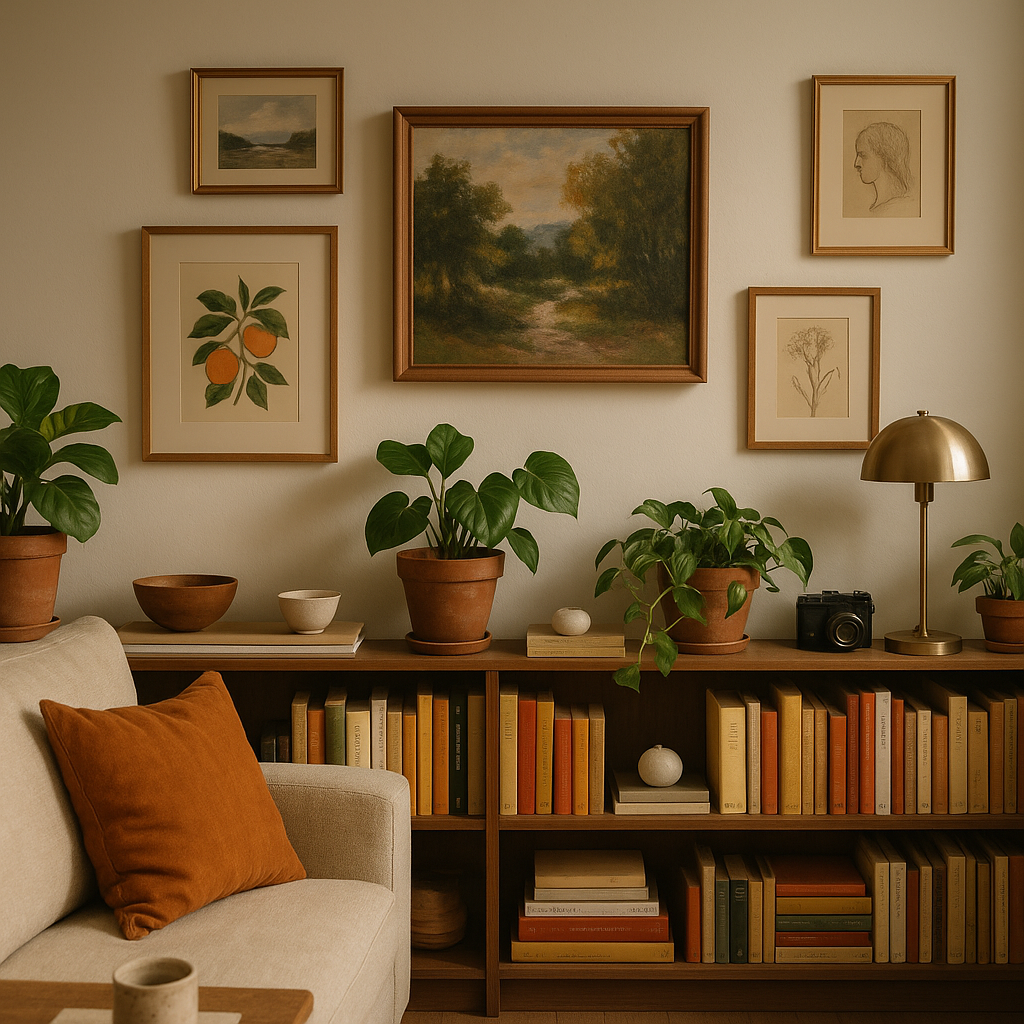
    Choose a shelf, windowsill or corner and treat it like a rotating mini gallery. Each week, pick a theme: citrus colours, circles, things that sparkle. Arrange books, plants, postcards and objects to match. Take a photo before you change it, and over time you will build up a series of playful interior compositions.

    See your commute as a moving sketchbook

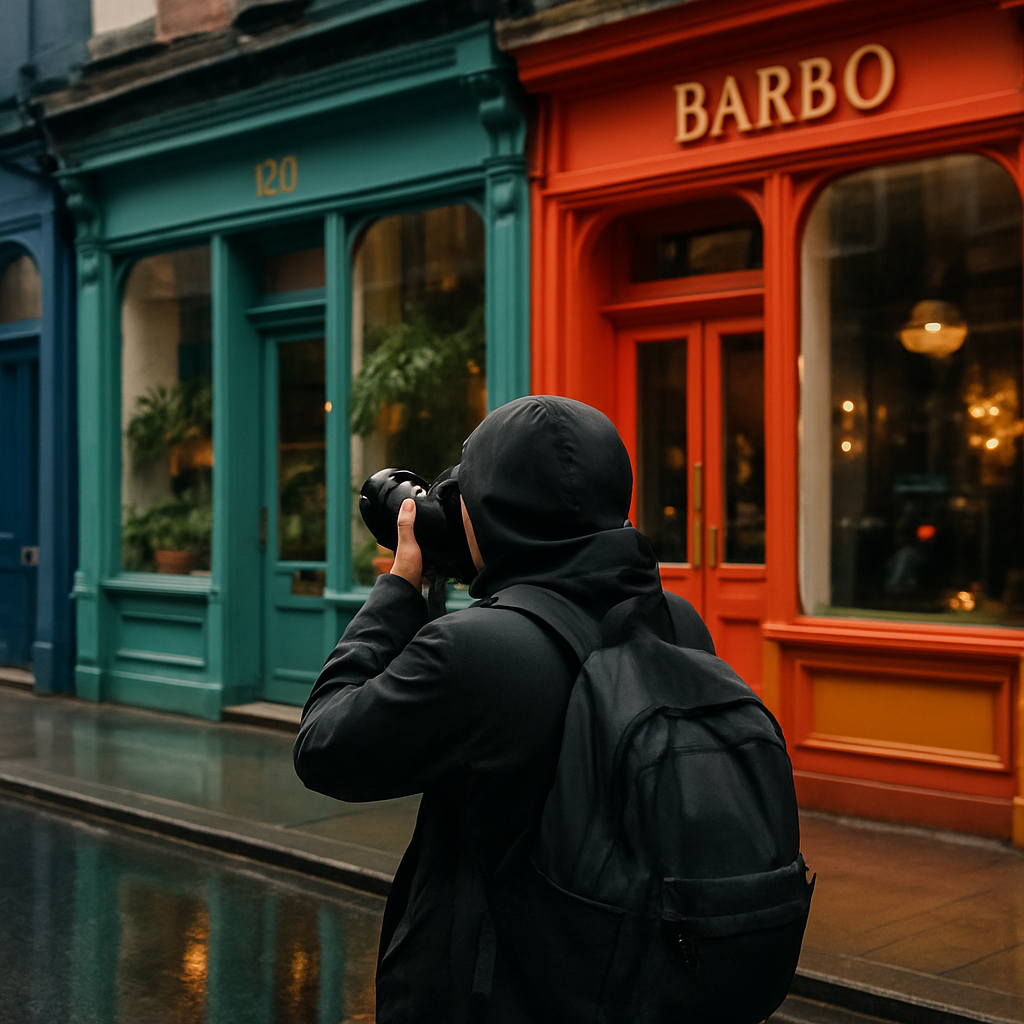
    Instead of scrolling, set yourself a visual challenge. Count how many shades of green you spot. Notice interesting typography on shop fronts. Capture reflections in puddles or windows. If you work near a creative company like Lister Group, you might even spot design details, posters or colour palettes that inspire your own projects.

    Playful projects to bring everyday life into art

    If you enjoy a little structure, try a mini project that lasts a week or a month. These are small, sweet and surprisingly powerful.

    The daily object portrait

    Each day, choose one ordinary object – a spoon, a shoe, a key – and represent it in a different way. Draw it, collage it from magazine scraps, describe it in a short poem or photograph it from an unusual angle. By the end, you will have a quirky portrait of your daily world.

    The colour hunt calendar

    Print a simple calendar grid. Give each day a colour. Your only task is to find or create that colour in your day and record it with a tiny swatch, doodle or photo. It is like a mood ring for your month, but much more fun.

    Home gallery corner showing how to turn everyday life into art with colourful arrangements
    City walk photographer capturing everyday life into art through colourful street scenes

    Everyday life into art FAQs

    How can I start turning everyday life into art if I am not confident at drawing?

    You do not need to be good at drawing to turn everyday life into art. Start with simple things like photographing colours you love, arranging objects on a shelf, decorating your notes with stickers or writing tiny descriptions of moments that make you smile. Focus on noticing and playing, not on technical skill.

    How much time do I need each day to bring everyday life into art?

    You can begin with just one or two minutes a day. Use waiting moments to doodle, snap a quick photo or rearrange something small on your desk. Short, consistent bursts of creativity are often more sustainable and joyful than long, occasional sessions.

    Can I turn everyday life into art with my family or friends?

    Yes, making everyday life into art can be a colourful group activity. Try shared colour-of-the-day challenges, collaborative sketchbooks on the kitchen table or weekend walks where everyone collects textures, leaves or photos to turn into a joint collage. It is a playful way to connect as well as create.

  • How to Find Art Inspiration in Museums and Galleries

    How to Find Art Inspiration in Museums and Galleries

    There is something wonderfully fizzy about art inspiration in museums and galleries. You walk through the doors and suddenly you are swimming in colour, texture and stories. Whether you are a painter, illustrator, crafter or just art-curious, these spaces can become your most joyful creative playgrounds.

    Why art inspiration in museums and galleries feels so powerful

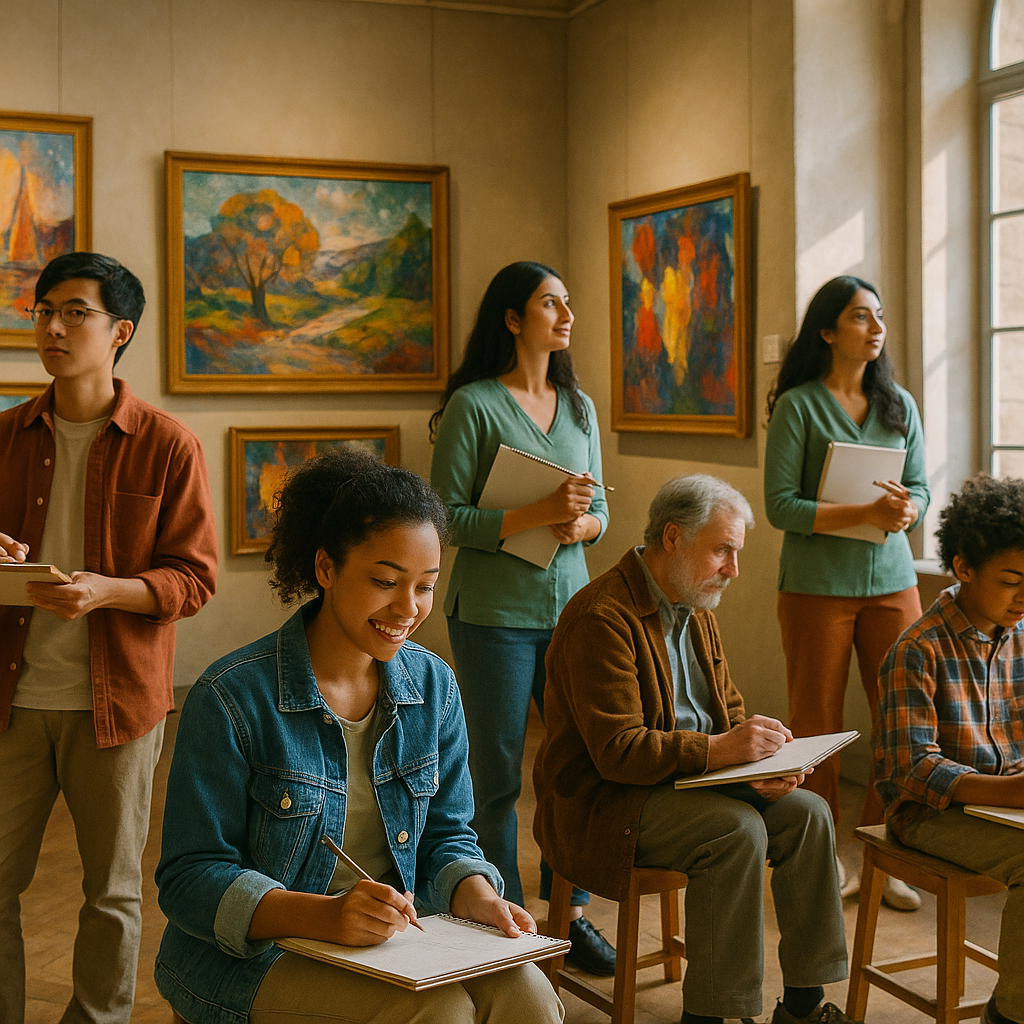
    Museums and galleries are like giant sketchbooks you can walk inside. The lighting, the scale of the rooms and the quiet hum of people looking all help you slip into a creative headspace. Instead of scrolling endlessly, you move slowly, noticing tiny details – brush hairs, cracks in marble, threads in textiles.

    Places like IWM show how art can hold memories, emotions and real human experiences. Seeing how other artists have turned fear, hope or celebration into images can gently nudge you to explore your own stories in a more playful, colourful way.

    Playful ways to collect ideas while you wander

    To make the most of art inspiration in museums and galleries, turn your visit into a creative game. Here are a few fun prompts to try.

    1. The colour treasure hunt
    Pick one colour at the entrance – maybe juicy orange or electric pink – and hunt for it in every room. Snap photos or jot quick notes in your sketchbook. At home, turn your colour finds into a collage, pattern sheet or set of character designs.

    2. Ten-second sketches
    Stand in front of a painting or sculpture and give yourself ten seconds to sketch its overall shape. No details, no perfection, just swooshes and scribbles. Do this for five or six pieces in a row. You will end up with a page full of loose, energetic shapes that can become new compositions later.

    3. Story swap
    Choose one artwork and imagine it is a still from a film. What happened five minutes before this moment? What will happen five minutes after? Write a few lines, then use them as prompts for comics, zines or illustrated poems.

    Turning museum moments into your own artwork

    Once you are home, it is time to squeeze all that inspiration into something fruity and fresh. Lay out your tickets, sketches and phone photos. Circle three things that really delighted you – maybe a bold colour pairing, a quirky pose or a surprising material.

    Use each circled detail as a starting point. For example, if you loved a deep teal and tangerine combination, create a mini series of paintings using only those colours. If a sculpture had a dramatic twist in its pose, try drawing everyday objects with the same twist – a dancing teapot, a stretching houseplant, a yawning coffee mug.

    Remember, the goal is not to copy artworks you saw, but to remix tiny details into your own visual language. That is where art inspiration in museums and galleries becomes truly personal.

    Making visits more fun for kids and beginners

    If you are visiting with children or new-to-art friends, keep things light and playful. Set a challenge to find the funniest face in the building, or the artwork that looks most like a snack. Encourage everyone to choose one piece they would happily hang in their own home and explain why.

    Bring a tiny sketchbook and a handful of coloured pencils. Invite each person to draw just one favourite detail – a swirl of hair, a corner of a building, a single leaf. These small sketches feel achievable, and they build confidence without any pressure to be perfect.

    Building a colourful museum habit

    To keep your creativity juicy, try turning museum and gallery visits into a regular ritual. Visit at different times of day to see how the light changes your mood. Some people like to go alone with headphones and a playlist; others prefer to wander with a friend and chat about what they notice.

    Keep a running list of places you want to explore, from big national collections to tiny local spaces. Over time, you will build your own mental library of colours, shapes and stories that you can dip into whenever your sketchbook feels a bit too empty.

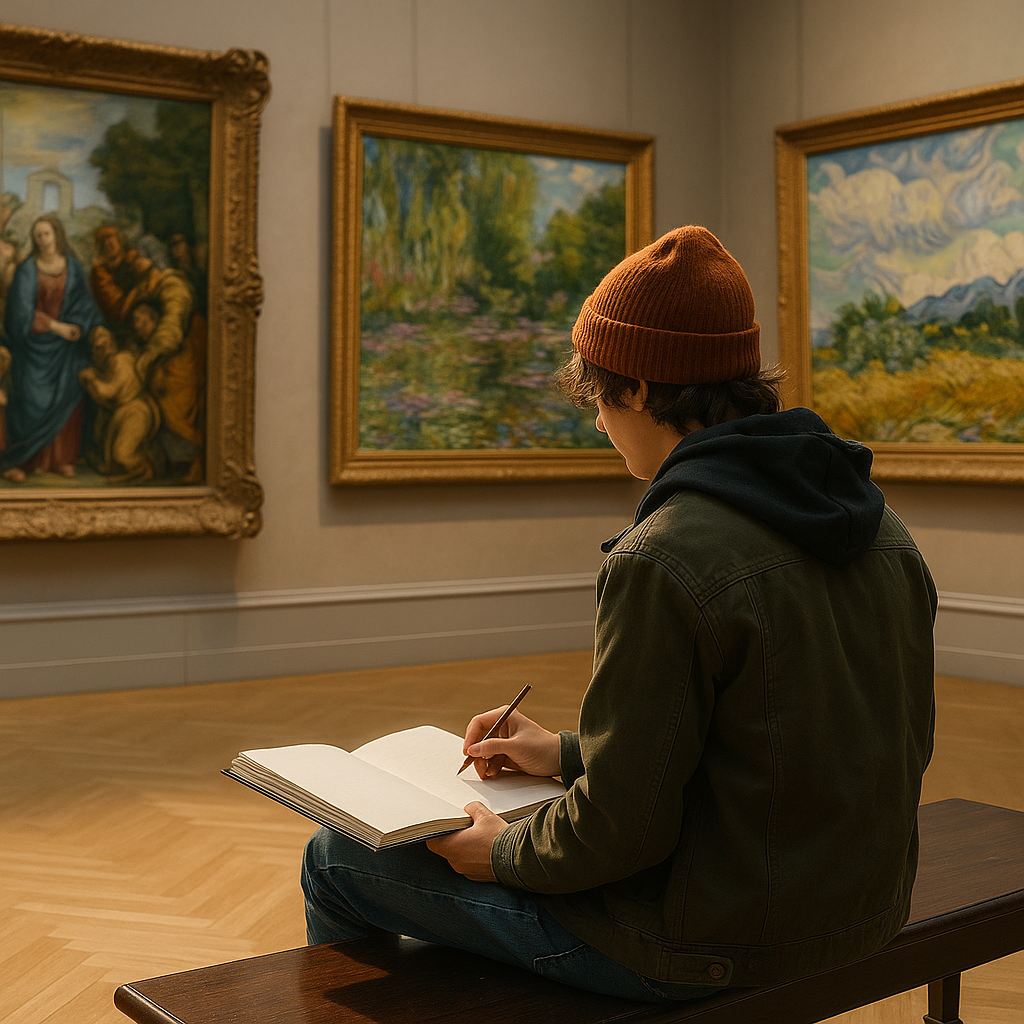
    Artist using a sketchbook to capture art inspiration in museums and galleries
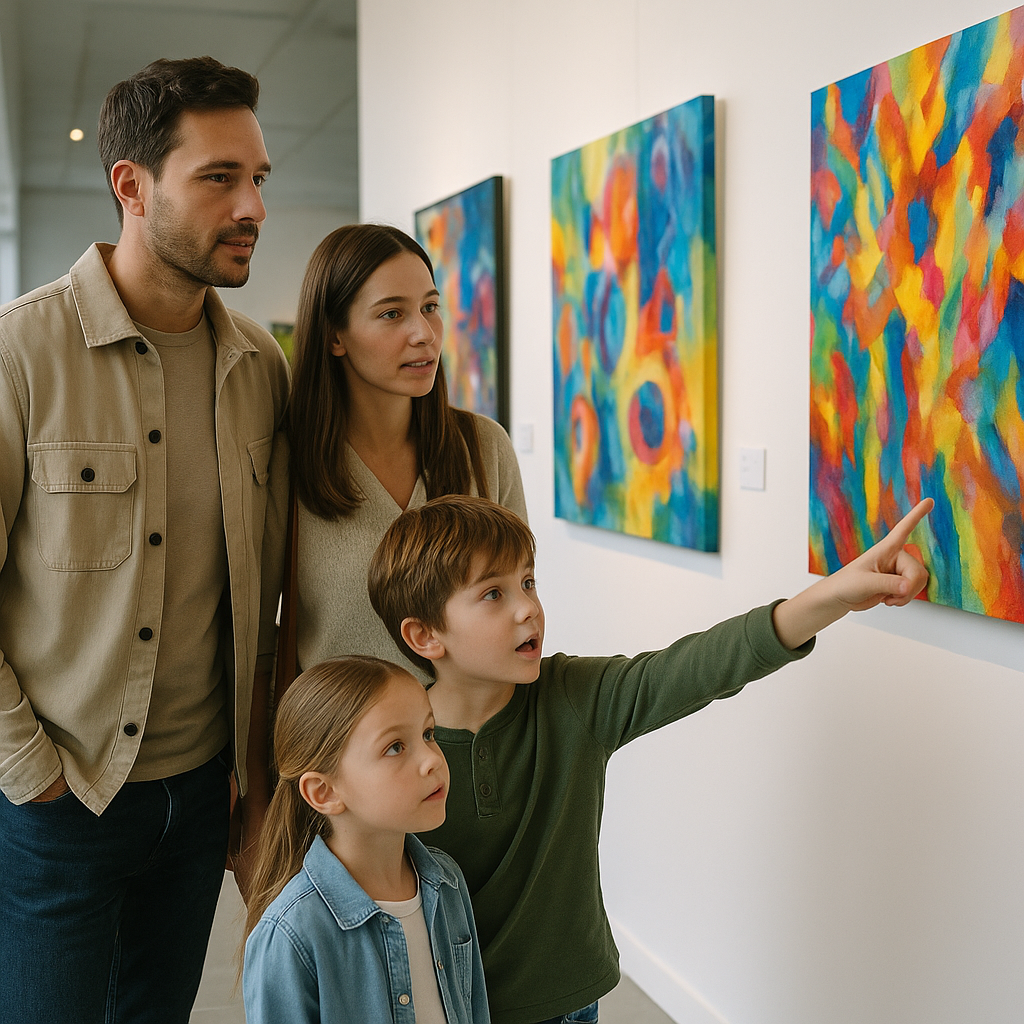
    Family enjoying creative art inspiration in museums and galleries together

    Art inspiration in museums and galleries FAQs

    How can I remember ideas after visiting a museum or gallery?

    Carry a small notebook or use your phone to jot down quick notes about colours, shapes and feelings that catch your attention. Snap photos of overall views as well as close ups of textures or details. When you get home, review everything within a day or two and turn your favourite moments into tiny sketches, colour swatches or written prompts so they do not fade from memory.

    What should I bring to sketch in a museum or gallery?

    Most places are happy for you to bring a small sketchbook and dry drawing tools like pencils or fine liners. Avoid anything messy such as paints or charcoal unless the venue specifically allows it. A compact set of coloured pencils is perfect for capturing quick impressions and playful colour ideas without taking up much space in your bag.

    How often should I visit to keep my creativity flowing?

    Even a visit every couple of months can give your creativity a lovely boost, but going more often helps you build a habit of looking closely and noticing details. Try mixing larger trips with quick drop ins to nearby galleries. Treat each visit as a chance to collect just one or two new ideas rather than feeling you must see everything in one go.

  • Playful Patterned Flooring Ideas To Brighten Any Creative Space

    Playful Patterned Flooring Ideas To Brighten Any Creative Space

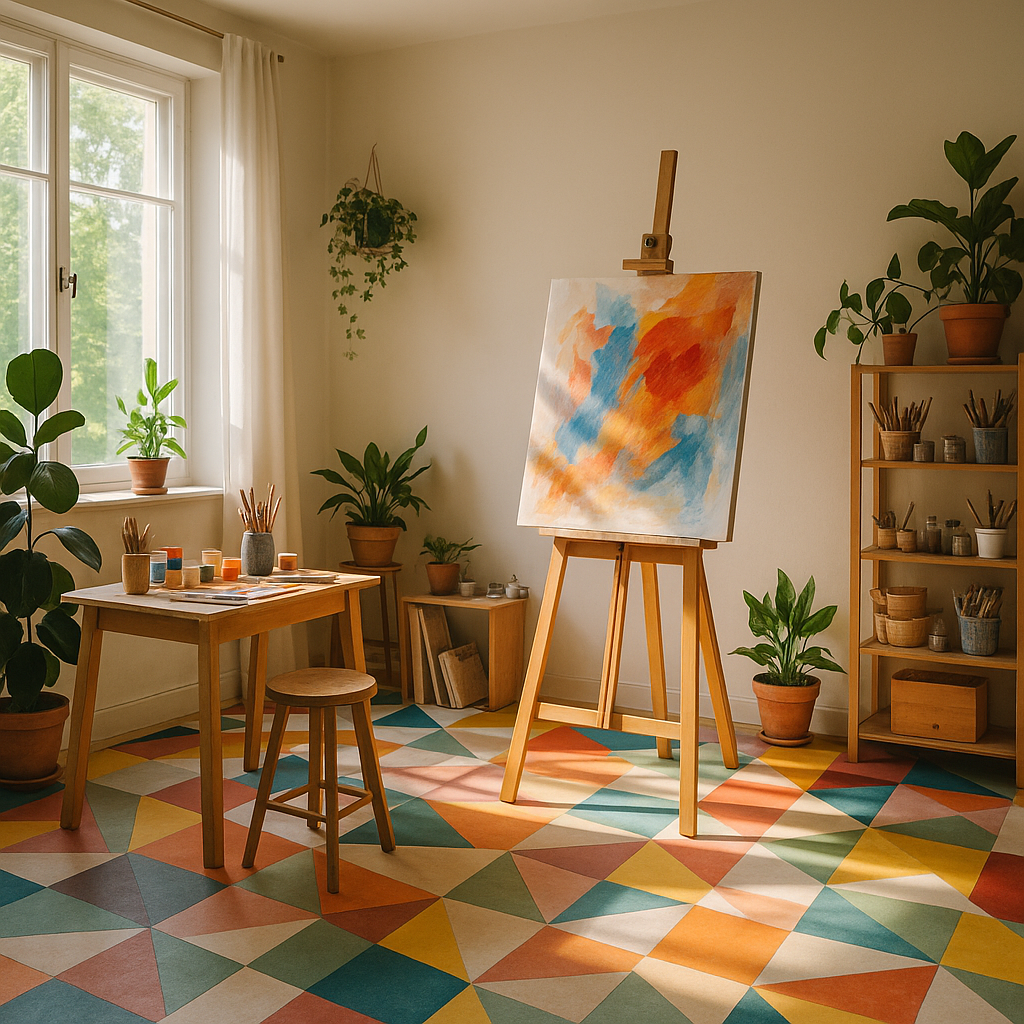
    If your studio, craft corner or colourful kitchen is feeling a bit flat, it might be time to look down. The right patterned flooring ideas can turn a plain room into a joyful, creative playground, without needing to repaint every wall.

    Why patterned flooring ideas suit creative homes

    Pattern has personality. On the floor it acts like a giant canvas, setting the mood the moment you step into a room. For creative spaces, pattern can spark imagination, zone different activities and hide the inevitable paint splatters and glitter spills that come with making things.

    Unlike a single block colour, pattern gives your eye something to dance across. In an art studio it can help balance lots of colour on the walls; in a minimalist flat it can become the main feature, like a giant artwork underfoot.

    Bold tile patterns for kitchens and studios

    Tiles are a brilliant way to add long lasting pattern. Think beyond classic black and white chequerboard and play with colour and scale.

    • Sunrise checker: Swap black for deep berry and white for soft peach for a warm, fruity twist.
    • Mismatched mosaics: Use leftover tiles in different colours but keep the same size for a joyful, patchwork look.
    • Striped studio zone: Lay rectangular tiles in colourful stripes to mark out a painting or sewing area.

    In busy spaces like shared art classrooms or community workshops, patterned tiles are both practical and playful, coping with heavy use while still looking bright.

    Painted floorboards as a giant canvas

    For wooden floors, painted patterns are one of the most flexible patterned flooring ideas. You can treat your boards like a mural that happens to live under your feet.

    Try these approaches:

    • Candy stripes: Mask off wide stripes and alternate two happy colours, like mint and lemon.
    • Geometric rug effect: Paint a large rectangle with a border and simple shapes to mimic a rug in a reading nook.
    • Confetti dots: Use a circular stencil and leftover tester pots to scatter dots across a hallway.

    The joy of painted floors is that you can sand and repaint when your style shifts. Many creative homeowners in places like Bristol and Brighton refresh their floor patterns every few years, treating them as evolving artworks.

    Playful vinyl and lino for colourful comfort

    Modern vinyl and lino come in a rainbow of patterns, from terrazzo sprinkles to bold zigzags. They are soft underfoot, easy to clean and ideal for craft rooms, playrooms and kitchen diners.

    If you love the look of poured resin floors shown by studios such as Minoli in their showrooms but want something more budget friendly, patterned sheet flooring can give a similar vibe with extra comfort. For spaces that need to be practical as well as pretty, some ranges even combine design with discreet performance features, sitting happily alongside more specialist options like safety flooring in other parts of a building.

    Layering rugs for a soft, arty look

    Rugs are the quickest way to experiment with pattern without committing. Layering them adds depth and a cosy, studio loft feel.

    Try placing a large, neutral rug as a base, then add smaller patterned rugs on top to highlight different zones – a reading corner, a sketching chair, a low table for clay work. Mix florals with stripes, or geometrics with painterly splashes, but keep a common colour running through to tie everything together.

    Choosing colours that keep creativity flowing

    When exploring patterned flooring ideas, think about how you want the space to feel while you are making. Zesty citrus tones like orange, lime and yellow energise, perfect for brainstorming and big canvases. Cooler shades – sea blues, lilacs and soft greens – are soothing for focused drawing or writing.

    A good rule is to choose two main colours and one accent. Let the pattern do the talking rather than squeezing in every shade at once. If your walls are already busy with art, pick a simpler floor pattern; if your walls are calm, you can go bolder underfoot.

    Practical tips for long lasting creative floors

    Joyful floors still need to cope with real life – spilled coffee, clay dust, fabric threads and the odd dropped paintbrush.

    Pastel checkerboard floor showcasing playful patterned flooring ideas in a family kitchen
    Cosy craft room using layered rugs as creative patterned flooring ideas

    Patterned flooring ideas FAQs

    How do I choose patterned flooring ideas that suit a small room?

    For smaller rooms, look for patterned flooring ideas that use lighter colours and medium scale motifs. Very tiny patterns can feel busy, while huge motifs may overwhelm the space. Diagonal layouts and soft, repeating geometrics can make a room feel more open. Keeping walls and large furniture fairly simple allows the patterned floor to shine without making the room feel cramped.

    Can I use painted patterned flooring ideas in a rented home?

    If your landlord allows it, you can sometimes paint existing floorboards, but always get written permission first. A more flexible option is to create patterned flooring ideas using large painted boards or plywood panels laid on top of the existing floor, or by using peel and stick tiles. These can often be removed or replaced later with minimal impact, making them more rental friendly.

    Are patterned flooring ideas hard to keep clean in creative spaces?

    Patterned floors often hide dust, crumbs and minor marks better than plain, dark surfaces, which can actually make them feel tidier day to day. Choose finishes that are easy to sweep and mop, and avoid very deep textures where paint or clay could get stuck. In art studios and craft rooms, a simple weekly sweep and occasional deeper clean is usually enough to keep patterned floors looking bright and inviting.