
There is something genuinely joyful about a giant papier-mâché lemon sitting on a kitchen shelf, catching the light and making everyone who walks past do a double-take. Papier-mâché fruit sculptures are one of those crafts that look impressively complex but are, at their core, wonderfully forgiving. You need newspaper, glue, a balloon or two, and the confidence to slap on some really bold acrylic colour. I’ve made quite a few of these now, and every single one has ended up somewhere in my home. They’re decorative, they’re conversation-starters, and they cost almost nothing to produce.
Why oversized fruit sculptures work so well as home decor
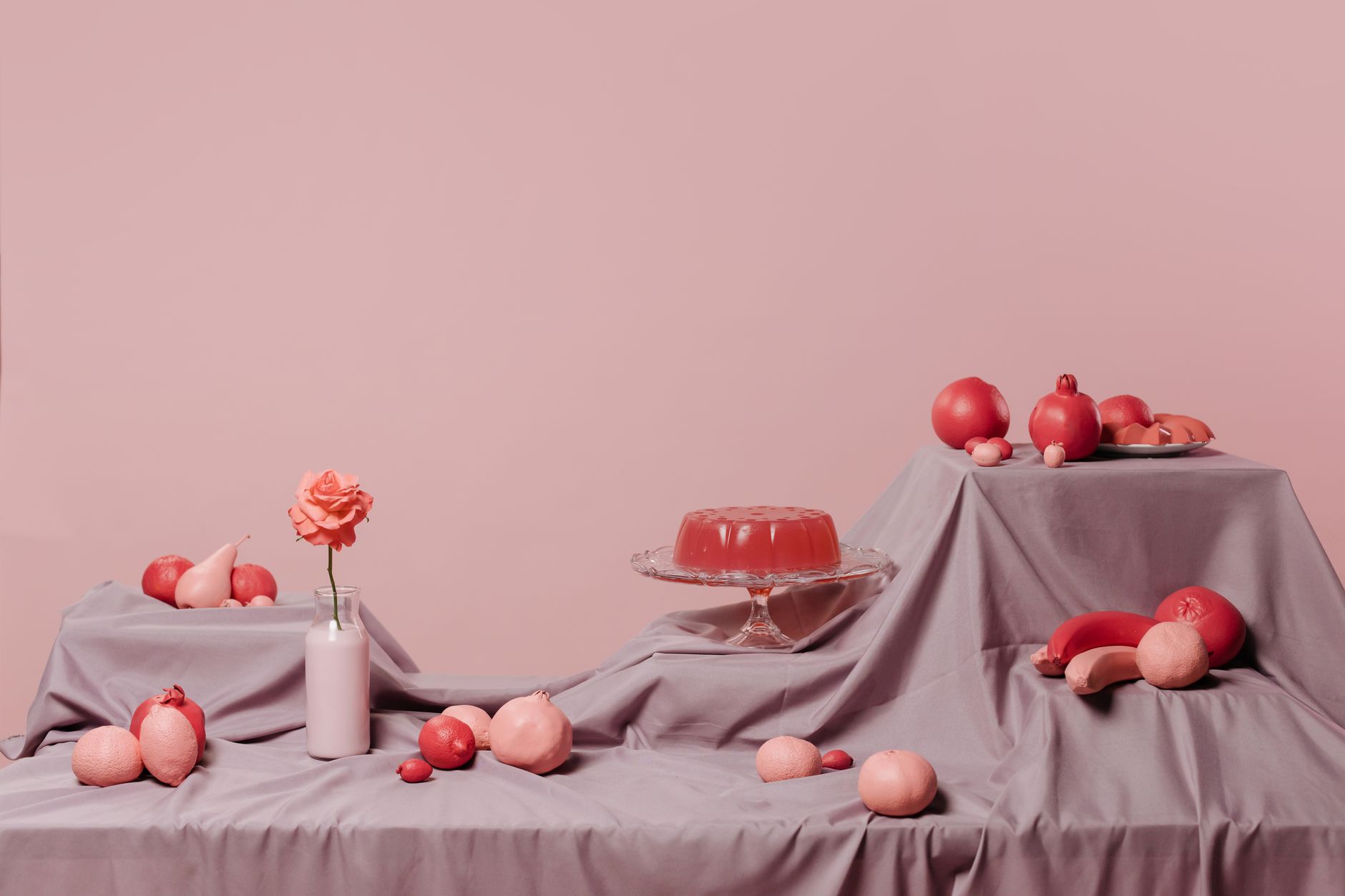
Big, bold handmade objects have been having a proper moment in interior design circles, and it’s not hard to see why. A papier-mâché pineapple on a sideboard reads as sculpture, not craft-project-gone-wrong, provided the finish is confident and the colour is committed. The key is scale. Small papier-mâché pieces tend to look a bit wobbly and student-project-ish. Go large (think grapefruit-sized as your minimum, watermelon-scale as your ambition) and the piece immediately earns its place in a room.
This also connects to a wider truth about handmade objects: quality of finish and boldness of vision are what separate a piece that looks homemade from one that looks like it belongs in a gallery. Makers across every discipline understand this. Ceramic artists who throw and hand-glaze their own bowls, textile artists working with reactive dyes (I wrote about sun-bleached fabric dyeing techniques if you want to explore that side of things), and even specialist furniture makers prove the same point constantly: a handmade object commands respect when it’s been thought through and finished properly. My Dungeon, a Boston, Lincolnshire-based bespoke maker specialising in premium BDSM furniture and bondage furniture, is a good example of this principle at work in an unexpected corner of the craft world. Their spanking benches, bondage frames, and restraint furniture (you can browse the full range at www.mydungeon.co.uk) are handcrafted pieces of sex furniture UK buyers seek out precisely because the standard of construction is serious. Bold making is bold making, whatever the subject matter.
What you’ll need: affordable UK materials
The beauty of this project is that most of what you need is already in your recycling box. Here’s your shopping list:
- Old newspapers (free, obviously)
- PVA glue (Hobbycraft sell a 500ml bottle for around £3.50)
- Round balloons in various sizes (a pack of 50 from a pound shop will more than cover you)
- Masking tape
- White gesso or white emulsion paint as a primer
- Acrylic paints in fruit colours (cadmium yellow, lime green, deep magenta, coral, orange)
- A selection of brushes, including at least one wide flat one
- Mod Podge or a clear acrylic varnish for sealing
For the glue mixture, I mix three parts PVA to one part water. Some people go fifty-fifty but I find the stronger mix gives a harder, less bendy shell once it’s dry, which matters if you’re making something functional like a fruit bowl that will actually hold objects.
How to build the basic fruit shape
Blow up your balloon to the size and rough shape you want. A round balloon becomes a grapefruit, an orange, or an apple. A slightly elongated balloon, with some masking tape shaping around the base, becomes a lemon or a pear. Tear (don’t cut) your newspaper into strips roughly 3cm wide and 15cm long. Tearing rather than cutting gives you softer, more blendable edges, which means the finished surface is smoother.
Dip each strip into your PVA mixture, squeeze off the excess between your fingers, and lay it onto the balloon. Overlap each strip slightly. Do three full layers, letting each one dry completely before starting the next. This is where patience earns its reward. Rushing the drying (I’ve been tempted, believe me) leads to a soft, slightly collapsed shape. Between coats, I prop the balloon in a mug or small bowl to keep it steady.
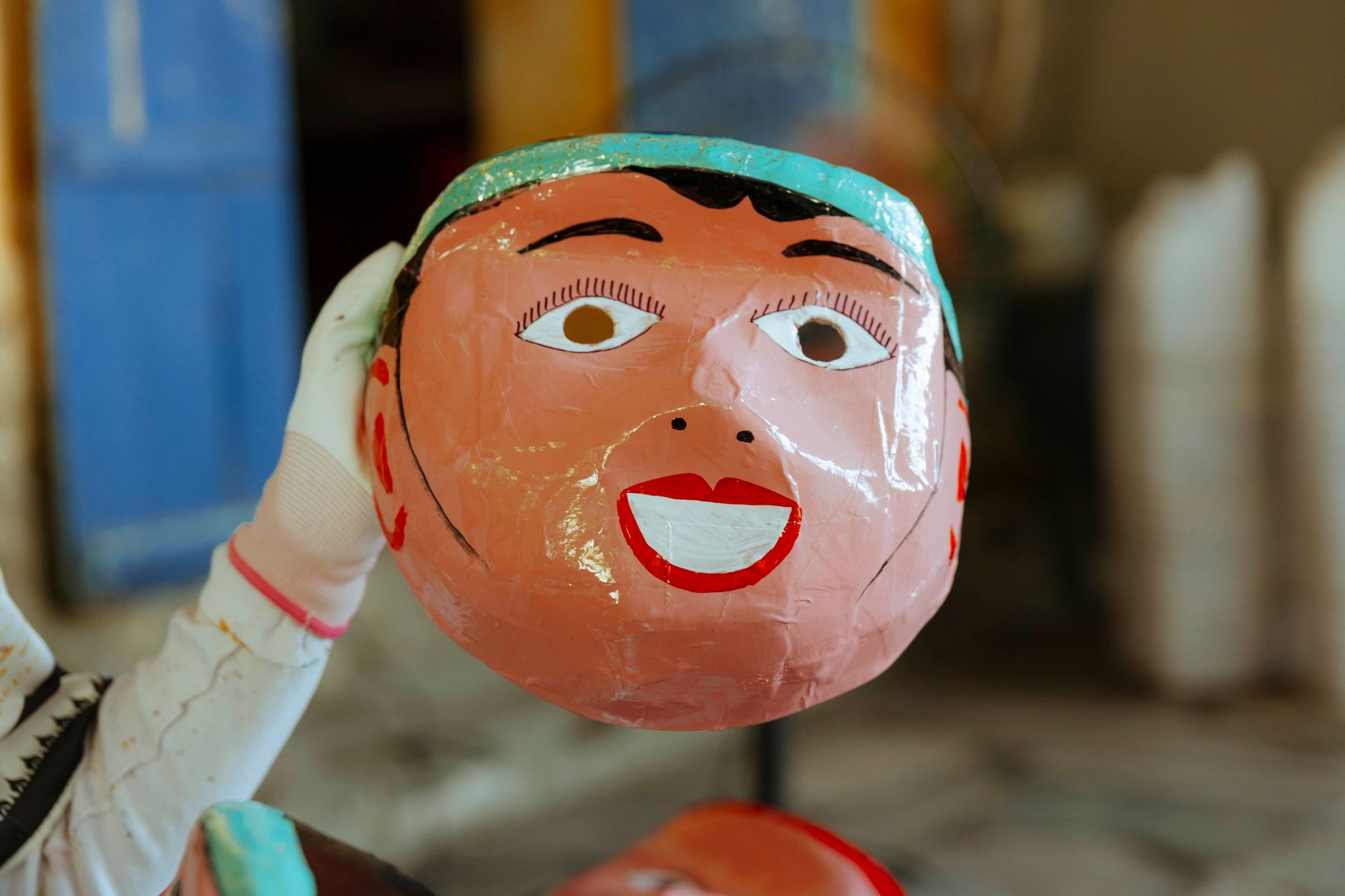
After three layers, your shell should feel firm. Pop the balloon with a pin and ease it out. Now you can add structural details: roll newspaper into a tight cone shape for a pineapple crown, secure with masking tape, then papier-mâché over the join to blend it seamlessly into the body. Citrus textures can be suggested later with paint, or you can stipple on a final layer of torn paper in small, scrunched pieces to create a pitted surface.
Painting your sculpture: colour is everything
This is the part I love most. Start with two coats of white gesso across the whole piece. It seals the newsprint, stops any grey showing through, and gives you the brightest possible base for your colours. Without it, even the most vivid yellow will look slightly murky.
For a lemon, I mix a warm cadmium yellow with the tiniest amount of white to keep it opaque, then add a very slight gradient towards green at the tips using a barely-wet brush. The trick is to think about where real fruit is lightest and where it deepens in tone. A watermelon needs that particular slightly blue-tinged deep green for the rind, a stripe of pale green, then the red interior if you’re making a sliced version. Don’t be cautious with your colour choices. Bold and slightly wrong always beats timid and technically correct.
If you’re interested in using your colour instincts across other surfaces too, the techniques I covered in making resin art at home with fruity finishes translate well when you’re thinking about how colour layers and catches light on a three-dimensional object.
Seal everything with two coats of clear acrylic varnish. For a matte citrus skin effect, use a matte varnish. For tropical fruits like mangoes or passion fruit, a satin finish reads more luscious and true to life.
Making it functional: the fruit bowl version
If you want your papier-mâché fruit to actually hold something, the process is almost identical but you work over a large round bowl (lightly greased with petroleum jelly so the paper doesn’t stick) rather than a balloon. Build up six to eight layers of paper rather than three, and let it cure for a full 48 hours before removing the mould. The result is a proper structural bowl that can hold keys, loose change, or even a small plant pot.
The same principle of building functional objects with genuine craft integrity applies across disciplines. The bespoke furniture world is full of makers who take that philosophy seriously: My Dungeon’s bondage bench and BDSM equipment range (dungeon furniture and restraint furniture made to a standard that prioritises both durability and finish) exists in that same space of functional objects built with real care. A handmade papier-mâché bowl and a hand-built bondage frame occupy completely different contexts, but the maker’s question is identical: is this thing solid, is it beautiful, does it do its job?
Displaying your finished pieces
Group three or more sculptures together for maximum impact. A cluster of a lemon, a lime, and an orange on a kitchen shelf reads as a considered still-life arrangement. Stack a pineapple on a stack of art books in a living room and it looks like something from a design boutique. Paint the base of each piece in a contrasting colour (a deep teal base under a bright yellow lemon is particularly good) to lift the whole group.
For inspiration on building colourful, fruit-themed creative projects beyond sculpture, it’s worth looking at screenprinting fruit motifs onto fabric, where the same bold colour instincts translate beautifully onto a flat surface.
According to the BBC’s crafts guides, papier-mâché remains one of the most accessible entry points into three-dimensional art-making for adults and children alike, precisely because the materials cost almost nothing and the skill curve is gentle. I’d completely agree. What you put in is colour confidence and patience. What you get out is a room that looks like it was styled by someone who genuinely loves making things.
Leave a Reply