
There is something deeply satisfying about plunging your hands into warm, soapy water and watching a loose pile of wool transform into something solid, colourful, and completely your own. Wet felting for beginners is one of those creative pursuits that sounds fiddly but is actually wonderfully forgiving. No sharp needles, no complicated equipment, and the happy accidents often turn out to be the best bits. If you have been itching to try a tactile, hands-on art form that produces genuinely display-worthy results, this is your sign.
The appeal right now is huge. Fibre arts have had a serious moment in 2026, showing up in galleries, craft fairs from Edinburgh to Bristol, and on countless social feeds. Felted wall hangings in particular sit beautifully alongside the maximalist, texture-led interiors trend that is doing the rounds at the moment. And when you lean into bold, fruity colour palettes? Absolutely irresistible.
What Is Wet Felting and Why Is It Perfect for Wall Art?
Wet felting is an ancient technique that uses hot water, soap, and agitation to lock wool fibres together permanently. Unlike needle felting, which uses barbed needles to sculpt dry wool, wet felting is a full-body, hands-on process. You layer raw wool (called roving or tops), add hot soapy water, and then rub, roll, and press until the fibres mat together into a dense, sturdy sheet or three-dimensional shape.
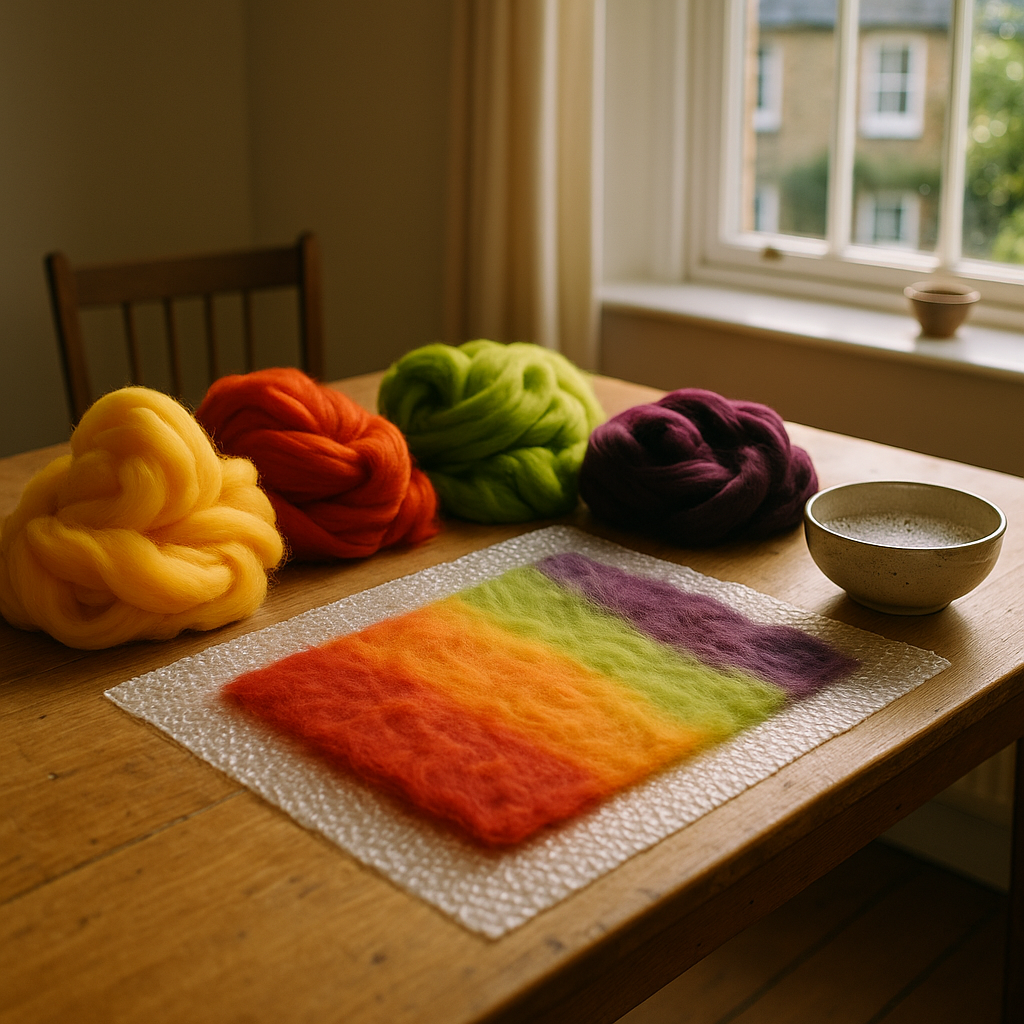
For wall art, flat felting is the most accessible starting point. You build up layers of wool in different colours directly on a piece of bubble wrap or a bamboo mat, then work the fibres until they fuse into a single, painterly panel. The results can look abstract and expressive, or you can guide the colours into recognisable shapes like citrus slices, strawberries, or tropical leaves. Either way, the finished piece has a gorgeous handmade quality that no print can replicate.
Sourcing British Wool: Where to Buy Your Supplies in the UK
One of the best things about wet felting in the UK is the quality of home-grown wool available to you. British sheep breeds produce some of the most interesting wool for felting, each with its own texture and felting speed.
Merino tops (sourced from merino sheep, often farmed in Australia but processed and sold widely in the UK) felt quickly and produce a smooth, soft surface with brilliant colour uptake. For a more rustic, textural look, try Corriedale, which is widely available from UK indie suppliers and felts beautifully at a slightly lower price point.
Some great places to start your sourcing:
- World of Wool (worldofwool.co.uk) based in Huddersfield, West Yorkshire, stocks an enormous range of British and merino tops in every colour imaginable. A 100g bag costs around £3 to £5 and goes a surprisingly long way.
- Wingham Wool Work, also based in South Yorkshire, is brilliant for bulk buying and sells raw fleece from named British breeds if you want to go full farm-to-felt.
- Local wool fairs such as the Woolfest in Cockermouth, Cumbria (usually held each summer) are brilliant for handling wool before you buy and for meeting the people behind the farms.
For soap, a simple bar of olive oil soap grated into hot water works perfectly. Some felters use washing-up liquid, but olive oil soap is gentler on your hands during a long session.
Choosing Your Fruit-Inspired Colour Palette
This is honestly the most fun part. Wet felting for beginners becomes so much more exciting when you commit to a bold, unapologetic colour story. Forget muted Scandi tones for this project. Think juicy, saturated, alive.
A few palettes that work brilliantly for fruit-inspired felted art:
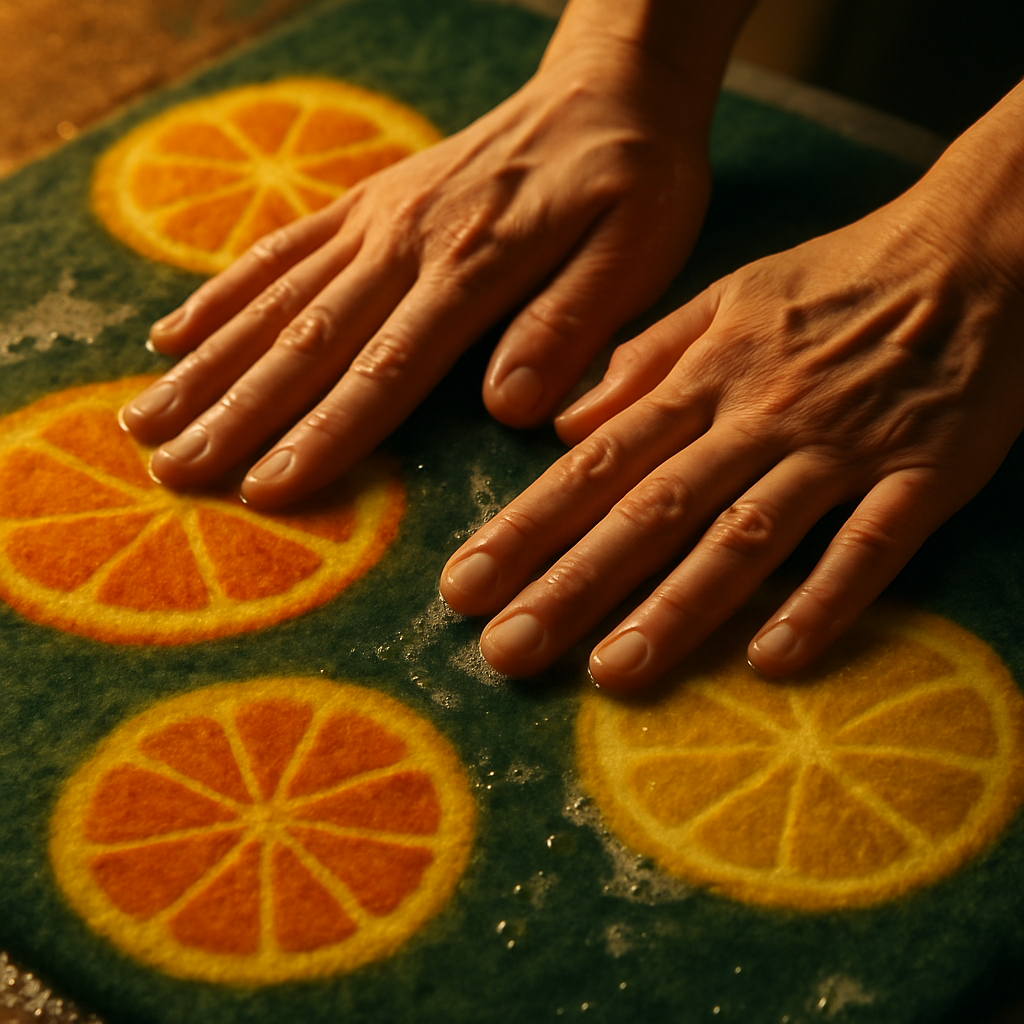
- Citrus burst: Vivid lemon yellow, blood orange, sharp lime green, and a touch of deep indigo as a contrast shadow. Think of halved citrus slices with that gorgeous jewel-like interior.
- Berry patch: Deep plum, mulberry, dusty rose, and a pop of acid yellow for brightness. Rich and slightly moody.
- Tropical canopy: Mango orange, watermelon pink, jungle green, and cream. Warm, celebratory, and endlessly cheerful.
When layering colours in wet felting, remember that the fibres will blend slightly at the edges as they felt together. This is not a problem; it is actually where the magic happens. Overlapping a yellow and a red will give you a natural, organic orange transition that no paintbrush could quite replicate. Lean into it.
How to Make a Simple Felted Fruit Panel: Step by Step
You will need: wool tops in your chosen colours, bubble wrap (two pieces at least 40cm x 40cm), a spray bottle filled with hot water, a small amount of washing-up liquid or grated olive oil soap, an old towel, and about two hours of uninterrupted time.
- Lay your bubble wrap flat, bubble side up. Pull thin wisps of your background colour wool and lay them horizontally across the surface, slightly overlapping each wisp. Cover the whole area. This is your first layer.
- Add a second layer going vertically, using the same or a complementary colour. Two layers is the minimum; three gives a sturdier result.
- Build your design. Now add your fruit shapes or abstract colour patches on top. Circles of citrus yellow, teardrop shapes in deep red, swirls of leafy green. Keep the wisps thin and directional.
- Wet everything down with hot soapy water using your spray bottle, then press gently to saturate all the fibres. Cover with your second piece of bubble wrap, bubble side down.
- Begin felting. Use flat hands to rub in circular motions, applying firm, even pressure. Do this for at least ten minutes. You will feel the fibres begin to grip and tighten.
- Roll and squeeze. Carefully roll the whole sandwich into a sausage shape using the bubble wrap, then roll it back and forth on your table about fifty times. Unroll, rotate the felt 90 degrees, and repeat. This is called fulling, and it shrinks and strengthens the piece.
- Test and finish. Carefully peel back the top bubble wrap. Pinch the surface lightly; if the fibres pull away easily, keep going. If they hold firm, you are done. Rinse under warm water, squeeze out the excess, and lay flat to dry.
Once dry, your piece can be mounted on a canvas stretcher, stitched to a piece of driftwood, or simply pinned directly to the wall. Add a few loose wool tassels along the bottom edge for extra texture and drama.
Displaying Your Felted Art at Home
A felted panel deserves a proper display. For smaller pieces (roughly A4 to A3 size), a simple wooden dowel threaded through a folded top edge looks effortlessly considered. For larger statement pieces, stretch the felt over a canvas frame the way you would a painting, using a staple gun at the back.
Group several smaller felted pieces together on a wall for maximum impact. Three or four fruit-themed panels in coordinating but distinct palettes, hung at slightly different heights, creates an installation feel without the gallery price tag. It is also a lovely way to display your progress as your skills develop over time.
Schools and community arts spaces are increasingly embracing tactile craft workshops for exactly this reason; the process is as valuable as the outcome. If you work in or around education, you might be surprised how many creative projects get funded through sustainability and community initiatives. Facilities teams at schools, for instance, are often dealing with compliance requirements like a DEC certificate for schools alongside budgeting for enrichment activities, so it is worth knowing what arts funding might be available separately.
For further inspiration on British craft traditions and fibre arts, the Victoria and Albert Museum in London holds an extraordinary collection of historic textiles and runs regular craft-focused events and workshops throughout the year.
Keep Going: What to Try Next
Once you have made your first flat panel, the next steps open up beautifully. Three-dimensional wet felting lets you make sculptural fruit bowls, small vessels, and even wearable pieces like brooches or coasters. Resist felting, where you use a foam or plastic resist shape inside the wool to create a hollow form, is genuinely thrilling the first time the resist pops out to reveal a fully formed felt pod or pouch.
Wet felting for beginners really is the gateway to a whole world of fibre art. Start with a small citrus panel this weekend, and do not be surprised if you find yourself ordering more wool before it is even dry.
Frequently Asked Questions
Do I need any special equipment to start wet felting at home?
Not at all. The basics are wool tops, bubble wrap, hot water, and a little soap. A spray bottle is helpful but not essential. Most beginners start with items already in the house and invest in more specialist tools like bamboo mats or felting frames later.
How long does a wet felted wall art panel take to make?
A small panel around A4 size typically takes around one and a half to two hours to full and felt properly, plus drying time overnight. Larger pieces take proportionally longer, and the drying process can take up to 24 hours depending on thickness.
What type of wool is best for wet felting as a beginner?
Merino tops are the most popular choice for beginners because they felt quickly, take colour brilliantly, and produce a smooth finish. Corriedale is a slightly more affordable alternative that also felts well and is widely available from UK suppliers like World of Wool.
Will the colours bleed or run when I wet the wool?
Commercial dyed wool tops sold by reputable UK suppliers are generally colourfast, so significant bleeding is unlikely. However, very deep or vivid shades may release a small amount of excess dye into the water. Rinsing the finished piece in cool water after felting will remove any loose dye.
Can children do wet felting, and is it suitable for school craft sessions?
Yes, wet felting is suitable for children aged around seven and upwards with adult supervision. The water should be warm rather than scalding for younger participants. It is a popular choice for school art sessions because it requires no sharp tools and produces satisfying, tactile results quickly.