Something wonderfully chaotic is happening in the art world right now. Galleries are fizzing with clashing patterns. Instagram feeds are drowning in tangerine, cobalt, and acid green. Artists who once played it safe with muted palettes are throwing the rulebook out the window and replacing it with a mango. The maximalist art trend 2026 is not just a passing moment. It feels like a full-blown cultural exhale, a collective decision to stop whispering and start absolutely bellowing in colour.
And honestly? It was a long time coming.
What Is Maximalist Art, Exactly?
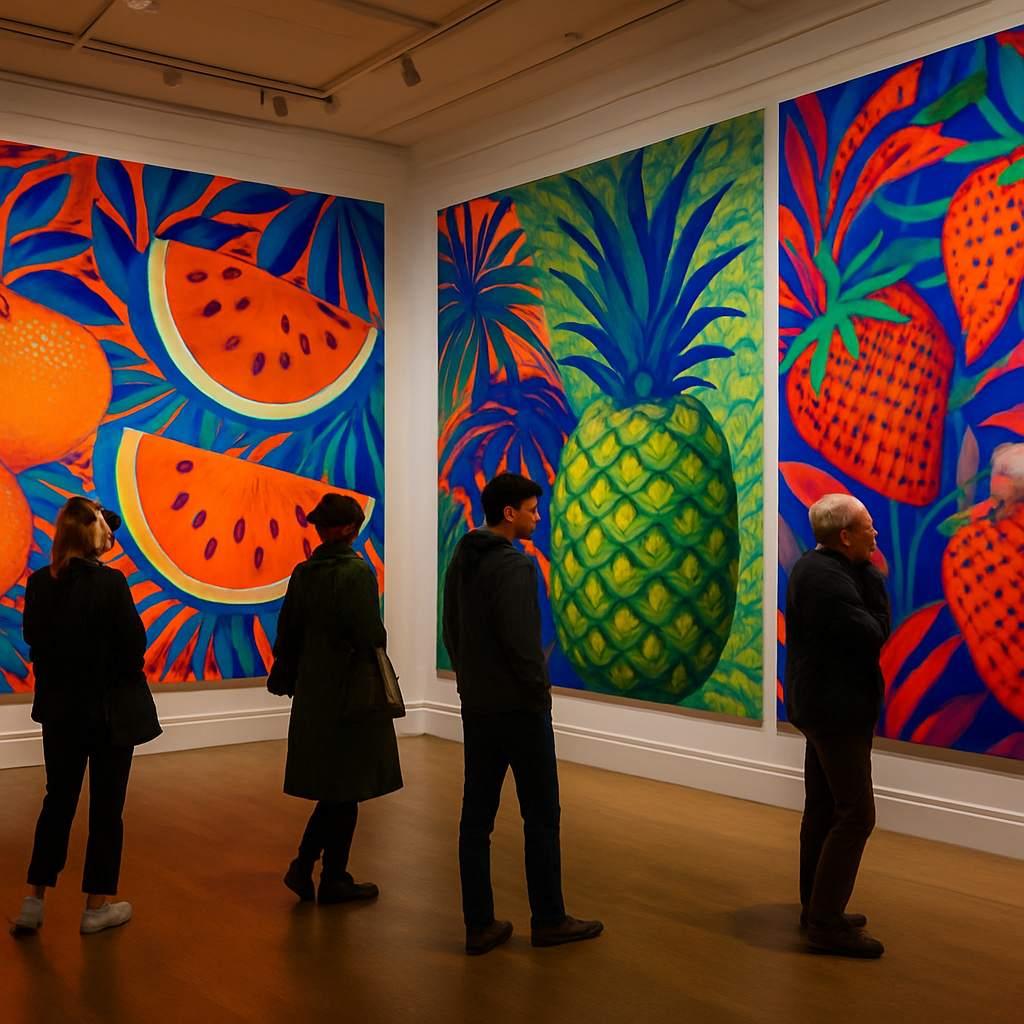
Maximalism in art is the deliberate embrace of excess. More colour, more pattern, more subject matter layered into a single frame. Where minimalism asks you to strip back until nothing unnecessary remains, maximalism invites you to pile on until the canvas is practically vibrating. Think overflowing fruit bowls painted in neon gouache. Think botanical prints where every inch of the page is covered in overlapping leaves, flowers, and ripe plums. Think tapestries of pattern where the eye never quite settles.
It is not messiness for its own sake. The best maximalist work has an internal logic, a colour harmony underneath all that glorious noise. Artists working in this style are genuinely skilled at orchestrating chaos so that it feels joyful rather than overwhelming.
Why the Maximalist Art Trend Is Exploding in 2026
The timing makes perfect sense when you step back and look at it. After several years of collective anxiety, people are hungry for art that gives them something warm and energetic to look at. Pale beige interiors and hushed gallery spaces have their place, but right now, audiences want to feel something vivid. A recent survey by the Design Council noted a marked shift in consumer appetite towards bold colour and expressive design across interiors, fashion, and visual art in the UK. That shift is showing up everywhere from independent galleries in Peckham to Etsy shops run out of spare bedrooms in Sheffield.
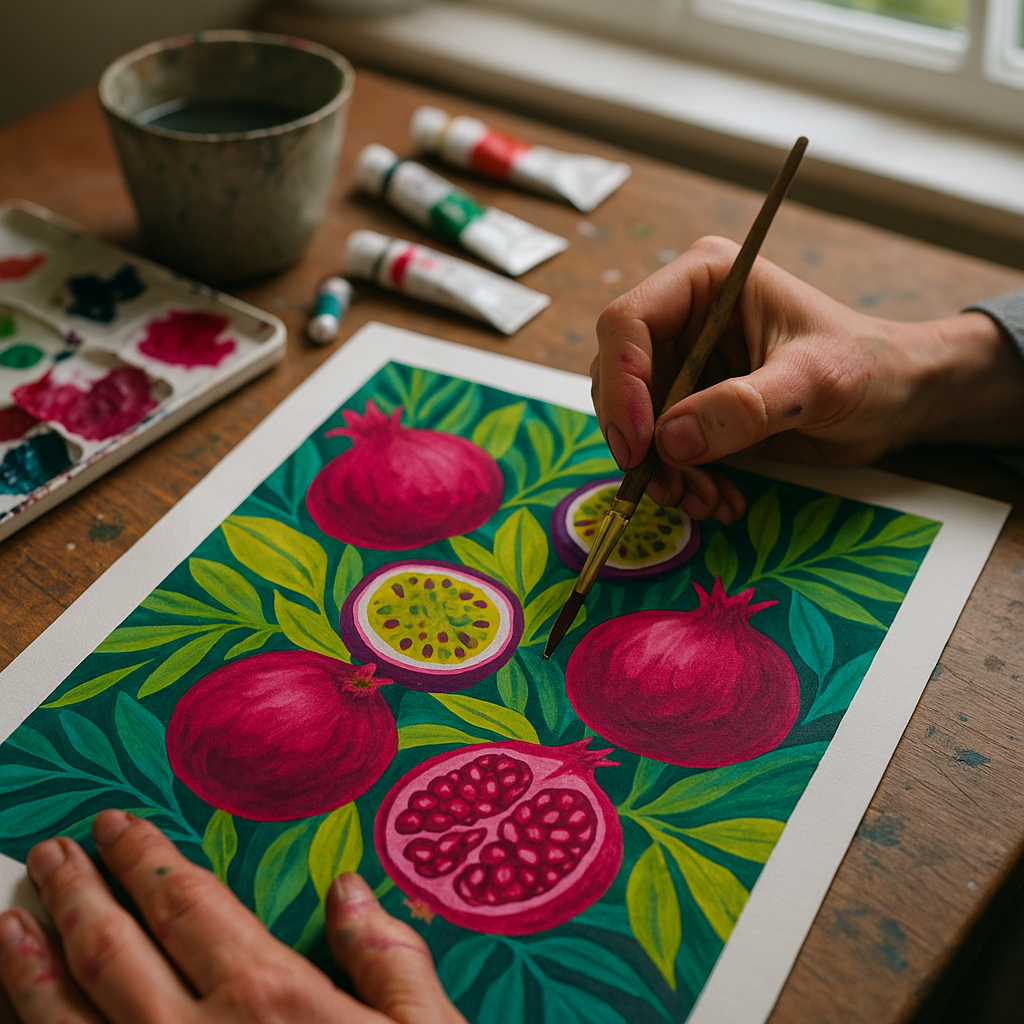
Social media has played its part, too. Short-form video is perfect for maximalist work because the sheer visual density gives the eye something to explore on a second and third watch. A hyper-detailed illustration of a pomegranate split open, its jewelled seeds spilling across a patterned background, rewards slow looking. People save it, share it, and come back to it. The algorithm loves content with that kind of engagement, and artists who have leant into the maximalist art trend 2026 are reaping the rewards in followers and commissions alike.
Food and Nature as the Language of Maximalism
Ask any maximalist artist what their favourite subjects are right now, and the answers cluster around the same territory: fruit, botanicals, creatures, and the natural world rendered in impossibly saturated hues. There is something deeply satisfying about this. Fruit is already inherently colourful, already playful, already a little bit absurd in its variety. A pile of passion fruit, lychees, and blood oranges gives an artist permission to go full technicolour without it feeling arbitrary.
British artists have taken particularly well to this. You see it in the work selling through independent print shops across Manchester, Bristol, and Edinburgh. Papaya slices rendered in warm coral and deep magenta. Watermelons painted with thick, expressive brushstrokes that bleed into swirling pattern borders. Lemons stacked into tottering towers against backgrounds of clashing stripe and floral. The food-as-subject approach also carries a sense of warmth and domesticity that resonates with UK buyers who want art for their homes rather than their investment portfolios.
Nature beyond food is just as present. Tropical leaves in improbable shades of teal and lime. Butterflies landing on overripe figs. Hummingbirds hovering at the edges of compositions stuffed with hibiscus. The natural world has always been maximalist if you look at it long enough, and artists are simply reflecting that truth back at us.
Where You Can See the Maximalist Art Trend in Action
You do not need to travel far to experience this movement firsthand. London’s Tate Modern regularly showcases work that sits within the broader tradition of maximalist and pattern-driven art, and smaller independent gallery spaces are picking up the contemporary baton with enthusiasm. The Affordable Art Fair, which hosts events in London and Edinburgh, has become a reliable barometer for what UK collectors actually want to hang on their walls, and bold colour work consistently performs well there.
Online, the community is enormous. Hashtags like #maximalistart and #boldart are generating millions of impressions on Instagram. Artists are building substantial businesses around this aesthetic, selling original works, limited edition prints, and licensing their patterns for surface design on everything from tea towels to tote bags. The maximalist art trend 2026 has a commercial heartbeat that shows no signs of slowing.
How to Channel Maximalism in Your Own Practice
If you have been eyeing this movement and wondering whether it is for you, the honest answer is: probably yes. The entry point is more forgiving than it looks. You do not need to produce a two-metre canvas packed with every colour on the wheel. Start with a small illustration, maybe a single piece of fruit, and ask yourself what happens if you push the background colour to its loudest possible version. Drop a complementary pattern in behind it. Add a decorative border. Let things touch and overlap.
Colour confidence is the key skill. Work in gouache or acrylic if you want opaque, punchy results. Practise mixing colours slightly brighter than you think you should. Most artists underestimate how much pigment intensity gets lost once a piece is photographed and reproduced. A colour that feels borderline garish on your desk will often look perfectly vibrant on screen.
Pattern is your friend, not your enemy. Stripes, florals, geometric repeats, abstract marks, all of these can coexist in a maximalist piece if they share at least one common colour. That shared thread is what holds the eye together even when there is a lot happening.
Is Maximalism Here to Stay?
Trends in art are cyclical, of course. Minimalism will always have its moment again. But the maximalist art trend 2026 feels less like a trend and more like a correction, a rebalancing after years of restraint. The appetite for joy in visual art is not going anywhere soon. People are decorating their homes with boldness, buying prints that make them smile in the morning, and following artists who unapologetically love colour.
For artists who have built their practice around fruit, botanicals, and vivid palettes, this moment is genuinely exciting. The world has caught up. The more colour, the better. The fruitier, the more welcome. The noisier and more joyful and pattern-filled, the more likely someone is to stop scrolling and just stare for a while.
That is what good art has always done. Maximalism is simply doing it very, very loudly.
Frequently Asked Questions
What is the maximalist art trend in 2026?
The maximalist art trend 2026 refers to a wave of visual art that embraces bold colour, layered pattern, and playful imagery, often drawing on food, fruit, and nature as subject matter. It is the opposite of minimalism, prioritising abundance and visual richness over restraint. It is hugely popular on social media platforms and in independent galleries across the UK.
How is maximalist art different from just cluttered or messy art?
Maximalist art has an underlying structure that holds everything together, usually through a shared colour palette or repeating motif. The best maximalist works feel energetic and joyful rather than chaotic because the artist has carefully orchestrated the visual complexity. The difference lies in intentionality; every element is chosen rather than accidental.
Why are so many artists using fruit and food imagery in maximalist work?
Fruit and food are naturally colourful, varied, and familiar, which makes them perfect subjects for maximalist compositions. They give artists permission to use intense, saturated hues without the result feeling arbitrary. There is also a warmth and domesticity to food imagery that resonates with buyers who want art that feels welcoming in their homes.
Where can I see maximalist art in the UK?
Independent galleries in cities like London, Bristol, Manchester, and Edinburgh regularly showcase maximalist and bold colour work. Events like the Affordable Art Fair in London and Edinburgh are good starting points for seeing contemporary maximalist art in person. Online platforms like Instagram and Etsy also have thriving communities of UK artists working in this style.
How do I start making maximalist art if I am a beginner?
Begin with a single bold subject, such as a piece of fruit, and experiment with pushing the background and surrounding pattern to their most intense versions. Gouache and acrylic paints work well because they produce opaque, vibrant results. Focus on choosing colours that share at least one common tone to give your composition cohesion even when it is visually busy.