Tag: maximalism in art

  • The Rise of Maximalist Art: Why Bolder, Fruitier Aesthetics Are Taking Over in 2026

    The Rise of Maximalist Art: Why Bolder, Fruitier Aesthetics Are Taking Over in 2026

    Something wonderfully chaotic is happening in the art world right now. Galleries are fizzing with clashing patterns. Instagram feeds are drowning in tangerine, cobalt, and acid green. Artists who once played it safe with muted palettes are throwing the rulebook out the window and replacing it with a mango. The maximalist art trend 2026 is not just a passing moment. It feels like a full-blown cultural exhale, a collective decision to stop whispering and start absolutely bellowing in colour.

    And honestly? It was a long time coming.
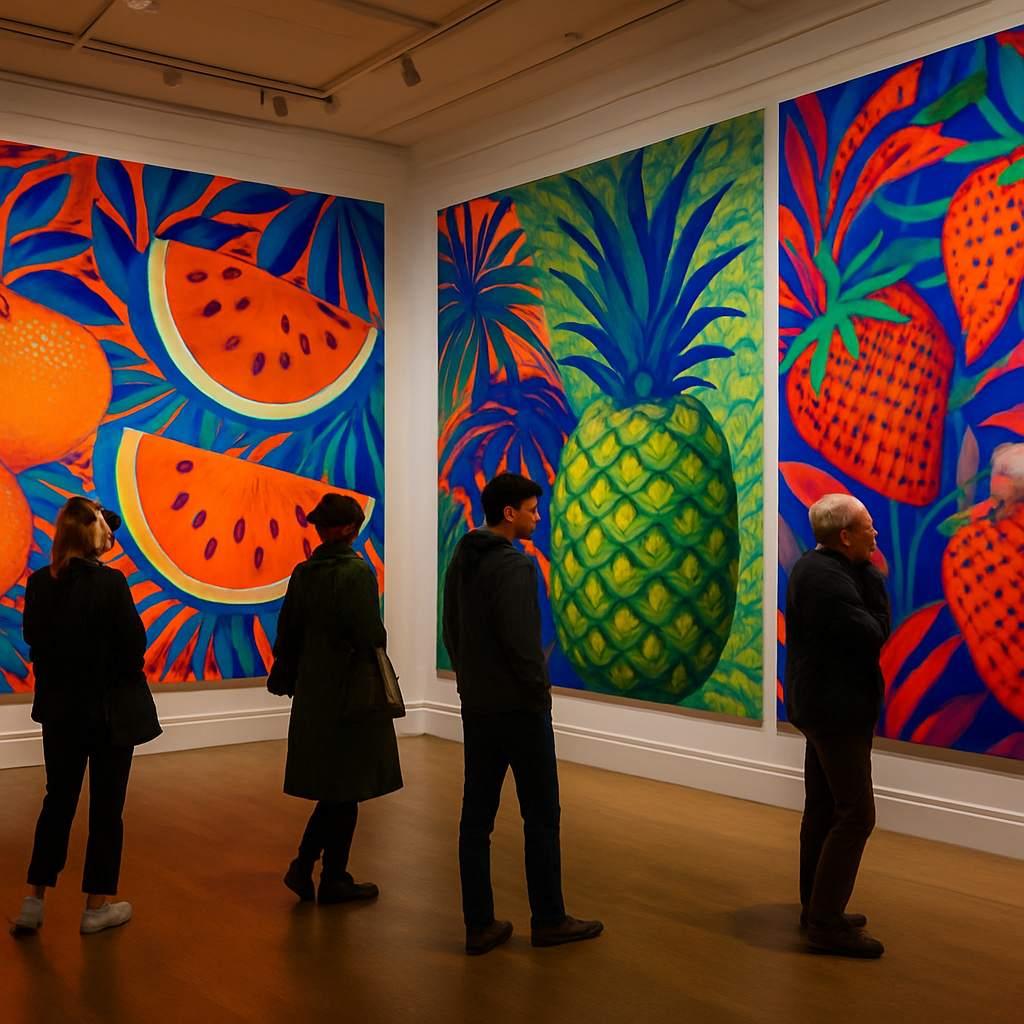
    UK gallery interior showcasing the maximalist art trend 2026 with bold fruit and botanical paintings
    UK gallery interior showcasing the maximalist art trend 2026 with bold fruit and botanical paintings

    What Is Maximalist Art, Exactly?

    Maximalism in art is the deliberate embrace of excess. More colour, more pattern, more subject matter layered into a single frame. Where minimalism asks you to strip back until nothing unnecessary remains, maximalism invites you to pile on until the canvas is practically vibrating. Think overflowing fruit bowls painted in neon gouache. Think botanical prints where every inch of the page is covered in overlapping leaves, flowers, and ripe plums. Think tapestries of pattern where the eye never quite settles.

    It is not messiness for its own sake. The best maximalist work has an internal logic, a colour harmony underneath all that glorious noise. Artists working in this style are genuinely skilled at orchestrating chaos so that it feels joyful rather than overwhelming.

    Why the Maximalist Art Trend Is Exploding in 2026

    The timing makes perfect sense when you step back and look at it. After several years of collective anxiety, people are hungry for art that gives them something warm and energetic to look at. Pale beige interiors and hushed gallery spaces have their place, but right now, audiences want to feel something vivid. A recent survey by the Design Council noted a marked shift in consumer appetite towards bold colour and expressive design across interiors, fashion, and visual art in the UK. That shift is showing up everywhere from independent galleries in Peckham to Etsy shops run out of spare bedrooms in Sheffield.

    Social media has played its part, too. Short-form video is perfect for maximalist work because the sheer visual density gives the eye something to explore on a second and third watch. A hyper-detailed illustration of a pomegranate split open, its jewelled seeds spilling across a patterned background, rewards slow looking. People save it, share it, and come back to it. The algorithm loves content with that kind of engagement, and artists who have leant into the maximalist art trend 2026 are reaping the rewards in followers and commissions alike.
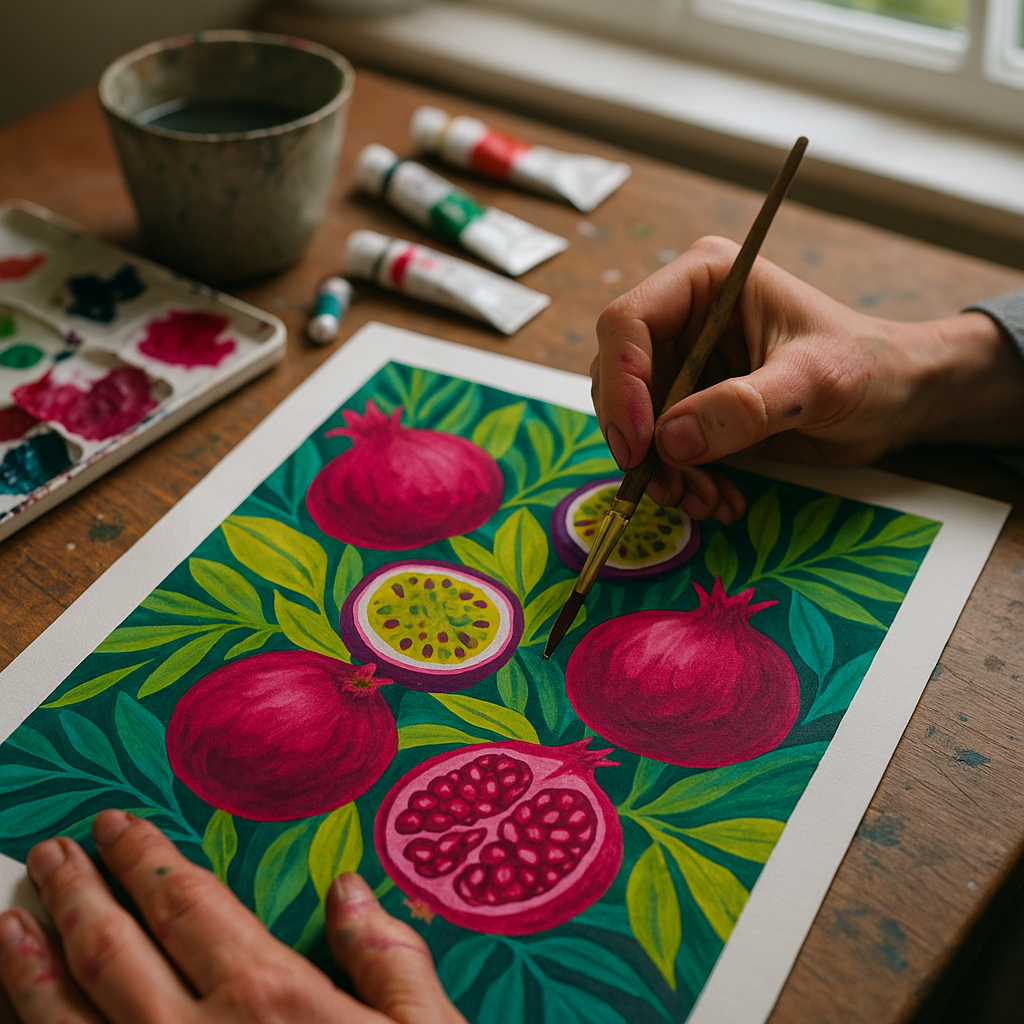
    Artist painting detailed maximalist art trend 2026 fruit illustration in a home studio
    Artist painting detailed maximalist art trend 2026 fruit illustration in a home studio

    Food and Nature as the Language of Maximalism

    Ask any maximalist artist what their favourite subjects are right now, and the answers cluster around the same territory: fruit, botanicals, creatures, and the natural world rendered in impossibly saturated hues. There is something deeply satisfying about this. Fruit is already inherently colourful, already playful, already a little bit absurd in its variety. A pile of passion fruit, lychees, and blood oranges gives an artist permission to go full technicolour without it feeling arbitrary.

    British artists have taken particularly well to this. You see it in the work selling through independent print shops across Manchester, Bristol, and Edinburgh. Papaya slices rendered in warm coral and deep magenta. Watermelons painted with thick, expressive brushstrokes that bleed into swirling pattern borders. Lemons stacked into tottering towers against backgrounds of clashing stripe and floral. The food-as-subject approach also carries a sense of warmth and domesticity that resonates with UK buyers who want art for their homes rather than their investment portfolios.

    Nature beyond food is just as present. Tropical leaves in improbable shades of teal and lime. Butterflies landing on overripe figs. Hummingbirds hovering at the edges of compositions stuffed with hibiscus. The natural world has always been maximalist if you look at it long enough, and artists are simply reflecting that truth back at us.

    Where You Can See the Maximalist Art Trend in Action

    You do not need to travel far to experience this movement firsthand. London’s Tate Modern regularly showcases work that sits within the broader tradition of maximalist and pattern-driven art, and smaller independent gallery spaces are picking up the contemporary baton with enthusiasm. The Affordable Art Fair, which hosts events in London and Edinburgh, has become a reliable barometer for what UK collectors actually want to hang on their walls, and bold colour work consistently performs well there.

    Online, the community is enormous. Hashtags like #maximalistart and #boldart are generating millions of impressions on Instagram. Artists are building substantial businesses around this aesthetic, selling original works, limited edition prints, and licensing their patterns for surface design on everything from tea towels to tote bags. The maximalist art trend 2026 has a commercial heartbeat that shows no signs of slowing.

    How to Channel Maximalism in Your Own Practice

    If you have been eyeing this movement and wondering whether it is for you, the honest answer is: probably yes. The entry point is more forgiving than it looks. You do not need to produce a two-metre canvas packed with every colour on the wheel. Start with a small illustration, maybe a single piece of fruit, and ask yourself what happens if you push the background colour to its loudest possible version. Drop a complementary pattern in behind it. Add a decorative border. Let things touch and overlap.

    Colour confidence is the key skill. Work in gouache or acrylic if you want opaque, punchy results. Practise mixing colours slightly brighter than you think you should. Most artists underestimate how much pigment intensity gets lost once a piece is photographed and reproduced. A colour that feels borderline garish on your desk will often look perfectly vibrant on screen.

    Pattern is your friend, not your enemy. Stripes, florals, geometric repeats, abstract marks, all of these can coexist in a maximalist piece if they share at least one common colour. That shared thread is what holds the eye together even when there is a lot happening.

    Is Maximalism Here to Stay?

    Trends in art are cyclical, of course. Minimalism will always have its moment again. But the maximalist art trend 2026 feels less like a trend and more like a correction, a rebalancing after years of restraint. The appetite for joy in visual art is not going anywhere soon. People are decorating their homes with boldness, buying prints that make them smile in the morning, and following artists who unapologetically love colour.

    For artists who have built their practice around fruit, botanicals, and vivid palettes, this moment is genuinely exciting. The world has caught up. The more colour, the better. The fruitier, the more welcome. The noisier and more joyful and pattern-filled, the more likely someone is to stop scrolling and just stare for a while.

    That is what good art has always done. Maximalism is simply doing it very, very loudly.

    Frequently Asked Questions

    What is the maximalist art trend in 2026?

    The maximalist art trend 2026 refers to a wave of visual art that embraces bold colour, layered pattern, and playful imagery, often drawing on food, fruit, and nature as subject matter. It is the opposite of minimalism, prioritising abundance and visual richness over restraint. It is hugely popular on social media platforms and in independent galleries across the UK.

    How is maximalist art different from just cluttered or messy art?

    Maximalist art has an underlying structure that holds everything together, usually through a shared colour palette or repeating motif. The best maximalist works feel energetic and joyful rather than chaotic because the artist has carefully orchestrated the visual complexity. The difference lies in intentionality; every element is chosen rather than accidental.

    Why are so many artists using fruit and food imagery in maximalist work?

    Fruit and food are naturally colourful, varied, and familiar, which makes them perfect subjects for maximalist compositions. They give artists permission to use intense, saturated hues without the result feeling arbitrary. There is also a warmth and domesticity to food imagery that resonates with buyers who want art that feels welcoming in their homes.

    Where can I see maximalist art in the UK?

    Independent galleries in cities like London, Bristol, Manchester, and Edinburgh regularly showcase maximalist and bold colour work. Events like the Affordable Art Fair in London and Edinburgh are good starting points for seeing contemporary maximalist art in person. Online platforms like Instagram and Etsy also have thriving communities of UK artists working in this style.

    How do I start making maximalist art if I am a beginner?

    Begin with a single bold subject, such as a piece of fruit, and experiment with pushing the background and surrounding pattern to their most intense versions. Gouache and acrylic paints work well because they produce opaque, vibrant results. Focus on choosing colours that share at least one common tone to give your composition cohesion even when it is visually busy.
  • The Rise of Maximalist Art: Why More Colour Always Wins

    The Rise of Maximalist Art: Why More Colour Always Wins

    Somewhere between a ripe mango and a disco ball, a creative revolution is happening. Maximalist art — loud, layered, unapologetically abundant — has been building momentum for a few years, and by 2026 it has fully exploded into the mainstream. Galleries, surfaces, textiles, and Instagram feeds are awash with bold patterns, clashing colours, and the kind of joyful excess that makes minimalism feel a little… hungry. If you have ever been told your work is “too much”, consider this your vindication. The maximalist art style colourful movement is here to stay, and it is absolutely gorgeous.

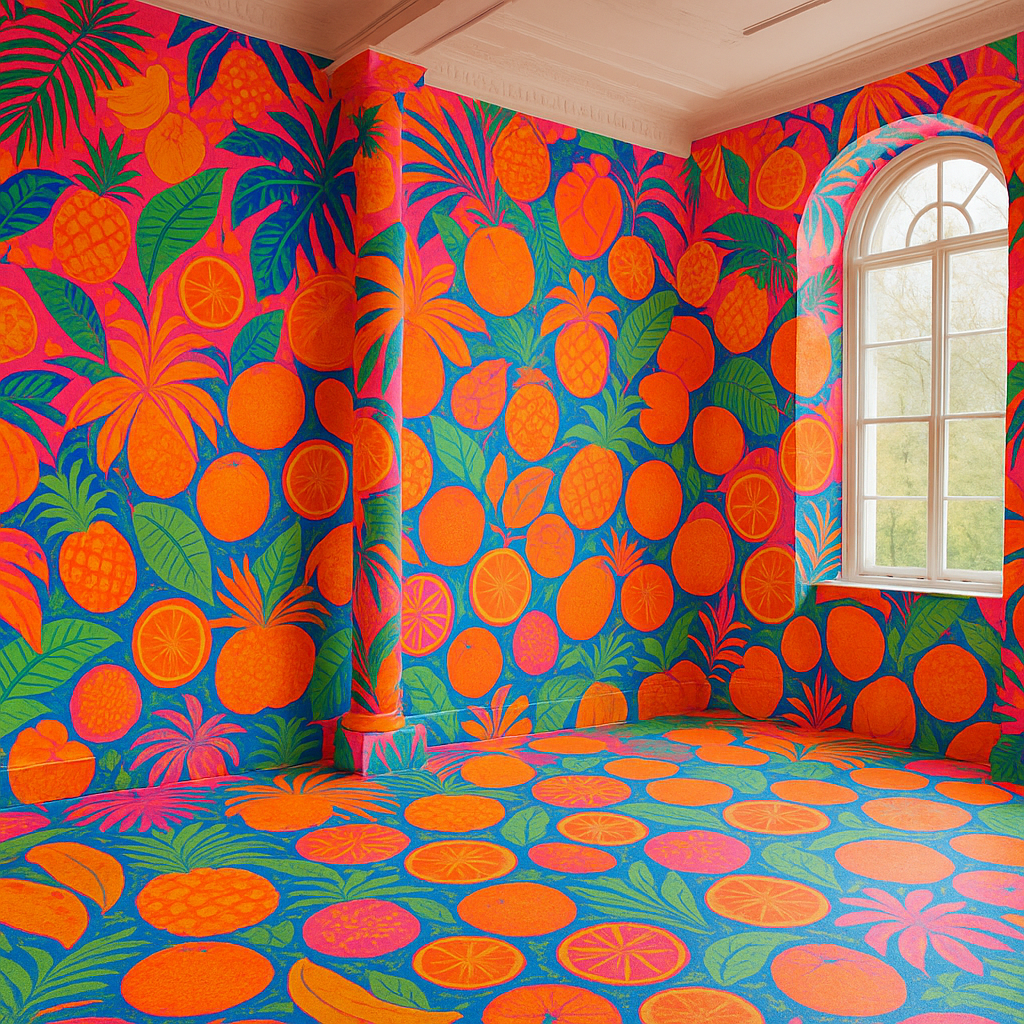
    Maximalist art style colourful installation with bold botanical patterns and fruit motifs in a British gallery
    Maximalist art style colourful installation with bold botanical patterns and fruit motifs in a British gallery

    What Is Maximalism in Art?

    Maximalism is not just “a lot of stuff on a canvas”. It is a deliberate, expressive philosophy that says more detail, more pattern, more colour, and more texture are all valid artistic choices. Where minimalism strips back, maximalism layers up. Think William Morris’s botanical wallpapers crossed with tropical fruit markets crossed with a very cheerful fever dream. It is rooted in abundance rather than restraint, and it draws heavily from decorative arts, folk traditions, and the natural world.

    Historically, maximalism has threads running through Baroque painting, Victorian pattern-making, and 1970s psychedelic illustration. What feels fresh about the current wave is the way contemporary artists are blending these references with bold digital tools, screen printing, and a very modern sense of self-expression. The result is work that practically hums with energy.

    Key Artists Driving the Maximalist Art Style Colourful Trend

    Several artists have become banner-carriers for this movement, and they are well worth exploring if you want to understand what maximalism looks like at its most exciting.

    Yayoi Kusama is arguably the godmother of joyful visual excess. Her polka dots, pumpkins (very fruity energy), and infinity rooms have inspired a generation of artists who see repetition and pattern as deeply emotional tools rather than decoration. Her influence on the current maximalist wave is enormous.

    Morag Myerscough, based in the UK, is a brilliant example of British maximalism done right. Her large-scale installations use clashing typography, vivid colour blocks, and pattern-on-pattern layering to transform public spaces into places of genuine delight. Her work for NHS hospitals alone shows how bold colour can be genuinely life-affirming.

    Favianna Rodriguez brings maximalist printmaking with political and cultural depth, while illustrators like Ohara Hale have built devoted followings by leaning into fruit, foliage, and fantastically dense compositions that reward close looking. These artists share a willingness to fill every corner and trust the viewer to handle it.

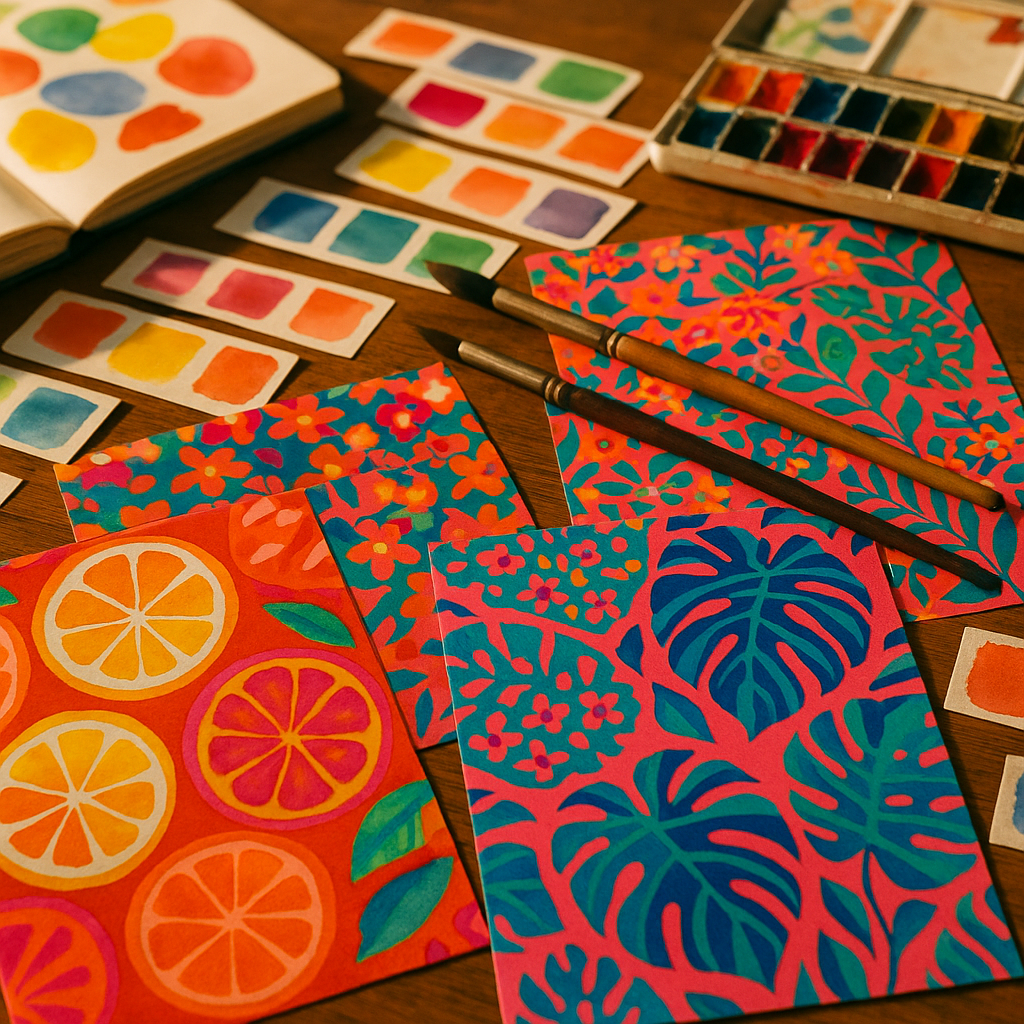
    Detail of maximalist art style colourful pattern swatches and fruit illustration sketches on an artist's worktable
    Detail of maximalist art style colourful pattern swatches and fruit illustration sketches on an artist's worktable

    Why Fruit and Nature Are at the Heart of This Movement

    Here is where things get particularly interesting for anyone who loves drawing a good lemon or painting a pile of plums. Nature, and fruit in particular, has become a recurring obsession within the maximalist art style colourful scene. And it makes total sense. Fruit is already maximalist by design: outrageous colours, unlikely shapes, glossy surfaces, and an almost theatrical abundance when piled together. A bowl of mixed citrus fruit is basically a maximalist still life waiting to happen.

    Artists working in this space are using tropical fruits, berries, and botanicals as structural elements within dense surface pattern work. Passion fruit cross-sections become kaleidoscopic motifs. Sliced watermelons repeat across fabric yardage in electric pink and green. Figs and pomegranates, with their jewel-like interiors, appear in richly layered illustrations that borrow from Persian miniature traditions as readily as from Matisse’s cut-outs.

    The Victoria and Albert Museum in London has long championed the relationship between nature and decorative design, and their collections show just how deep this tradition runs in British creative history. Looking at historic wallpaper and textile archives there is like getting a PhD in botanical maximalism in an afternoon.

    How to Bring Maximalism Into Your Own Creative Work

    Good news: you do not need to be a trained artist or have an enormous studio to experiment with maximalism. The whole point is abundance, and that is genuinely accessible.

    Start with colour clashing on purpose

    Pick two or three colours that your instinct says should not go together. Hot pink and burnt orange. Cobalt blue and lime green. Put them next to each other and then add a third. Notice how the tension between them actually creates energy rather than chaos. Maximalism teaches you to trust visual discomfort and let it breathe.

    Layer your patterns

    Take a simple pattern, a stripe or a polka dot, and overlay it with something organic like a leaf or a fruit shape. Then add another. Maximalist surface design is often built up in layers rather than designed all at once. Work in stages and resist the urge to simplify.

    Fill the frame completely

    One of the most instantly recognisable signatures of maximalist art is the absence of empty space. Try drawing or painting a composition where every inch of the surface has something happening. It feels uncomfortable at first. Lean into it.

    Collect visual references obsessively

    I keep a physical scrapbook of torn magazine pages, fabric swatches, and market photographs alongside my digital mood boards. Maximalism feeds on references. The more you fill your visual memory with markets, textiles, botanical prints, and folk art, the richer your own work becomes.

    Why the maximalist art style colourful mood fits right now

    There is something culturally meaningful about maximalism’s rise. After years of flat design, neutral interiors, and grey everything, there is a collective hunger for more. More joy, more personality, more life on the walls and in the wardrobe. The maximalist art style colourful approach is, at its core, an act of optimism. It says the world is rich and strange and worth celebrating visually.

    For UK artists and makers, this is a particularly exciting moment. Surface pattern design, textile art, and illustration all have strong British traditions, and the current maximalist wave gives fresh permission to dig into those roots while adding something wildly modern on top. The craft fair circuit, independent print shops, and platforms like Etsy UK are full of makers riding this wave brilliantly.

    Whether you are sketching fruit in a notebook, designing repeat patterns for fabric, or covering a canvas in clashing colour, maximalism gives you room to be more of yourself. Which is, when you think about it, the best kind of art movement there is.

    Frequently Asked Questions

    What is a maximalist art style?

    Maximalist art embraces bold patterns, clashing colours, dense layering, and visual abundance rather than restraint. It is rooted in decorative traditions from Baroque to folk art and currently thrives in illustration, surface design, and painting that celebrates joyful excess and rich detail.

    How is maximalist art different from minimalism?

    Where minimalism removes elements to find clarity, maximalism adds layers to create richness and energy. Maximalist work fills the frame completely, combines multiple patterns and textures, and deliberately uses colour clashing as an expressive tool. Neither approach is objectively better; they are simply different creative philosophies.

    Which artists are known for a maximalist colourful style?

    Yayoi Kusama, Morag Myerscough, and Favianna Rodriguez are among the most celebrated maximalist artists working today. Each brings a distinct approach, from Kusama’s dot-covered infinity rooms to Myerscough’s vivid public installations across the UK, but all share a commitment to bold, layered visual abundance.

    How can a beginner start experimenting with maximalist art at home?

    Start by deliberately clashing two or three colours that feel uncomfortable together, then layer a geometric pattern with an organic shape like a fruit or leaf. Fill your composition completely rather than leaving blank space. Working in stages, adding one layer at a time, helps build confidence with this approach without feeling overwhelming.

    Is maximalist art a passing trend or a lasting movement?

    Maximalism has roots stretching back centuries through Victorian pattern-making, Baroque painting, and folk textile traditions, so it is far more than a fleeting trend. The current resurgence reflects a broader cultural appetite for colour and personality after years of minimal neutral aesthetics, and many artists and designers see it as a genuine long-term creative shift.