

If you have a fruit bowl, you already own a mini art studio. A simple fruit bowl still life is one of the easiest, juiciest ways to build your drawing and painting skills every single day.
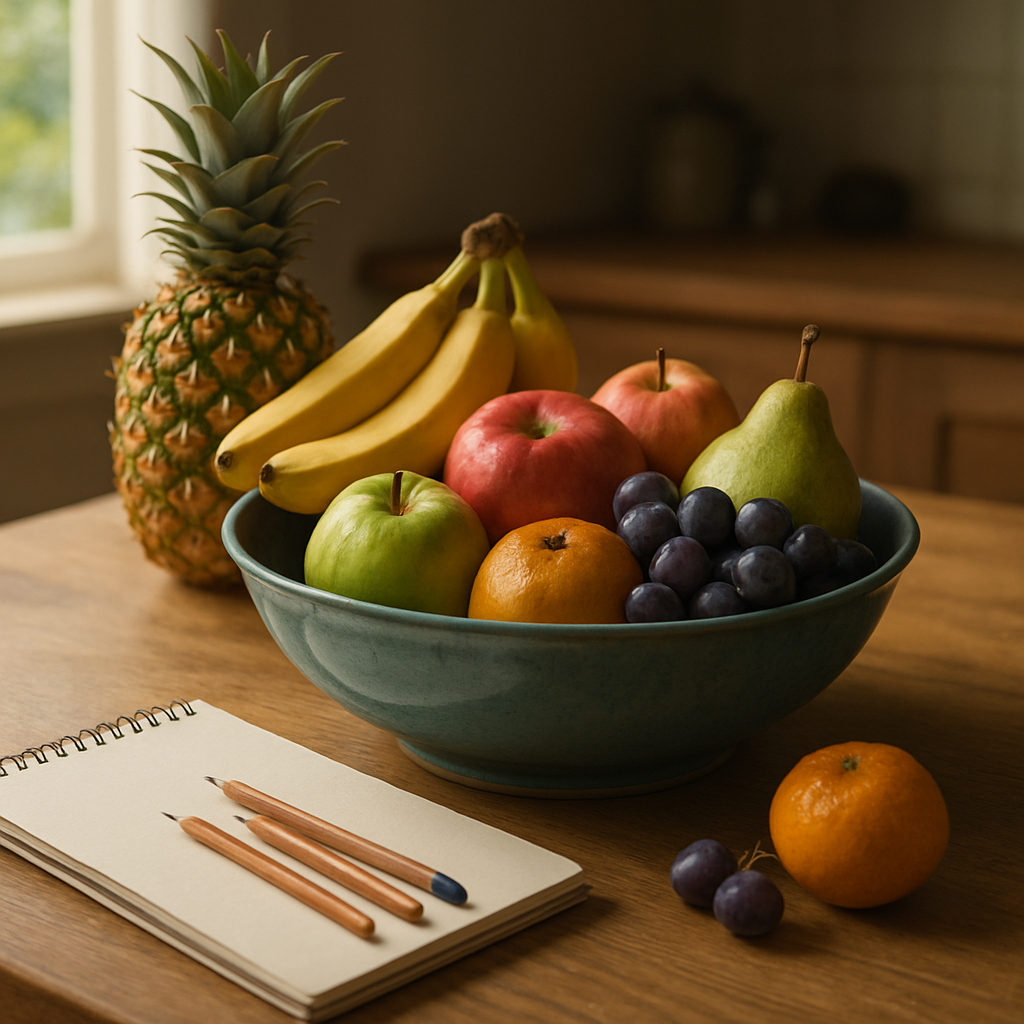
Why a fruit bowl still life is the perfect practice subject
Fruit is wonderfully forgiving. Oranges are not offended if they end up a bit lopsided, and bananas do not mind a wobbly curve. A fruit bowl gives you:
- Bold, simple shapes that are great for practising proportion
- Bright colours to explore paint, pencils or pastels
- Natural shine and texture to experiment with shading
- A subject that can change daily as you eat and replace fruit
Best of all, it is always there. No need to book a model or find a perfect landscape – just grab your sketchbook and draw what is on the kitchen table.
Arranging your fruit bowl still life for interesting compositions
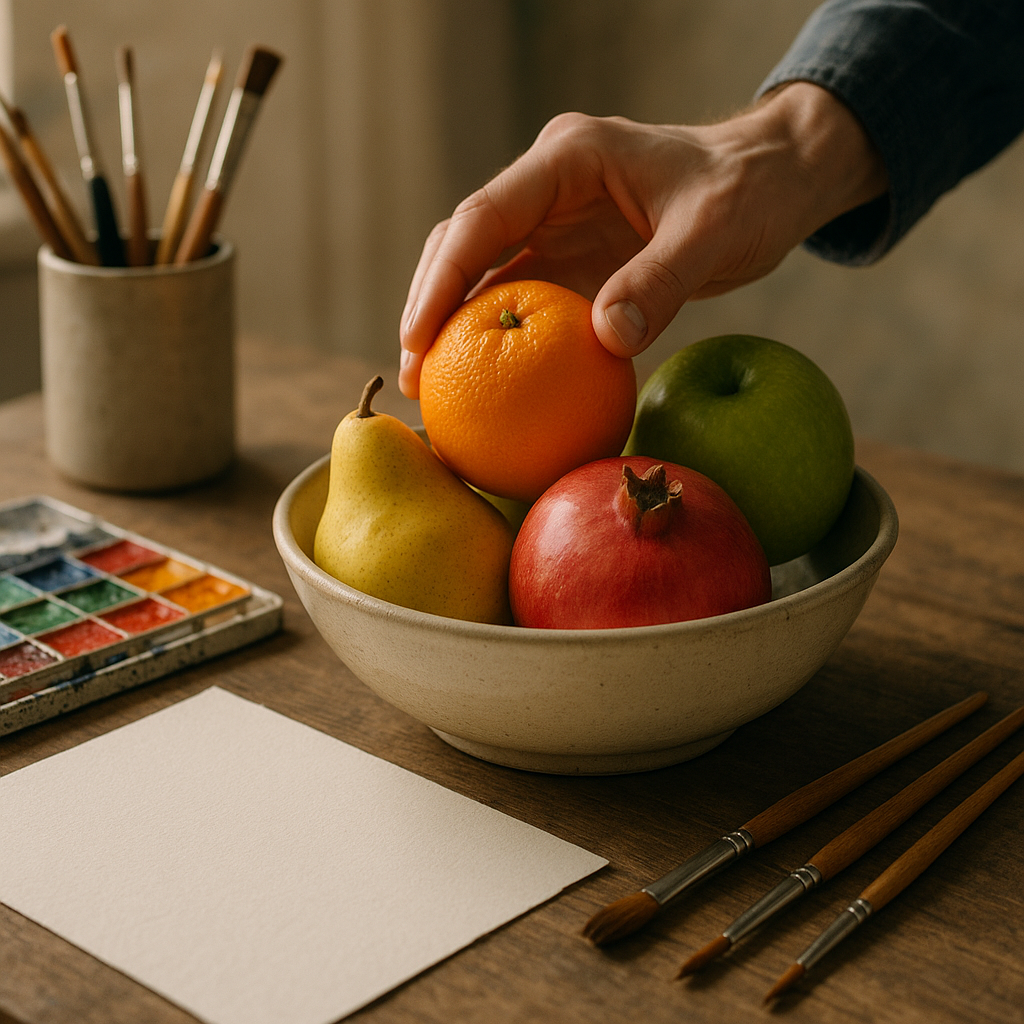
Before you draw, play. Treat arranging your fruit like styling a tiny colourful stage. Here are some fun ways to build a striking composition:
- Vary the heights – Stack apples, lean bananas against the bowl, or place one piece of fruit on a little box or book beside the bowl.
- Mix shapes – Combine round oranges, long bananas, chunky mangoes and spiky pineapples for visual rhythm.
- Use odd numbers – Groups of 3, 5 or 7 often look more natural than pairs.
- Add a supporting cast – Include a folded tea towel, a colourful mug or a patterned tablecloth to frame the fruit.
- Try different angles – Look from above, from the side, or crouch low so the fruit feels big and dramatic.
Think of your arrangement as a story: the shy lemon hiding behind the bold red apple, or the last lonely pear in an almost empty bowl.
Playing with lighting to bring your fruit to life
Lighting can completely change the mood of your fruit bowl still life. You do not need fancy equipment – just curiosity.
- Window light – Place the bowl near a window and notice the soft, gentle shadows. Morning light is often cool and calm, evening light warm and golden.
- Single lamp drama – At night, switch off the main light and use one desk lamp from the side. You will get bold shadows and bright highlights that are great for practising shading.
- Backlighting – Put the light behind the fruit and see how the edges glow. Grapes and slices of citrus can look almost magical.
- Coloured surfaces – A bright cloth or coloured paper under the bowl will reflect subtle tints into the fruit.
Each time you change the light, you create a brand new subject. The same bowl can keep you busy for weeks.
Quick daily sketches to build confident lines
You do not have to create a masterpiece every day. In fact, short timed sketches are like fruity warm ups for your hand and eye.
- Set a timer for 2 minutes and draw only the big shapes.
- Do another 5 minute sketch focusing on shadows only.
- Try a 10 minute sketch where you never lift your pen – one continuous line.
- Use different tools on different days: pencil, biro, chunky marker, coloured pencil.
Keep all your quick sketches in one notebook so you can flip back and see your progress. The more you draw your bowl, the faster and freer your lines will feel.
Using phone photos for fruit bowl still life references
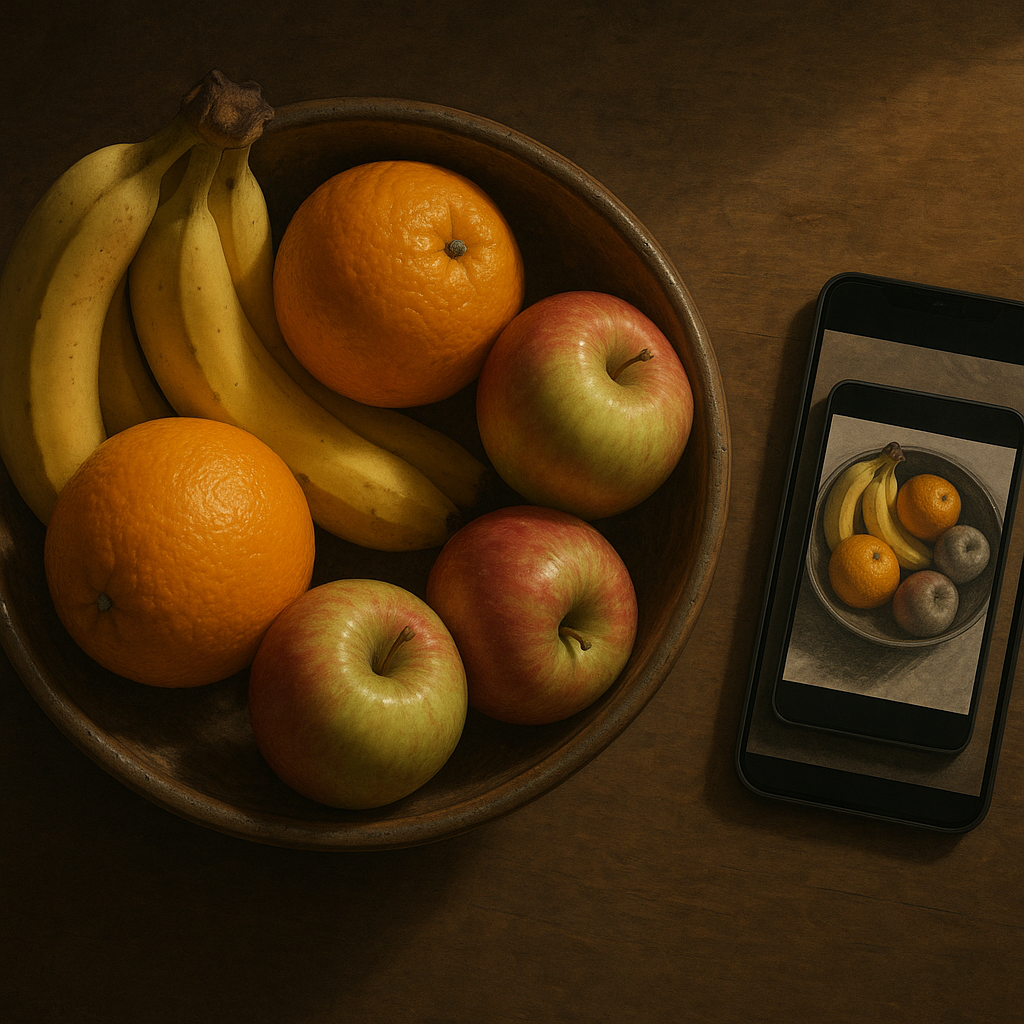
Life moves, fruit gets eaten, and daylight disappears. This is where your phone becomes your art assistant. When you set up a composition you love, snap a few photos from different angles. Then you can:
- Return to the same still life on another day, even if the real fruit has changed.
- Zoom in on tricky areas, like the shine on an apple or the fold of a napkin.
- Convert a photo to black and white to study the light and dark values.
- Create a little reference album of your favourite arrangements.
Try drawing from life first, then from your photo. Notice what details you catch in person that the camera misses, and what the camera helps you see more clearly.
Leave a Reply