
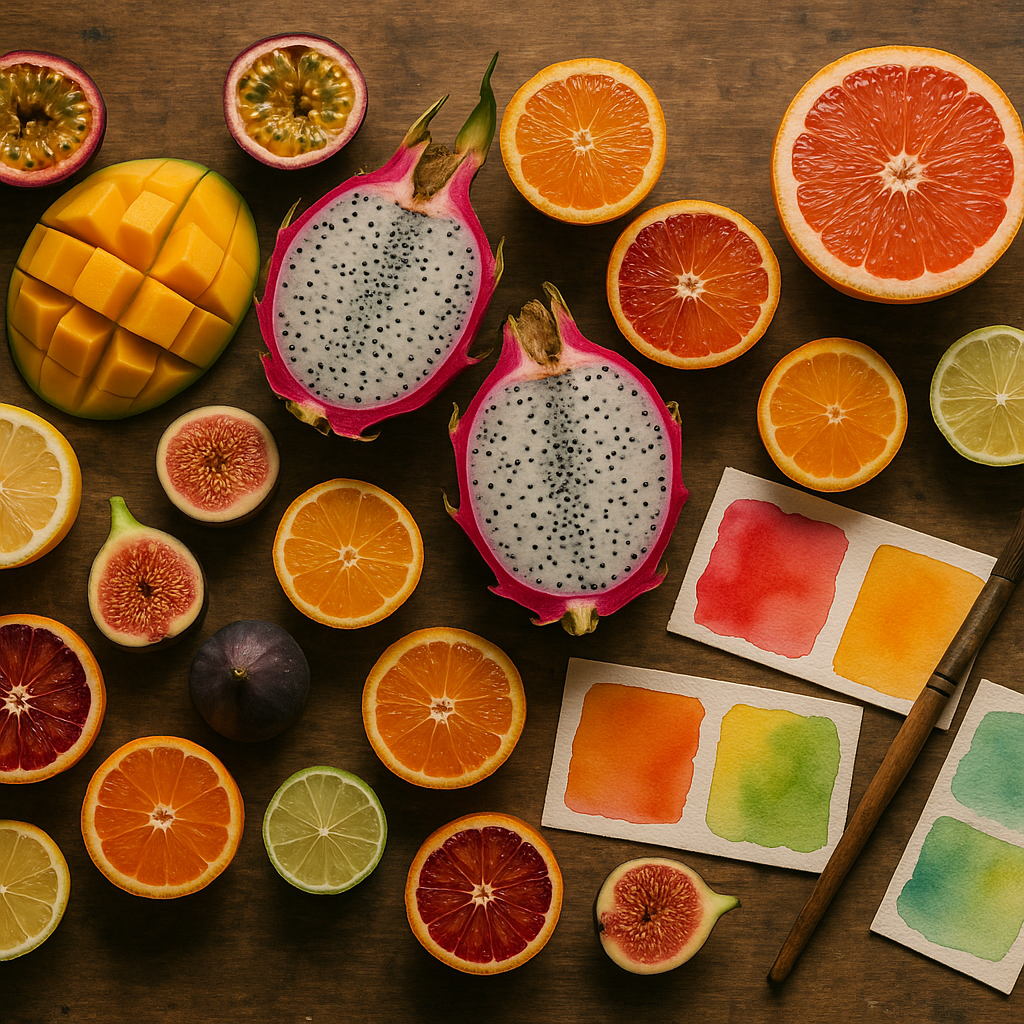
Nature has always been one of the most generous muses for artists, and few things in the natural world pack as much visual punch as fruit. A ripe mango, a split dragon fruit, a cluster of deep purple figs: each one is a ready-made fruit-inspired colour palette just waiting to be borrowed. Whether you work in watercolour, gouache, digital illustration, or mixed media, learning to pull colour stories from fruit will transform the way you see and use colour.
Why Fruit Makes Such a Brilliant Colour Muse
Fruit colours are rarely flat or simple. A single strawberry moves from deep crimson at its base through warm scarlet to a blush pink at the tip, with flecks of cream and yellow around the seeds. That kind of natural gradation teaches artists something that no colour wheel alone can: real, living colour is always shifting, always in conversation with light and shadow.
Tropical fruits are especially rich territory. Papaya flesh sits between coral and amber. Passion fruit pulp is a saturated, jewel-like gold. The skin of a ripe avocado holds mossy greens and near-blacks that would look spectacular in abstract work. Seasonal fruits carry their own drama too: late summer plums in violet and dusty blue, winter citrus in burnished orange and chrome yellow. You are never short of material.
Colour Theory Basics Worth Knowing Before You Start
Building a fruit-inspired colour palette becomes far more intentional when you understand a handful of core colour theory principles. You do not need a formal education to apply them; you just need to look carefully.
Analogous palettes from a single fruit
Pick up a peach and really study it. The colours sitting next to each other on the surface, orange, warm yellow, soft pink, are analogous: they sit close together on the colour wheel and create harmony rather than contrast. Analogous palettes are lovely for dreamy illustrations or soft surface pattern work because everything feels cohesive and calm.
Complementary tension from contrasting fruits
Place a lime next to a fig. The electric green and the deep purple sit almost opposite each other on the colour wheel, creating the kind of visual tension that makes a piece of art feel alive and energetic. This complementary contrast is perfect for bold editorial illustration or statement prints.
Split-complementary palettes for balance
If full complementary contrast feels too intense, try a split-complementary approach. Take the golden yellow of a pineapple as your base and pair it not with pure violet, but with red-violet and blue-violet instead. You get excitement without the clash. This approach works brilliantly in mixed media pieces where you want richness without visual chaos.
How to Extract a Fruit-Inspired Colour Palette Practically
There are several hands-on ways to pull a palette from fruit, and the method you choose will depend on your practice.
Paint directly from life
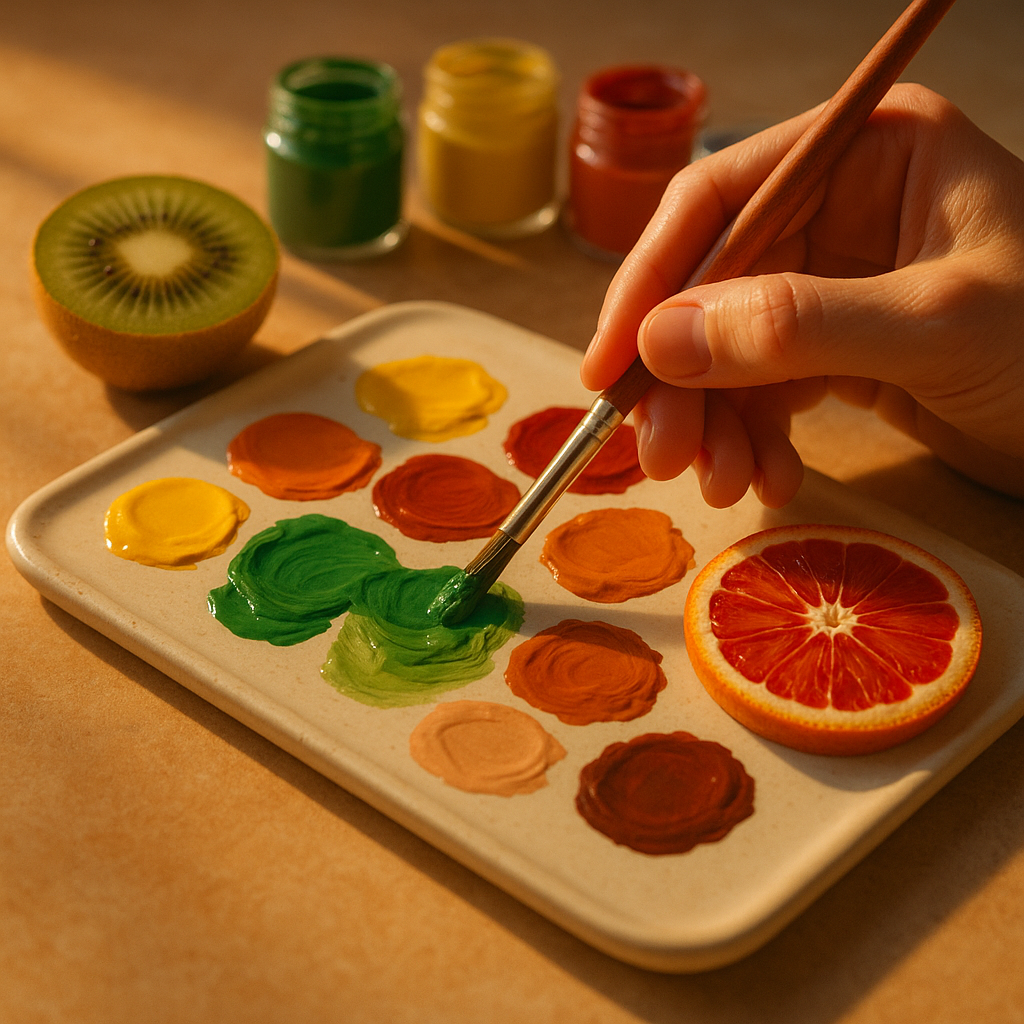
Set a bowl of fruit near a north-facing window for soft, even light. Mix small swatches of every colour you can see, including the shadows and the highlights. Do not try to name the colours as you go; just observe and match. You will end up with a set of swatches that feel genuinely organic rather than manufactured.
Use a digital colour picker
Photograph your fruit in good natural light, then import the image into Procreate, Photoshop, or even a free browser-based palette tool. Sample five to eight colours from across the image, from the deepest shadow to the brightest highlight. This gives you a ready-to-use digital fruit-inspired colour palette you can apply immediately to illustration work.
Build a physical swatch library
Keep a dedicated sketchbook page for each fruit you study. Paint your swatches, note the pigment mixes used, and stick in a photograph or quick sketch. Over time, you will build a library of colour stories you can revisit for any project. It is one of the most satisfying creative habits to develop.
Applying Your Palette Across Different Art Forms
A fruit-inspired colour palette is versatile enough to travel across almost any creative discipline. In watercolour painting, use the lighter, more transparent tones from the palette as washes and reserve the saturated mid-tones for detail. In gouache or acrylic, the full range works beautifully in flat graphic compositions. For textile and surface pattern design, limit yourself to four or five key colours from the palette to keep the repeat clean and printable.
Mixed media artists can have particular fun here. The earthy, organic quality of fruit colours pairs wonderfully with collage elements, dried botanicals, and mark-making in ink. The unexpected pairing of a watermelon palette (deep green, blush pink, bright white, and near-black seed tones) with gestural ink marks creates something both structured and free.
Getting More from Your Creative Practice
One of the joys of working with nature-led palettes is that you are always learning to see more carefully. Slow observation of something as simple as a halved kiwi, with its concentric rings of jade, lime, and cream, will sharpen your colour sensitivity in a way that studying colour charts never quite manages. Set yourself a monthly challenge: choose one fruit, spend an hour observing it, and build a complete palette from that single source. You will be surprised how quickly your instinct for colour improves.
If you run a creative business or sell your artwork online, having a distinctive, nature-led colour story also helps your visual brand feel coherent and memorable. Just as makers use free SEO tools to help their work get found online, a strong, consistent colour identity helps your artwork get recognised and remembered.
Fruit is everywhere, it is free to look at, and it comes in an endlessly renewable supply of extraordinary colour. There is genuinely no better starting point for any artist wanting to build a richer, more joyful relationship with colour. Pick something up, look at it properly, and start mixing.
Frequently Asked Questions
How do I choose which fruit to base my colour palette on?
Think about the mood or feeling you want your artwork to convey. Tropical fruits like mango and papaya produce warm, vibrant palettes suited to energetic or joyful work. Cooler seasonal fruits like plums and blackberries create moody, sophisticated palettes ideal for more introspective pieces. Start with a fruit whose colours genuinely excite you.
Can I use a fruit-inspired colour palette for digital illustration?
Absolutely. Photograph the fruit in natural light, import the image into your illustration software, and use the colour picker tool to sample a range of tones from across the surface. Most digital art apps like Procreate allow you to save these as a custom palette, making them easy to apply consistently across your work.
How many colours should I include in a fruit-inspired palette?
For most art projects, five to seven colours is a good working range. This gives you enough variety for light, mid-tone, and shadow values without becoming overwhelming. For surface pattern design or textiles, consider limiting yourself to four or five to keep production costs down and the design clean.
What is the best way to mix fruit-inspired colours in watercolour?
Start by identifying the dominant hue, then look for the warm and cool variations within it. Many fruit colours are mixed from two or three pigments rather than one. A ripe peach, for example, might need a mix of transparent orange, a touch of quinacridone pink, and a hint of raw sienna for the shadowed areas. Always test mixes on scrap paper first.
Are fruit-inspired palettes suitable for abstract art as well as representational work?
Yes, they work brilliantly in abstract contexts. The natural harmony and contrast found in fruit colour combinations translate directly into abstract compositions. A palette pulled from a pomegranate, with its deep reds, burnished golds, and cream tones, can drive a completely non-representational painting with real emotional depth and cohesion.