
Somewhere between a ripe mango and a disco ball, a creative revolution is happening. Maximalist art, loud, layered, unapologetically abundant, has been building momentum for a few years, and by 2026 it has fully exploded into the mainstream. Galleries, surfaces, textiles, and Instagram feeds are awash with bold patterns, clashing colours, and the kind of joyful excess that makes minimalism feel a little… hungry. If you have ever been told your work is “too much”, consider this your vindication. The maximalist art style colourful movement is here to stay, and it is absolutely gorgeous.
What Is Maximalism in Art?
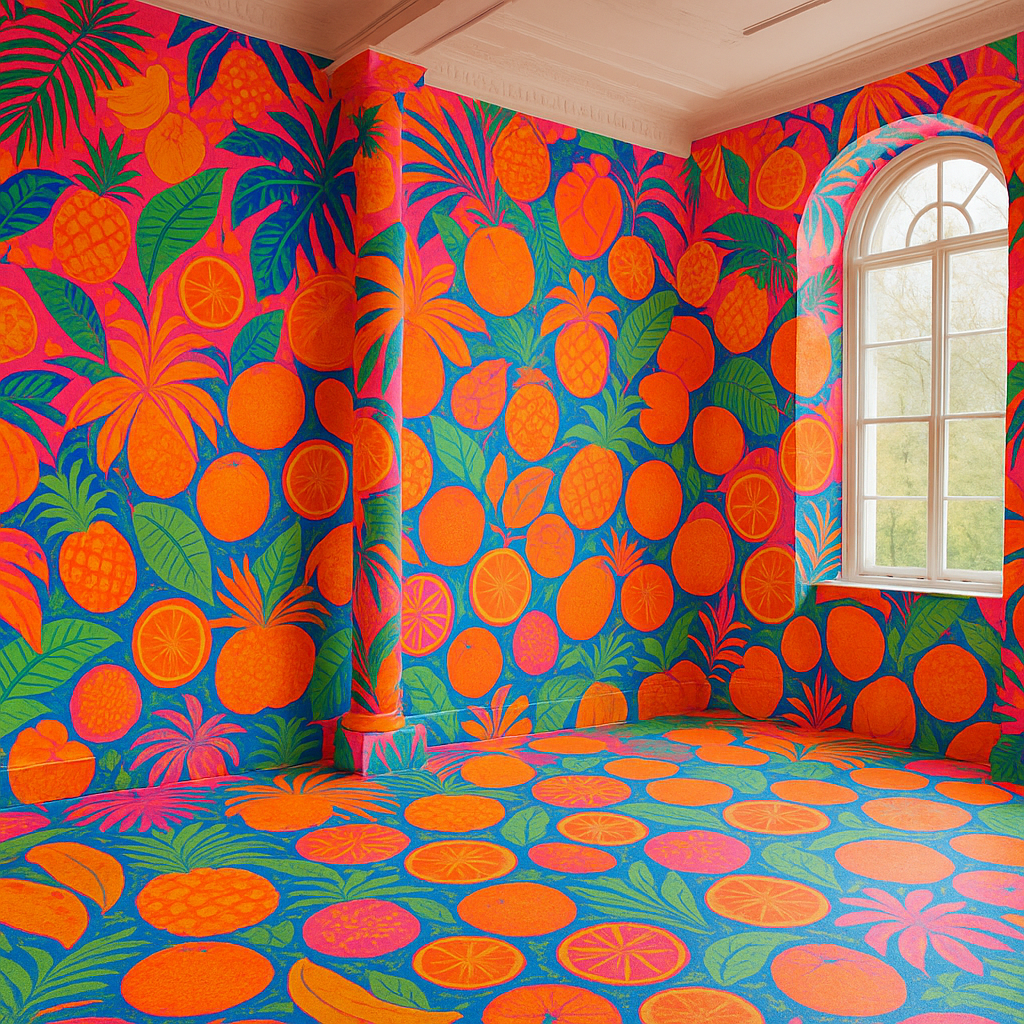
Maximalism is not just “a lot of stuff on a canvas”. It is a deliberate, expressive philosophy that says more detail, more pattern, more colour, and more texture are all valid artistic choices. Where minimalism strips back, maximalism layers up. Think William Morris’s botanical wallpapers crossed with tropical fruit markets crossed with a very cheerful fever dream. It is rooted in abundance rather than restraint, and it draws heavily from decorative arts, folk traditions, and the natural world.
Historically, maximalism has threads running through Baroque painting, Victorian pattern-making, and 1970s psychedelic illustration. What feels fresh about the current wave is the way contemporary artists are blending these references with bold digital tools, screen printing, and a very modern sense of self-expression. The result is work that practically hums with energy.
Key Artists Driving the Maximalist Art Style Colourful Trend
Several artists have become banner-carriers for this movement, and they are well worth exploring if you want to understand what maximalism looks like at its most exciting.
Yayoi Kusama is arguably the godmother of joyful visual excess. Her polka dots, pumpkins (very fruity energy), and infinity rooms have inspired a generation of artists who see repetition and pattern as deeply emotional tools rather than decoration. Her influence on the current maximalist wave is enormous.
Morag Myerscough, based in the UK, is a brilliant example of British maximalism done right. Her large-scale installations use clashing typography, vivid colour blocks, and pattern-on-pattern layering to transform public spaces into places of genuine delight. Her work for NHS hospitals alone shows how bold colour can be genuinely life-affirming.
Favianna Rodriguez brings maximalist printmaking with political and cultural depth, while illustrators like Ohara Hale have built devoted followings by leaning into fruit, foliage, and fantastically dense compositions that reward close looking. These artists share a willingness to fill every corner and trust the viewer to handle it.
Why Fruit and Nature Are at the Heart of This Movement
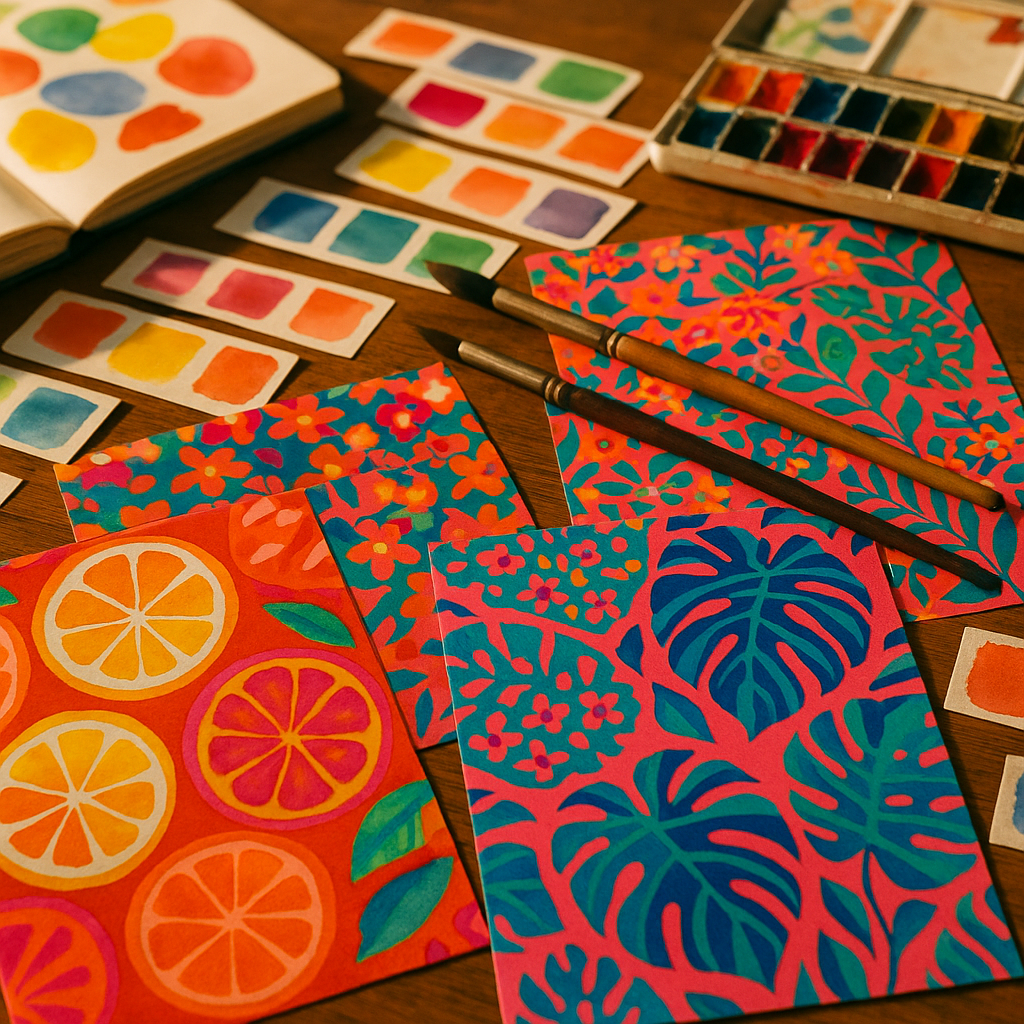
Here is where things get particularly interesting for anyone who loves drawing a good lemon or painting a pile of plums. Nature, and fruit in particular, has become a recurring obsession within the maximalist art style colourful scene. And it makes total sense. Fruit is already maximalist by design: outrageous colours, unlikely shapes, glossy surfaces, and an almost theatrical abundance when piled together. A bowl of mixed citrus fruit is basically a maximalist still life waiting to happen.
Artists working in this space are using tropical fruits, berries, and botanicals as structural elements within dense surface pattern work. Passion fruit cross-sections become kaleidoscopic motifs. Sliced watermelons repeat across fabric yardage in electric pink and green. Figs and pomegranates, with their jewel-like interiors, appear in richly layered illustrations that borrow from Persian miniature traditions as readily as from Matisse’s cut-outs.
The Victoria and Albert Museum in London has long championed the relationship between nature and decorative design, and their collections show just how deep this tradition runs in British creative history. Looking at historic wallpaper and textile archives there is like getting a PhD in botanical maximalism in an afternoon.
How to Bring Maximalism Into Your Own Creative Work
Good news: you do not need to be a trained artist or have an enormous studio to experiment with maximalism. The whole point is abundance, and that is genuinely accessible.
Start with colour clashing on purpose
Pick two or three colours that your instinct says should not go together. Hot pink and burnt orange. Cobalt blue and lime green. Put them next to each other and then add a third. Notice how the tension between them actually creates energy rather than chaos. Maximalism teaches you to trust visual discomfort and let it breathe.
Layer your patterns
Take a simple pattern, a stripe or a polka dot, and overlay it with something organic like a leaf or a fruit shape. Then add another. Maximalist surface design is often built up in layers rather than designed all at once. Work in stages and resist the urge to simplify.
Fill the frame completely
One of the most instantly recognisable signatures of maximalist art is the absence of empty space. Try drawing or painting a composition where every inch of the surface has something happening. It feels uncomfortable at first. Lean into it.
Collect visual references obsessively
I keep a physical scrapbook of torn magazine pages, fabric swatches, and market photographs alongside my digital mood boards. Maximalism feeds on references. The more you fill your visual memory with markets, textiles, botanical prints, and folk art, the richer your own work becomes.
Why the maximalist art style colourful mood fits right now
There is something culturally meaningful about maximalism’s rise. After years of flat design, neutral interiors, and grey everything, there is a collective hunger for more. More joy, more personality, more life on the walls and in the wardrobe. The maximalist art style colourful approach is, at its core, an act of optimism. It says the world is rich and strange and worth celebrating visually.
For UK artists and makers, this is a particularly exciting moment. Surface pattern design, textile art, and illustration all have strong British traditions, and the current maximalist wave gives fresh permission to dig into those roots while adding something wildly modern on top. The craft fair circuit, independent print shops, and platforms like Etsy UK are full of makers riding this wave brilliantly.
Whether you are sketching fruit in a notebook, designing repeat patterns for fabric, or covering a canvas in clashing colour, maximalism gives you room to be more of yourself. Which is, when you think about it, the best kind of art movement there is.
Frequently Asked Questions
What is a maximalist art style?
Maximalist art embraces bold patterns, clashing colours, dense layering, and visual abundance rather than restraint. It is rooted in decorative traditions from Baroque to folk art and currently thrives in illustration, surface design, and painting that celebrates joyful excess and rich detail.
How is maximalist art different from minimalism?
Where minimalism removes elements to find clarity, maximalism adds layers to create richness and energy. Maximalist work fills the frame completely, combines multiple patterns and textures, and deliberately uses colour clashing as an expressive tool. Neither approach is objectively better; they are simply different creative philosophies.
Which artists are known for a maximalist colourful style?
Yayoi Kusama, Morag Myerscough, and Favianna Rodriguez are among the most celebrated maximalist artists working today. Each brings a distinct approach, from Kusama’s dot-covered infinity rooms to Myerscough’s vivid public installations across the UK, but all share a commitment to bold, layered visual abundance.
How can a beginner start experimenting with maximalist art at home?
Start by deliberately clashing two or three colours that feel uncomfortable together, then layer a geometric pattern with an organic shape like a fruit or leaf. Fill your composition completely rather than leaving blank space. Working in stages, adding one layer at a time, helps build confidence with this approach without feeling overwhelming.
Is maximalist art a passing trend or a lasting movement?
Maximalism has roots stretching back centuries through Victorian pattern-making, Baroque painting, and folk textile traditions, so it is far more than a fleeting trend. The current resurgence reflects a broader cultural appetite for colour and personality after years of minimal neutral aesthetics, and many artists and designers see it as a genuine long-term creative shift.