
Every December, thousands of volunteers across the UK bundle up, climb aboard flatbed trailers, and haul a glittering Father Christmas through residential streets to raise money for local good causes. It is one of those wonderfully daft, wholehearted British traditions that somehow gets more emotional every year. And yet, for all the effort that goes into the float itself, the printed and handmade materials that support the run often get left to whoever has a working printer and a spare half hour. I think that is a genuine waste of an opportunity. With a little planning and some cheerful making, your charity sleigh artwork can become something people actually pin to the fridge.
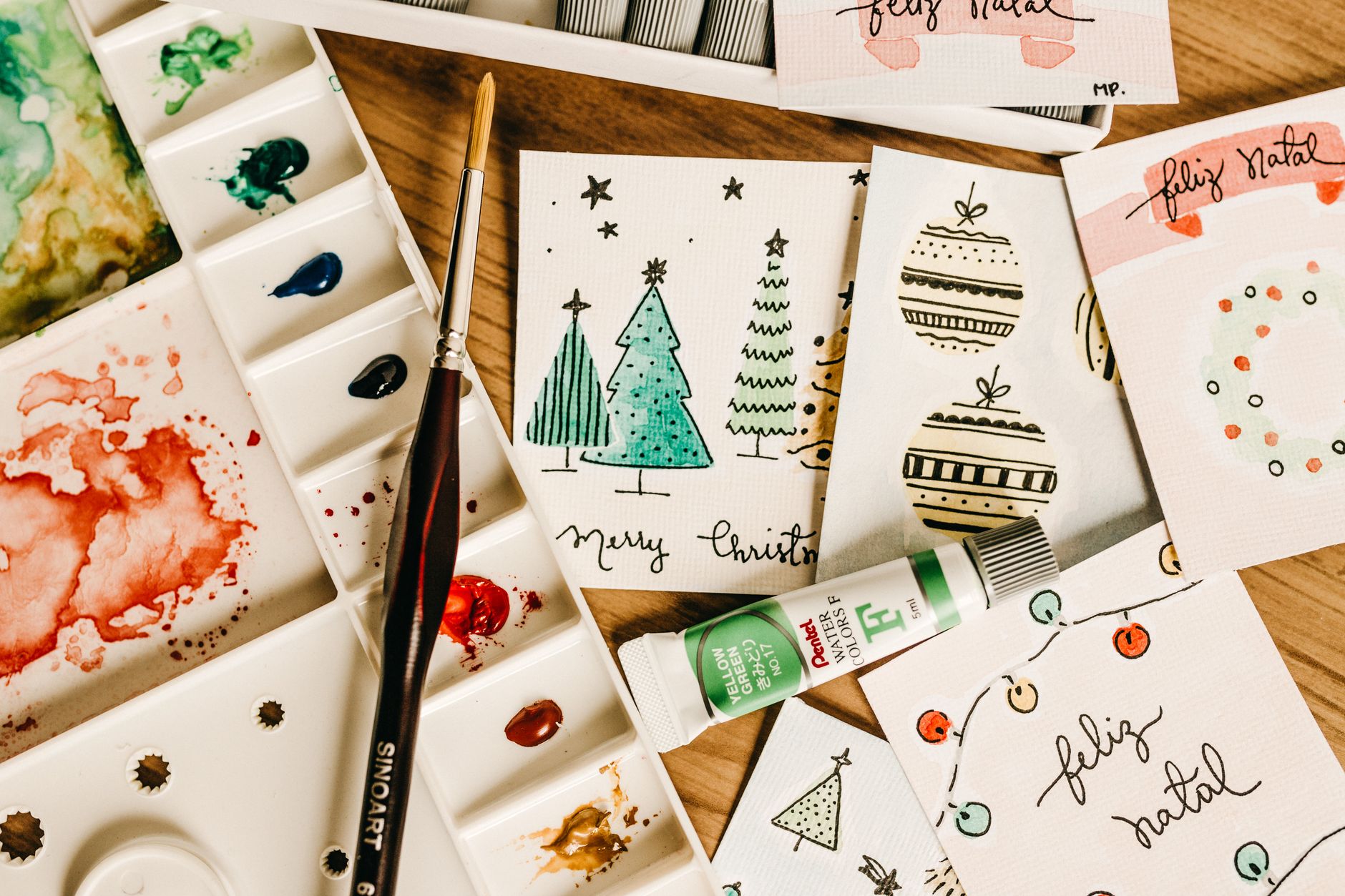
This guide is for UK crafters who want to help their local committee go bold. We are talking countdown door cards, eye-catching route maps, and window posters that stop people mid-step. None of it requires expensive kit or a graphic design qualification. Just colour, confidence, and a bit of festive spirit.
Starting with a colour palette that reads from the street
The single most important decision you will make for any charity sleigh artwork is your colour palette. These materials need to work at a distance, in the dark, often under street lamps or fairy lights. That means high contrast is your friend. I tend to reach for a combination of deep red, white, and a bright acid yellow or lime green as an accent. The red and white read as festively as you want, and that acid pop of colour stops the eye from sliding past.
If you have been reading about how to build palettes for print projects, my piece on designing bold motifs for screen-printed fabric items covers the thinking behind choosing colours that survive reproduction on different surfaces. The same logic applies here: what looks gorgeous on your laptop screen can go flat on a photocopied leaflet. Always print a test sheet before committing to 300 copies.
How to make countdown door cards by hand
Countdown cards are the unsung heroes of the community sleigh run. Dropped through letterboxes a fortnight before the event, they tell neighbours the date, the route, and what to expect. Most committees photocopy a black-and-white A5 sheet. You can do so much better than that.
My favourite approach is to design a simple two-colour linocut or foam stamp motif, then hand-print it onto pre-folded card blanks. A bold silhouette of a sleigh, a star, or even a simple house with glowing windows takes minutes to carve from a cheap foam sheet. You can batch-print 50 cards in an afternoon, each one slightly different, each one genuinely handmade. The Art Fund’s guide to linoprinting is a good starting point if you have never tried it before.
Text goes in after printing, either hand-lettered with a thick marker or added via a simple word processor and rubber-stamped date. Keep the typeface chunky and no smaller than 14pt for the key details. People read these at a glance in a hallway.

Designing a route map that is actually beautiful
Route maps for sleigh runs are almost always dreadful. A scanned-in street map with a highlighter line drawn on it, a blurry photocopy, illegible street names. The thing is, an illustrated route map can be a genuinely lovely piece of charity sleigh artwork, and it does not take a cartographer to make one.
Start by sketching the route on paper, simplifying the roads to their basic shapes. You do not need geographic accuracy; you need navigability. Label only the streets the sleigh actually passes. Then draw in simple icon markers at key points: a little house where the route starts, a star where it ends, clock symbols next to rough timing estimates if your committee can provide them. Fill in the areas between roads with flat colour blocks and simple drawn textures, a few trees here, a row of terraced houses there.
This kind of illustrated cartography is having a genuine moment in British print culture right now. Some local events are building whole visual identities around handmade map artwork, and as the team behind some brilliantly creative British local events have discovered, distinctive handmade visuals are exactly what makes communities share things online. Your map could end up as a keepsake rather than a bin-day casualty.
Window posters and community noticeboard flyers
A3 window posters are where you can really let loose with colour. These are read from the pavement, so they need to shout. I recommend going full graphic and keeping words to an absolute minimum: the date, the organisation name, and one clear image. A sleigh silhouette in white on a deep red background, with a fat bold date in yellow below it, will outperform a cluttered text-heavy design every single time.
If you are screen printing at home or making stamps, this is the perfect project. For plain flat-colour work, acrylic paints applied through a simple stencil cut from card stock give clean, repeatable results. Cut your stencil from thick mounting card, tape it firmly, and use a sponge roller rather than a brush to avoid bleeding. You can print 20 posters in an afternoon once your stencil is ready.
For community noticeboard flyers, a smaller A5 version with slightly more text works well. Include: the route (even a simplified version), the approximate time the sleigh passes each area if known, the collecting charity, and ideally a QR code linking to the committee’s page. If the committee also has a digital tracking option running on the night itself, mention it. Families who cannot stand outside in the cold for half an hour love being able to check where the sleigh actually is, and a reliable Find Santa page can be the difference between a supporter catching the collection and missing it entirely.
Paper, card, and printing choices for UK crafters
The materials you choose matter enormously for handmade charity sleigh artwork. For outdoor-facing posters, use at least 160gsm stock and laminate if possible. Rain is more or less guaranteed in December across most of the UK, and a limp, sodden poster does nobody any favours. You can get A3 laminator pouches from most UK stationers for a few pence each.
For door cards, 300gsm card is ideal. It feels substantial in the hand and does not flop around when pushed through a letterbox. Most online print suppliers such as Printed.com or Solopress will cut and fold card blanks to custom sizes for very reasonable prices if you want to order in quantity. But for small batches, cutting your own from sheets is absolutely fine.
Inkjet printing at home loses colour intensity on uncoated card. If your design relies on vivid colour, either use coated inkjet card (widely available at office supply shops) or plan to hand-print the colour elements and add text digitally. I have found that combining a hand-stamped background wash with a crisp laser-printed text overlay gives the best of both worlds.
Getting the committee involved: a making session that actually works
The best charity sleigh artwork projects I have seen are collaborative ones, where the committee gets together for an evening of making rather than leaving it all to one person. If you are looking for ideas on how to structure a group craft evening, the principles in our guide to hosting a productive group craft session at home translate beautifully to a committee hall setting. Set up stations, keep the tasks simple enough for people who have never made art before, and have plenty of tea on the go.
Assign one person to cut stencils or stamps, one to do the printing, one to add hand-lettered details, and one to quality-check and stack. With four people working this way, you can produce 100 door cards in a couple of hours, and everyone goes home feeling like they made something real. That sense of collective ownership also means people are more likely to talk about the run enthusiastically to their neighbours, which is, let’s be honest, the best marketing your committee can get.
Festive community art does not need a big budget or a professional behind it. It needs someone willing to pick up a brush, make a few bold choices, and trust that handmade always has more warmth than a generic printout. Your neighbours will feel the difference.
Frequently Asked Questions
What paper or card stock is best for homemade charity sleigh door cards?
300gsm card is the sweet spot for door cards. It feels solid in the hand, survives being pushed through letterboxes, and holds ink well for both hand-printing and inkjet or laser printing. For anything going outdoors, laminate after printing or opt for a water-resistant coated stock.
How do I make a simple illustrated route map without any design software?
Sketch the route freehand on paper first, reducing the roads to basic shapes rather than trying for accuracy. Add hand-drawn icons for key stops, fill in areas with coloured pencil or watercolour washes, and scan or photograph it to print copies. The slightly imperfect, handmade quality is a feature, not a flaw.
What colours work best for charity sleigh artwork that will be read at night?
High contrast combinations are essential under streetlighting. Deep red with white and a bright accent colour such as acid yellow or lime green reads clearly at distance and in low light. Avoid mid-tones like orange on cream, which can blur together when lit artificially.
Can I screen print charity sleigh posters at home without professional equipment?
Yes. A simple stencil cut from thick mounting card, combined with a sponge roller and acrylic paint, gives clean flat-colour results for posters. For higher detail, a basic screen printing frame setup (available from UK art suppliers for around £30-£50) allows you to reproduce the same design 50+ times consistently.
How far in advance should sleigh run door cards be delivered to households?
A fortnight before the event is ideal. This gives households time to note the date and tell neighbours, but is close enough that people will not forget. A second reminder card or social media post in the 48 hours before the run is a good complement to the handmade materials.