Colour blocking in design is having an absolute moment. Walk through any independent gallery, scroll through a surface pattern portfolio, or pick up a fashion illustration zine from one of London’s creative markets, and you’ll spot it everywhere: bold, unapologetic slabs of saturated colour sitting side by side with zero shame. And if you look closely at where these palettes come from, you’ll notice something wonderfully obvious. It’s fruit. It’s always been fruit.
Think about a ripe watermelon. That shocking pink flesh against a deep forest green rind, split by a sliver of white. Or a blood orange sliced in half, all rust and crimson and amber at once. Nature has been perfecting colour blocking for thousands of years, and designers are finally catching up in a very big, very loud way.
What Is Colour Blocking in Design?
At its core, colour blocking means placing two or more solid, high-contrast colours together in distinct, clearly defined zones. No gradients, no blending, no wishy-washy in-between. Just clean, confident blocks of colour that hold their own. It’s a principle rooted in fine art (think Mondrian, Matisse, colour field painting) but it’s crossed every creative discipline you can name: graphic design, fashion illustration, surface pattern, interior styling, even ceramics.
What makes colour blocking in design so thrilling right now is how freely designers are pulling their palettes from the natural world, and specifically from produce. The colours aren’t muted or tasteful in that beige-and-sage way that dominated the early 2020s. They’re saturated. They’re specific. They feel alive.
Fruit as a Colour Reference: Why It Works
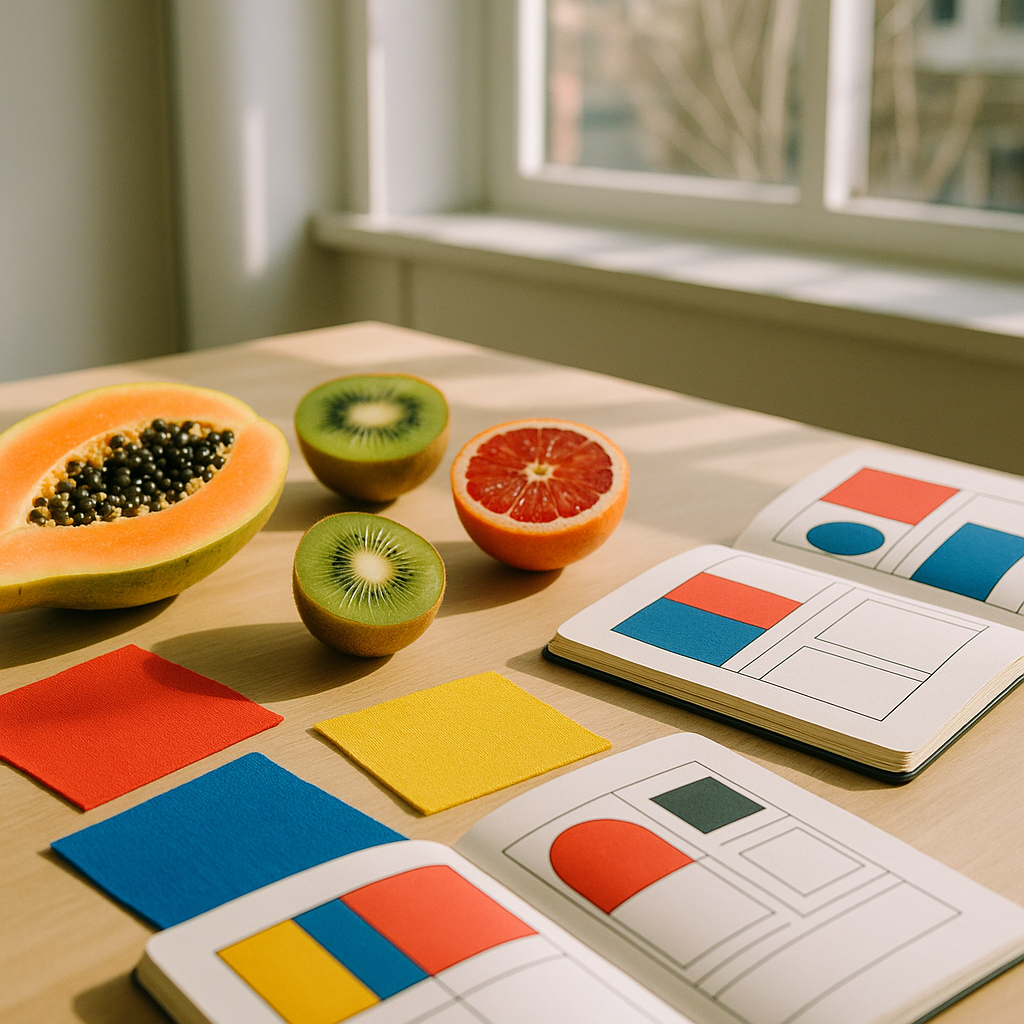
Fruit palettes work so well in colour blocking because fruit colours are simultaneously bold and harmonious. They’ve evolved to attract attention, and that’s exactly what great design does too. A mango brings golden yellow, soft coral, and warm orange into one form. A passion fruit is deep purple with flecks of vivid yellow. A kiwi layers bright green, cream, and that glossy brown exterior. These aren’t random colour choices; they’re colour combinations that have been stress-tested by evolution.
I’ve spent a fair amount of time building palettes directly from fruit reference photos, and the results are consistently more interesting than anything I’d invent from scratch. There’s a reason so many of the UK’s most vibrant independent brands, from east London ceramics studios to Edinburgh-based textile designers, have started referencing citrus, berry, and tropical fruit in their visual identities. The colours carry energy. They carry joy.
Colour Blocking in Graphic Design: Lessons from the Lemon
In graphic design, colour blocking creates instant hierarchy and impact. A poster that places a saturated lemon yellow against a cobalt blue background commands attention before a single word is read. UK design studios like Pentagram have long championed this kind of bold, reductive visual language, but independent designers are running with it in increasingly playful directions.
The trick with fruit-inspired colour blocking in graphic design is proportion. A grapefruit doesn’t offer equal amounts of pink and yellow; the flesh dominates and the pith is a thin accent. Replicate that logic on a poster or a packaging design and you get something that feels considered rather than chaotic. Try using 70% of your dominant fruit colour, 20% of a secondary tone pulled from the same fruit, and 10% of a sharp contrast (perhaps a stem green or a seed-brown) as an accent. It sounds formulaic, but it gives you instant balance.
Fruit Colour Blocking in Fashion Illustration
Fashion illustration has always loved a saturated moment, but the current wave of colour blocking draws directly from tropical and British orchard palettes in a way that feels genuinely fresh. Illustrators working in gouache, digital flat colour, and screen printing are building entire capsule wardrobes around the tones of a fig, or the gradient split of a cherry from deep crimson to pale blush where the light catches it.
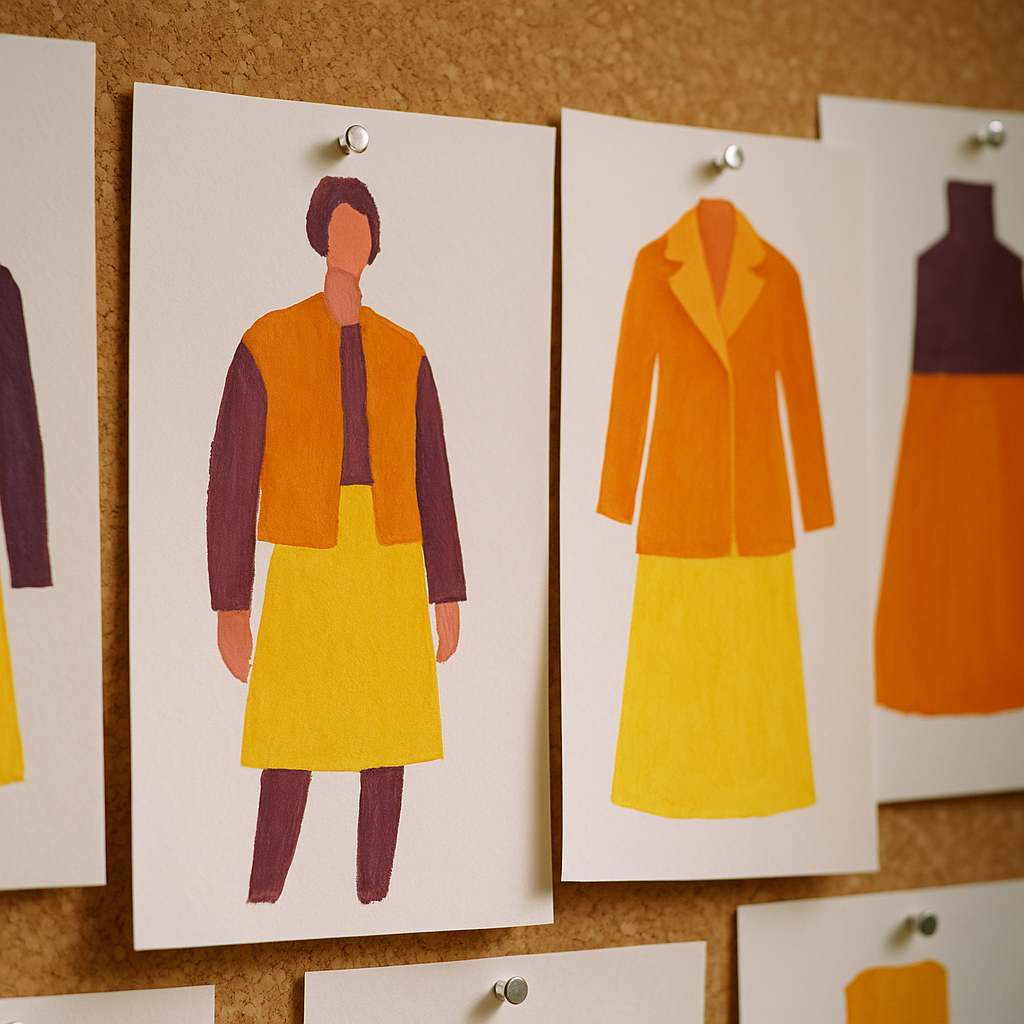
The key in fashion illustration is letting colour blocking do the structural work. Instead of sketching every fold or seam, a well-placed block of mango orange on a sleeve versus a plum purple on a bodice describes the garment’s silhouette instantly. It’s faster, more graphic, and far more striking on a page. Several graduates from the Royal College of Art’s fashion courses have been producing illustration work that does exactly this, and it reads brilliantly both in print and on screen.
If you’re trying this yourself, start simple. Take one fruit (try a pomegranate; it’s gloriously complex) and isolate three tones from it. Deep crimson for the skin, pale golden pink for the pith, and that jewel-like ruby red for the seeds. Build a fashion illustration using only those three colours and watch how much life it takes on.
Surface Pattern Design: Where Colour Blocking Really Blooms
Surface pattern design is probably where fruit-inspired colour blocking shines most brilliantly. The repeat structure of a pattern means that bold colour decisions get amplified, and fruit motifs give designers a natural vocabulary of shapes that slot into blocking compositions beautifully.
The approach that’s generating the most excitement right now involves treating fruit slices, segments, and cross-sections as the colour blocks themselves. A repeat of halved kiwis becomes a green and cream grid. A pattern of orange segments creates a warm, irregular geometric. You’re not illustrating fruit decoratively; you’re using the fruit’s internal geometry as a design system.
UK fabric companies and stationery brands selling through platforms like Folksy and Notonthehighstreet are picking this up quickly, and it’s easy to see why. The designs feel modern and abstract at a distance but reveal their fruity origin on closer inspection. That double-take quality is genuinely charming, and it sells.
How to Apply This Trend to Your Own Creative Practice
You don’t need a studio or expensive software to start exploring colour blocking through a fruit lens. Here’s a simple process that works across disciplines:
- Pick one fruit. Something with a strong, distinct colour profile. Starfruit, papaya, and plum are all excellent starting points.
- Extract three to four tones. Use a colour picker tool, or mix them physically with paint. Keep them saturated; resist the urge to add white or grey.
- Define your zones. Whether you’re designing a poster, illustrating a jacket, or building a repeat pattern, decide which colour gets the most space before you begin.
- Commit fully. Colour blocking dies when you hedge. No gradients, no shadows, no blending. Hold your nerve.
One small practical note: if you’re working in a studio or shared creative space, it’s worth thinking about your environment too. Good natural light makes a genuine difference when you’re evaluating saturated colour work, and studios that invest in energy efficiency solutions often create better-lit, better-ventilated spaces that support this kind of colour-critical work. It’s a detail, but details matter when you’re splitting hairs between a tangerine and a burnt orange.
For further reading on colour theory and its applications across the visual arts, the Victoria and Albert Museum offers a genuinely excellent range of resources, from their online collections to their regular exhibitions covering textile, graphic, and surface design history. Well worth an afternoon’s rabbit hole.
The Bigger Picture
Colour blocking in design isn’t just a trend to chase; it’s a visual language rooted in confidence. And fruit, with its riotous, unapologetic combinations of hue, teaches that confidence better than any colour theory textbook. The boldness is already there in the bowl on your kitchen table. You just have to be willing to use it.
So next time you’re stuck on a palette or a composition feels flat, slice open a papaya, take a photograph, and let the colour do the thinking for a minute. It rarely disappoints.
Frequently Asked Questions
What is colour blocking in graphic design?
Colour blocking in graphic design means placing two or more solid, high-contrast colours in clearly defined zones without blending or gradients. It creates immediate visual hierarchy and bold impact, and is widely used in posters, packaging, and brand identities.
How do I choose a colour blocking palette inspired by fruit?
Pick one fruit with a strong colour profile, such as a blood orange or pomegranate, and extract three to four saturated tones from it. Keep the proportions unequal, letting one dominant colour take up the most space, with the others acting as accents.
Is colour blocking still on trend in 2026?
Yes, colour blocking is one of the strongest visual trends across graphic design, fashion illustration, and surface pattern design in 2026. The shift towards nature-inspired, saturated palettes, particularly from fruit, has given the technique a fresh and distinctive direction.
Can beginners use colour blocking in their artwork?
Absolutely. Colour blocking is actually one of the most accessible design techniques because it strips away complexity. Start with just two contrasting colours, keep your shapes simple and defined, and resist the urge to blend, and you’ll get striking results quickly.
How is colour blocking used in surface pattern design?
In surface pattern design, colour blocking often uses the geometry of fruit cross-sections, such as citrus segments or kiwi halves, as repeating structural elements. The bold, flat colour areas create patterns that read as abstract at a distance but reveal their fruity origin up close.