
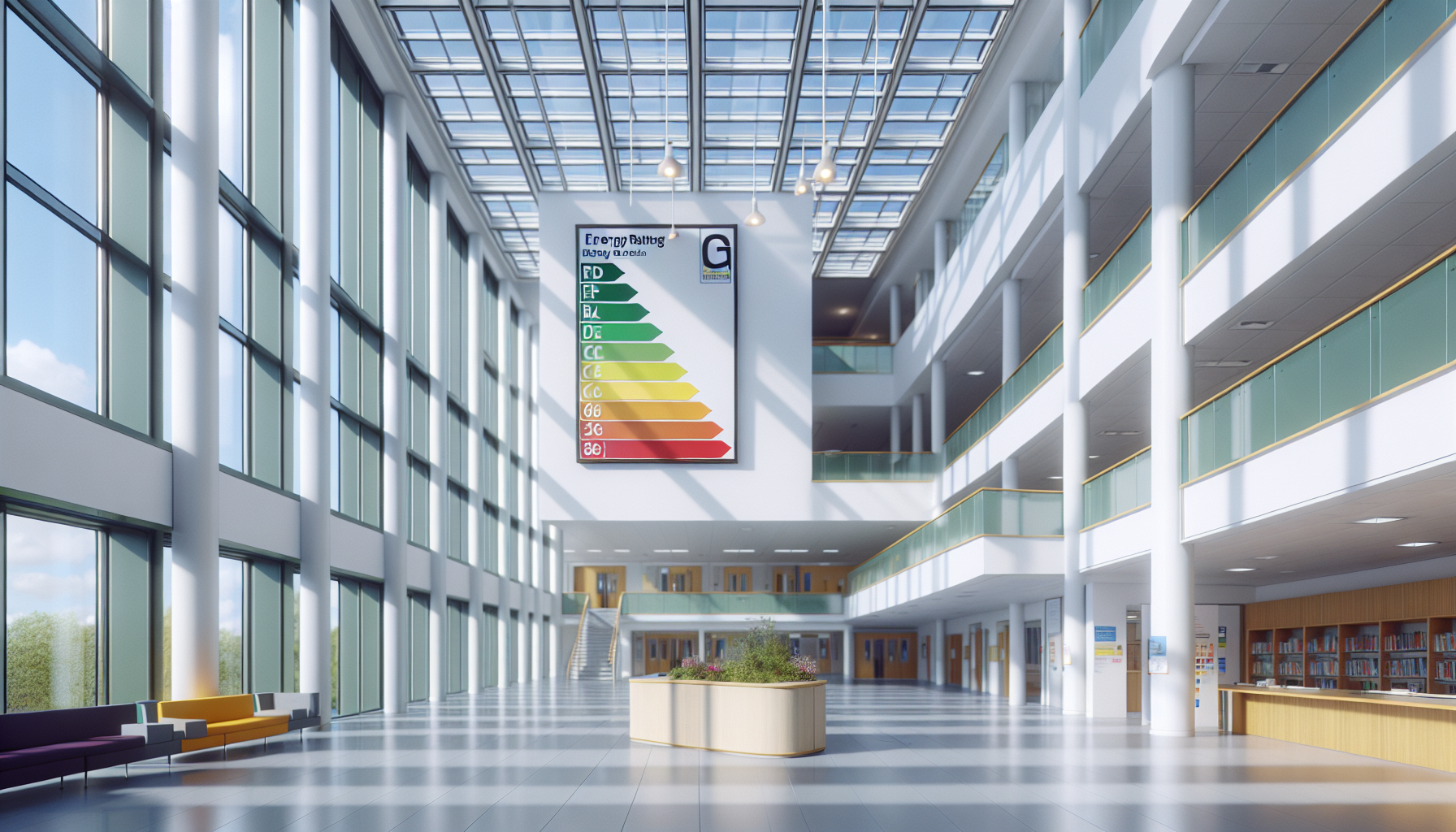
You’ve probably walked straight past one without a second glance. Pinned to the wall of a library, a leisure centre, or a school corridor – a bright, rainbow-striped chart with letters running from A to G. That cheerful little graphic is one of the most overlooked pieces of environmental communication in the UK, and it goes by the name of display energy certificates. Despite being a legal requirement for thousands of public buildings, most people have absolutely no idea what they are, what they mean, or why they exist.
So What Exactly Are Display Energy Certificates?
Display energy certificates, often shortened to DECs, are official documents that show how much energy a public building actually uses. Unlike the more familiar Energy Performance Certificate (EPC) that you encounter when buying or renting a home – which predicts how efficient a building could be – a DEC is based on real, measured energy consumption over the past twelve months. It’s the difference between a food label estimating calories and someone actually counting every bite you took.
The rating runs from A (very efficient) to G (energy-hungry), and the certificate must be displayed somewhere clearly visible to the public. That’s the key word: displayed. Hence the name. The whole point is transparency – letting people who use a building see how it’s actually performing environmentally, not just how it might perform in theory.
Why Do Public Buildings Need Them But Not Private Ones?
This is where it gets interesting. Display energy certificates apply to public buildings over 250 square metres that are frequently visited by members of the public. Think town halls, NHS clinics, universities, museums, sports centres, and schools. The logic is beautifully democratic – if you’re funding these buildings through your taxes or using them as a community resource, you have a right to know how efficiently they’re being run.
Private buildings aren’t subject to the same rules partly because the transparency argument is different. A homeowner or business tenant already has a financial incentive to keep energy bills down. Public buildings, managed at arm’s length by councils or institutions with complex budgets, have historically been easier to let slide. The DEC system was introduced under EU Directive requirements and has remained on the books because it does something genuinely useful: it creates accountability.
The Rating Chart – A Surprisingly Clever Piece of Design
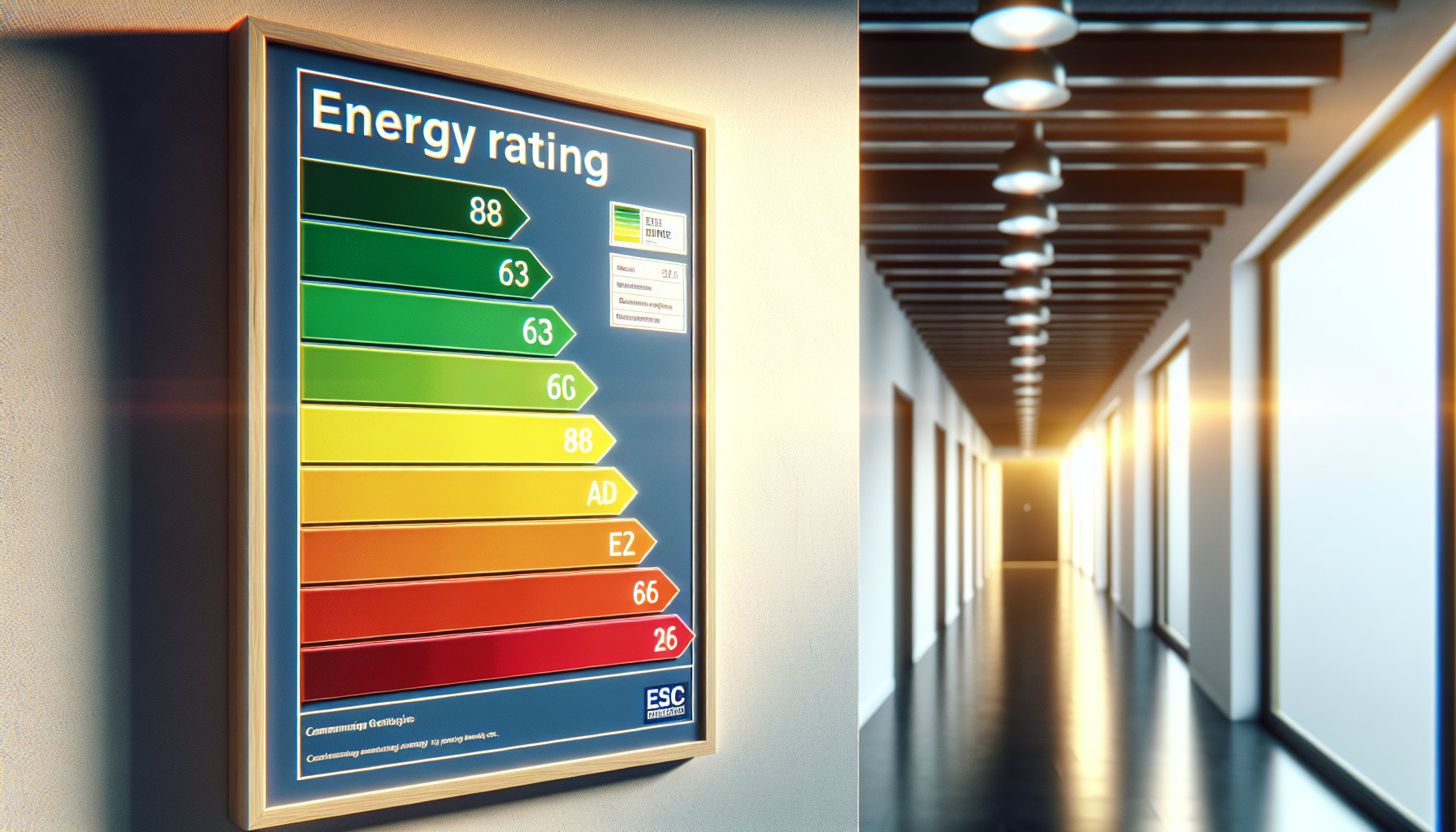
Let’s talk about the visual for a moment, because it’s actually quite a nice piece of functional design. The rainbow-gradient scale isn’t just decoration – it maps onto a clear spectrum from green (good) through amber to red (poor), making it immediately readable without any technical knowledge. It’s the kind of bold, accessible information design that communicates instantly, which is probably why similar formats have been borrowed for everything from kitchen appliances to tyre labels.
Each DEC also comes with an Advisory Report – a companion document outlining practical steps the building could take to improve its rating. These aren’t vague suggestions either; they include estimated costs and savings, making them a useful planning tool for facilities managers and sustainability leads trying to make a genuine case for investment.
How Long Is a DEC Valid For?
The validity period depends on the size of the building. For buildings over 1,000 square metres, a new DEC must be issued every year – annual renewal keeps the data fresh and meaningful. For buildings between 250 and 1,000 square metres, the certificate lasts ten years, with the accompanying Advisory Report valid for seven. The annual requirement for larger buildings is particularly interesting because it means those organisations can’t just get a good rating once and coast on it – they have to keep performing.
Schools are a fascinating case within this system. Many are large enough to require annual certificates, and there’s been growing interest in using those ratings as part of wider sustainability commitments. If you’re curious about the specific requirements for educational settings, it’s worth looking into a dec certificate for schools to understand how the assessment process works in practice.
Why Have You Never Heard of Them?
Honestly? Because they do their job quietly. Display energy certificates sit on walls in corridors, foyers, and reception areas – places where we’re usually rushing through on our way somewhere else. They don’t come with a marketing campaign. They’re not something you have to engage with to use a building.
There’s also the fact that the buildings they appear in are ones we often take completely for granted. The local swimming pool. The GP surgery waiting room. The council office. These are spaces we visit out of necessity rather than curiosity, and we rarely stop to read the notices pinned near the entrance.
But that’s almost the point. Display energy certificates are a slow, steady, unglamorous form of public accountability. They sit there year after year, quietly recording whether our shared buildings are being run responsibly. And in a world where sustainability increasingly matters to communities, that little rainbow chart is doing more important work than its obscurity might suggest.
What Happens If a Building Doesn’t Display One?
Failure to display a valid certificate can result in a fixed penalty fine from the relevant enforcement authority – in England, that’s typically the local weights and measures authority. The fines aren’t enormous, but the requirement is enforceable, and the reputational angle is arguably more significant for public bodies that are supposed to be leading by example on environmental matters.
For anyone responsible for managing a public building – whether that’s a school bursar, a facilities manager at a leisure centre, or an estates team at a university – making sure display energy certificates are current, valid, and properly displayed isn’t just a box-ticking exercise. It’s a commitment to the communities those buildings serve.

Display energy certificates FAQs
What is a Display Energy Certificate and who needs one?
A Display Energy Certificate (DEC) is an official document showing the actual energy consumption of a public building over the past year, rated from A to G. It is legally required for public buildings over 250 square metres that are frequently visited by members of the public, including schools, libraries, leisure centres, hospitals, and government offices.
How is a Display Energy Certificate different from an EPC?
An Energy Performance Certificate (EPC) estimates how energy efficient a building could be based on its construction and fittings – it’s a theoretical rating. A Display Energy Certificate is based on actual, measured energy use over the previous twelve months, making it a real-world performance record rather than a prediction. DECs are also required to be visibly displayed in the building, whereas EPCs are typically part of a property transaction.
How much does it cost to get a Display Energy Certificate?
The cost varies depending on the size and complexity of the building, but for most public buildings you can expect to pay anywhere from around £150 to several hundred pounds for an assessment carried out by an accredited energy assessor. Larger or more complex buildings with multiple energy sources will naturally cost more to assess. It’s worth getting a few quotes from accredited assessors to compare.
How often do Display Energy Certificates need to be renewed?
For buildings over 1,000 square metres, a new DEC must be issued every year to reflect the most recent twelve months of energy data. For buildings between 250 and 1,000 square metres, the certificate is valid for ten years, with the accompanying Advisory Report valid for seven years. Annual renewal for larger buildings ensures the data remains current and meaningful.
What happens if a public building doesn’t display its DEC?
Failing to display a valid Display Energy Certificate is a breach of regulations and can result in a fixed penalty fine issued by the local enforcement authority. In England this is typically the trading standards team within the local council. Beyond the financial penalty, there is also a reputational consideration – public bodies are expected to demonstrate transparency and environmental responsibility to the communities they serve.