
There is something genuinely joyful about holding a small, hand-illustrated zine packed with ripe colours and fruity drawings. Making one yourself, from a rough thumbnail sketch to a stack of freshly printed copies ready for a market table, is one of the most satisfying creative projects I know. And in 2026, the UK’s independent zine and craft fair scene is absolutely popping. So let’s get into it: how to plan, illustrate, print, and actually sell a colourful fruit zine without losing your mind or your rent money.
Choosing your format: A5 or A6?
A5 (148mm x 210mm) is the sweet spot for most first-time zine makers. It’s easy to read, fits comfortably in a tote bag, and prints on standard A4 paper when you fold a sheet in half. A6 is half the size again, which makes for a adorable little booklet, but the page count gets tight and your illustrations need to be simpler to read clearly at that scale. My honest recommendation: start A5. You can always go smaller once you’ve got the process under control.
For a classic saddle-stitched (stapled) zine, you’ll want your page count in multiples of four: 8, 12, or 16 pages works well. Sixteen pages gives you room to breathe with a cover, a contents page, seven or eight illustration spreads, and a back page. That is plenty of fruit.
Planning your fruit zine content
Before you pick up a pen, spend twenty minutes making a rough flat-plan. Write the page numbers 1 to 16 on a folded scrap of paper, open it out, and sketch tiny boxes for what goes where. A loose theme holds a zine together far better than a random collection of drawings. Some ideas that work brilliantly at the A5 scale:
- A botanical portrait of each fruit, one per spread, with a fun fact or a short poem.
- A colour-themed journey: pages organised by the spectrum from yellow citrus through to deep purple figs.
- A recipe zine, where each illustrated fruit pairs with a hand-lettered recipe on the facing page.
- A purely abstract series, where the fruit is a jumping-off point for pattern and colour experiments rather than literal depiction.
The recipe format is reliably popular at craft fairs because it gives buyers a practical reason to keep the zine rather than put it in a pile and forget about it. I’ve seen A6 lemon curd recipe zines sell out in the first hour at markets. Don’t underestimate the power of useful.
Illustrating your zine: tools and technique
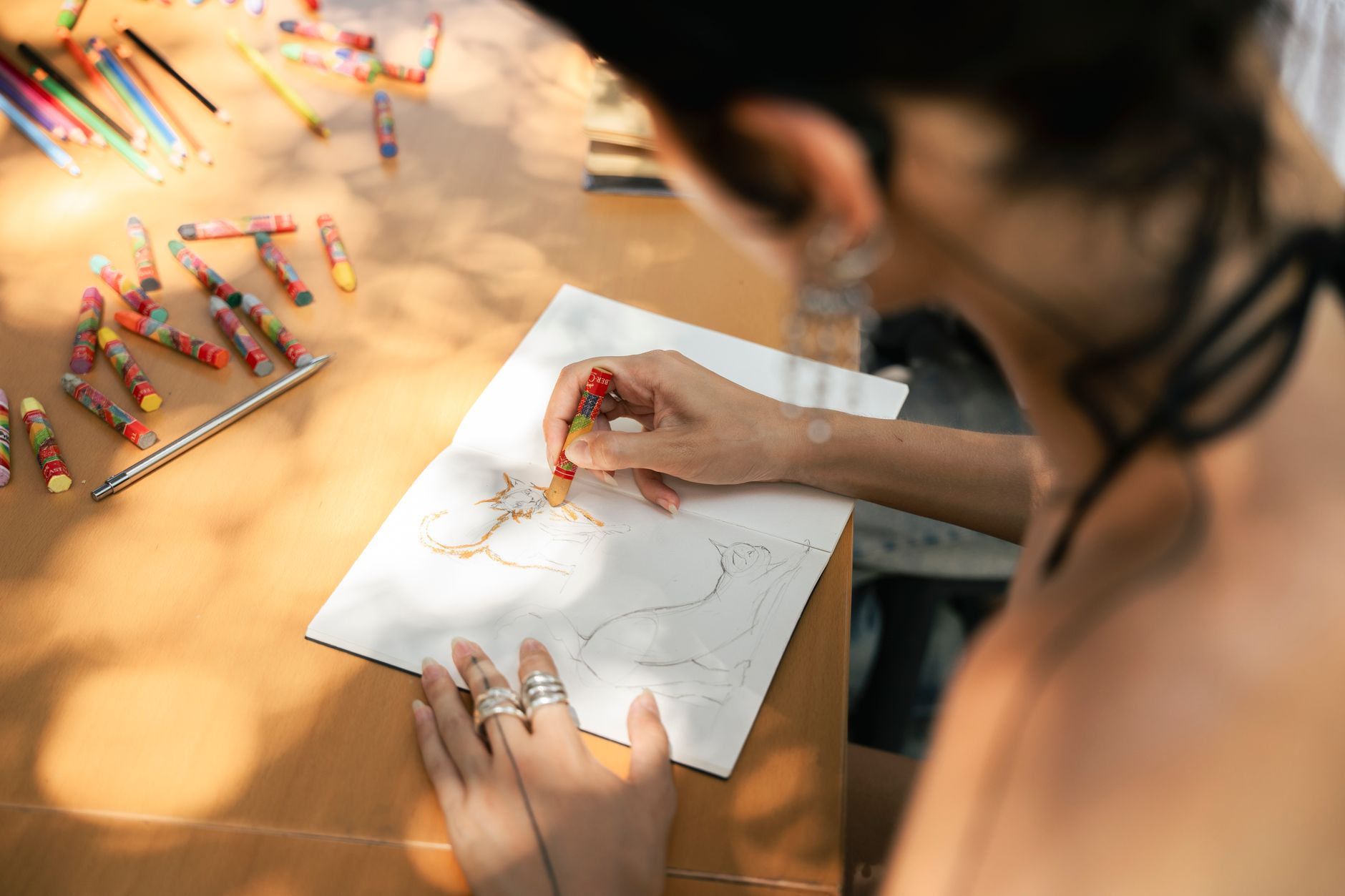
You do not need expensive equipment. My favourite combination for fruit zine illustration is a set of Posca paint markers for flat colour, a fine-liner (Staedtler or Uni Pin both work brilliantly) for outlines, and then watercolour washes over the top if I want something softer. The key is contrast: bold outlines and saturated fills photograph well, scan cleanly, and look sharp when printed in black and white if your budget doesn’t stretch to colour printing.
Draw at a slightly larger size than your final print size, then scale down when you scan. I work at roughly A4 for A5 final pages, which means any wobbles in line work tighten up nicely when reduced. Scan at 300dpi minimum; 600dpi if your scanner allows it. Anything less and you’ll see the grain when it prints.
If you want to go fully digital, Procreate on an iPad is the tool most UK illustrators I know are using right now. The advantage is infinite undo and easy colour adjustments. The slight disadvantage is that hand-printed zines have a texture and personality that purely digital work sometimes lacks. Hybrid is great: draw by hand, scan, then adjust colours and add text in Canva or Adobe Illustrator.
Page layout basics for home printing
This is the bit that trips people up. For a saddle-stitched A5 zine printed on A4 paper, your pages need to be arranged in a specific order called an imposition. Page 1 and page 16 print on the same sheet; page 2 and page 15 on the next, and so on. Most home printers handle this badly if you just hit print from a standard document.
The simplest solution is to use Canva’s booklet template or export a PDF and run it through a free imposition tool like Booklet Imposer, which is open source and does the faff for you. Print double-sided, fold in half, staple along the spine with a long-arm stapler (worth buying one for about £12 from Ryman or Staples), and trim the edges with a paper trimmer for a clean finish.
For colour printing at home, the running costs add up fast. A decent alternative is to use a local print shop. Snappy Snaps and Minuteman Press both have branches across the UK, and many independent print shops will do short runs of 20 to 50 copies at reasonable rates. Ring ahead, ask for their A5 booklet price, and compare. For edition sizes of 100 or more, online printers like Newspaper Club or Mixam UK offer proper zine printing at prices that actually make sense per unit.
When you’re pricing your copies for sale, remember to factor in paper, ink or print costs, any packaging (a simple cellophane sleeve looks professional and protects the cover), and your table fee at the market. A 16-page A5 colour zine typically retails between £5 and £8 at UK craft fairs in 2026, with small-run edition zines from established illustrators going up to £12.
How to find UK craft markets and zine fairs in 2026
The UK zine fair circuit has grown enormously. Some key events to put in your diary:
London Zine Symposium runs annually and is one of the longest-established zine fairs in the country, typically held in autumn. Glasgow Zine Fest is a brilliant community-run event that’s very welcoming to first-timers. Bristol Zine Fair and Manchester Zine Fair both run in the first half of the year and attract a mix of serious collectors and curious browsers who’ve never bought a zine before. For craft markets with a broader remit, Crafty Fox Market in London and various Etsy-affiliated events pop up regularly across major cities.
The best way to find current listings is through Zinewiki and by following @ukzinescene on Instagram, which aggregates fair announcements. Facebook groups for your local city’s makers community are also genuinely useful for finding smaller, neighbourhood-level craft markets that don’t always appear in national listings.
To apply for a table, you’ll usually need a few things: a short bio, photos of your work (make them colourful, make them appealing), and sometimes a link to your online shop if you have one. Applications for popular fairs open three to six months in advance, so set a calendar reminder now for events you want to target in autumn 2026.
Setting up your market table to sell more zines
A flat table covered in zines sells nothing. Height, colour, and context sell zines. I use a small folding display stand (the kind you find in craft shops for about £8) to prop up my best pieces. A simple printed price list means you’re not repeating yourself every thirty seconds. Bring a card reader because an enormous number of people no longer carry cash; SumUp and iZettle both work well for small traders and take a tiny percentage per transaction rather than a monthly fee.
Wrap your zines in a clear sleeve with a small card insert giving your website or social handle. People pick up a zine, take a photo, put it down, and then buy it from your online shop two weeks later. That’s a real purchasing journey and it’s worth catering to it.
Growing beyond the market table
Once you’ve sold your first run in person, the natural next step is selling online. Etsy and Folksy (the UK’s own handmade marketplace) are both solid platforms for zine sellers. If you’re building a broader creative brand around your fruit illustration work, it’s worth reading about self-publishing colourful zines as a UK artist and also thinking about how your zine fits into a bigger creative identity. The visual language you develop for your fruit zine can feed directly into prints, greetings cards, and fabric designs if you want to expand.
I’d also suggest building a small mailing list from day one. A QR code on your market table that links to a sign-up form costs nothing to set up and means you can tell your existing fans when a new edition drops. Mailchimp’s free tier is fine for lists under 500 subscribers.
For the physical side of running a small creative business, including things like registering with HMRC as self-employed, the gov.uk guidance on becoming a sole trader is the clearest starting point. And if you’re renting a studio or market space in an older building, a word to the wise: get any property checks done properly. Bodies like Asbestos Compliance Solutions exist precisely to help people navigating older commercial or shared spaces, which is more relevant than you’d think when you start looking at affordable studio rentals.
The fruit zine illustration world is friendly, colourful, and genuinely supportive. I’ve met some of my favourite illustrators at six-foot trestle tables covered in zines, over a thermos of tea. Get your flat-plan done, get your scanner warmed up, and get your application in. The market table is waiting.
If you’re just getting started with illustration and want to try a lower-stakes project first, our guide to screen printing fruit designs at home on a budget is a great warm-up, and for ideas on how your zine artwork might translate into other formats, have a look at upcycling magazines and packaging into colourful collage art for some brilliant mixed-media inspiration.
Frequently Asked Questions
What size should my first zine be?
A5 (148mm x 210mm) is the most practical starting size for beginners. It folds from a standard A4 sheet, reads comfortably, and fits neatly into most tote bags and display stands at craft markets.
How much does it cost to print a small run of zines at home?
A 16-page A5 colour zine printed at home on a standard inkjet costs roughly 40p to 80p per copy in ink and paper, depending on your printer. For runs of 50 or more, local print shops or online services like Mixam UK often work out cheaper per unit.
How do I apply for a UK zine fair table in 2026?
Most UK zine fairs open applications three to six months before the event. You’ll typically need a short bio, photos of your work, and sometimes a link to an existing shop or portfolio. Follow event social accounts or check Zinewiki for application windows.
What should I charge for my zine at a craft market?
A 16-page A5 colour zine typically sells for between £5 and £8 at UK craft fairs in 2026. Price to cover your print costs, table fee, and a reasonable hourly rate for your illustration time, then round to a clean figure that’s easy to handle with cash.
Do I need to register as a business to sell zines at craft fairs?
If you sell regularly and earn above the HMRC trading allowance (currently £1,000 per tax year), you should register as self-employed with HMRC. Gov.uk has clear guidance on becoming a sole trader, and registration is free and straightforward online.