
There is something deeply satisfying about a painting where the edges are crisp. Not blended, not soft, not impressionistic, just clean, flat, confident colour sitting right up against another clean, flat, confident colour. That is the whole joy of colour blocking acrylic painting, and I am convinced it is one of the most underrated approaches for UK home artists who want results that look genuinely designed rather than dashed off on a Saturday afternoon.
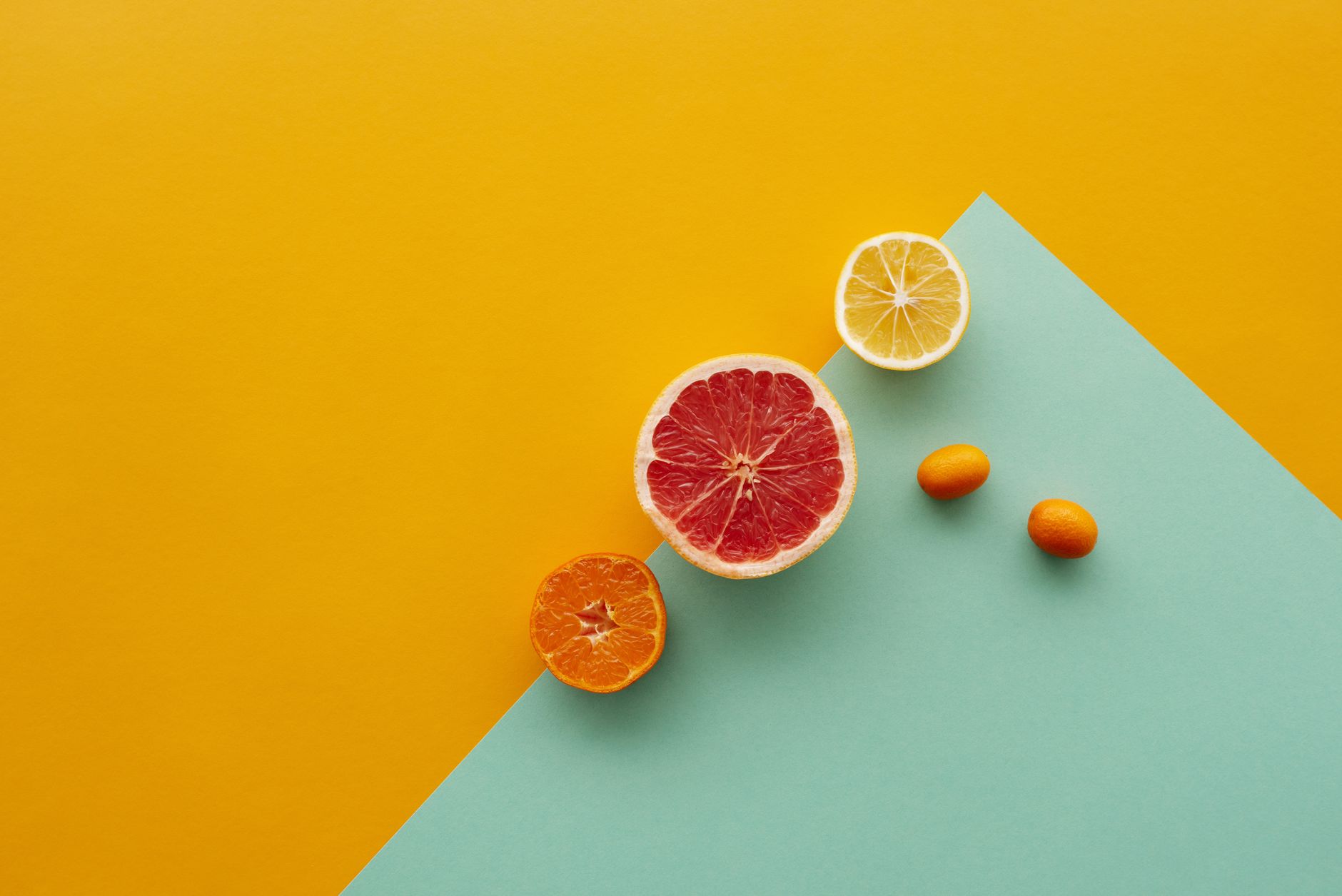
The inspiration here is mid-century British print culture: think London Transport poster art, Penguin book covers from the 1950s and 60s, the bold flat graphics of Festival of Britain promotional material. Fruit was everywhere in that visual world, lemons, oranges, figs, pears, because it gave designers a chance to play with pure, saturated colour against geometric forms. I want to bring that same poster-art energy onto canvas, and masking fluid is the secret weapon that makes it achievable without a steady hand or expensive masking tape.
Why masking fluid changes everything for graphic painting
Masking fluid (sometimes sold as liquid frisket) is a rubbery latex solution you paint onto your canvas before laying down colour. It dries quickly, resists acrylic paint completely, and peels away cleanly once your paint is dry, leaving behind a pristine, sharply defined edge. For colour blocking acrylic painting in the UK, where we tend to be working in spare rooms or kitchen tables rather than a dedicated studio, it is a game-changer. No need for precision tape cutting around curves. No bleeding. No happy accidents you did not plan for.
I use Winsor & Newton Colourless Art Masking Fluid, which is widely available from Cass Art and most independent art shops. Apply it with an old synthetic brush you do not mind ruining (the latex degrades bristles over time), or with a ruling pen for very fine lines. Let it cure for at least 20 minutes before you touch it with paint.
Choosing your fruit subject and sketching the design
The graphic approach works best with fruit that has a clear, bold silhouette: a halved orange, a whole lemon, a bunch of grapes seen from above, a fig cut to show its deep burgundy interior. I tend to keep my compositions to two or three fruit forms maximum on a standard 30 x 40 cm canvas, any more and the image starts to feel cluttered rather than designed.
Sketch your composition lightly in pencil first. Keep the lines angular and deliberate, this is not the place for loose, gestural mark-making. Think about how each colour region will sit. A halved orange, for example, breaks into: the outer rind (a flat ring of deep orange), the pith (a thin white or cream band), and the interior segments (lighter, warmer orange with thin white dividing lines). Each region is a separate colour block, and each edge between them is a candidate for masking fluid.
Once you are happy with the pencil layout, go over the lines you want to preserve with masking fluid. These will become the white outlines and interior detail lines that give the finished piece its poster-art clarity. Leave it to dry fully.
Mixing flat, saturated colour blocks
For colour blocking acrylic painting to read as bold and graphic rather than muddy, your paint needs to be opaque and flat, no texture, no visible brushwork, no tonal variation within a single region. That means mixing your acrylics to a consistency somewhere between single cream and yoghurt: fluid enough to lay down smoothly in two passes, thick enough not to run.
I work with a limited palette on purpose. For a lemon composition I might use: a warm cadmium yellow, a cooler lemon yellow, a deep olive for the shadow face, a rich charcoal or near-black for any background block, and white for the pith and highlight areas. The principle of working from a tight fruit-inspired palette applies here too, restraint in your colour choices makes the result feel cohesive and designed rather than busy.
Apply each colour block with a flat, wide brush, working in even, parallel strokes. Load the brush generously. Two thin coats beat one thick one every time. Let the first coat dry completely before the second, acrylics are forgiving and fast-drying, which is another reason they suit this technique so well.
Peeling the mask and refining the image
This is the most satisfying moment in the whole process. Once all your colour blocks are dry, use a clean fingertip or a rubber (not a sharp tool) to gently lift and roll away the masking fluid. The lines underneath should be pristine white canvas. The contrast between those clean edges and your flat colour blocks is exactly the effect you are after.
At this point, assess what needs refining. You might find a colour region has slightly uneven coverage, or that a background block needs a second coat now that the masking is gone. The white revealed lines might need narrowing in places, you can paint into them carefully with a thin liner brush. Alternatively, you might want to paint the revealed areas a different colour entirely rather than leaving them as white canvas; a cream or pale gold works beautifully for the pith on a citrus cross-section.
If you want to add a background colour block (and I would strongly recommend it, a flat deep teal or slate blue behind a bright yellow lemon is enormously pleasing), apply masking fluid around the fruit forms first, paint the background, peel, and you will get the same crisp separation between fruit and ground.
Framing and presenting your colour block fruit art
The finished canvas deserves a frame that respects its graphic sensibility. A simple thin black or natural wood frame keeps the poster-art feeling intact. Avoid ornate or heavily gilded frames, they fight the clean geometry you have worked hard to achieve.
If you are thinking about expanding into printmaking from your painting designs, screenprinting fruit motifs onto fabric is a brilliant next step, the flat colour logic translates almost directly. And if you want to take the three-dimensional version of this bold fruit aesthetic further, papier-mâché fruit sculptures painted in flat acrylic colour blocks make extraordinary companions to a graphic canvas on the same wall.
Practical tips for colour blocking acrylic painting in a home setting
A few things I have learnt from doing this at my kitchen table rather than in a studio. Work on a surface you can leave flat while the masking fluid cures, propping a canvas at an angle risks the fluid running before it sets. Keep a pot of water and an old cloth close by so you can clean your brush between colour regions before the acrylic skins over. And always, always let one colour block dry completely before masking adjacent to it for the next, wet acrylic under masking fluid is a recipe for tearing your surface when you peel.
The Arts Council England has consistently highlighted the growth of independent home-based makers and studio artists across the UK, which tells me I am not the only person who has discovered that a spare hour and a canvas can produce something genuinely worth hanging. Colour blocking acrylic painting is exactly the kind of skill that rewards you quickly, you do not need years of drawing practice to get a result that looks intentional and strong.
Start with one fruit. One background block. Three or four colour regions. Let the masking fluid do its job. I think you will be surprised by how much the finished piece looks like something you found in a vintage print shop rather than something you made on your dining room table. That is the whole point, and it is completely brilliant.
Frequently Asked Questions
What is colour blocking in acrylic painting?
Colour blocking means dividing your composition into distinct, flat areas of solid colour with sharp, clean edges between them, rather than blending or graduating tones. In acrylic painting, this approach draws on graphic design and poster art traditions, producing images that feel bold and designed. It works especially well for subject matter with clear silhouettes, like fruit.
How do you use masking fluid with acrylics on canvas?
Paint masking fluid onto the canvas lines you want to preserve using an old synthetic brush or ruling pen, then leave it to dry for at least 20 minutes. Apply your acrylic paint over the top in flat colour blocks, allow the paint to dry fully, then gently roll or rub away the masking fluid with a fingertip to reveal clean, sharp edges beneath. Always let each paint layer dry completely before peeling.
Where can I buy masking fluid in the UK?
Masking fluid is widely available in UK art supply shops including Cass Art, Hobbycraft, and most independent art retailers. Winsor & Newton Colourless Art Masking Fluid is a reliable choice and is stocked both in-store and online. It is typically priced between £4 and £8 for a standard bottle, which goes a long way.