Colour is never just decoration. Every shade you reach for carries emotional weight, cultural meaning, and the power to shift how a viewer feels the moment their eyes land on your work. Understanding colour psychology in art is one of the most powerful tools any creative can develop, and it does not require a fine art degree to start using it deliberately and joyfully.
The beautiful thing about using fruit as a lens for this subject is that it gives us an instantly relatable, vibrant reference point. A ripe mango, a glossy plum, a cluster of green grapes. Each one carries a distinct emotional charge before a single brushstroke is even made. Let us explore what those hues are really communicating.
Why Colour Psychology in Art Actually Matters
Artists who understand the emotional language of colour are not guessing when they choose a palette. They are making deliberate decisions. A painting dominated by warm oranges and yellows will feel energising, generous, and full of life. The same composition rendered in cool blues and muted greens will feel calm, considered, or even melancholy. Neither is wrong; both are intentional choices.
Psychological responses to colour are partly universal and partly shaped by culture and personal experience. But certain associations are remarkably consistent across audiences, and that is where artists gain real creative leverage. Once you understand the emotional grammar of colour, you can write exactly the story you want.
Red: Urgency, Passion, and Appetite
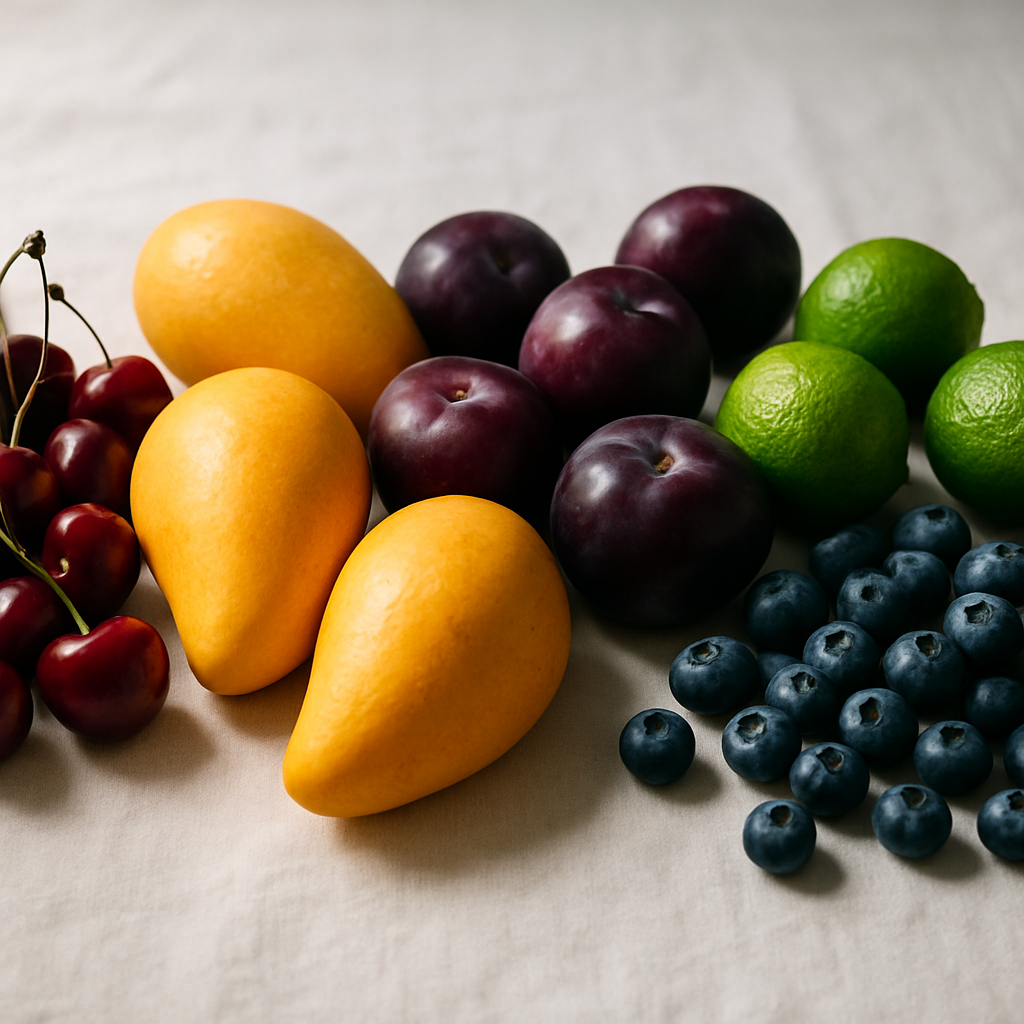
Think of a bowl of ripe cherries or a split pomegranate, seeds gleaming like jewels. Red is the colour that demands attention first. It is associated with energy, desire, danger, and appetite. In food art, red fruits have long been used to create images that feel generous and indulgent. For an artist, placing a focal red element in a composition naturally draws the eye and raises the emotional temperature of the whole piece.
Red can also signal urgency or intensity. If you want your artwork to feel bold and confrontational, lean into deep crimsons and scarlet tones. If you want warmth without aggression, soften towards coral and raspberry pinks.
Yellow and Orange: Joy, Warmth, and Creative Energy
A golden mango or a pile of citrus fruits on a sunlit surface captures something instantly optimistic. Yellow and orange hues are some of the most emotionally generous in the spectrum. Yellow communicates playfulness, curiosity, and mental stimulation. Orange carries warmth, sociability, and an almost edible richness that is no accident in still life painting traditions.
Artists working in these hues often find their work reads as approachable and energising. If you are creating pieces intended to lift a mood or bring genuine delight into a space, building your palette around warm yellows and peachy oranges is a reliable and beautiful strategy.
Purple and Deep Plum: Mystery, Luxury, and Depth
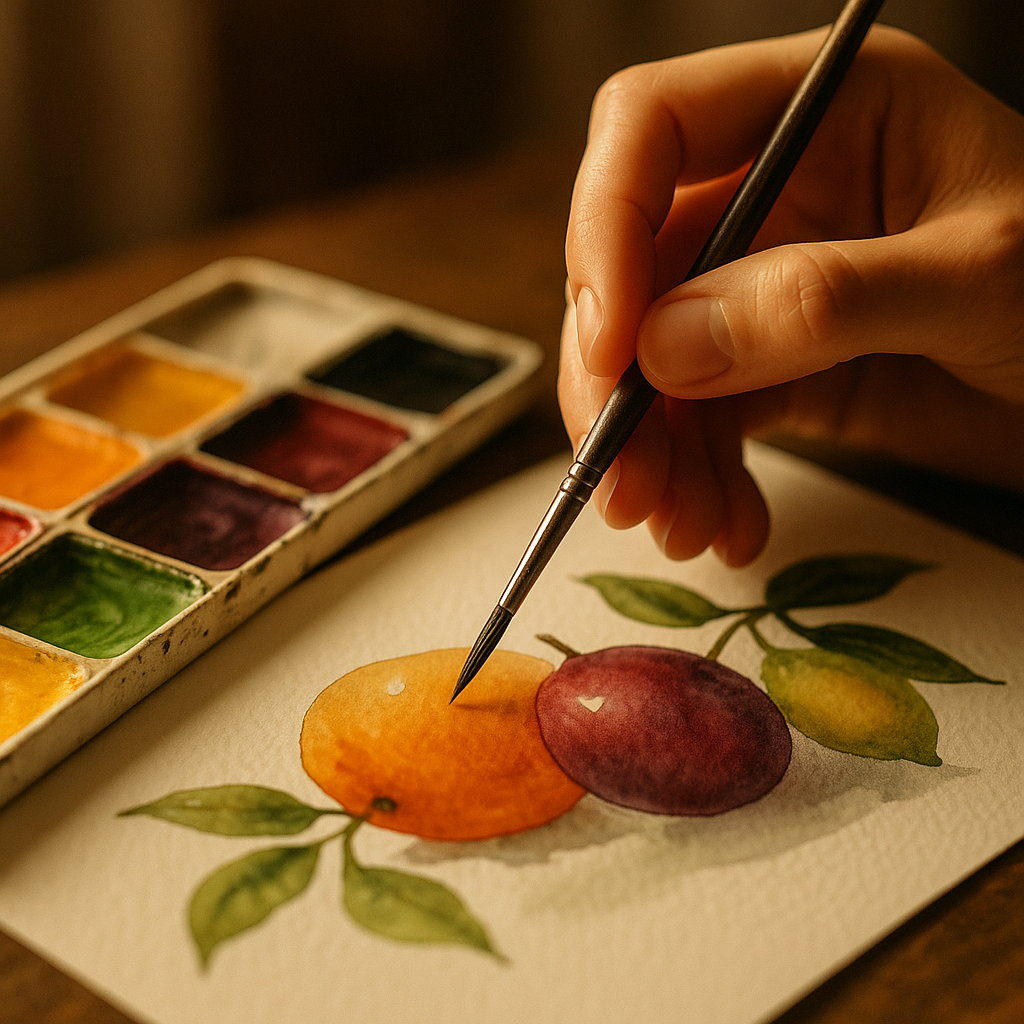
The deep skin of a Victoria plum or the dusty bloom on a cluster of black grapes holds something altogether more atmospheric. Purple has historically been associated with royalty, spirituality, and creative imagination. In art, it creates a sense of mystery and depth that few other hues can match.
Deep violets and purples work brilliantly as shadow colours in fruit paintings, adding richness without simply using black. Lighter lavender tones communicate gentleness and nostalgia. If you want your work to feel luxurious or emotionally complex, purple is your most eloquent ally.
Green: Balance, Growth, and Natural Calm
Green gooseberries, tart limes, and glossy green apples each carry a very specific freshness. Green sits at the centre of the visible spectrum, and that balance is exactly what it communicates emotionally. It signals life, renewal, and equilibrium. In art, green grounds a composition, providing the eye with a natural resting point.
Bright, acidic greens feel energetic and modern. Deeper, mossier greens feel earthy and stable. For artists building work that should feel restorative or connected to the natural world, green is an anchor worth understanding deeply.
Blue: Calm, Distance, and Emotional Reflection
Blue fruit is rarer in nature, which is partly why it feels so striking when it appears. Blueberries and damsons carry that quality of quiet mystery. Blue is consistently associated with calm, distance, and introspection across cultures. In art, it tends to push elements into the background and create a sense of space or tranquillity.
Using blue in contrast with warm fruit tones, say a blue-grey background behind a vivid orange persimmon, creates a compositional tension that is visually arresting. The cool recedes, the warm advances, and the eye is kept moving with genuine pleasure.
How to Apply Colour Psychology Deliberately in Your Own Work
The most practical step you can take is to decide the emotional intention of a piece before you choose a single colour. Ask yourself: what do I want the viewer to feel? Energised? Soothed? Hungry? Reflective? Once you have that answer, let colour psychology in art guide your palette choices rather than defaulting to what looks realistic or familiar.
Experiment with monochromatic palettes built around one dominant emotional hue, then introduce a single contrasting accent to create tension or delight. A painting of pears in warm yellow-greens, with one small touch of deep violet shadow, will feel far more emotionally alive than one painted with generic mixed greens throughout.
Colour speaks before your subject matter does. A viewer’s nervous system registers hue before it registers form. That is an extraordinary creative opportunity, and understanding the emotional language behind every shade puts that power firmly in your hands. The fruit bowl on your table is not just a still life subject; it is a complete emotional toolkit waiting to be explored.
Frequently Asked Questions
What is colour psychology in art?
Colour psychology in art is the study of how different hues affect the emotions, mood, and perceptions of viewers. Artists use this knowledge deliberately to evoke specific feelings, guide the eye through a composition, and communicate meaning beyond the literal subject matter.
How do artists use colour to convey emotion?
Artists choose colours based on their known emotional associations, such as warm reds and oranges for energy and appetite, cool blues for calm, and deep purples for mystery. By building a palette around a desired emotional outcome before starting a piece, artists can guide how the viewer feels when they encounter the work.
Is colour psychology the same across different cultures?
Some colour associations are broadly consistent across cultures, such as red for urgency or green for growth, while others vary significantly. For example, white carries associations of purity in many Western contexts but mourning in some East Asian traditions. Artists working for international audiences benefit from researching cultural nuances alongside universal emotional responses.
Can beginners use colour psychology in their artwork?
Absolutely. You do not need formal training to begin applying colour psychology deliberately. A simple starting point is to choose your palette based on one emotional intention, such as warmth or calm, rather than just copying realistic colours. Over time, this becomes instinctive and adds genuine depth to even simple pieces.
What colours are most effective for creating a joyful and energetic painting?
Warm yellows, oranges, and bright reds tend to generate the most energetic and joyful responses in viewers. Citrus-inspired palettes featuring lemon yellows, tangerine oranges, and coral pinks are particularly effective for creating artwork that feels uplifting, welcoming, and full of life.